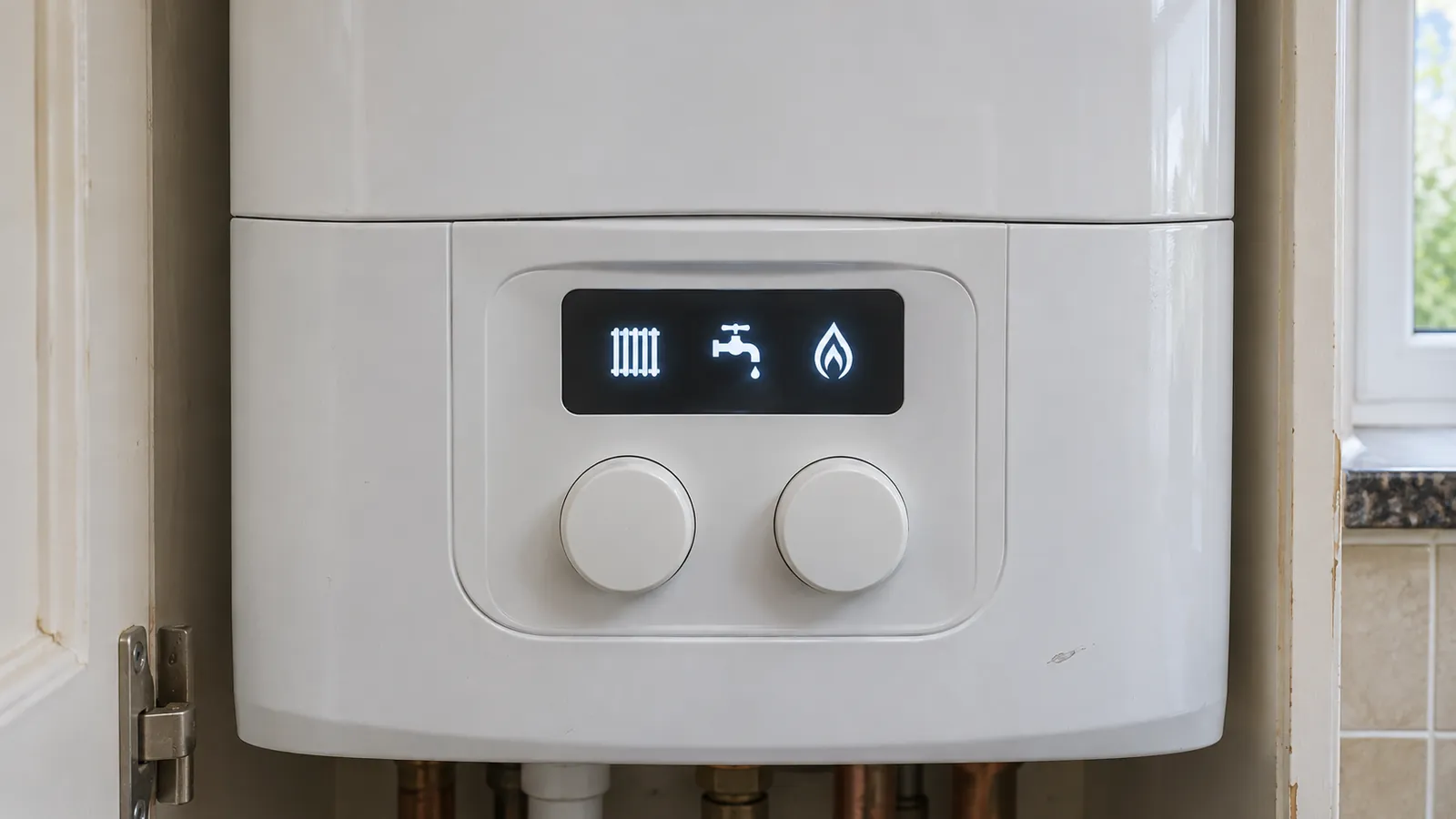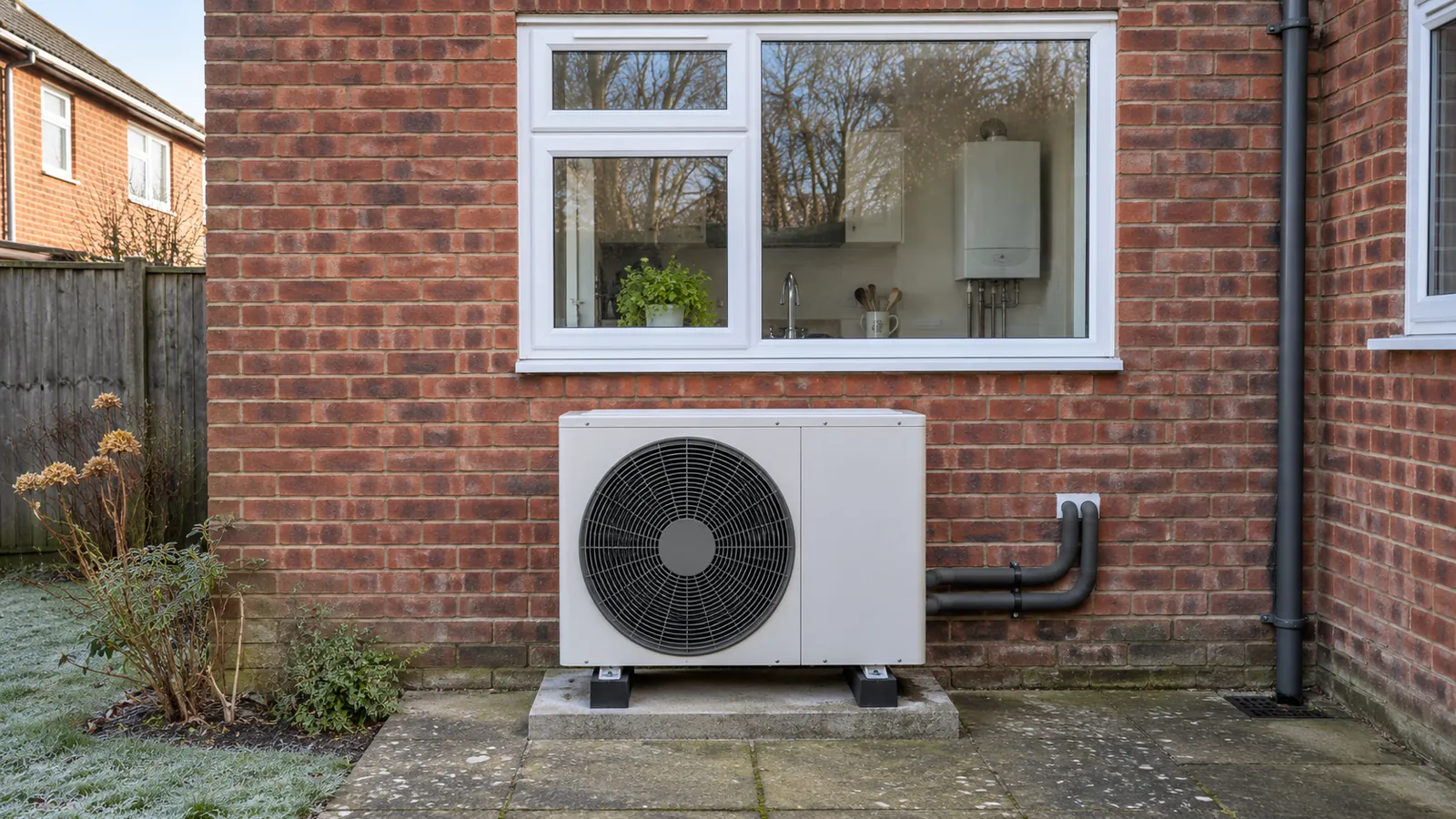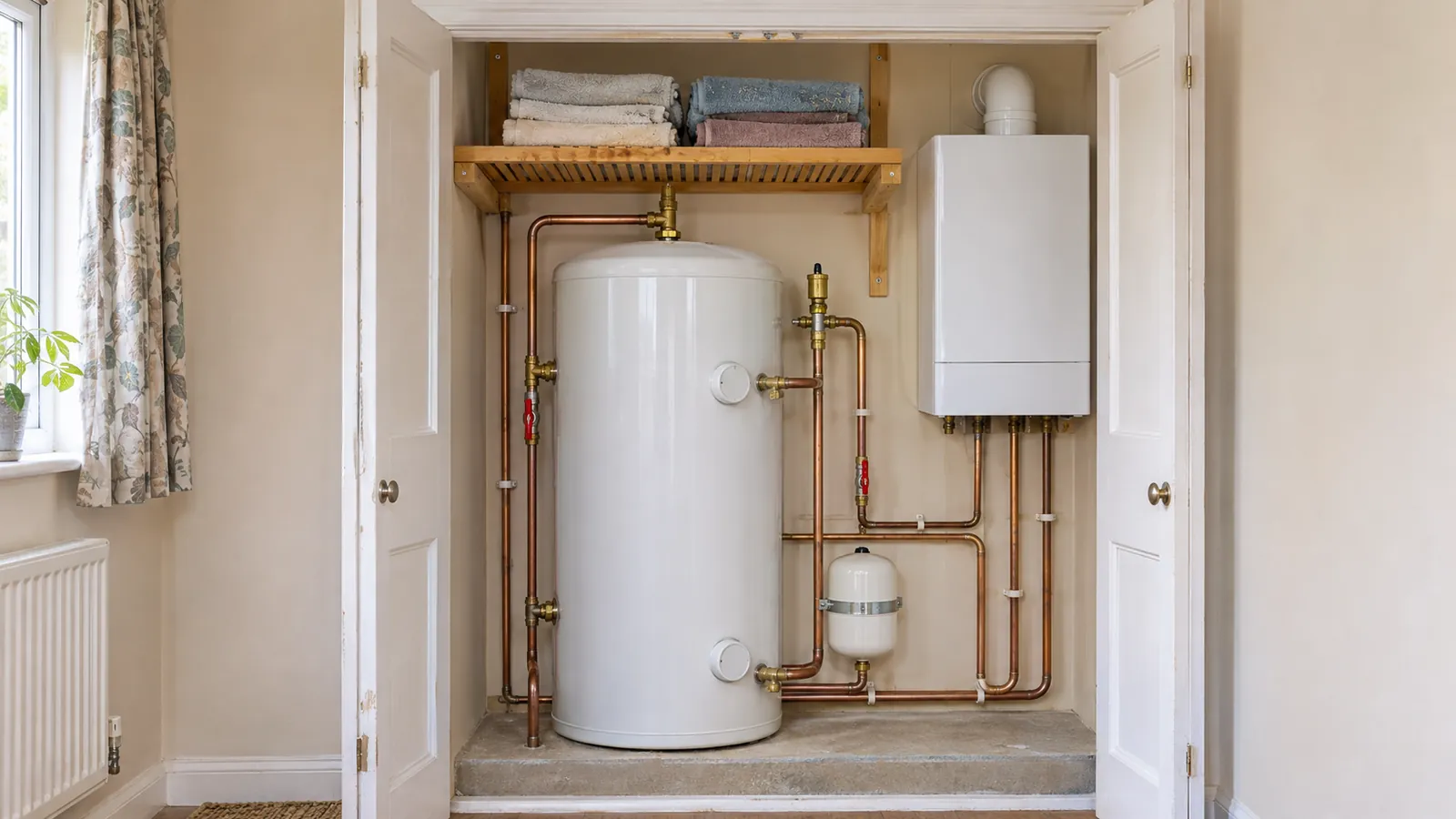

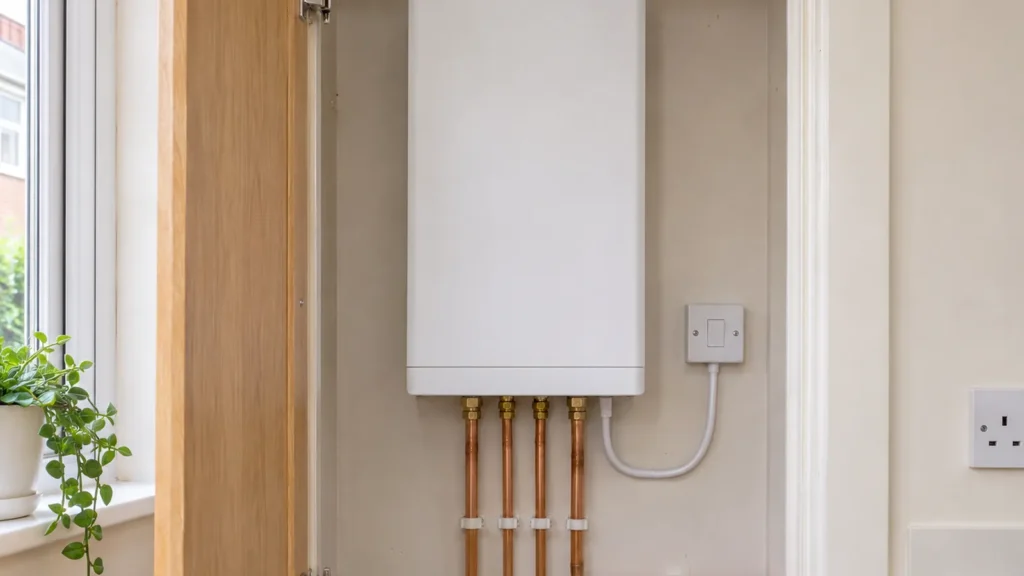
An electric boiler heats your radiators and hot water with an electric element instead of burning gas. It's almost 100% efficient, silent, has no flue and needs no annual gas safety check. The catch is running cost: at 2026 price cap rates, electricity costs about 26.32p per kWh against 7.97p for gas, so heating with an electric boiler typically costs around three times as much as a modern gas boiler. Electric boilers make most sense in small, well-insulated homes and flats with no gas supply. Before you buy, check your electricity supply can handle it: most homes on a 100A single-phase supply are limited to roughly 12–15kW.
If you live in a flat where gas isn't allowed, or a house off the gas grid, an electric boiler can look like the obvious answer. It often is a good fit, but only if you go in knowing the running costs and the power limits. For boilers, radiators and controls in general, see our complete home heating guide.
How does an electric boiler work?
An electric boiler works like a large kettle connected to your central heating. Water from your heating system flows past one or more electric heating elements inside the boiler. The elements heat the water, and a pump sends it around your radiators, just as with a gas boiler.
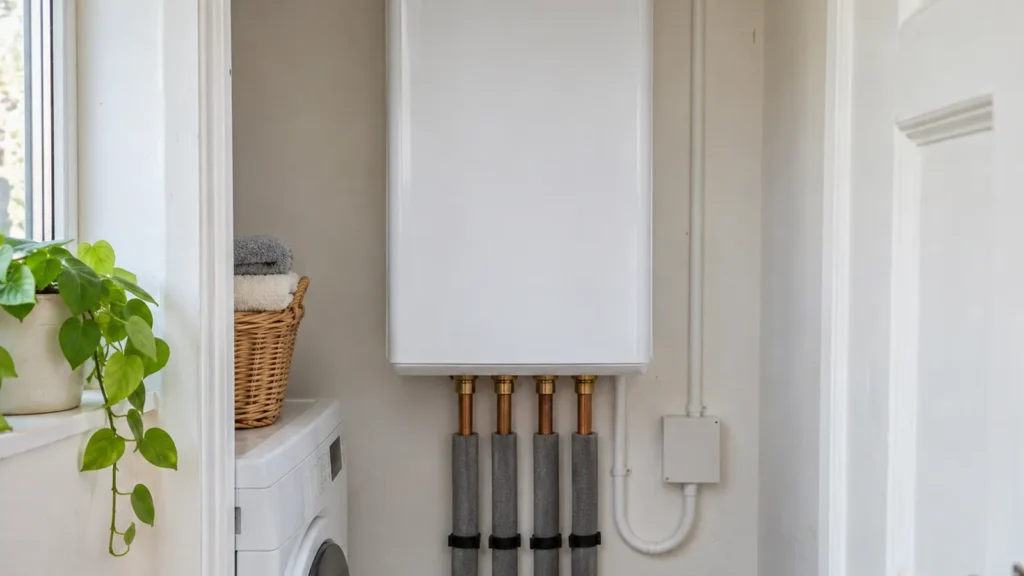
Because nothing is burned:
- There's no flue through the wall or roof
- There's no gas supply, no carbon monoxide risk and no Gas Safe annual check
- Almost all the electricity becomes heat in the water, so they're often described as 99–100% efficient at the point of use
- They're very quiet and usually smaller than a gas boiler
The efficiency figure sounds impressive, but it doesn't make electric heating cheap. It only means that very little of the energy you pay for is wasted. What decides your bill is the price per kWh, and electricity costs much more per kWh than gas. More on that below.
Types of electric boiler
Electric boilers come in the same basic types as gas boilers. If you're replacing an existing boiler, see what type of boiler you have first, as it decides what you can swap to easily.
| Type | What it does | Suits |
|---|---|---|
| Electric combi boiler | Heats radiators and heats hot water on demand. No hot water cylinder. | Small flats with one bathroom and low hot water demand |
| Electric system boiler | Heats radiators and a separate hot water cylinder. Pump and expansion vessel built in. | Homes with a cylinder, more than one bathroom |
| Electric heat-only (regular) boiler | Heats radiators and a cylinder, with separate tanks and pump | Replacing an old regular boiler without changing pipework |
| Electric flow boiler | Heats water for the heating circuit only, often paired with a cylinder | Small systems, or alongside a separate hot water solution |
| Storage electric boiler / thermal store | Heats a large insulated store of water overnight on cheap off-peak electricity | Homes on Economy 7 or another time-of-use tariff |
A note on electric combi boilers and hot water
An electric combi heats water as you use it. Heating water instantly needs a lot of power, and an electric combi is limited by your supply (see the next section). So the hot water flow rate is usually lower than from a gas combi. A typical electric combi suits one shower at a time, not a bath filling while someone showers.
If your household uses a lot of hot water, an electric system boiler with a cylinder often works better. The cylinder heats up slowly and stores the hot water, ideally on cheaper overnight electricity.
Sizing: the power supply limit
This is the part most adverts skip. A gas boiler can be 30kW or more because gas pipes deliver a lot of energy. An electric boiler can only draw what your electricity supply can provide.
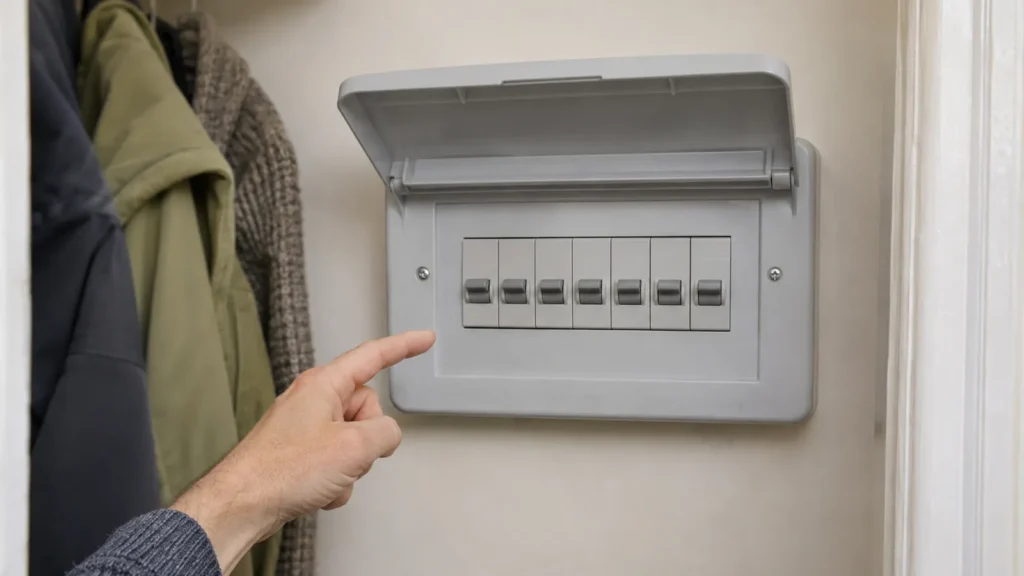
The current an electric boiler draws is roughly:
Current (amps) = power (watts) ÷ voltage (230V)
| Boiler size | Approximate current |
|---|---|
| 6kW | about 26A |
| 9kW | about 39A |
| 12kW | about 52A |
| 14.4kW | about 63A |
Most UK homes have a single-phase supply with a main fuse of 60A, 80A or 100A. Your oven, hob, shower, kettle and everything else share that supply. Installer and manufacturer guidance commonly treats about 12–14.4kW as the practical upper limit on a 100A supply, and many models of this size state that 100A is required.
What this means for you:
- Check your main fuse rating before you get quotes. It's often printed on the sealed fuse carrier next to your meter. Don't open or touch it; the fuse belongs to your network operator.
- An electrician must do a load calculation. They'll look at your total demand, including electric showers and cooking, and check the cable size from the meter.
- You may need a supply upgrade. If your main fuse is smaller than 100A, your distribution network operator (DNO) may be able to upgrade it. Larger homes sometimes need a three-phase supply, which is expensive and not always available.
- A bigger home may simply be too big. If your home needs more than about 12–15kW of heat on a cold day, a single electric boiler may not keep up. Better insulation lowers the heat you need.
Electric boilers draw a large current for long periods. Installation must be done by a qualified electrician, usually registered with a competent person scheme, as it involves a new dedicated circuit and is notifiable work under Part P of the Building Regulations in England and Wales. Never try to wire one yourself.
How much heat does your home need?
As a rough guide only, a small, well-insulated flat might need around 4–8kW at peak, a typical two-bedroom home 8–12kW, and larger or poorly insulated homes more. Add up the output of your radiators for a better picture: our radiator BTU calculator estimates what each room needs. A heating engineer can do a proper room-by-room heat loss calculation.
Electric boiler running costs vs gas
The honest maths, using the Ofgem price cap averages for 1 October–31 December 2026: 26.32p per kWh for electricity and 7.97p per kWh for gas. These are averages; check your own bill for your exact rates.
The useful heat you get from each kWh you pay for depends on efficiency:
- Electric boiler: about 99% efficient, so each kWh of heat costs about 26.32p ÷ 0.99 ≈ 26.6p
- Modern condensing gas boiler: about 90% efficient in real use, so 7.97p ÷ 0.90 ≈ 8.9p
- Air source heat pump: produces around 3kWh of heat per kWh of electricity over a year (a seasonal efficiency of about 300%, though it varies by home and installation), so 26.32p ÷ 3 ≈ 8.8p
Example: a year's heating and hot water
Annual cost = heat needed (kWh) ÷ efficiency × price per kWh
| Home | Heat needed per year | Electric boiler | Gas boiler | Heat pump (approx.) |
|---|---|---|---|---|
| Small, efficient flat | 6,000kWh | 6,000 ÷ 0.99 × 26.32p ≈ £1,595 | 6,000 ÷ 0.90 × 7.97p ≈ £531 | 6,000 ÷ 3 × 26.32p ≈ £526 |
| Typical home | 10,000kWh | 10,000 ÷ 0.99 × 26.32p ≈ £2,659 | 10,000 ÷ 0.90 × 7.97p ≈ £886 | 10,000 ÷ 3 × 26.32p ≈ £877 |
These figures leave out standing charges. If you have no gas supply at all, you also avoid the gas standing charge, which is worth roughly £100 or more a year. That narrows the gap a little, but an electric boiler on a standard tariff still usually costs far more to run than gas.
You can cut the cost by using a storage electric boiler or a hot water cylinder heated overnight on Economy 7 or a similar off-peak tariff. The night rate is much lower than the day rate, but the day rate is usually higher than a standard tariff, so this only pays off if most of your use is shifted overnight. To work out what one appliance costs per hour, try our running cost calculator.
What does an electric boiler cost per month?
Spread over a year, the typical home in the table above would pay about £220 a month on average for heating and hot water with an electric boiler, against roughly £75 for gas. Winter months cost much more than summer months. Your figure will depend on the size of your home, how well it's insulated, the temperature you keep it at and your tariff.
Who should consider an electric boiler?
An electric boiler is a good fit when most of these are true:
- You have no mains gas, or gas isn't allowed in your building (common in flats)
- Your home is small and well insulated, so it needs little heat
- A heat pump isn't practical: no outside space for the unit, a leasehold that won't allow it, or a flat with no suitable location
- You want to keep your existing radiators and pipework instead of switching to electric panel or storage heaters
- You're replacing an old oil or LPG boiler in a small property and want no fuel deliveries or tank
- You can make use of a cheap overnight tariff or solar panels
It's usually a poor fit for large or draughty houses, homes with high hot water demand on a combi, and anyone who currently has gas and is choosing only on running cost.
Electric boiler vs heat pump
Both run on electricity and both can be low-carbon as the grid gets greener. The big difference is efficiency.
| Electric boiler | Air source heat pump | |
|---|---|---|
| Heat per kWh of electricity | About 1kWh | Typically about 2.5–4kWh over a year |
| Running cost | High | Similar to gas, often less with a heat pump tariff |
| Upfront cost | Lower | Higher, though grants can help |
| Space | Small, fits in a cupboard | Outdoor unit plus usually a hot water cylinder |
| Radiators | Works with existing radiators at normal temperatures | May need some larger radiators |
| Noise | Silent | Outdoor unit makes a low hum when running |
| Grants | Not covered by the Boiler Upgrade Scheme | The Boiler Upgrade Scheme can help in England and Wales; check gov.uk |
If you have the space and your home suits it, a heat pump will usually cost far less to run. An electric boiler wins on simplicity, size and upfront cost.
What to look for when choosing an electric boiler
We don't name a single "best electric boiler", because the right one depends on your home and your supply. Compare models on these points:
- Output (kW) that matches your heat loss and fits within your electricity supply. Bigger isn't better if your supply can't carry it.
- Modulation or staged elements. Boilers that switch elements on in stages, or vary their output, avoid big surges and are kinder to your supply.
- Load management. Some boilers can reduce their output automatically when other big appliances are on, which helps on a tight supply.
- Hot water performance. For a combi, check the hot water flow rate in litres per minute. For a system boiler, check it works with your cylinder.
- Off-peak and smart controls. Look for support for time-of-use tariffs, weather compensation or smart thermostats.
- Warranty length and what it requires (often registration and annual servicing by an approved installer).
- Built-in parts: pump, expansion vessel, pressure relief valve and frost protection.
- Size and noise if it's going in a kitchen or living space.
- Local installer support. A boiler with good installer coverage in your area is easier to service and repair.
Ask installers to show the load calculation in writing and to confirm whether you need a supply upgrade. A quote that doesn't mention your main fuse rating hasn't looked closely enough.
How much does an electric boiler cost to install?
As a rough estimate for 2026, a straightforward electric boiler swap in a small home might cost somewhere around £2,000–£4,500 including fitting, depending on the size and type of boiler, how much pipework changes, and the electrical work. These are estimates only.
Things that add cost:
- A new dedicated circuit and cable from the consumer unit
- A consumer unit upgrade if yours is old or full
- A supply upgrade from your DNO (sometimes free, sometimes not, and it can take weeks)
- Adding a hot water cylinder for a system boiler
- Removing an old oil tank or LPG bottles
- Converting from a regular (tank-fed) system
Get at least three written quotes from installers who cover both the heating and electrical work, and check that the electrical work comes with a certificate. If you're comparing with a gas boiler, our guide to new combi boiler costs shows typical gas prices.
Maintenance and servicing
Electric boilers have fewer parts that wear out than gas boilers, but they still need looking after:
- Annual check: most manufacturers recommend a yearly service to keep the warranty valid. It's an electrical and heating check, not a gas safety check.
- System pressure: sealed systems need the correct pressure, just like a gas system. See our guide to boiler pressure.
- Inhibitor and filter: a magnetic filter and inhibitor protect the elements and radiators from sludge.
- Limescale: in hard water areas, scale can build up on elements that heat hot water. A scale reducer helps.
With any electric heating, using less heat is the cheapest fix. Start with the loft insulation, and for one or two rooms compare the cheapest electric heaters to run.
FAQs
Are electric boilers expensive to run?
Yes, compared with gas. At 2026 price cap averages, electricity costs about 26.32p per kWh against 7.97p for gas, so an electric boiler usually costs around three times as much to run as a modern gas boiler for the same heat.
What is the most efficient electric boiler?
All electric boilers turn almost 100% of the electricity they use into heat, so there's little difference in efficiency between models. Running costs depend far more on your home's insulation, your controls and your tariff. A heat pump is much more efficient than any electric boiler.
Can an electric combi boiler run a shower?
Usually one shower at a time, at a lower flow than a gas combi. If you have more than one bathroom or a big household, an electric system boiler with a hot water cylinder is usually better.
What size electric boiler do I need?
It depends on your home's heat loss. Small, well-insulated flats might need 4–8kW, and typical two-bedroom homes 8–12kW. Your electricity supply usually limits you to about 12–15kW on a 100A single-phase supply.
Do electric boilers need a 100A supply?
Many larger models (around 12kW and above) state that a 100A supply is required. Smaller ones may work on less. An electrician must check your total load before installation.
Do electric boilers need servicing?
Most manufacturers recommend an annual service to keep the warranty valid. There's no gas safety check, but the electrics, pressure and components should still be checked.
Can I replace my immersion heater with an electric boiler?
Possibly, if you want to heat radiators as well as water. An electric boiler is a bigger job than an immersion heater and needs its own circuit. For hot water only, a cylinder with an immersion heater on an off-peak tariff is often simpler and cheaper.
Is an electric boiler better than storage heaters?
It's more controllable and keeps your radiators, but on a standard tariff it's expensive to run. Storage heaters use cheap overnight electricity. See our guide to Economy 7 storage heaters to compare.
- Electric boilers are nearly 100% efficient, silent and need no flue or gas safety check.
- At 2026 price cap averages they usually cost around three times as much to run as gas.
- Your electricity supply limits the size: roughly 12–15kW on a typical 100A single-phase supply.
- They suit small, well-insulated homes and flats without gas.
- A heat pump costs far less to run if your home can take one.
- Installation needs a qualified electrician and a proper load calculation.