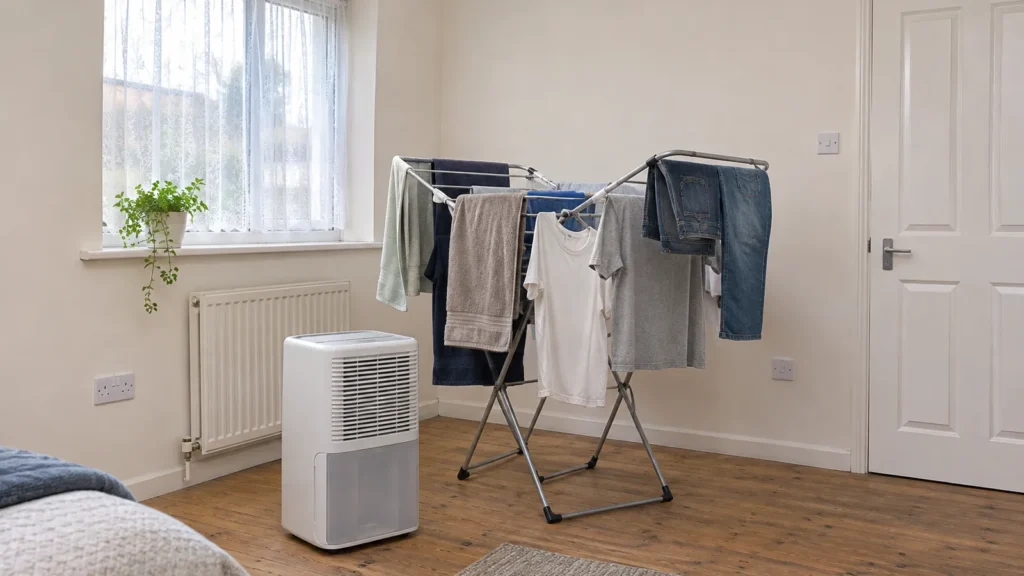
Yes, a dehumidifier dries clothes indoors, typically in around 4–8 hours for a normal load in a small closed room, compared with a day or more on an airer alone. It also stops the moisture from your washing turning into condensation and mould. A compressor dehumidifier uses roughly 150–250W, so a 6-hour drying session costs around 25–40p at current UK prices, much less than most tumble dryers.
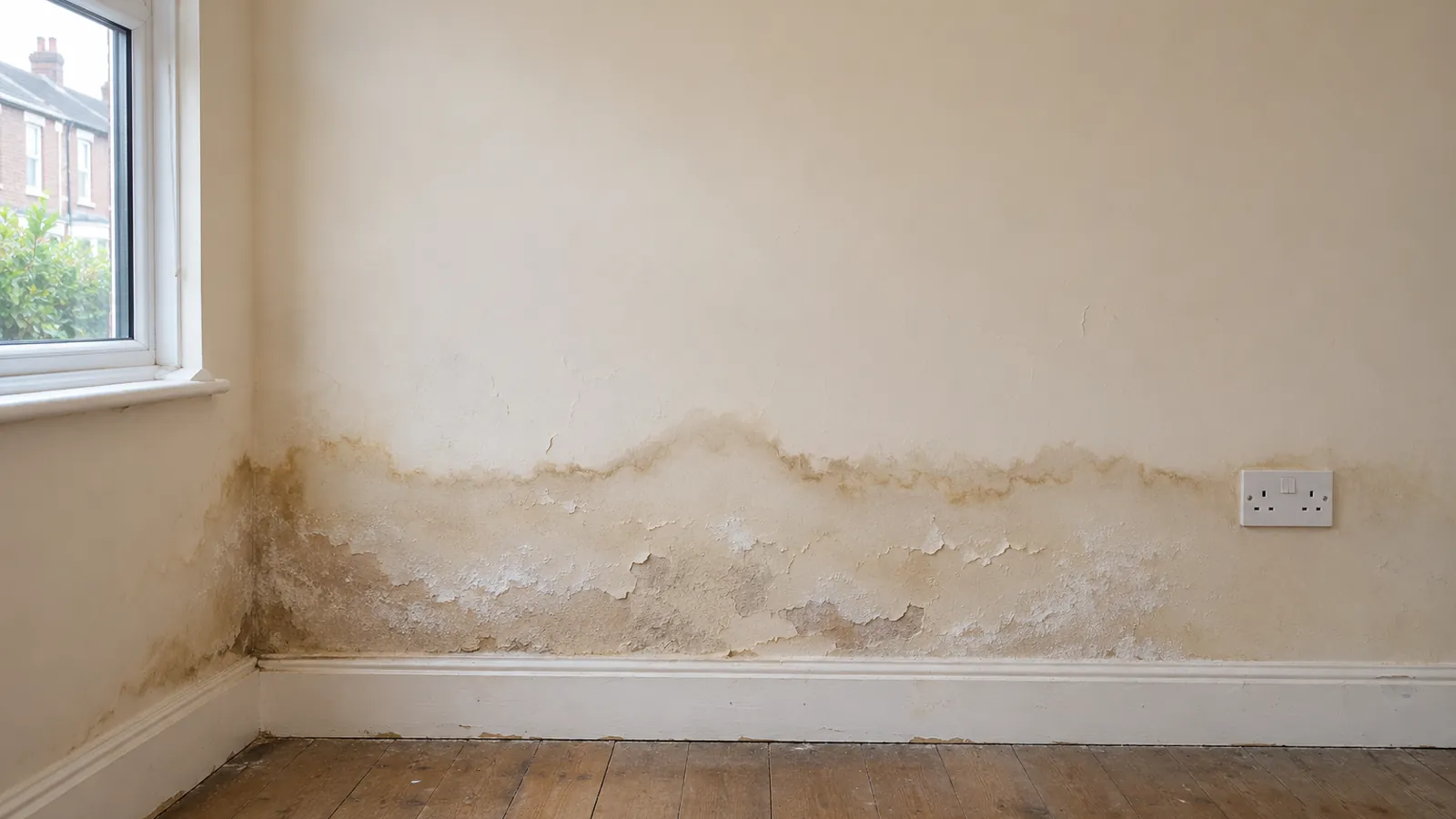
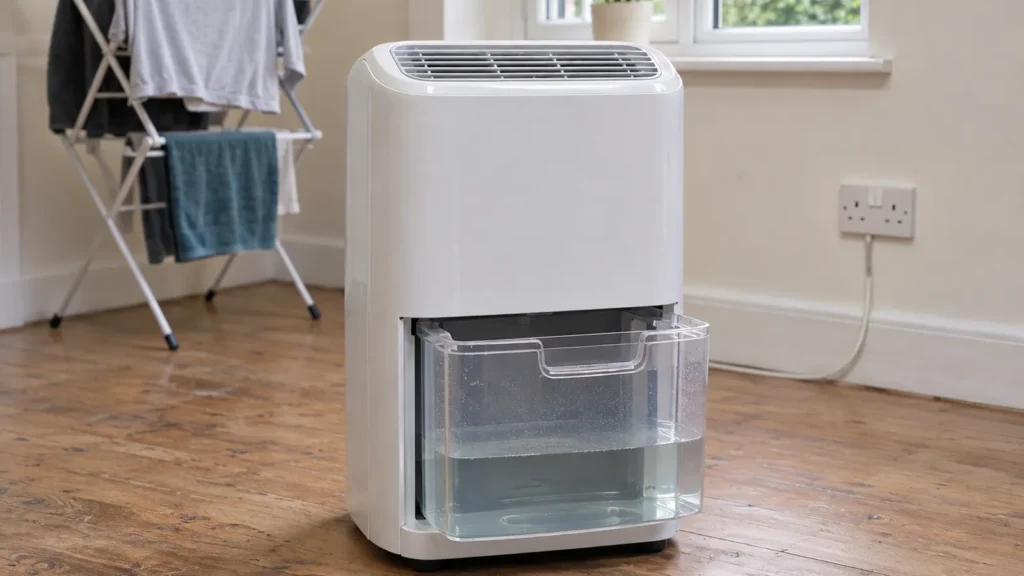
Drying clothes on radiators and airers is one of the biggest causes of condensation and mould in UK homes: every drop of water in your washing ends up in the air. A dehumidifier solves both problems at once. It pulls that water out of the air into its tank, and the drier air pulls moisture out of your clothes faster.
How a dehumidifier dries clothes
Clothes dry by evaporation, and evaporation slows right down when the air around them is already humid. In a closed room with wet washing, humidity can climb above 80% within an hour, and the clothes barely dry.
A dehumidifier constantly removes water vapour from the air, keeping humidity low, so moisture keeps evaporating out of the fabric. Many models have a laundry mode that runs the fan and compressor at full power until the room is dry.
How long does a dehumidifier take to dry clothes?
| Setup | Typical drying time (normal load) |
|---|---|
| Airer in an open, heated room, no dehumidifier | 24–48 hours |
| Airer in a small closed room, 10–12L compressor dehumidifier | 6–10 hours |
| Airer in a small closed room, 20L compressor dehumidifier on laundry mode | 4–6 hours |
| Airer in a small closed cold room, desiccant dehumidifier | 5–8 hours |
Thick towels, jeans and hoodies take longest. These are typical ranges; your results depend on the room size, temperature, how full the airer is and how well your washing machine spins.
How much does it cost to dry clothes with a dehumidifier?
Here's a rough comparison for one load of washing, at a unit rate of 26p per kWh:
| Method | Power | Time | Energy | Cost per load |
|---|---|---|---|---|
| Compressor dehumidifier, 10–12L | ~160W | 6 hours | ~1 kWh | ~25p |
| Compressor dehumidifier, 20L | ~250W | 6 hours | 1.5 kWh | ~39p |
| Desiccant dehumidifier (laundry to high) | 300–650W | 6 hours | 1.8–3.9 kWh | ~47p–£1.01 |
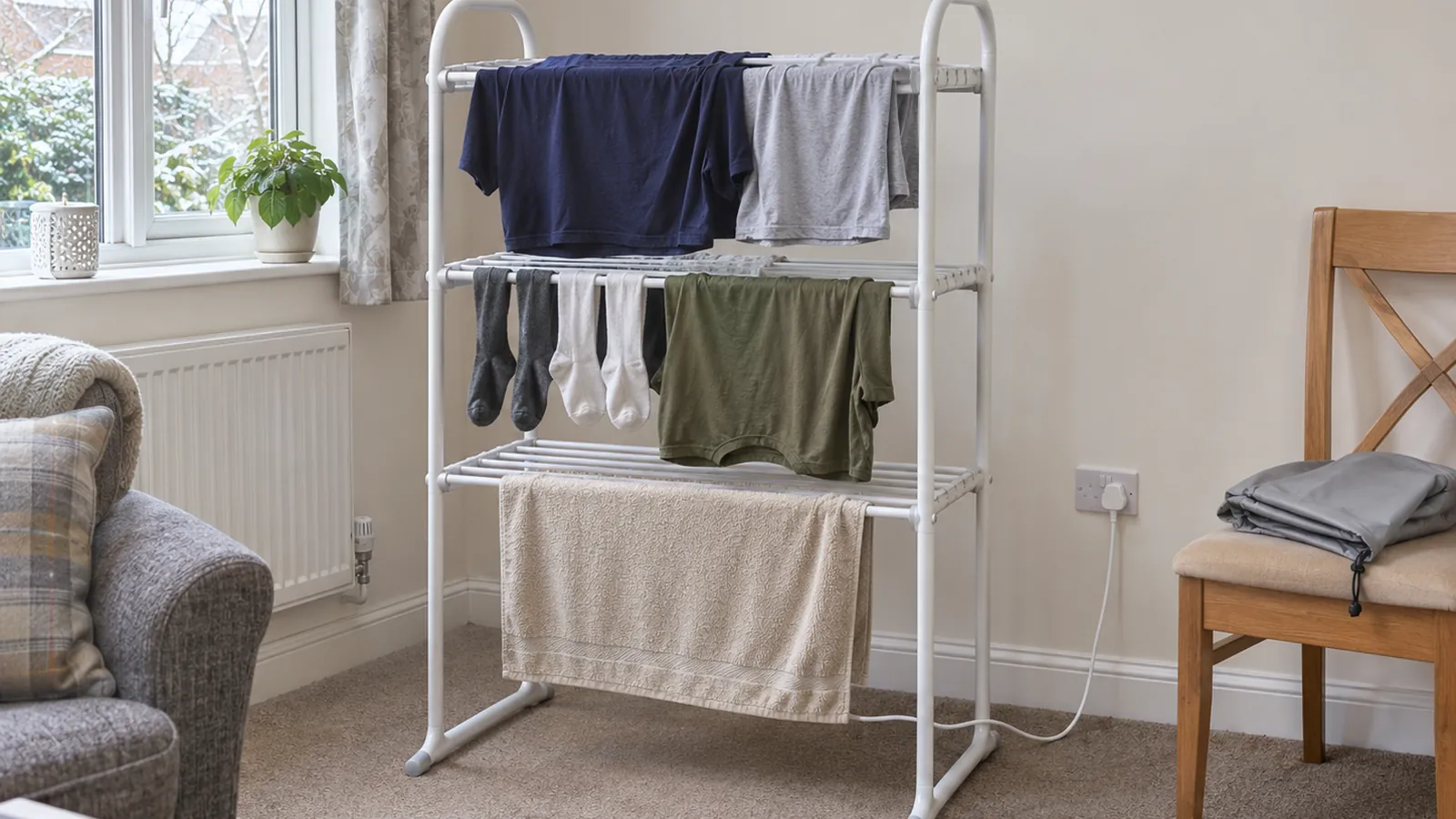
| Heated airer (no dehumidifier) | ~220W | 6 hours | 1.3 kWh | ~34p, but adds humidity to the room |
| Heat pump tumble dryer | — | 1 cycle | 1–2 kWh | ~26–52p |
| Vented or condenser tumble dryer | — | 1 cycle | 3–5 kWh | ~78p–£1.30 |
The heated airer looks cheap, but all the water from your washing goes into the room air, so on its own it makes condensation worse. Pair it with a dehumidifier if you dry indoors often.
Work out your own figures with the calculator. Choose your dehumidifier type and how many hours you run it:
Dehumidifier running cost calculator
– · Default price: Ofgem price cap average, 1 Oct–31 Dec 2026. Check your bill for your exact unit rate.
The cheapest setup of all: a compressor dehumidifier plus an airer in a small room, such as a box room, utility or bathroom, with the door shut. A smaller space means the dehumidifier dries the air (and your washing) much faster.
Compressor or desiccant for drying clothes?
- Compressor dehumidifiers are cheaper to run and work best in heated rooms (above about 15°C). For most UK homes, this is the best choice for drying washing.
- Desiccant dehumidifiers use more electricity, but keep working well in cold rooms, garages and conservatories, and give off gentle warmth that helps clothes dry. Good for unheated spaces or if you keep the heating low.
How to dry clothes with a dehumidifier: best setup
- Spin well first. Use the fastest spin your fabrics allow: less water in = shorter drying time.
- Pick a small room and shut the door and window.
- Space clothes out on an airer so air can move between them. Don't overload it.
- Put the dehumidifier close, about 1 metre away, blowing its dry air towards the washing if it has a directional vent.
- Use laundry mode or set the target humidity to the lowest setting.
- Empty the tank or use continuous drainage if your model has it.
- Turn clothes over halfway through for the thickest items.
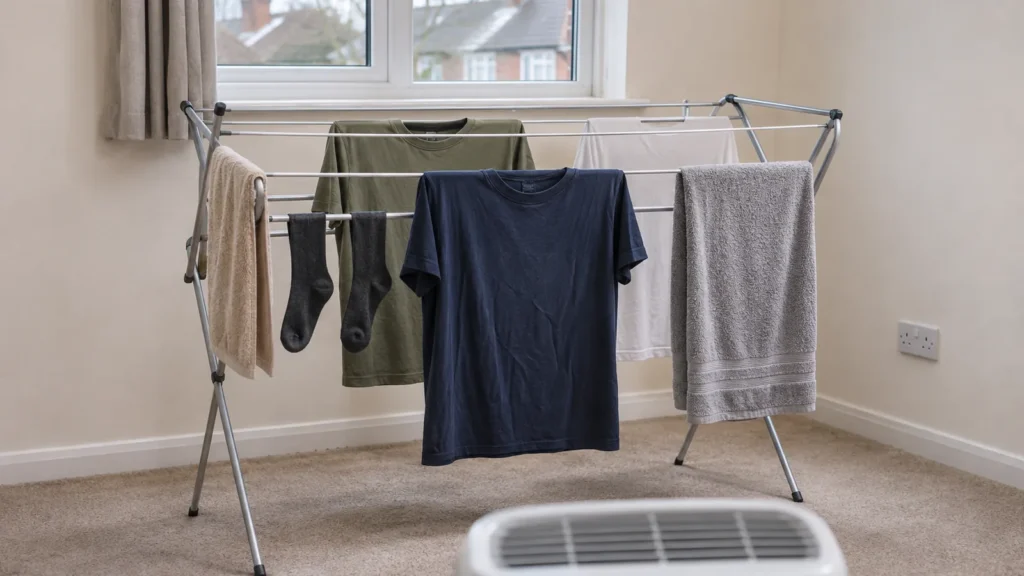
Don't put a dehumidifier where its vents are blocked, and don't cover it with washing. Keep electrical appliances away from water, and follow the manufacturer's guidance on use in bathrooms.
FAQs
Can a dehumidifier dry clothes without heating?
Yes, though more slowly in a cold room. In unheated spaces a desiccant dehumidifier works better than a compressor model, and its slight warmth helps.
Is it cheaper to use a dehumidifier or a tumble dryer?
For most homes, a compressor dehumidifier is cheaper per load than a vented or condenser tumble dryer, and similar to a heat pump tumble dryer. It also reduces condensation and mould, which a vented dryer doesn't.
What size dehumidifier do I need to dry clothes?
A 10–12 litre model handles a flat or small house and the odd load of washing. For a family drying washing most days, a 20 litre model with a laundry mode dries faster.
Do dehumidifiers make clothes smell?
No. Washing that dries slowly in humid air is what smells musty. Drying faster with a dehumidifier usually makes clothes smell fresher.
Can you leave a dehumidifier on all night?
Yes. Dehumidifiers are designed to run for long periods. Most switch off automatically when the tank is full or the target humidity is reached. Choose a quiet model or night mode for bedrooms.
- A dehumidifier dries a load of washing in roughly 4–8 hours in a small closed room.
- A compressor model costs around 25–40p per drying session at current prices.
- It's usually cheaper than a vented or condenser tumble dryer, and it cuts condensation and mould.
- Small room, door shut, clothes spaced out, laundry mode on.