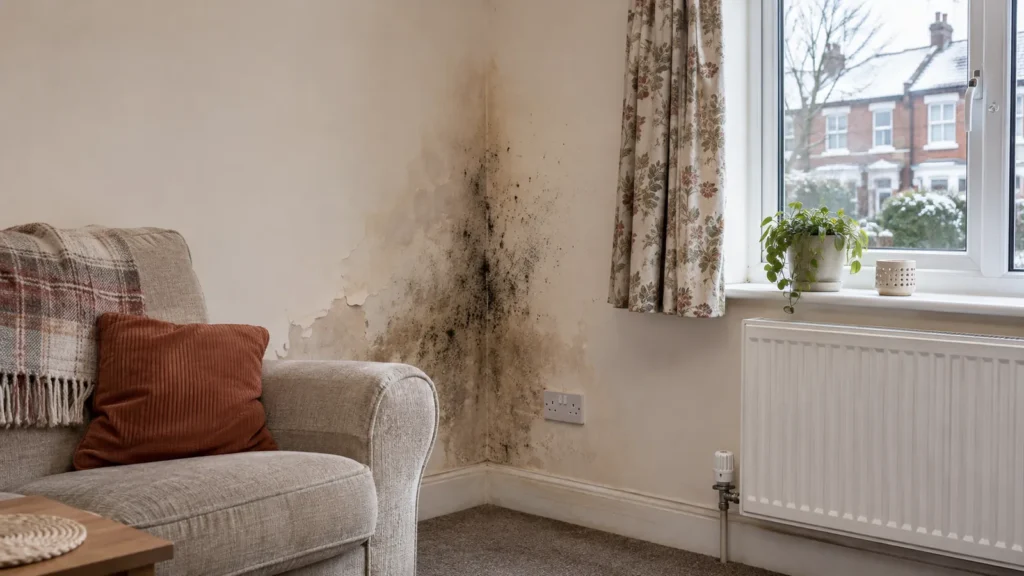
Damp and mould are the most common problems in British homes. Our climate is mild and wet, many houses are old and draughty or newly sealed up, and we dry clothes indoors for half the year. The result: water vapour with nowhere to go.
The good news is that most damp and mould in UK homes is caused by condensation, and condensation is fixable without builders. This guide shows you how to work out which kind of damp you have, then sends you to the exact fix.
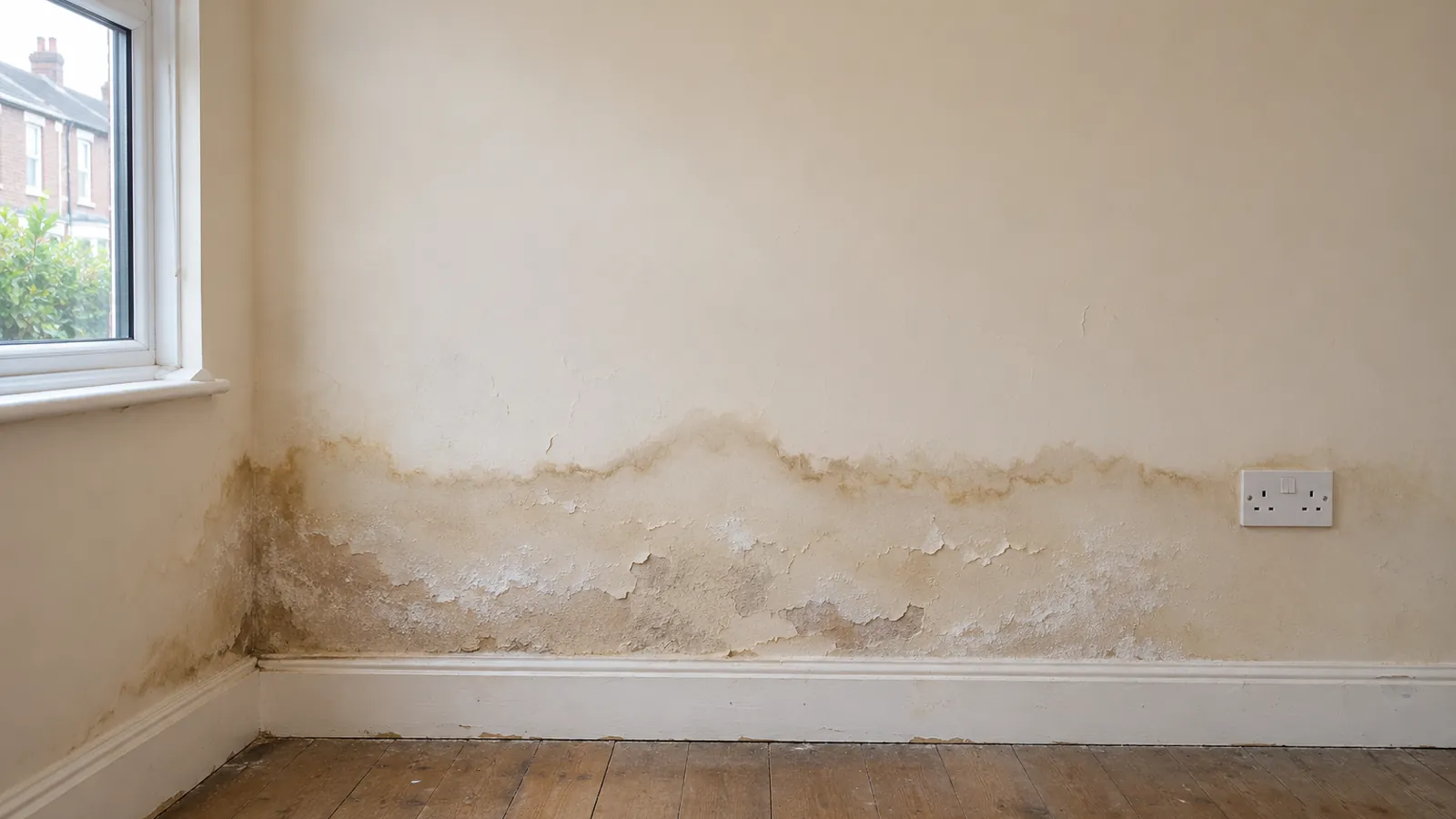
Black spots on cold walls, ceilings and window frames, worst in winter? That's almost always condensation mould: clean it, then improve ventilation and heating. A tide mark rising from the floor, or a patch that gets worse after rain? That's rising or penetrating damp, which is a building problem that needs repairing at the source.
Start here: the most-needed fixes
- Mould on the bathroom ceiling: how to remove it and stop it coming back
- Condensation on the inside of windows: why it happens and how to stop it
- Does a dehumidifier dry clothes? (And how long it takes)
Which type of damp do you have?
| What you see | Likely cause | How common | What to do first |
|---|---|---|---|
| Black spots in corners, behind furniture and on window reveals, worse in winter | Condensation | Very common | Ventilate, heat steadily, cut moisture, then clean the mould |
| Windows streaming with water every morning | Condensation | Very common | Open trickle vents, use extractor fans, run a dehumidifier (guide) |
| Damp patch that grows after heavy rain, on one wall or the ceiling | Penetrating damp | Common | Find the leak outside: gutters, roof, pointing, render, window seals |
| Sudden wet patch in any weather, often below a bathroom or pipes | Plumbing or heating leak | Common | Turn off the water and call a plumber |
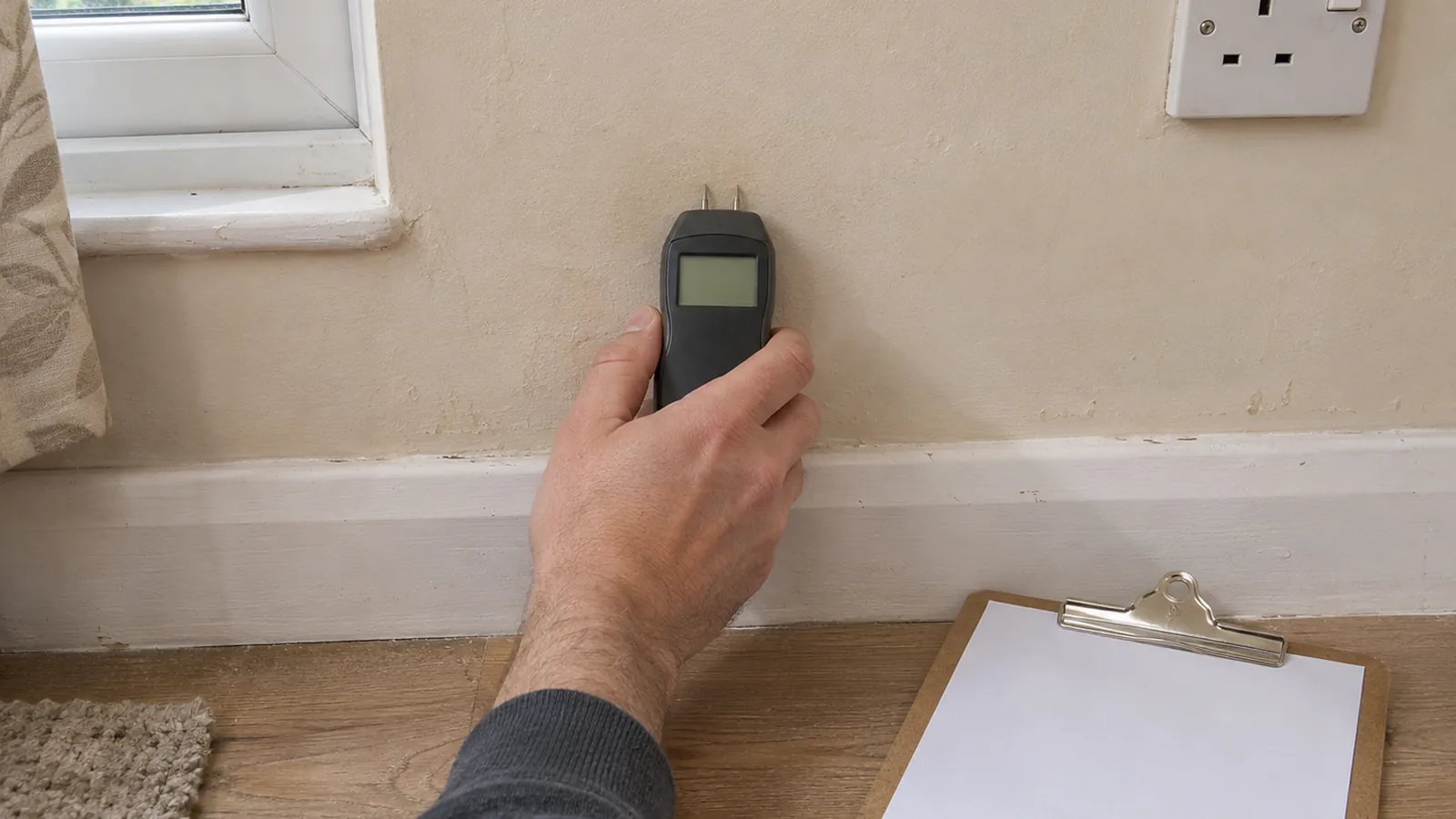
| Tide mark up to about 1 m above the floor, white salty bloom, crumbly plaster | Rising damp | Rare | Check outside ground levels and air bricks first, then get an independent damp survey |
Buy a £10 digital hygrometer. If your living rooms sit above 60% relative humidity most of the time, condensation is your main enemy, whatever a damp-proofing salesperson tells you.
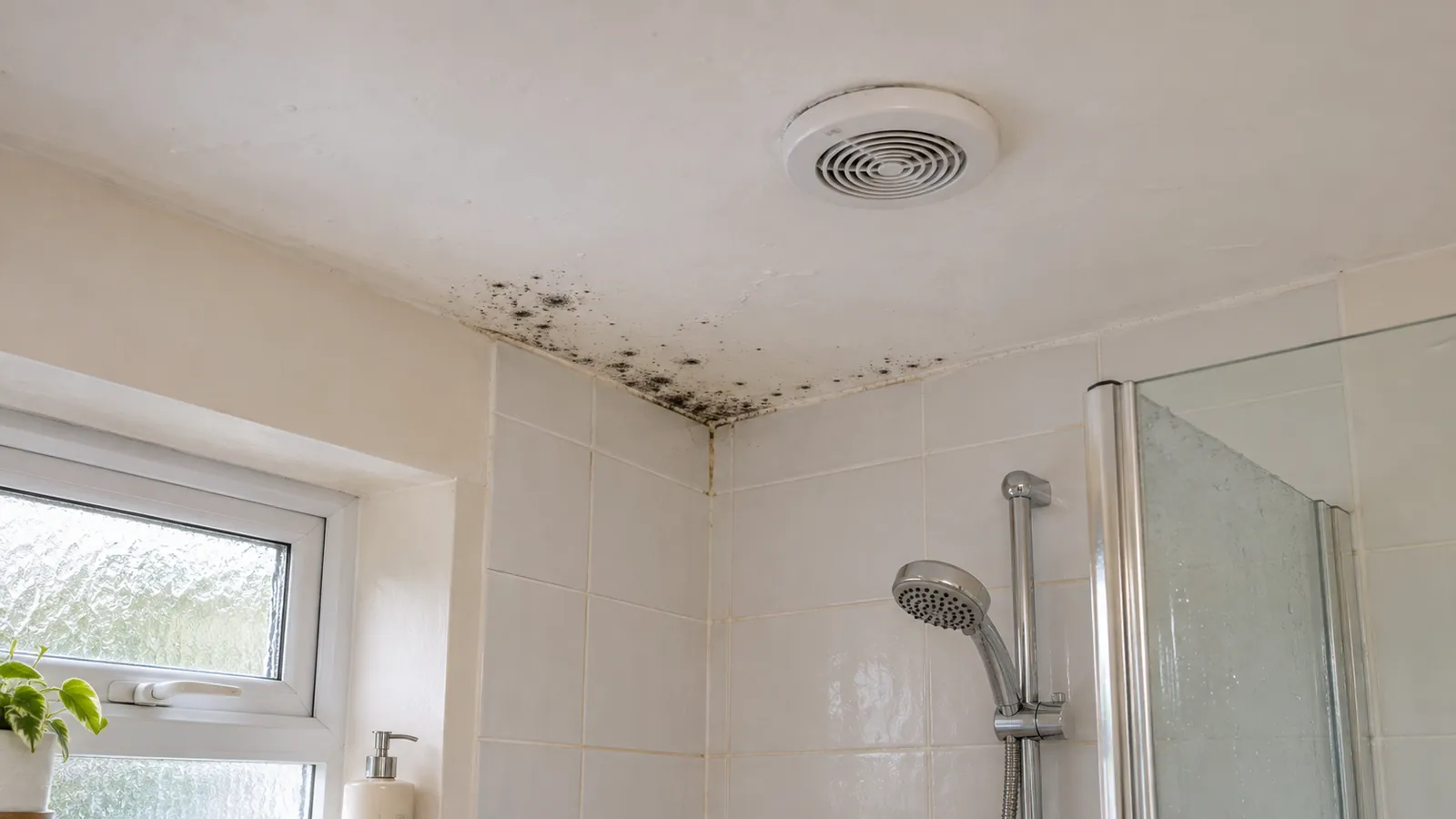
Black mould
How to remove black mould safely, which products work, and how to stop it returning on ceilings, walls, sealant and fabrics.
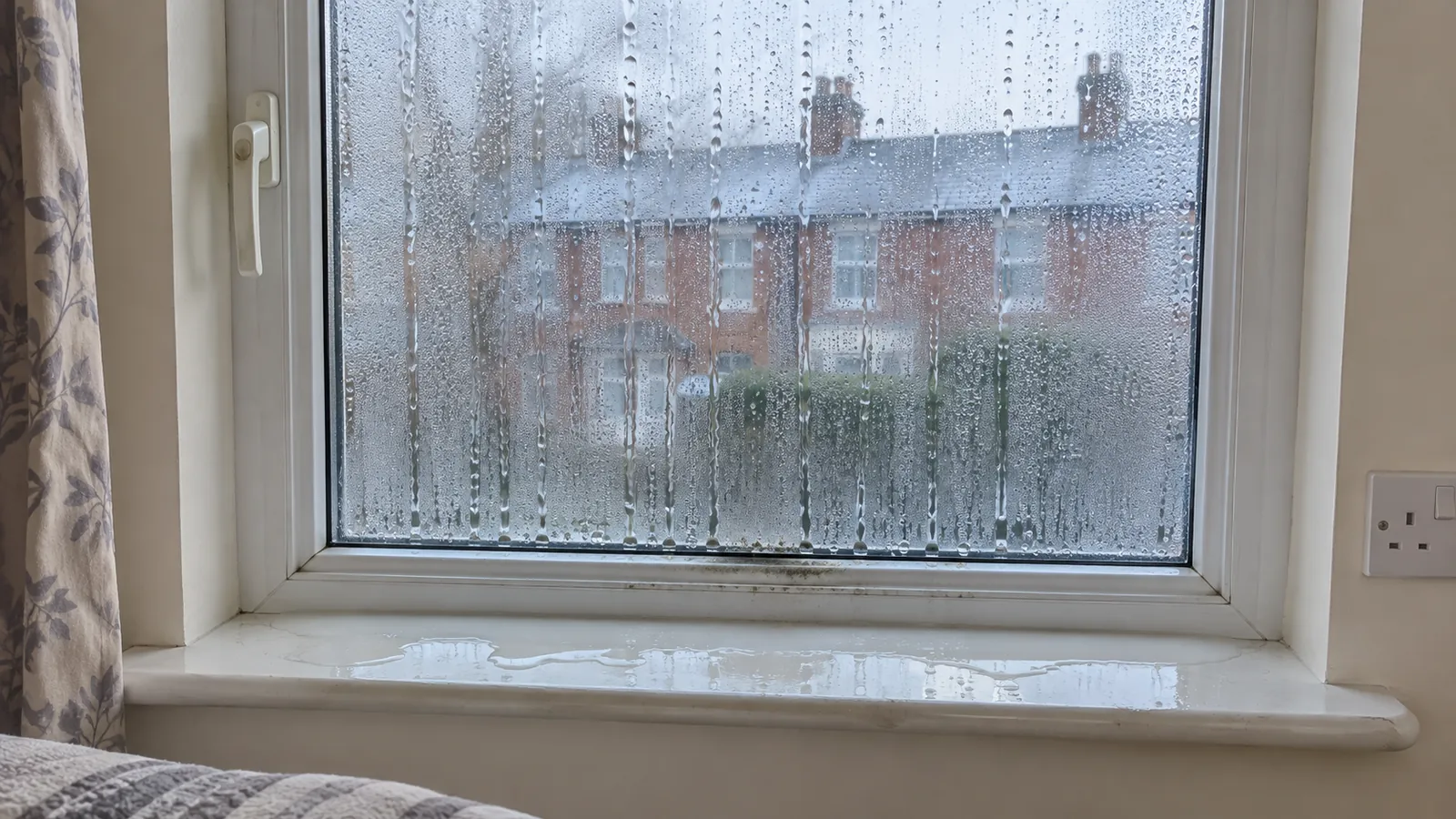
Condensation
Why windows and walls get wet, the role of humidity and cold surfaces, and the cheapest ways to cut condensation for good.
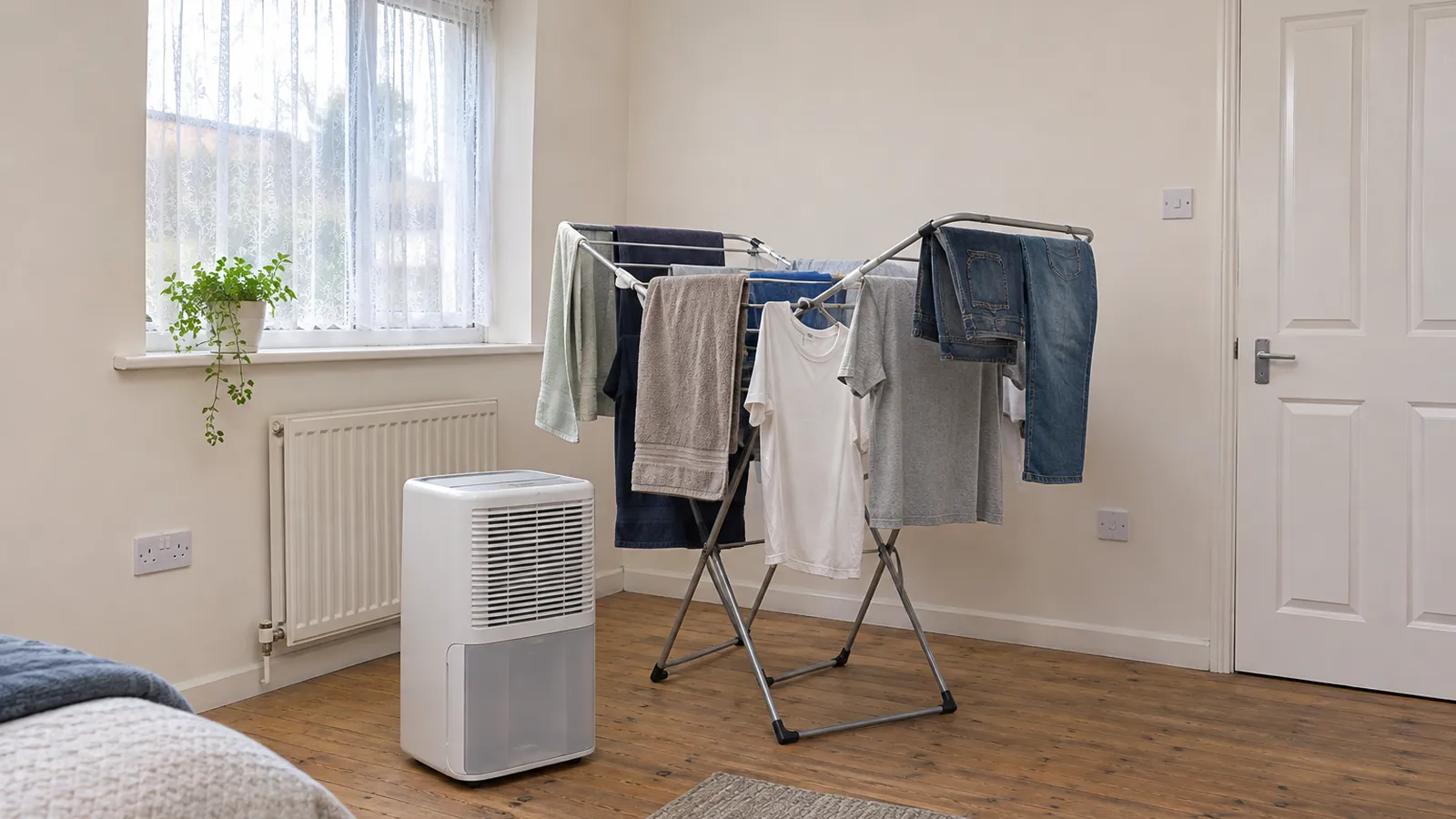
Dehumidifiers
Compressor or desiccant, what size you need, what they cost to run, and how to use one to dry washing.
Dehumidifier running cost calculator
– · Default price: Ofgem price cap average, 1 Oct–31 Dec 2026. Check your bill for your exact unit rate.
Damp walls and ceilings
Damp patches, musty smells, flaking paint and what a damp survey costs.
 Damp & MouldHow Much Does a Damp Survey Cost? (UK Prices, and Free vs Independent)What a damp survey costs in the UK, what you get for your money, and why a free survey from a damp-proofing company can end up costing you thousands.5 min readRead
 Damp & MouldRising Damp: Signs, Causes, Treatment Cost and Whether You Really Have ItReal rising damp is much rarer than damp-proofing salespeople suggest. How to tell the signs apart, what causes it, how to fix it and what it really costs.6 min readRead
Rising and penetrating damp
How to tell genuine rising damp from condensation, what treatment really costs, and how to fix penetrating damp at the source.
- Damp & MouldHow Much Does a Damp Survey Cost? (UK Prices, and Free vs Independent)What a damp survey costs in the UK, what you get for your money, and why a free survey from a damp-proofing company can end up costing you thousands.5 min readRead
- Damp & MouldRising Damp: Signs, Causes, Treatment Cost and Whether You Really Have ItReal rising damp is much rarer than damp-proofing salespeople suggest. How to tell the signs apart, what causes it, how to fix it and what it really costs.6 min readRead
Mould on household items
Washing machine seals, shower sealant, pink and orange mould, fabrics and furniture.
Guides in progress. Our editor is researching this topic now.
Request a guide →Renting with damp and mould
If you rent, your landlord is responsible for repairing the causes of damp, such as leaks, broken extractor fans and failed windows, and must keep the home fit to live in. In social housing in England, Awaab's Law (in force since 27 October 2025) sets legal deadlines for landlords to investigate and fix damp and mould hazards. Report problems in writing, with photos and dates.
Mould spores can trigger asthma and allergies and are particularly risky for babies, older people and anyone with a weakened immune system. If mould covers a large area (more than about 1 m²), keeps returning, or someone in the home is unwell, get professional help rather than cleaning it yourself.
FAQs
Is black mould dangerous?
Mould releases spores that can cause breathing problems, allergic reactions and asthma attacks. It's a health hazard rather than something to ignore. Remove it promptly and, more importantly, fix the moisture problem that lets it grow.
Does bleach kill mould?
Bleach removes the stain on hard, non-porous surfaces like tiles, but it doesn't soak into porous surfaces such as plaster and grout well. Dedicated mould removers (bleach-based or not) are designed to cling and work longer. Never mix bleach with other cleaners.
What humidity level stops mould?
Keep indoor relative humidity between 40% and 60%. Mould grows readily when surfaces stay above roughly 70–80% humidity for long periods, which is why cold corners and window reveals go first.
Will a dehumidifier stop mould?
A dehumidifier lowers humidity, which slows or stops new mould growth, especially when drying clothes indoors. It won't remove existing mould, and it won't fix a leak or rising damp.