A heated clothes airer is worth it if you dry washing indoors and want to avoid a tumble dryer. Most use 120–300W, so they cost about 3–8p an hour to run (roughly 20–45p for a full load) at current UK prices. They dry clothes in around 4–10 hours, faster with a cover over the top. The catch: all the water from your washing goes into the room, so in a damp home pair it with a dehumidifier or an open window.
Heated airers are one of the UK's most-searched home products every winter, and for good reason: they're cheap to buy, cheap to run and fold flat. But they're often oversold as a tumble dryer replacement. Here's an honest look at what they cost, how well they work and which type suits your home. For more ways to dry clothes cheaply, see our energy saving guide.
How a heated airer works
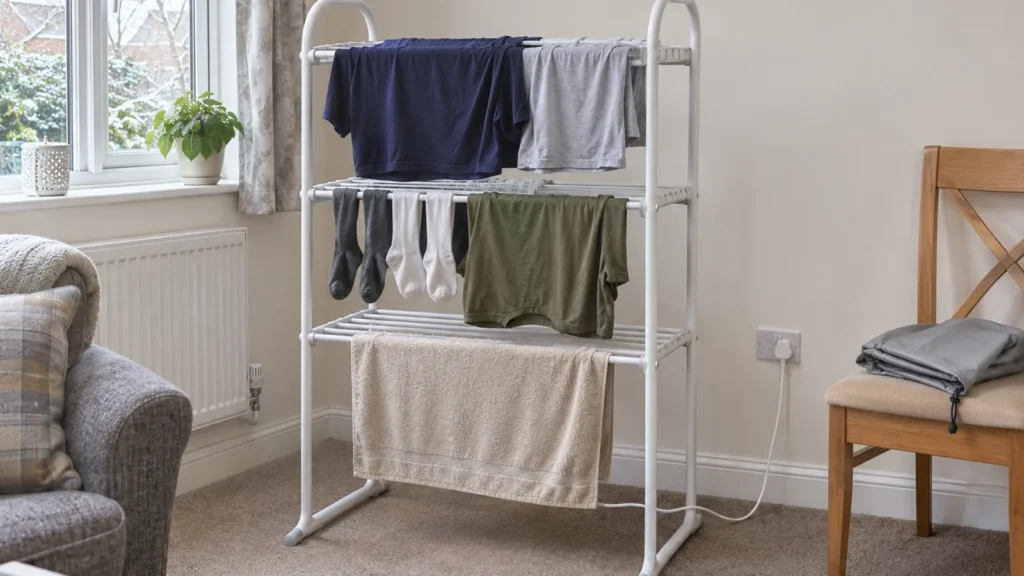
A heated airer is a clothes rack with low-temperature heating elements inside its rails. The rails get warm to the touch (typically up to about 50–70°C, not hot enough to scorch fabric), which speeds up evaporation from the clothes hung over them.
Because they only warm the rails rather than blowing hot air, they use very little power compared with a tumble dryer. But they don't remove moisture from the room, which matters if you already have condensation.
How much does a heated airer cost to run?
At a unit rate of 26p per kWh:
| Airer power | Cost per hour | 6-hour load | Every day for a month (6 hrs/day) |
|---|---|---|---|
| 120W (small / single tier) | ~3p | ~19p | ~£5.60 |
| 220W (typical 2–3 tier) | ~6p | ~34p | ~£10.30 |
| 300W (large / tower) | ~8p | ~47p | ~£14.00 |
Work out your own airer's cost with the calculator. The heated airer preset is already selected:
Appliance running cost calculator
– · Default price: Ofgem price cap average, 1 Oct–31 Dec 2026. Check your bill for your exact unit rate.
Heated airer vs tumble dryer vs dehumidifier
| Method | Cost per load (approx.) | Drying time | Effect on damp |
|---|---|---|---|
| Heated airer | 20–45p | 4–10 hours | Adds moisture to the room |
| Heated airer + cover | 15–35p | 3–6 hours | Adds moisture to the room |
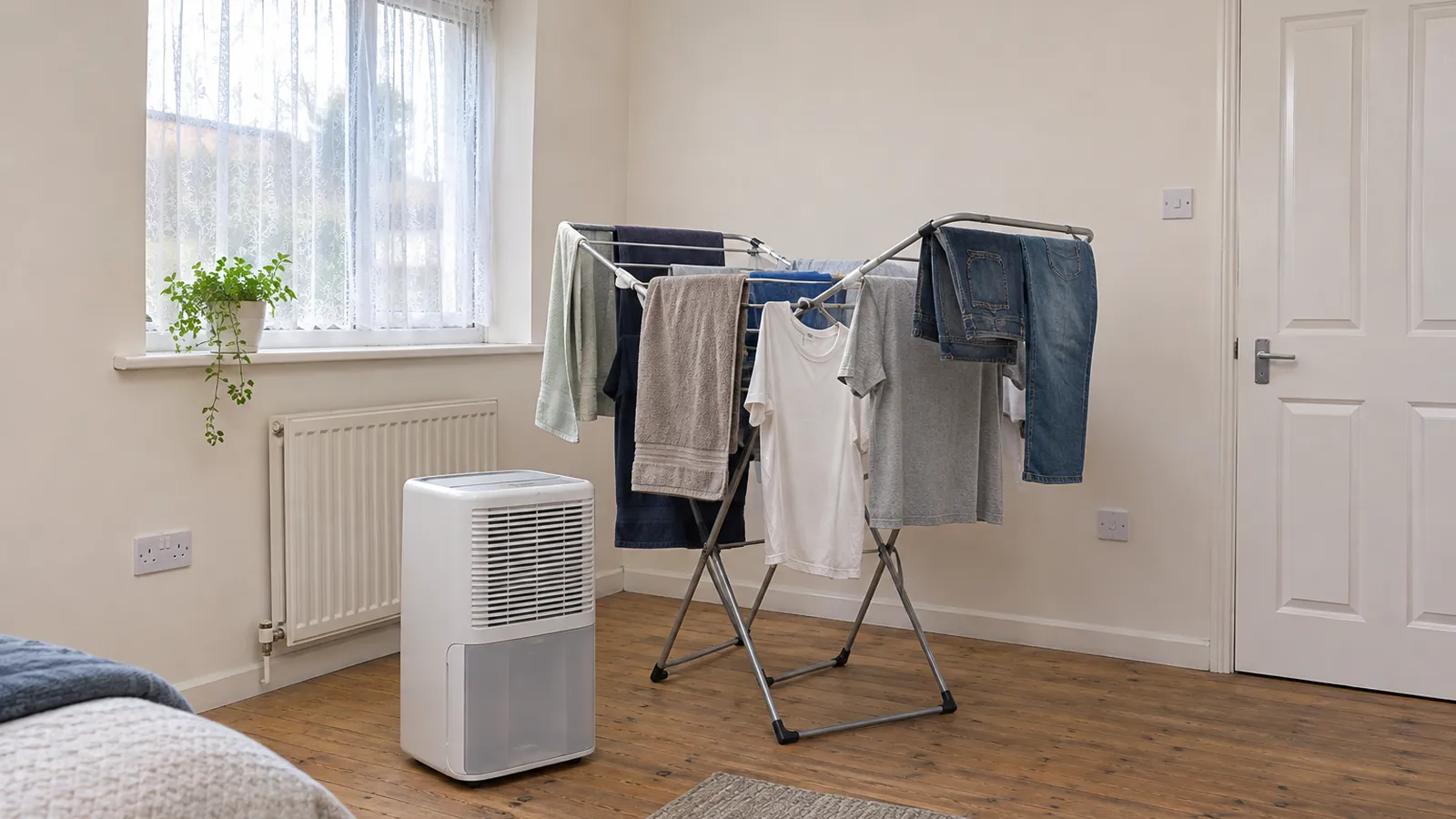
| Dehumidifier + normal airer | 25–40p | 4–8 hours | Removes moisture |
| Heat pump tumble dryer | 26–52p | 2–3 hours | None |
| Vented / condenser tumble dryer | 78p–£1.30 | 1–2 hours | Vented: none; condenser: a little |
So a heated airer is one of the cheapest ways to dry, but a dehumidifier comes close on cost and actively helps a damp home. If your windows stream with condensation every morning, read does a dehumidifier dry clothes? before buying.
Are heated airers worth it?
Worth it if:
- You dry clothes indoors most of the year and don't have space or budget for a tumble dryer.
- Your home is reasonably dry (little condensation, good ventilation).
- You can put it in a room with a window you can open, or alongside a dehumidifier.
Probably not worth it if:
- You already have condensation or mould problems: a dehumidifier will serve you better.
- You need large loads dry in a couple of hours (a heat pump dryer is faster).
- You'll overload it: heavy jeans and towels piled up won't dry evenly.
Which type of heated airer should you buy?
| Type | Typical power | Capacity | Best for |
|---|---|---|---|
| Single-tier / winged | 120–230W | Small load | Flats, occasional use |
| Two- or three-tier tower | 200–300W | Full load in a small footprint | Families, small rooms |
| Wall-mounted / radiator style | 100–200W | Towels and a few items | Bathrooms, utility rooms |
| Airer with dryer cover | Same as base airer | As base airer | Fastest drying for the cost |
Lakeland's Dry:Soon range is the best-known heated airer in the UK, which is why so many people search for it by name. But plenty of supermarket and high-street brands use the same basic design, so compare on the features below rather than the name.
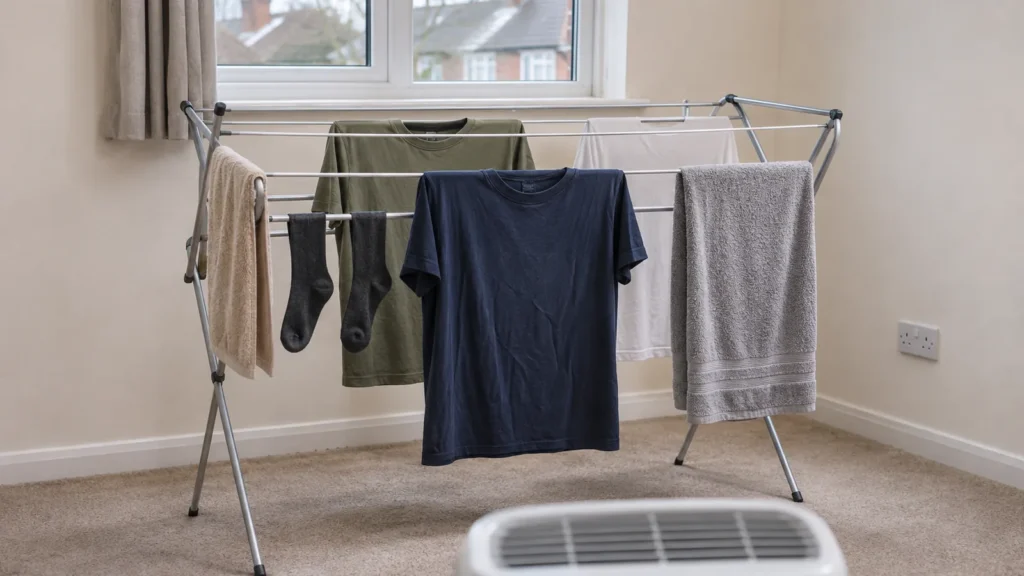
What to look for
- Wattage: 200–300W is the sweet spot for a full load. Below about 150W, thick items take a long time.
- Rail length: look at total drying space in metres, not just the number of tiers.
- Cover: a fitted cover traps warm air around the clothes like a mini drying cabinet, often cutting drying time significantly. It's the single best upgrade.
- Timer or auto shut-off: saves money and adds peace of mind.
- Stability and folding: tiered towers save floor space but should feel solid when loaded.
- Safety marks: buy from a reputable UK retailer and check for UKCA or CE marking.
The cover trick: a cover (or even a light, breathable sheet draped over the top, kept clear of the plug and cable) traps the warm air and can make a heated airer dry much faster. Add a dehumidifier in the same small room and you get the best of both: warm rails and dry air.
How to dry clothes faster on a heated airer
- Spin on the fastest setting your fabrics allow.
- Shake clothes out and hang them flat or folded once over a rail, not bunched.
- Leave gaps between items so warm air can circulate.
- Put thin items on top and heavy items on the bottom rails if it's a tiered airer.
- Use a cover or a well-ventilated small room with the door shut.
- Turn heavy items halfway through.
- Run a dehumidifier or open a window to stop the moisture causing condensation.
Don't cover the plug or cable, don't put the airer next to curtains or bedding, and don't dry items that the care label says shouldn't be heat-dried. Plug it directly into a wall socket, not an extension lead, and follow the manufacturer's instructions on maximum load.
FAQs
How much does it cost to run a heated airer?
Most heated airers use 120–300W, which costs about 3–8p an hour at 26p per kWh. A typical 6-hour drying session costs around 20–45p.
Are heated airers cheaper than tumble dryers?
Yes, much cheaper than vented or condenser tumble dryers per load, and similar to or slightly cheaper than heat pump tumble dryers, though much slower.
How long does a heated airer take to dry clothes?
Usually 4–10 hours depending on the fabric, load and room. A cover can bring it down to around 3–6 hours.
Do heated airers cause damp?
They don't create extra moisture, but the water from your washing evaporates into the room. In a poorly ventilated home that can lead to condensation and mould, so open a window or use a dehumidifier.
Is a heated airer or a dehumidifier better for drying clothes?
A heated airer dries clothes cheaply; a dehumidifier dries them for a similar cost and also removes moisture from your home. If you have any condensation problems, a dehumidifier (or both together) is the better choice.
Can you leave a heated airer on overnight?
Many are designed for long running times and have overheat protection, but check your model's instructions. Using a timer or auto shut-off model is the safest and cheapest approach.
Are heated airer covers worth it?
Yes. A cover traps warm air around your washing and is the easiest way to speed up drying without using more electricity.
- Heated airers cost about 3–8p an hour (roughly 20–45p a load).
- They're cheaper than most tumble dryers, but slower.
- A cover is the best upgrade; a dehumidifier stops the moisture causing damp.
- In a home with condensation, a dehumidifier may be the better buy.