To remove mould from a bathroom ceiling, ventilate the room, wear gloves, goggles and a mask, spray a mould remover onto the patch, leave it for the time on the label (usually 15–30 minutes), then wipe it off and let the ceiling dry fully. To stop it coming back, you have to deal with the cause: steam that can't escape, and a ceiling that's colder than the rest of the room. Run an extractor fan for at least 15 minutes after every shower, and check the loft insulation above.
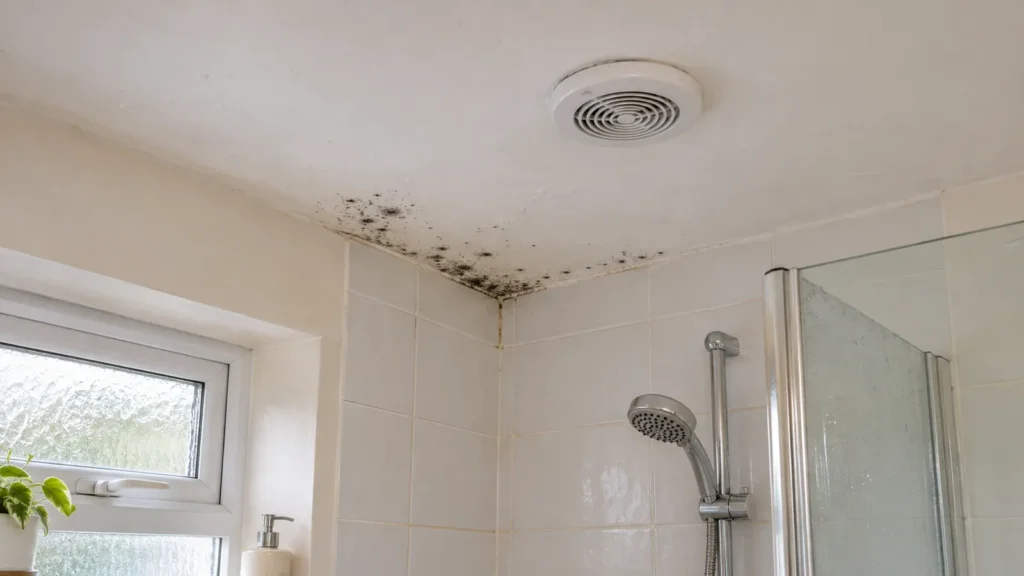
Black mould on a bathroom ceiling is one of the most common damp and mould problems in UK homes. It's rarely a sign of a leak. In most cases it's condensation: warm, wet air from showers and baths hits the coldest surface in the room and stays there long enough for mould to grow.
Why mould grows on bathroom ceilings
Mould needs three things: moisture, a surface to grow on, and time. Bathroom ceilings give it all three.
- Steam rises. The ceiling gets the warmest, wettest air in the house, several times a day.
- Ceilings are often cold. Under a loft, the ceiling is the boundary between a heated room and an unheated roof space. Where loft insulation is thin, missing or has been pushed aside (very common around the edges and over the bathroom), that patch of ceiling stays cold and water condenses on it.
- Poor ventilation. No extractor fan, a fan that's too weak, a fan that switches off with the light, or a window that stays shut in winter means moisture lingers for hours.
- Corners and edges. Look where your mould is. Mould in the corners where the ceiling meets external walls is a classic sign of a "cold bridge", a spot that loses heat faster than the rest.
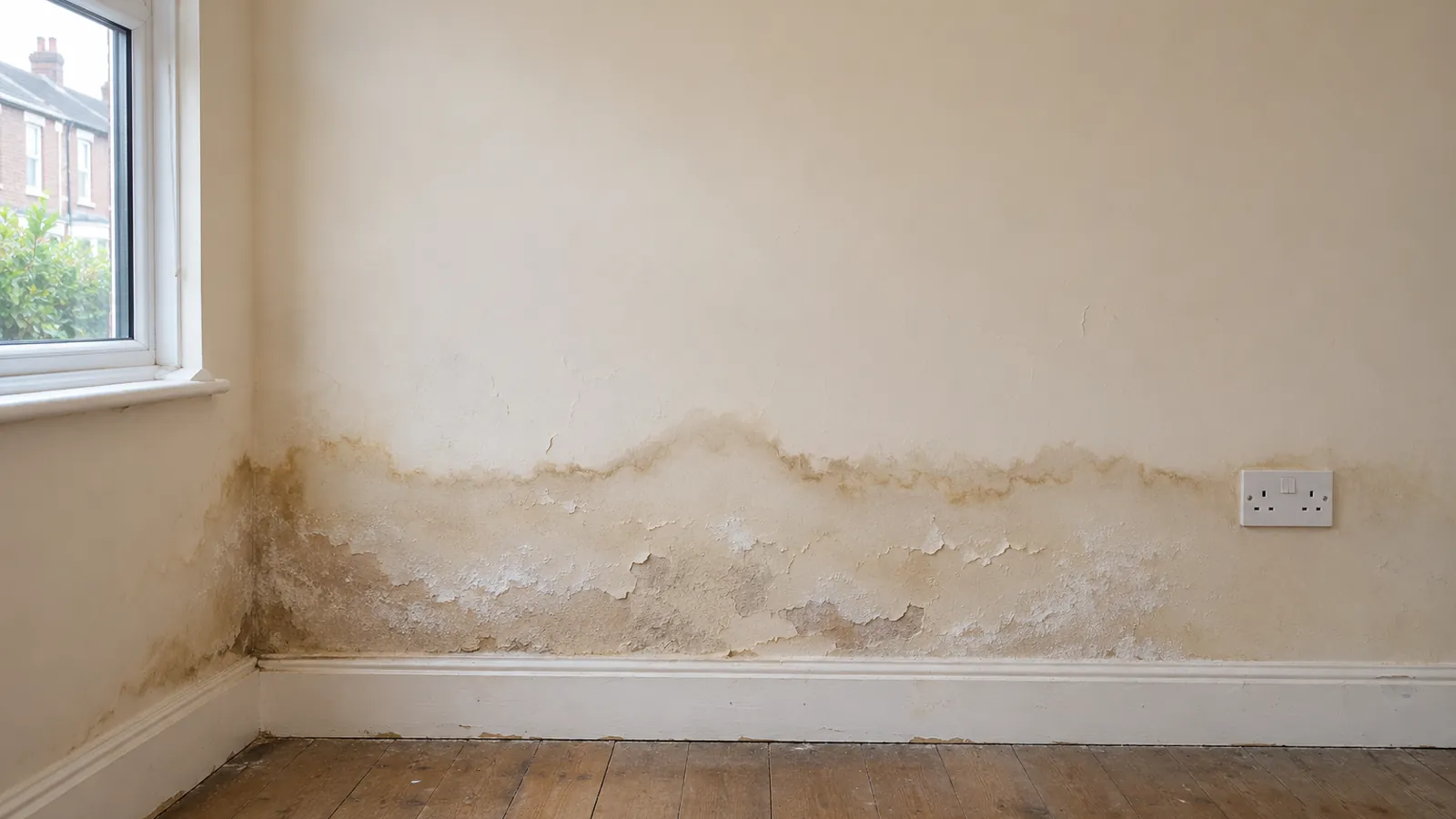
Mould in a neat line or patch that matches a joist, or right above where the shower head is? That's condensation. A brown water stain that spreads after it rains, or under a bath or shower upstairs? That's a leak. Find and fix the leak first, then clean.
What you'll need
- Mould remover spray (from about £4–£8): bleach-based for white ceilings and hard surfaces, or a non-bleach mould remover if you're worried about colour or fumes
- Rubber gloves, safety goggles and a disposable FFP2 mask (spores and spray mist land in your face when you work overhead)
- Disposable cloths or kitchen roll and a bin bag
- A sponge mop or extendable cleaning pad for high ceilings
- A step ladder that's stable on a wet floor
- Anti-mould bathroom paint (optional, for once the ceiling is clean and dry)
How to remove mould from a bathroom ceiling: step by step
- Open the window and turn on the extractor fan. Close the bathroom door so spores and fumes don't spread through the house.
- Protect yourself. Gloves, goggles and mask on. Cover the bath and floor with an old towel if you're using bleach.
- Don't dry-brush the mould. Brushing or vacuuming dry mould throws spores into the air. Always wet it first.
- Spray the mould and a little beyond it. Mould spreads further than you can see, so cover about 10 cm around the visible patch.
- Leave it to work for the time given on the product, typically 15–30 minutes. Don't let it run into your eyes if you're spraying overhead: step back or use a pad on a pole instead.
- Wipe it off with damp disposable cloths, folding to a clean side each time. Bag the cloths straight away.
- Repeat if staining remains. Stubborn grey shadows on old paint may need a second application.
- Dry the ceiling completely, ideally with the window open and the fan on for an hour. A dehumidifier speeds this up.
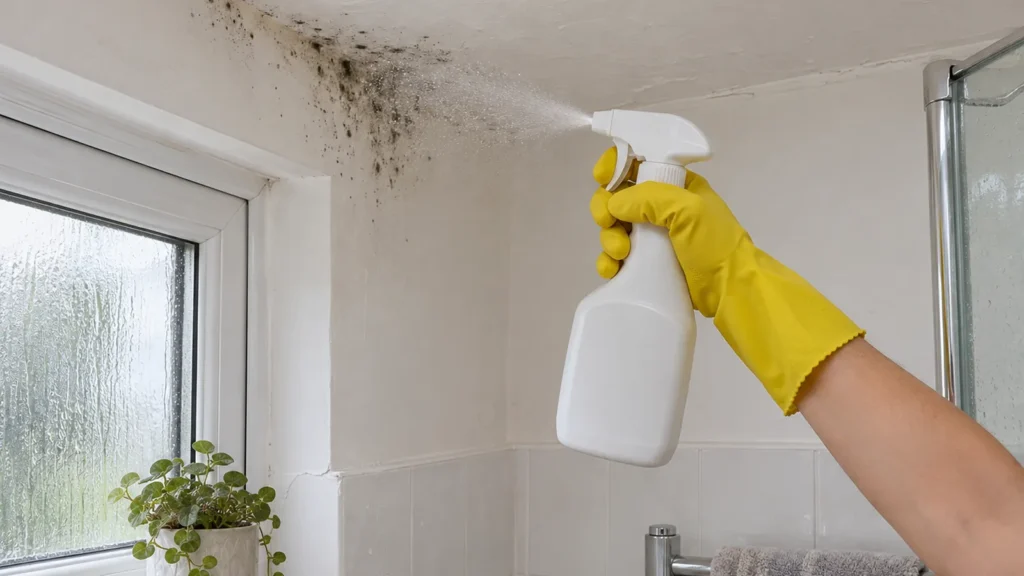
Never mix bleach with other cleaners, especially ammonia or acid-based products such as some limescale removers. It creates toxic gas. If your ceiling has an old textured coating (Artex) applied before 2000, don't scrape or sand it: it may contain asbestos. Clean the surface gently or get it tested first.
Should you paint over it?
Only after the mould is killed and the ceiling is completely dry. Painting straight over mould traps it, and it comes back through the paint within weeks.
Once the ceiling is clean and dry, a coat of anti-mould bathroom paint helps. These paints contain a fungicide and resist moisture better than standard emulsion. They slow mould down but don't fix the cause, so pair them with the ventilation fixes below.
How to stop mould coming back
This is the part that matters. Cleaning removes the mould you can see; these steps stop the next batch.
1. Run the extractor fan properly
Building Regulations (Approved Document F) expect an intermittent bathroom extractor to move at least 15 litres per second. Many older or cheap fans fall well short, or are clogged with dust.
- Hold a single sheet of toilet paper near the fan. If it isn't pulled firmly against the grille, the fan is too weak or blocked.
- Clean the grille and blades (power off at the fused spur or consumer unit first).
- Leave it running for 15–20 minutes after every shower. A fan with a humidistat or an over-run timer does this automatically. Replacing a fan is a job for an electrician.
2. Keep the steam moving out, not through the house
Close the bathroom door while showering and for 20 minutes afterwards, and open the window a little if you can. Squeegee the shower screen and tiles, and wipe any water off the ceiling with a microfibre cloth on a mop.
3. Warm the ceiling up
Get in the loft and look above the bathroom. You want an even layer of insulation (about 270 mm is the modern recommendation) right to the edges, with no bare patches. Insulation that's been squashed or pushed aside by an electrician or a storage board leaves a cold spot directly over your mould.
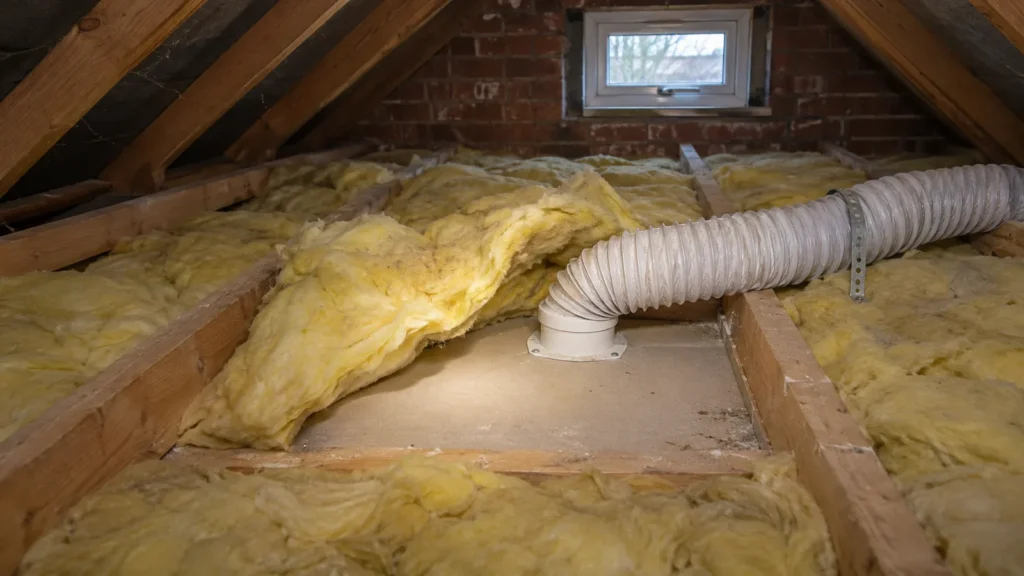
4. Keep the bathroom heated
A cold bathroom grows more mould. Keep the radiator or towel rail on in winter, even on a low setting, so surfaces stay above the temperature where water condenses.
5. Lower humidity in the whole house
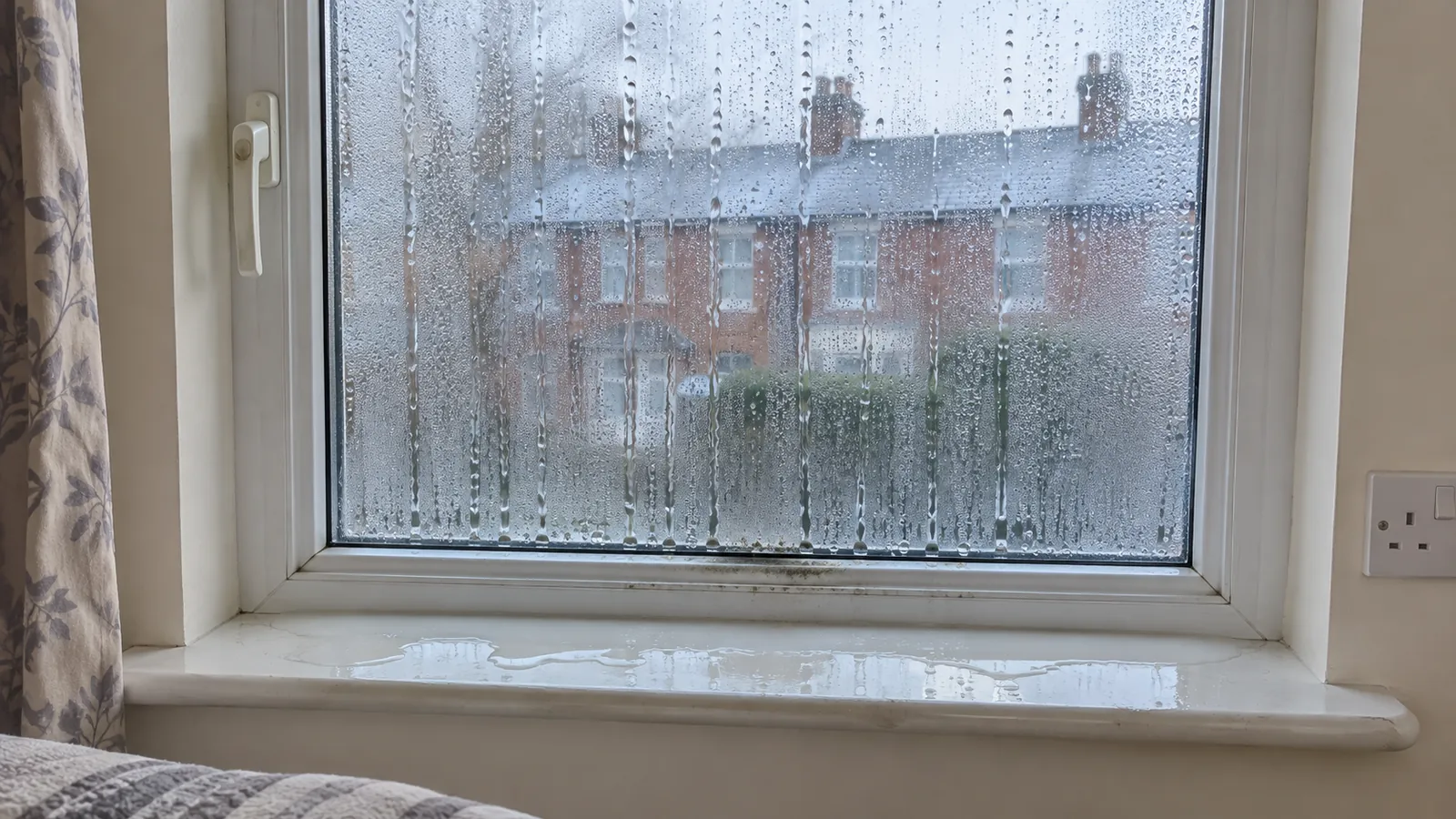
If mould is also appearing in bedrooms and on window frames, your whole house is holding too much moisture. Dry clothes outside or with a dehumidifier, use trickle vents, and read our guide to condensation on the inside of windows.
When to call a professional
- The mould covers a large area (more than about 1 m²) or comes back within weeks after cleaning and ventilating.
- You can see brown water staining, sagging or soft plaster, which suggests a leak.
- Someone in the home has asthma, a lung condition or a weakened immune system.
- You rent. Report it to your landlord in writing, with photos. Your landlord is responsible for fixing causes like broken extractor fans and leaks.
FAQs
Is black mould on a bathroom ceiling dangerous?
It can be. Mould releases spores that can trigger allergies, asthma attacks and breathing problems, and it's a particular risk for babies, older people and anyone with lung problems. Clean it promptly and fix the cause.
Does bleach kill mould on a ceiling?
Bleach removes mould staining well on painted ceilings and other hard surfaces, but it doesn't penetrate deep into porous plaster. A dedicated mould remover clings better to ceilings and is designed for the job. Always ventilate well and never mix bleach with other products.
Can I use vinegar to remove mould?
White vinegar can kill some surface mould and is a milder option, but it's less effective than a proper mould remover on established black mould and needs longer contact time. It's fine for light, early spotting.
Why does mould keep coming back on my bathroom ceiling?
Because the cause hasn't changed: too much steam and a cold ceiling. Run the extractor longer, check it's strong enough, top up the loft insulation above, and keep the room warm.
What paint stops mould on a bathroom ceiling?
Anti-mould or "kitchen and bathroom" paints contain fungicides and resist moisture. They help, but only on a clean, dry ceiling and alongside better ventilation.
- Bathroom ceiling mould is almost always condensation, not a leak.
- Wet the mould before wiping, wear PPE, and never mix bleach with other cleaners.
- The real fix is ventilation (15 l/s fan, 15–20 minutes after showers) and a warmer ceiling (insulation above).
- Paint with anti-mould paint only once the ceiling is clean and dry.