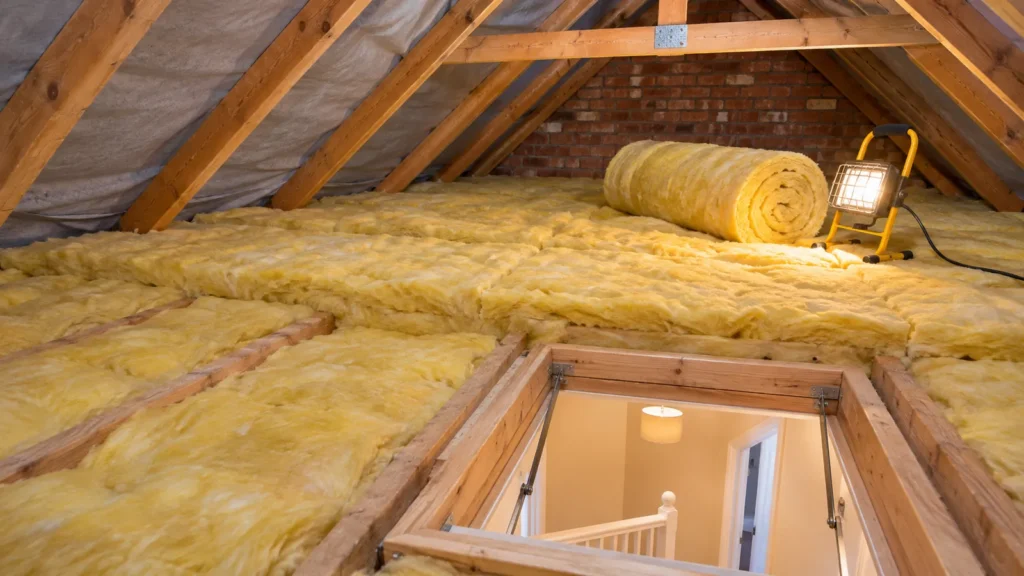
A warmer home is cheaper to heat, has less condensation and mould, and is worth more. Your Energy Performance Certificate (EPC) rates your home from A (most efficient) to G, and lists the upgrades that would improve it. This hub explains what those ratings mean and which improvements give the best return in a typical UK home.
The best-value upgrades, in order
| Upgrade | Typical cost | Why it's worth it |
|---|---|---|
| Draught-proofing doors, windows and floorboards | £ (DIY) | Cheapest saving in almost any home |
| Loft insulation topped up to 270 mm | ££ | Quick, often DIY, big heat-loss reduction |
| Cavity wall insulation | ££ | Large saving for homes built roughly 1920s–1990s with unfilled cavities |
| Hot water cylinder & pipe insulation | £ | Pennies to buy, pays back fast |
| Heating controls (thermostat, TRVs) | ££ | Stops heating empty rooms |
| Double / secondary glazing | £££ | Comfort, less condensation, noise reduction |
| Solid wall insulation (internal / external) | ££££ | Biggest impact in older solid-wall homes, but costly |
Your current EPC, with its recommended improvements and estimated savings, is free to view on the government's EPC register (search "find an energy certificate" on gov.uk).
EPC ratings
Guides in progress. Our editor is researching this topic now.
Request a guide →Windows and glazing
Guides in progress. Our editor is researching this topic now.
Request a guide →Wall insulation
Guides in progress. Our editor is researching this topic now.
Request a guide →Loft insulation
Guides in progress. Our editor is researching this topic now.
Request a guide →Room, garden room and sound insulation
Guides in progress. Our editor is researching this topic now.
Request a guide →Draught proofing
Guides in progress. Our editor is researching this topic now.
Request a guide →Grants and schemes
Guides in progress. Our editor is researching this topic now.
Request a guide →FAQs
What is a good EPC rating?
Most homes sit in band C or D: ONS figures (EPC records to March 2025) put the median home in England at C and in Wales at D. A rating of C or above is considered good. The legal minimum for private rented homes is currently E, but the government is aiming for as many as possible to reach C by 2030. A and B are typically new builds or homes with major upgrades.
What's the cheapest way to improve an EPC rating?
Low-energy lighting, loft insulation top-ups, hot water cylinder insulation and heating controls are usually the cheapest improvements. Cavity wall insulation is often the best value of the bigger jobs.
Can I get free insulation?
Possibly. The two main supplier-funded schemes, ECO4 and the Great British Insulation Scheme, closed to new installations at the end of March 2026. Support is now being set out under the government's Warm Homes Plan (published January 2026), alongside local council schemes, so check gov.uk and your council for what is currently open in your area before contacting installers.