
The recommended depth for mineral wool loft insulation in the UK is 270mm. Lay one layer between the joists and a second layer at right angles across them. In most lofts this is a job you can do yourself with loft roll for a few hundred pounds, or have fitted professionally. Keep the eaves clear for ventilation, don't squash the insulation when you board over it, and keep it off cables and downlights. Help with the cost may be available through government schemes, so check gov.uk for current schemes before you pay.
Heat rises, and in a home with a poorly insulated roof a lot of it carries on straight out through the ceiling. The Energy Saving Trust estimates that around a quarter of the heat in an uninsulated home is lost through the roof. Topping up your loft insulation is one of the cheapest, simplest ways to keep a home warmer and cut heating bills. For the wider picture on insulation, glazing and EPC ratings, see our insulation and EPC guide.
How does loft insulation reduce heat loss?
Heat always moves from warm places to cold places. In winter your rooms are warm and your loft is close to the outside temperature, so heat flows up through the ceiling plaster and out through the roof.
Loft insulation slows that flow down. Mineral wool and similar materials are full of tiny pockets of still air. Still air is a poor conductor of heat, so a thick blanket of it on top of your ceiling makes it much harder for heat to escape.
That means:
- Rooms stay warm for longer after the heating goes off
- The boiler or heat pump runs less to hold the same temperature
- Upstairs ceilings stay warmer, which helps reduce condensation and mould on them
The key is thickness. Insulation works by trapping air, so thin or squashed insulation traps less air and does far less good.
How much loft insulation do you need?
The Energy Saving Trust recommends 270mm of mineral wool insulation for a loft. Older homes often have much less: 25mm, 50mm or 100mm was common in the past, and many lofts have been disturbed by later work.
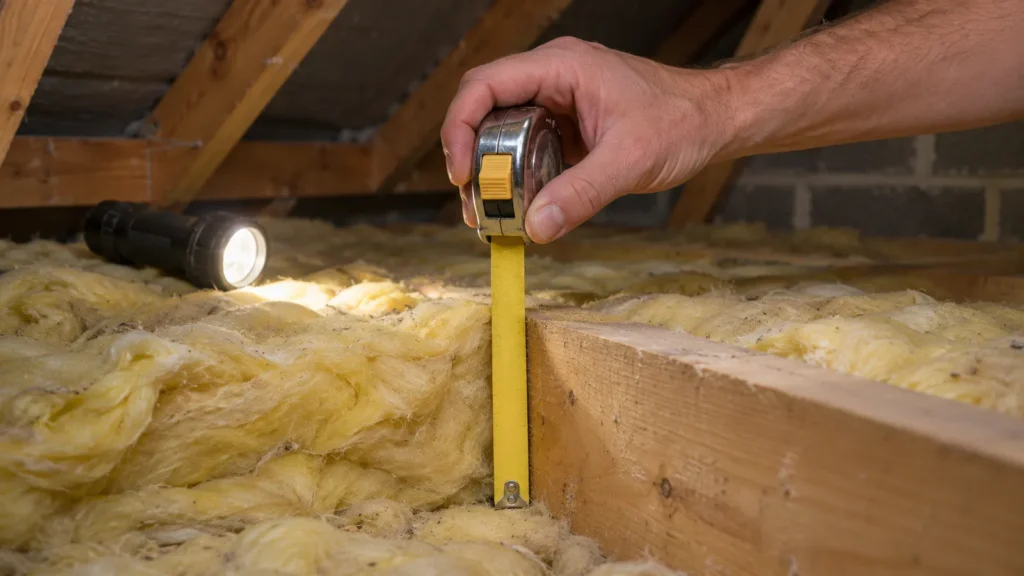
Check what you have now:
- Go into the loft with a torch and wear gloves.
- Push a ruler or tape measure down through the insulation until it hits the ceiling plaster.
- Check several spots, including near the hatch and in the far corners, where it's often thinner.
| Current depth | What to do |
|---|---|
| None | Full install: 100mm between joists plus 170mm across them |
| Up to about 100mm | Top up with a 170mm or 200mm layer across the joists |
| 150–200mm | A top-up is still worthwhile, especially if it's patchy |
| 270mm or more, evenly laid | You're done. Check the hatch, pipes and tank instead |
Your loft hatch is often the weak spot. A bare hatch lets warm air pour straight into the loft. Stick a piece of rigid insulation board to the top of the hatch and fit a foam or brush draught seal around the frame.
Types of loft insulation
Loft roll insulation (mineral wool)
Loft roll is the most common choice and the easiest for DIY. It's made from glass wool or rock wool and comes in rolls of different thicknesses, usually 100mm, 150mm, 170mm and 200mm. Rolls are typically sized to fit between standard joist spacings.
It's cheap, doesn't burn easily, and you can lay it without special tools. The downsides are that it's itchy to handle and it must not be compressed.
Sheep's wool and recycled insulation
Sheep's wool and recycled plastic insulation rolls are nicer to handle and don't irritate the skin. They cost more for the same thickness. They're a good option if you're sensitive to mineral wool or want a natural material.
Rigid insulation boards
PIR boards (foil-faced foam boards) give more insulation for the same thickness. They're used where space is tight, such as in sloping ceilings, on the loft hatch, or between rafters in a loft conversion. They're more expensive and fiddlier to cut and fit.
Blown insulation
Installers can blow loose mineral wool or cellulose fibres into the loft with a machine. It fills awkward gaps well and is useful in lofts with very low headroom where you can't crawl in to lay rolls.
What's the best loft insulation material in the UK?
For a standard cold loft (one you don't live in), mineral wool loft roll is usually the best value. It's what most installers use and what most guidance is written around. Pick sheep's wool if you want a natural, easy-to-handle material and don't mind paying more. Use rigid boards only where space is limited.
Spray foam insulation sprayed onto the underside of the roof has caused problems for many UK homeowners. It can trap moisture against roof timbers and hide their condition, and some mortgage lenders and surveyors have had concerns about homes that have it. Think carefully and get independent advice before having it installed. Be wary of cold callers offering it.
How much does loft insulation cost?
Prices vary by region, loft size and access. These ranges are rough guides for a typical semi-detached house in 2026:
| Option | Rough cost |
|---|---|
| Loft roll, per roll (depending on thickness and brand) | £20–£45 |
| DIY top-up for a typical semi | £150–£400 in materials |
| DIY full install from nothing | £300–£600 in materials |
| Professional install or top-up | £400–£1,000 |
| Loft insulation removal (old or contaminated insulation) | £600–£1,500+ |
| Insulated loft boarding on legs (per m²) | £20–£40 DIY, more if fitted |
Check the coverage printed on each roll. Thicker rolls cover a smaller area, so you'll need more rolls of the thicker layer.
How much does loft insulation save?
The amount you save depends on how much insulation you have now, the size of your home, how you heat it and the price of energy. Going from no insulation to 270mm saves far more than topping up from 200mm. The Energy Saving Trust publishes estimated savings by house type on its website, so check there for current figures rather than relying on old numbers.
For most homes with thin or patchy insulation, the materials pay for themselves within a few years. You can estimate what your heating costs now with our running cost calculator.
Can you get a grant for loft insulation?
Possibly. In recent years, free or cheap loft insulation has come through energy-supplier schemes, mainly for households on certain benefits, on lower incomes, or in homes with a low EPC rating. The Great British Insulation Scheme closed in March 2026, and ECO4 is due to end on 31 December 2026. The government's Warm Homes Plan, published in January 2026, is set to replace them, but its details and start dates are still being rolled out.
Some councils also run their own schemes. Better loft insulation can also lift your EPC rating, and it works best alongside draught-proofing. Check gov.uk for current schemes (search "apply for support to insulate your home") or contact your energy supplier and council.
Be careful with cold callers who say a "government scheme" will insulate your loft for free. Genuine schemes exist, but so do scams. Don't give personal or bank details over the phone. Find the scheme yourself on gov.uk and contact it directly.
DIY or professional: which should you choose?
When DIY makes sense
Laying loft roll is one of the easier home improvement jobs if:
- The loft has a proper hatch and a ladder
- Joists are at regular spacing and easy to walk on with crawl boards
- There's enough headroom to kneel and work
- There are no signs of damp, leaks or rot in the roof
- You're happy working in a hot, dusty, cramped space for a few hours
When to use a professional
Get an installer if:
- Headroom is very low or access is difficult
- The existing insulation is wet, mouldy, or contaminated with rodent droppings
- There's loose, granular insulation that might be vermiculite (see below)
- You have a flat roof, a room in the roof or sloping ceilings
- There are signs of a roof leak or condensation problem that needs fixing first
Vermiculite is a loose, grey-brown or gold, gravel-like insulation found in some older lofts. Some vermiculite contains asbestos. Don't disturb it. Have it tested by a licensed asbestos surveyor before anyone works in the loft. The HSE has guidance on asbestos in the home.
How to lay loft roll insulation yourself
Safety kit
Mineral wool irritates the skin, eyes and lungs. Wear:
- Long sleeves and trousers, or disposable overalls
- Gloves
- Safety goggles
- A dust mask (FFP2 or better)
Use crawl boards laid across the joists. Never step between the joists, as the ceiling plaster won't take your weight. Use a good torch or a battery work light.
Step-by-step
- Clear and check the loft. Look for leaks, damp patches on the timbers and gaps where you can see daylight. Fix any roof problems first.
- Lift cables onto the top. Electrical cables can overheat if they're buried under thick insulation. Where you can, lay cables on top of the insulation, not underneath it.
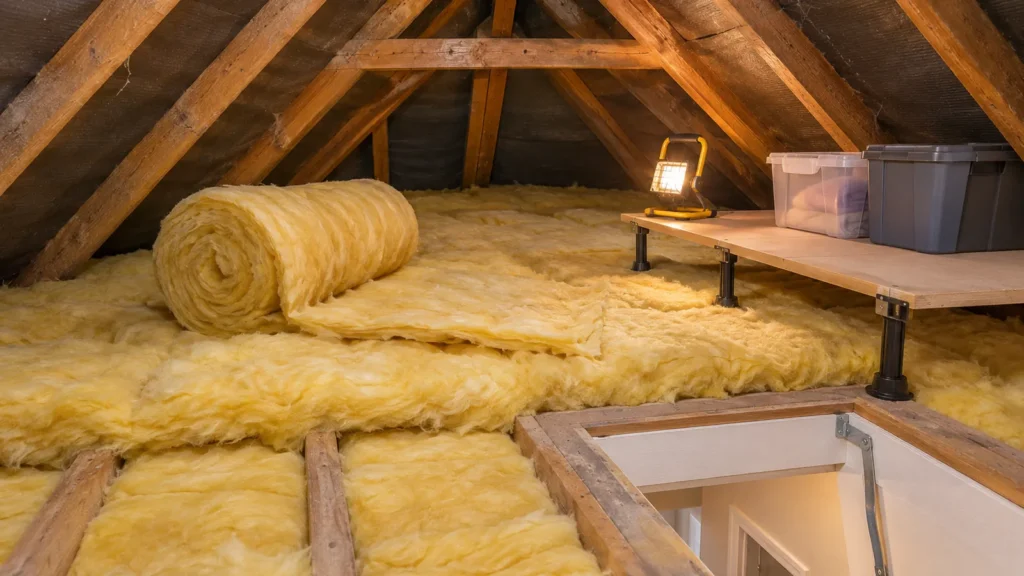
- Lay the first layer between the joists. Unroll the insulation into the gaps between joists. It should fill the gap snugly without being squashed. Butt the ends together with no gaps.
- Lay the second layer across the joists. Lay the top layer at right angles to the first. This covers the joists, which are a cold bridge if left exposed, and gets you to 270mm.
- Stop at the eaves. Leave a gap at the eaves so outside air can flow through. Use eaves vent trays (cheap plastic spacers) if the insulation keeps pushing into the gap.
- Leave space around downlights and flues. Keep insulation away from recessed downlights unless they're rated to be covered or have proper covers fitted. Keep it clear of flues and chimneys too.
- Insulate the hatch, pipes and tank. Don't put insulation under the cold water tank. The warm air from below stops it freezing. Instead, insulate the top and sides of the tank and wrap all pipes in the loft with pipe lagging.
How to cut loft insulation
Cut loft roll while it's still in its wrapper. Use a long, sharp knife, such as an old bread knife or a dedicated insulation saw. Measure and mark the wrapper, then cut straight through roll and wrapper together. It's much easier and less dusty than cutting loose insulation.
Ventilation and condensation risks in the loft
When you add thick loft insulation, the loft itself gets colder because less heat comes up from the house. A colder loft is more likely to get condensation on the underside of the roof, especially if warm, moist air from the house leaks up into it.
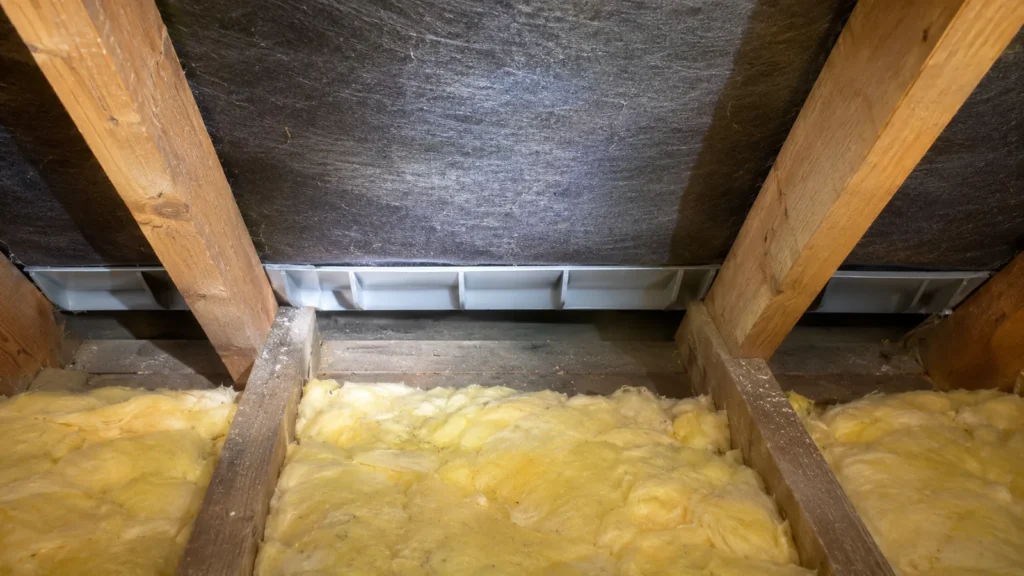
To avoid this:
- Keep the eaves clear so air can flow through the roof space
- Seal gaps around the loft hatch, pipes and cables coming up from the rooms below
- Make sure bathroom and kitchen extractor fans vent outside, not into the loft
- Don't block air bricks or soffit vents
If you see wet timbers, frost on the felt or dripping in the loft in winter, you have a condensation problem. A loft dehumidifier can help in the short term, but fixing ventilation and stopping moist air getting in is the real cure. The same moisture causes condensation on the inside of windows and mould on bathroom ceilings downstairs. Our damp and mould guide explains how it all connects.
Boarding over loft insulation
Many people want to use the loft for storage. The problem is that laying boards straight onto the joists squashes the insulation underneath, and squashed insulation loses much of its effect. Joists are often only 100mm deep, so you can't fit 270mm under boards laid directly on them.
The fix is loft insulation legs (also called loft stilts). These plastic or metal legs screw onto the joists and raise the boards above the full depth of insulation. You get storage space and a warm house.
Tips for boarding:
- Only board the area you actually need for storage
- Leave a gap between the insulation and the boards so moist air doesn't get trapped
- Don't overload the loft. Ceiling joists aren't designed to carry heavy loads
- Keep boards away from the eaves so ventilation isn't blocked
Replacing or removing old loft insulation
You don't normally need to remove old insulation before topping up. Lay the new layer on top. Replacement is worth it when the old insulation is:
- Wet or mouldy after a roof leak
- Contaminated with rodent or bird droppings
- Badly compressed and lumpy after years of storage on top
- Possibly vermiculite, which needs testing before anything is done
Loft insulation removal is usually done with a large industrial vacuum and is a dusty, messy job. Many people combine it with a loft clearance, then have new insulation laid.
Working on a garden office or conservatory instead? See our guides to garden room insulation and conservatory roof insulation.
FAQs
Is 270mm of loft insulation enough?
Yes, 270mm of mineral wool is the depth recommended by the Energy Saving Trust for a cold loft. Going deeper gives only small extra savings. If you have 270mm laid evenly with no gaps, focus on the hatch, pipes and draughts instead.
Can too much loft insulation cause damp?
Insulation itself doesn't cause damp. Problems happen when thick insulation makes the loft colder and moist air from the house gets in, or when it blocks ventilation at the eaves. Keep the eaves clear, seal gaps from below and check the loft in winter for condensation.
Should loft insulation touch the roof felt?
No. Leave a clear air gap between the insulation and the underside of the roof, particularly at the eaves, so air can move through the loft and carry moisture away.
Can I put loft insulation over electrical cables?
It's best to lift cables and lay them on top of the insulation. Cables buried under thick insulation can overheat. If you're not sure, ask a registered electrician to check, especially around older wiring.
Do I need building regulations approval for loft insulation?
Topping up or laying loft insulation in an existing cold loft doesn't normally need approval. Converting the loft into a room, or insulating the roof as part of major work, usually does. Check with your local building control if you're unsure.
Will loft insulation improve my EPC rating?
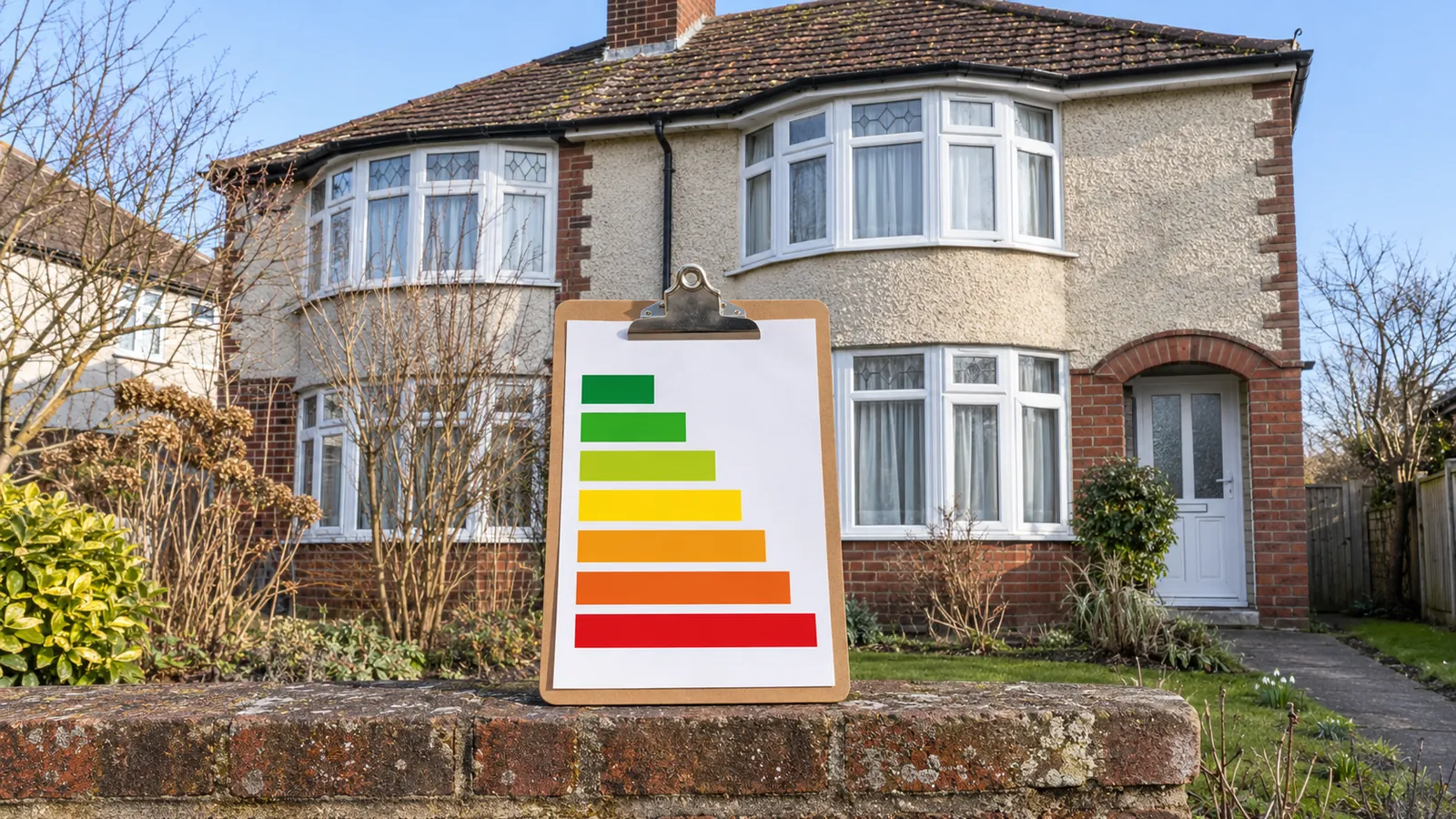
Usually yes. Roof insulation is one of the items an EPC assessor records. Going from little or no insulation to 270mm can improve the rating, and it often appears in the EPC's list of recommended improvements.
- Aim for 270mm of mineral wool: one layer between the joists, one across them.
- Loft roll is cheap and an easy DIY job in most lofts. Wear gloves, goggles and a mask.
- Keep the eaves clear, lift cables on top and insulate pipes and the tank, not under it.
- Use loft legs when boarding so you don't squash the insulation.
- Check gov.uk for current schemes before paying. Ignore cold callers.