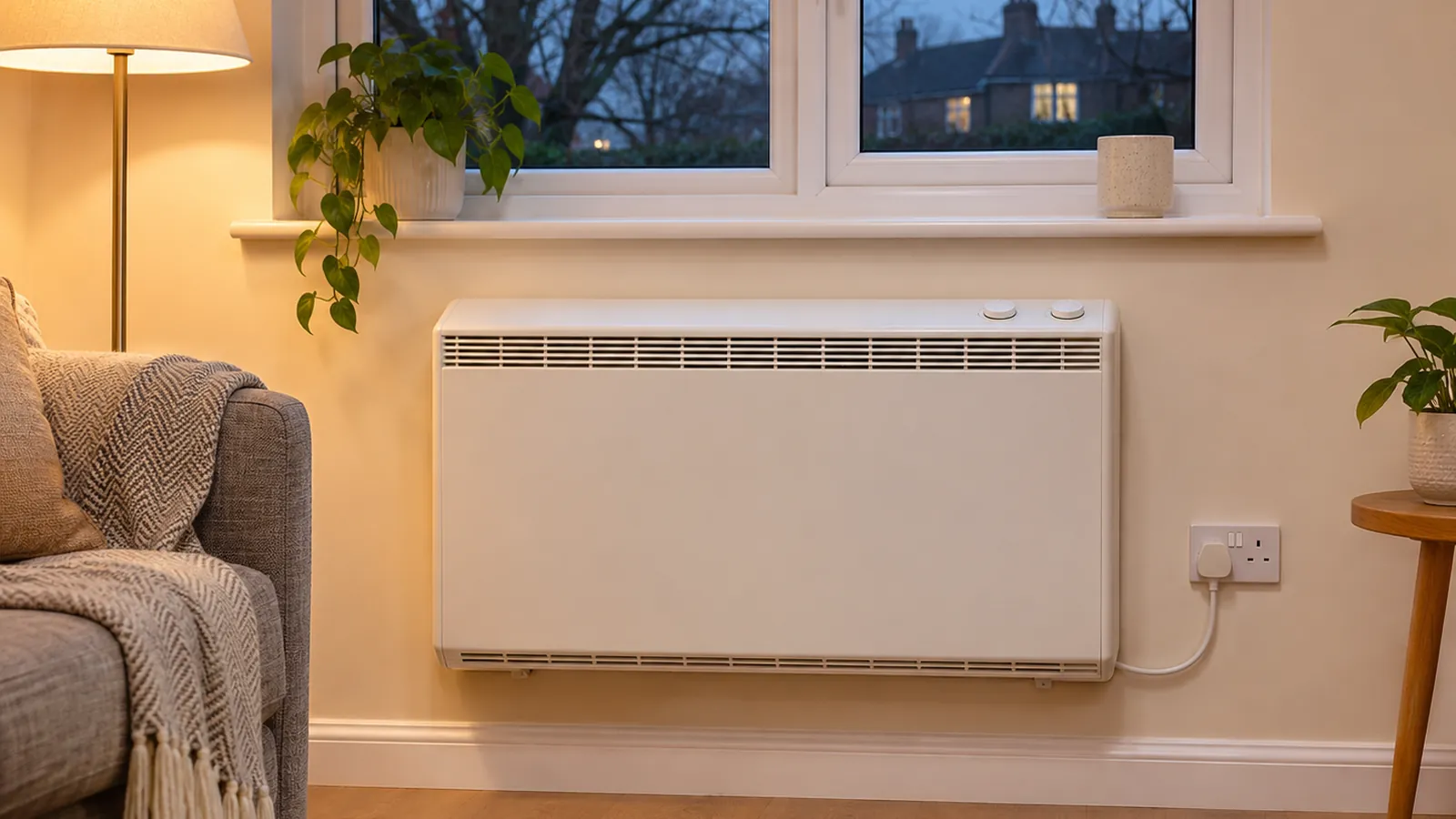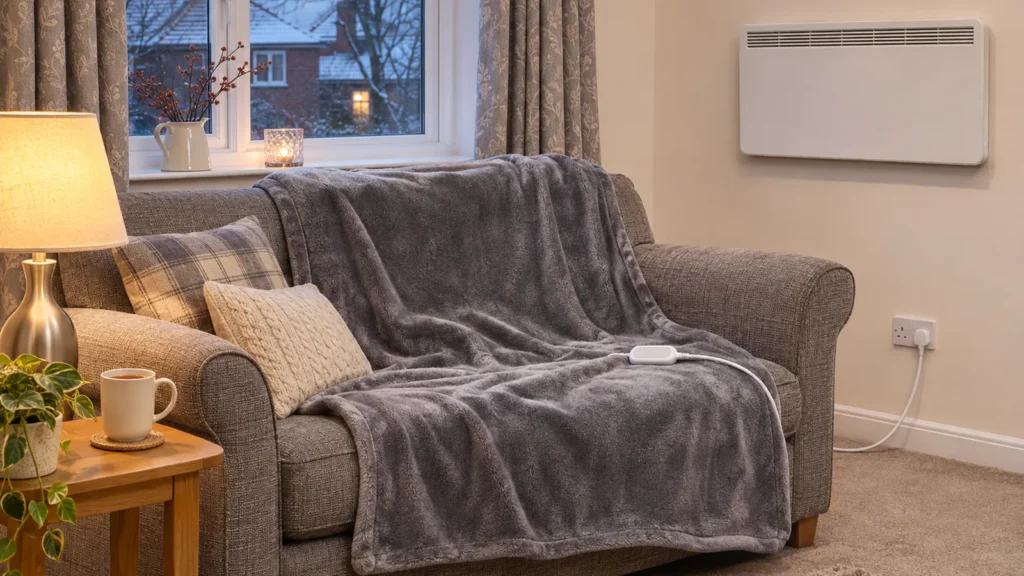
Every standard electric heater is equally efficient: a 1kW fan heater, oil-filled radiator or panel heater all turn 1kWh of electricity into 1kWh of heat, costing about 26p an hour at current UK prices. The cheapest heater to run is the lowest-wattage one that keeps you warm, with a thermostat and timer so it isn't running flat out. For warming a person rather than a room, an electric blanket or heated throw (about 1.5–3p an hour) beats any heater.
Heater adverts love to claim "the cheapest to run". In reality, physics means a watt is a watt: what changes your bill is how many watts a heater draws, for how long, and how well it controls itself. Here's how to choose, with real numbers. For more ways to cut costs, see our energy saving guide.
Running costs by heater type
At a unit rate of 26p per kWh, running continuously at full power:
| Heater | Typical power | Cost per hour (full power) | Best for |
|---|---|---|---|
| Electric blanket | 50–100W | 1–3p | Warming the bed |
| Heated throw | 80–150W | 2–4p | Sitting on the sofa |
| Infrared panel | 350–600W | 9–16p | Wall-mounted, warms people and surfaces |
| Oil-free / convector panel | 1kW | 26p | Small rooms, with thermostat |
| Halogen heater | 1.2kW | 31p | Instant spot heat on a person |
| Oil-filled radiator | 1.5kW | 39p* | Steady background heat, long sessions |
| Fan heater | 2kW | 52p | Quick blast of heat in a small room |
| Oil-filled radiator | 2.5kW | 65p* | Larger rooms |
*Oil-filled radiators have thermostats and cycle on and off once the room is warm, so the real cost over an evening is often much lower than the full-power figure.
Work out your own heater's cost per hour, day and year with the calculator. Pick a heater or type in its wattage:
Appliance running cost calculator
– · Default price: Ofgem price cap average, 1 Oct–31 Dec 2026. Check your bill for your exact unit rate.
Why every electric heater is "100% efficient"
Standard electric heaters (fan, convector, oil-filled, halogen, panel, infrared) all work by passing electricity through a resistance, and all of that energy ends up as heat in your room. So a 2kW fan heater and a 2kW oil-filled radiator cost exactly the same per hour at full power.
What differs is how the heat reaches you:
- Fan heaters heat the air quickly but noisily. Good for short bursts.
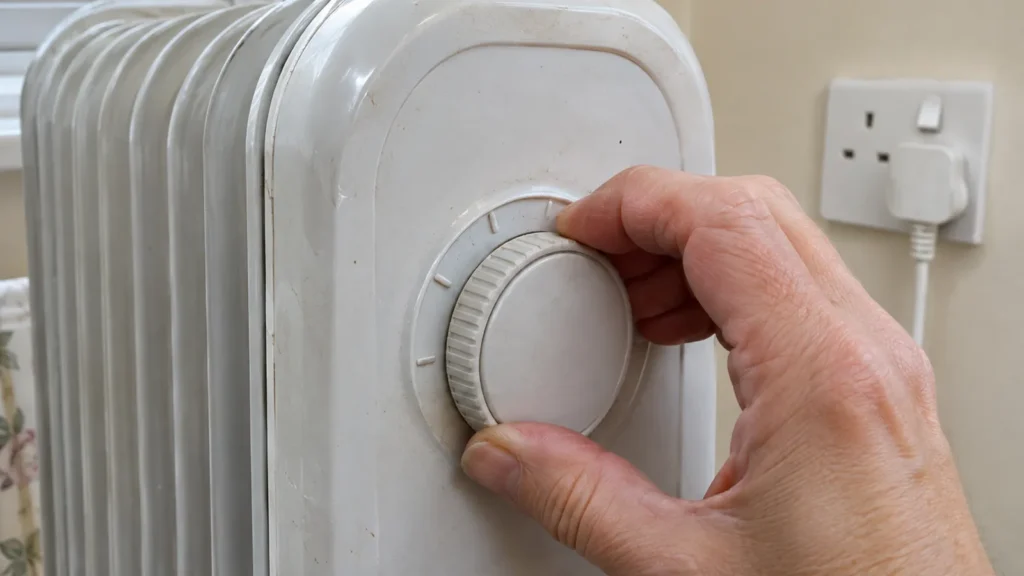
- Oil-filled radiators warm up slowly but hold heat and give steady, gentle warmth. With a good thermostat they cycle off, saving money over a long evening.
- Halogen and infrared heaters heat people and objects directly, like sunshine. You feel warm almost instantly, even in a draughty room, but only in front of them.
- Convector and panel heaters heat the air in the room. Good with a thermostat in a small, well-insulated room.
The real secret: heat yourself, not the room
The biggest saving isn't choosing a heater; it's heating the smallest space you need for the shortest time.
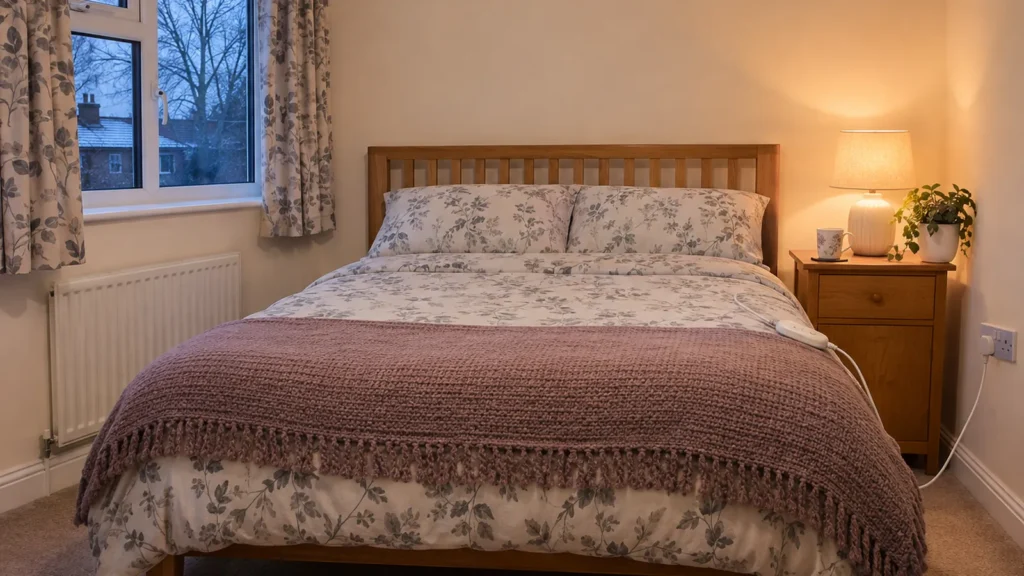
- Heat the person: an electric blanket, heated throw or heated gilet uses a fraction of the power of any room heater.
- Heat one room, not the house: if you're home alone all day in one room, a small heater can cost less than running gas central heating for the whole house.
- Use the thermostat: set it to a comfortable 18–20°C and let it switch itself off. A heater without a thermostat runs at full power until you remember to turn it off.
- Use a timer: warm the room for 20 minutes before you need it, not all evening.
- Close the door and stop draughts: a heater in a draughty room is heating the street. Draught excluders and curtains make every watt go further.
A 2kW heater left on for 6 hours a day costs about £3.12 a day, which is over £90 a month. The same evening under a 100W heated throw costs about 16p. If you can, heat yourself first and the room second.
Electric heater vs gas central heating: which is cheaper?
Per unit of heat, gas is far cheaper. Under the Ofgem price cap for October–December 2026, gas costs about 8p per kWh against about 26p for electricity, so less than a third of the price, and a modern condensing boiler converts about 90% of it into heat. Roughly:
| Heat source | Cost per kWh of heat (approx.) |
|---|---|
| Gas central heating (≈90% efficient) | ~9p |
| Air-to-air heat pump / reverse-cycle air conditioner | ~8–10p |
| Any standard electric heater | ~26p |
So if you're heating several rooms for several hours, gas central heating is usually cheaper. A small electric heater only wins when you're heating one small room for a short time and could otherwise turn the whole central heating off.
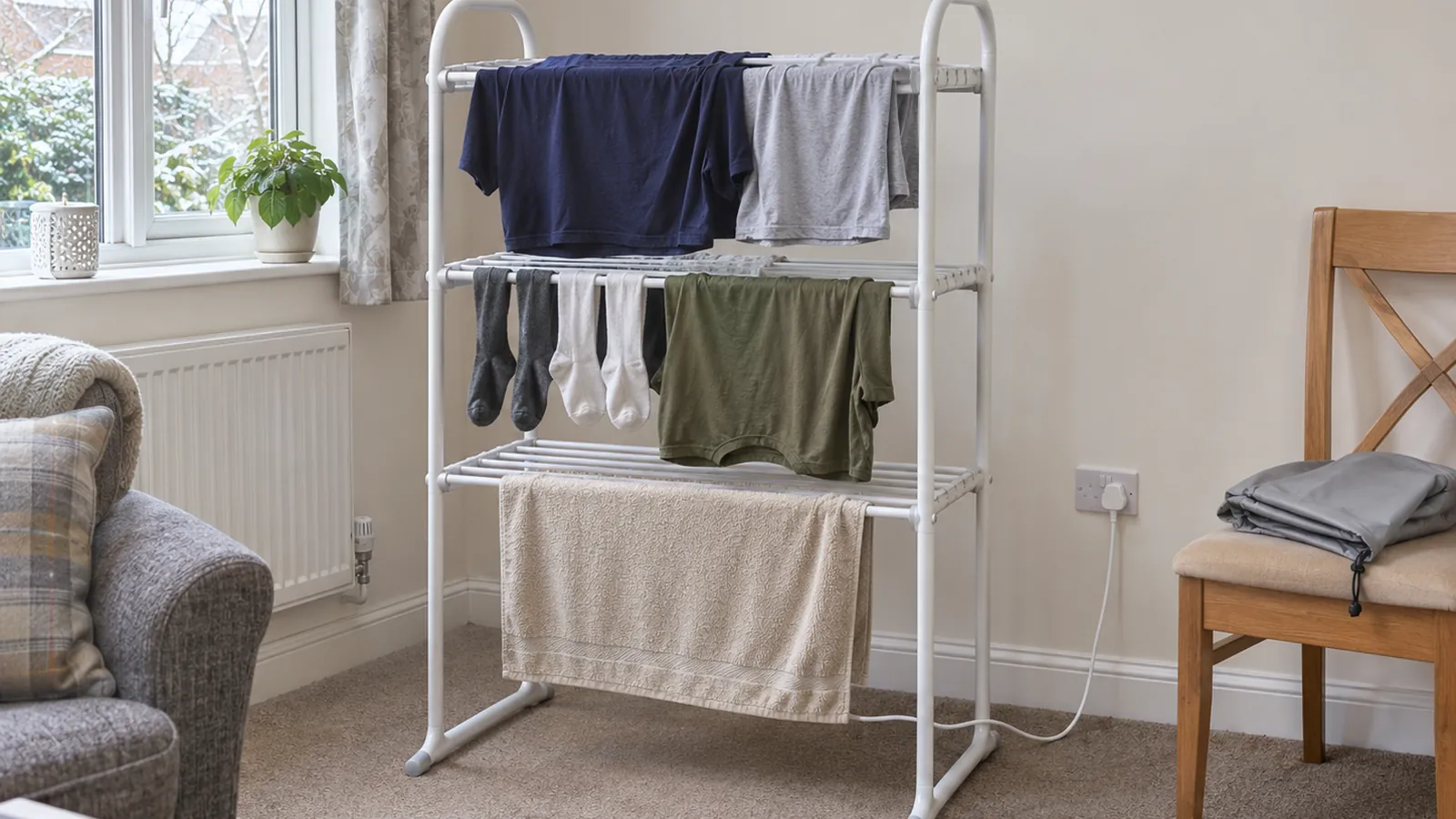
Never leave portable heaters on unattended or overnight, never cover them or dry clothes on them, keep them a metre from curtains, bedding and furniture, and plug them directly into a wall socket, never an extension lead. Choose heaters with tip-over and overheat protection.
How to choose the right heater
- For a home office used all day: a 1–1.5kW oil-filled radiator with a thermostat and timer.
- For a quick warm-up in a small room: a 2kW fan heater with a thermostat, used briefly.
- For a cold, draughty room you sit in for an hour: a halogen or infrared heater pointed at you.
- For the sofa or bed: a heated throw or electric blanket. It's the cheapest warmth there is.
- For the whole house: central heating, not portable heaters.
FAQs
What is the cheapest electric heater to run in the UK?
For warming a person, an electric blanket or heated throw (about 1–4p an hour). For warming a room, the lowest-wattage heater that keeps you comfortable, with a thermostat so it switches itself off once the room is warm.
Are oil-filled radiators cheaper to run?
Not per hour at full power. A 1.5kW oil-filled radiator costs the same as any 1.5kW heater. But their thermostat cycles them on and off once the room is warm, and the oil keeps giving off heat when they're off, so they're often cheaper over a long session.
Are halogen heaters cheap to run?
They use about 1.2kW, around 31p an hour. They feel warm instantly because they heat you directly, so they're good for short spells, but they don't warm the room much.
Do infrared heaters really save money?
They don't make more heat per watt than other electric heaters, but because they warm people and surfaces directly, you can often feel comfortable at a lower air temperature. Real savings depend on using them well.
How much does it cost to run a 2kW heater for an hour?
At 26p per kWh, a 2kW heater running at full power costs about 52p an hour. Check your bill for your exact unit rate.
- All standard electric heaters are equally efficient: cost depends on watts × hours.
- Heat yourself (blanket, throw) before heating the room.
- A thermostat and timer matter more than the heater type.
- For several rooms, gas central heating is usually cheaper than electric heaters.