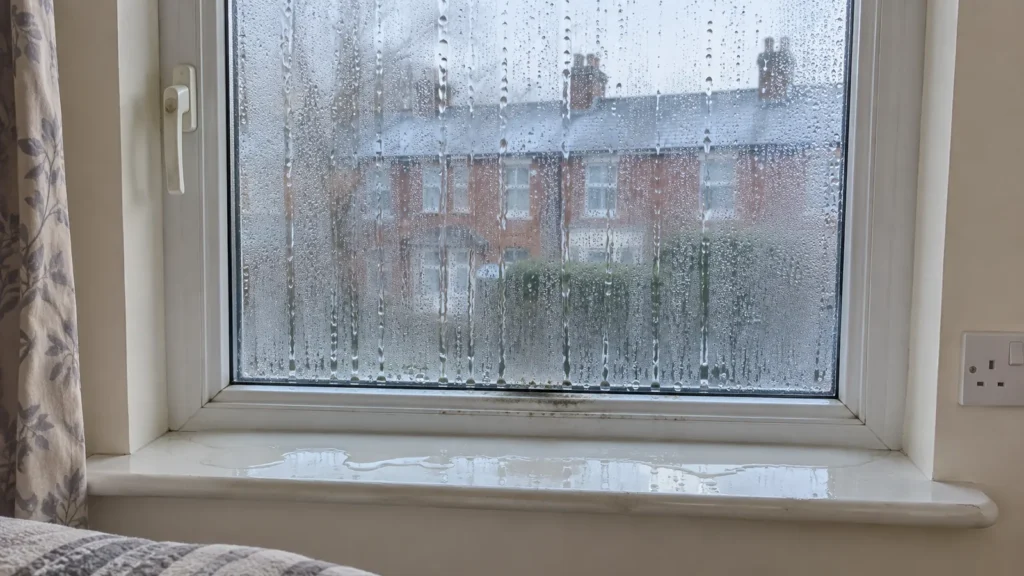
Condensation forms on the inside of windows when warm, moist indoor air touches the cold glass and cools below its dew point, so the water vapour turns back into droplets. A little on cold mornings is normal. Heavy condensation every day means your home is too humid: reduce the moisture you produce, ventilate more (trickle vents and extractor fans), keep rooms steadily warm, and wipe the windows each morning. A dehumidifier is the fastest fix.
Wet windows are the first visible sign of a humidity problem, and if you leave it, the next sign is usually black mould on the frames, sills and curtains. Here's what causes it in UK homes and how to get it under control. For the bigger picture, see our complete guide to damp and mould.
What causes condensation on windows?
Air always contains some water vapour. Warm air can hold more of it than cold air. When warm, humid air from your rooms meets a cold surface, it cools, can't hold as much water, and drops it onto that surface as condensation.
In winter, your windows are usually the coldest surfaces in a room, so they get it first. Everyday life adds a lot of moisture to the air:
- Showers and baths
- Cooking, especially boiling pans without lids
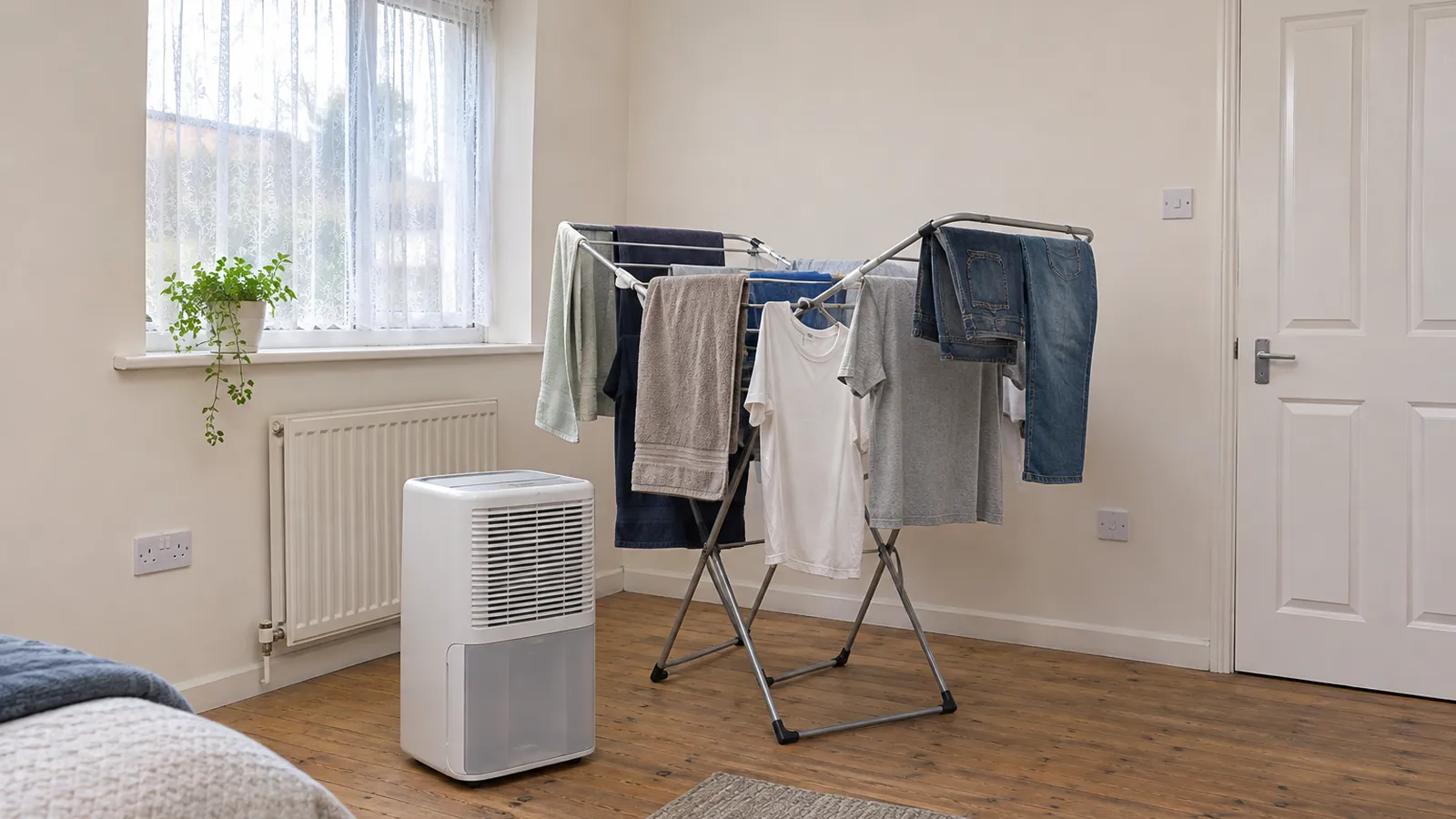
- Drying clothes indoors (one of the biggest sources: all the water in your washing ends up in your air)
- Breathing and sweating overnight, which is why bedrooms are worst in the morning
- Unvented tumble dryers, gas hobs and paraffin or bottled-gas heaters
Is condensation on windows a problem?
A light mist on the coldest mornings that clears by mid-morning isn't worth worrying about. It's a problem when:
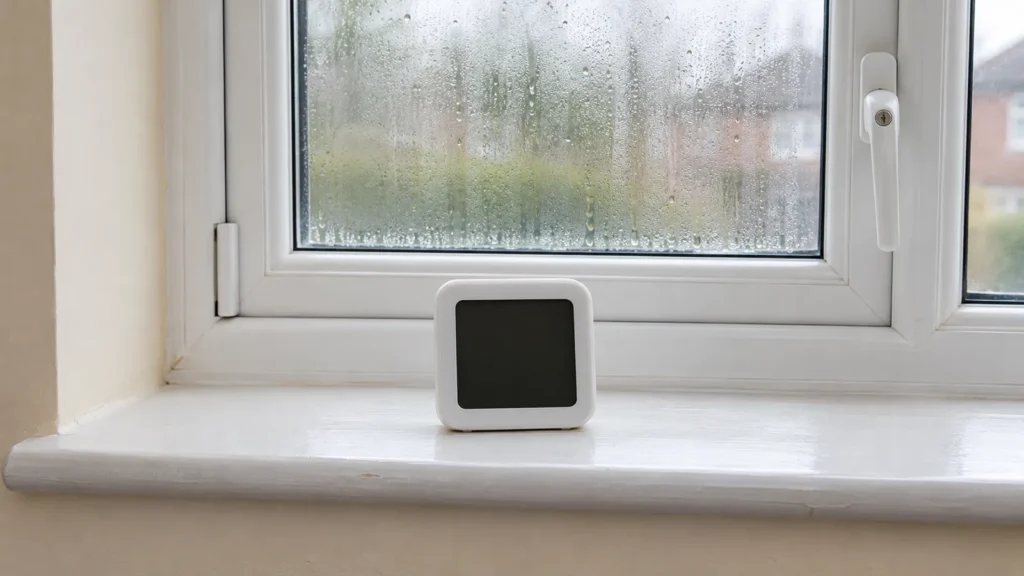
- Water runs down the glass and pools on the sill most days
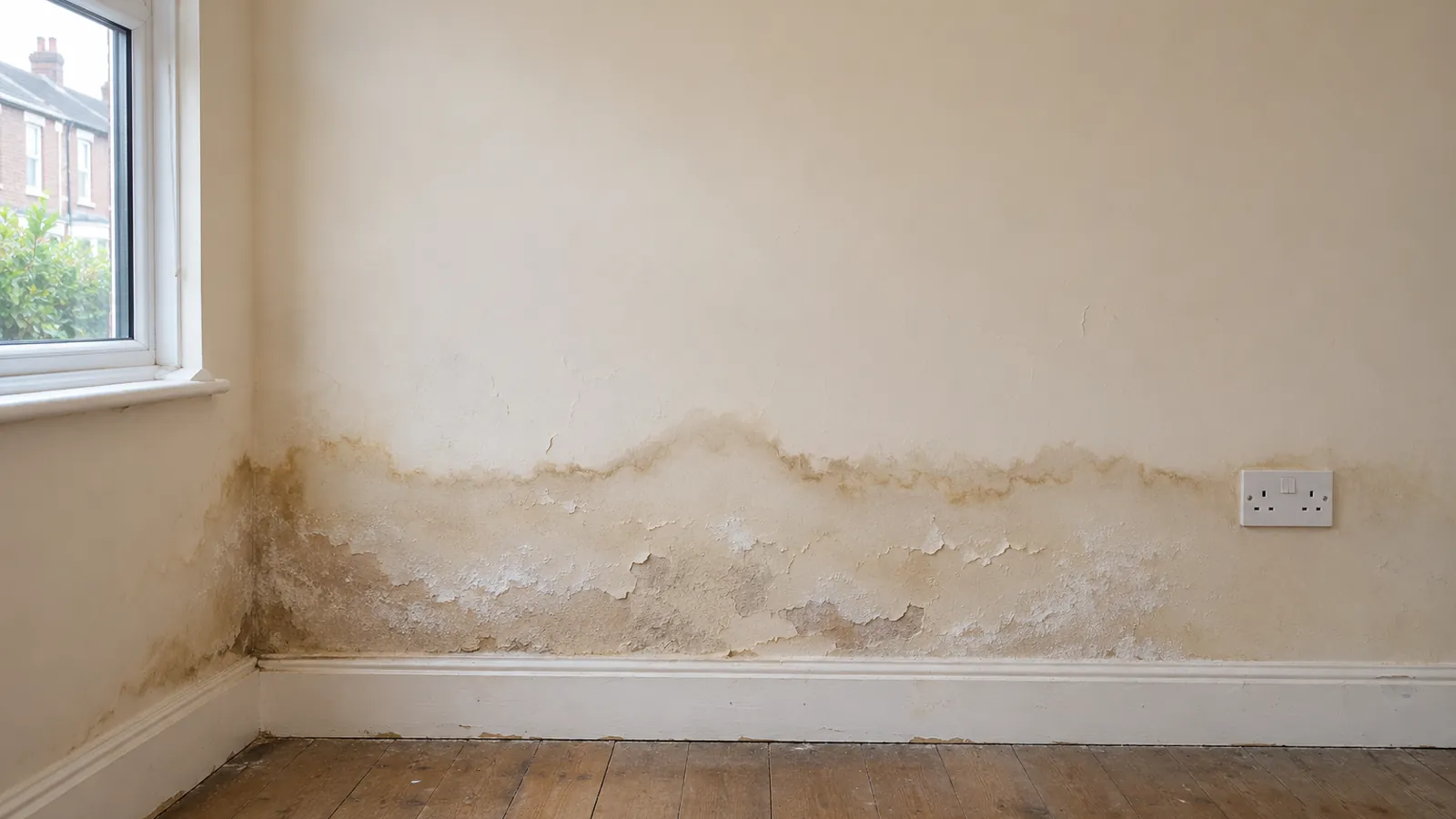
- Black mould appears on window seals, frames, reveals or curtains
- Rooms smell musty, or mould appears in corners and behind furniture
Then it's a sign your indoor humidity is regularly too high. Aim for 40–60% relative humidity; a cheap digital hygrometer tells you where you stand.
Condensation between the two panes of double glazing is different: it means the sealed unit has failed and the glass unit needs replacing. It's not a ventilation problem. Condensation on the outside of windows on cold mornings is actually a good sign: your glazing is keeping the heat in so well that the outer pane stays cold.
9 ways to stop condensation on the inside of windows
1. Open the trickle vents
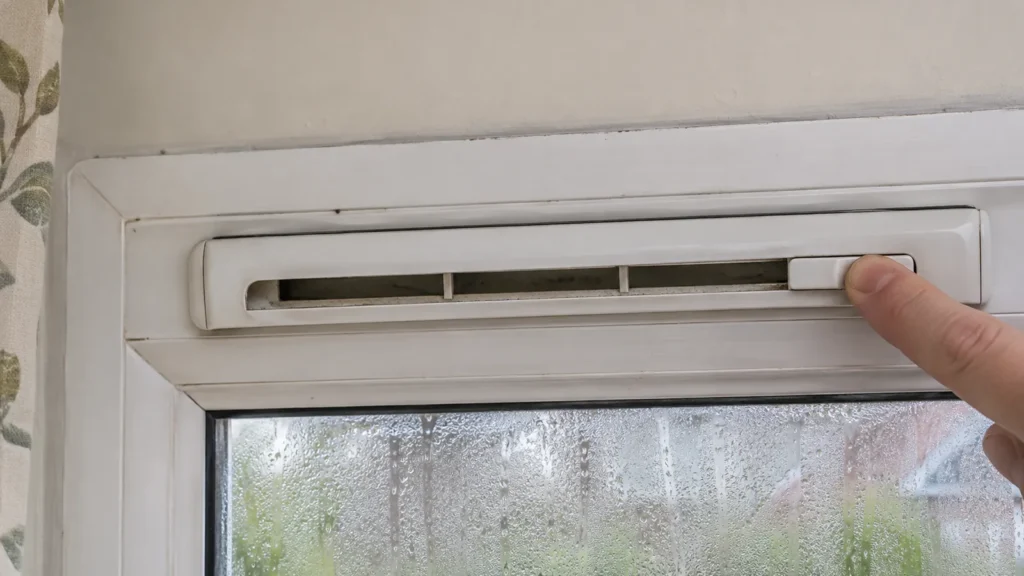
Most modern UPVC windows have trickle vents, small slotted vents in the top of the frame. They're designed to stay open all the time to provide background ventilation, but most people close them. Open them, especially in bedrooms.
2. Use extractor fans, and leave them on longer
Run the bathroom fan during and for 15–20 minutes after showers, and the cooker hood (venting outside, not recirculating) whenever you cook. Keep kitchen and bathroom doors shut so steam goes out, not into the bedrooms.
3. Dry clothes outside, or with a dehumidifier
If you have to dry indoors, do it in one room with the door shut and the window slightly open or, better, with a dehumidifier running. A dehumidifier also dries clothes surprisingly well and cheaply.
4. Run a dehumidifier
A compressor dehumidifier in a heated home can pull several litres of water from the air a day and will visibly reduce window condensation within a few days. Put it in the worst room, or a central hallway with doors open, overnight.
5. Keep the heating steady
Cold rooms that get blasted with heat for an hour then left to go cold get more condensation. Keeping rooms at a steady, moderate temperature keeps surfaces warmer. Don't leave rooms unheated and closed off all winter: they become cold, damp spots.
6. Air bedrooms in the morning
Open the bedroom window for 10–15 minutes after you get up to swap out the humid overnight air. It's quick and costs very little heat.
7. Wipe or vacuum the windows every morning
A squeegee, a microfibre cloth or a window vacuum stops water soaking into frames, seals and sills, which is where mould gets started. Wring the water into the sink, not back into the room.
8. Pull curtains and blinds back during the day
Thick curtains drawn tight against glass create a cold, still pocket of air that's perfect for condensation and mould. Open them in the day, and leave a small gap at the top at night if you can.
9. Improve the glass
Single glazing and old, failed double glazing make the coldest surfaces. Upgrading to modern double glazing, or adding secondary glazing in rented or listed homes, keeps the inner pane warmer and cuts condensation sharply.
How much does it cost to fix?
| Fix | Typical cost |
|---|---|
| Opening trickle vents, airing rooms, wiping windows | Free |
| Digital hygrometer | £8–£15 |
| Window vacuum / squeegee | £10–£50 |
| Compressor dehumidifier (10–20 litre) | £120–£250 to buy, roughly 3–7p an hour to run |
| New bathroom extractor fan (fitted by an electrician) | £150–£350 |
| Secondary glazing (per window) | £200–£600 |
| Replacement double-glazed unit (per pane) | £100–£300 |
Work out what a dehumidifier would cost you with our dehumidifier running cost calculator.
FAQs
Why are my windows wet every morning?
Overnight, people in a closed bedroom breathe out a surprising amount of moisture, the room cools, and the glass gets cold. By morning the humid air has condensed on the coldest surface. Open trickle vents and air the room for 10 minutes each morning.
Do dehumidifiers stop condensation on windows?
Yes. Lowering the humidity in the room means there's less water vapour to condense on the glass. Most people notice a big difference within a few days.
Should I worry about condensation on new double glazing?
Some condensation on the room side of new windows is normal in winter, especially because new windows seal draughts that used to ventilate the room. Open the trickle vents. Condensation between the panes of new glazing is a fault: contact the installer under warranty.
Does condensation cause mould?
Yes, regular condensation is the most common cause of black mould in UK homes. Mould grows on frames, seals, sills and nearby walls that stay damp. Here's how to remove mould safely.
- Window condensation = humid indoor air meeting cold glass.
- Fix it by cutting moisture, ventilating (trickle vents, fans), heating steadily and wiping daily.
- A dehumidifier is the quickest single fix.
- Condensation between panes means a failed sealed unit, not a humidity problem.