

A replacement combi boiler is much cheaper to install (typically around £2,000 to £3,500) and keeps things simple. An air source heat pump costs more upfront even after the £7,500 Boiler Upgrade Scheme grant in England and Wales, and needs a hot water cylinder and often some bigger radiators. On running costs, a well-designed heat pump with a seasonal efficiency (SCOP) of about 3 costs roughly the same as gas at the current price cap, and gets cheaper at higher efficiency or on a heat pump tariff. You also drop the gas standing charge. Heat pumps suit reasonably insulated homes with space for a cylinder; a combi suits small homes, flats and anyone who needs the cheapest fix now.
This is a decision forum threads go round in circles on, usually because people compare a badly designed heat pump with a good boiler, or the other way round. Below are the actual sums at the October to December 2026 price cap. For boiler options, see combi vs system boiler, and more heating help is on our heating hub.
The quick comparison
| Combi boiler | Air source heat pump | |
|---|---|---|
| Typical installed cost | About £2,000 to £3,500 (like for like) | Often £8,000 to £14,000 before grant |
| Grant | None | £7,500 Boiler Upgrade Scheme (England and Wales) |
| Hot water | On demand, no cylinder | Needs a hot water cylinder |
| Radiators | Existing ones fine | Some rooms may need bigger ones |
| Outdoor unit | No | Yes, roughly the size of a large suitcase or bigger |
| Running cost | Gas at 7.97p per kWh, ~90% efficient | Electricity at 26.32p per kWh ÷ efficiency (SCOP) |
| Lifespan | Roughly 10 to 15 years | Often quoted at 15 to 20 years |
| Carbon | Burns gas | Much lower, and falling as the grid gets cleaner |
Installed prices are rough 2026 estimates. What moves them: house size, pipework, radiator changes, cylinder space and the installer.
Running costs, worked out
The cost of a unit of heat depends on fuel price divided by efficiency.
Gas combi: 7.97p per kWh ÷ 0.90 efficiency = about 8.9p per kWh of heat.
Heat pump: 26.32p per kWh ÷ SCOP
- SCOP 3.0: 26.32 ÷ 3.0 = 8.8p per kWh of heat
- SCOP 3.5: 26.32 ÷ 3.5 = 7.5p per kWh of heat
- SCOP 4.0: 26.32 ÷ 4.0 = 6.6p per kWh of heat
For a house that needs 12,000 kWh of heat a year (a typical-ish three-bed semi):
| Energy used | Annual cost | |
|---|---|---|
| Gas combi (90%) | 13,333 kWh of gas | £1,063 |
| Heat pump, SCOP 3.0 | 4,000 kWh of electricity | £1,053 |
| Heat pump, SCOP 3.5 | 3,429 kWh | £902 |
| Heat pump, SCOP 4.0 | 3,000 kWh | £790 |
Those figures leave out standing charges. If you switch fully off gas, you can have the gas meter removed and stop paying the daily gas standing charge, which is often worth over £100 a year. Many suppliers also offer heat pump or time-of-use tariffs with cheaper electricity at certain times, which can cut the heat pump cost further.
The catch: those SCOP figures only happen with a properly designed system running at low flow temperatures. A badly designed heat pump running hot, with undersized radiators, can be dearer to run than gas.

The Boiler Upgrade Scheme
In England and Wales, the Boiler Upgrade Scheme gives £7,500 off an air source or ground source heat pump, applied by the installer, who must be MCS certified. Some off-gas homes have been eligible for a higher grant for a limited period. You generally need a valid EPC, and the scheme has rules about insulation recommendations and the property. Scotland runs its own scheme through Home Energy Scotland. Rules and budgets change, so check the Ofgem and gov.uk pages before you sign anything.
What a heat pump needs that a combi doesn't
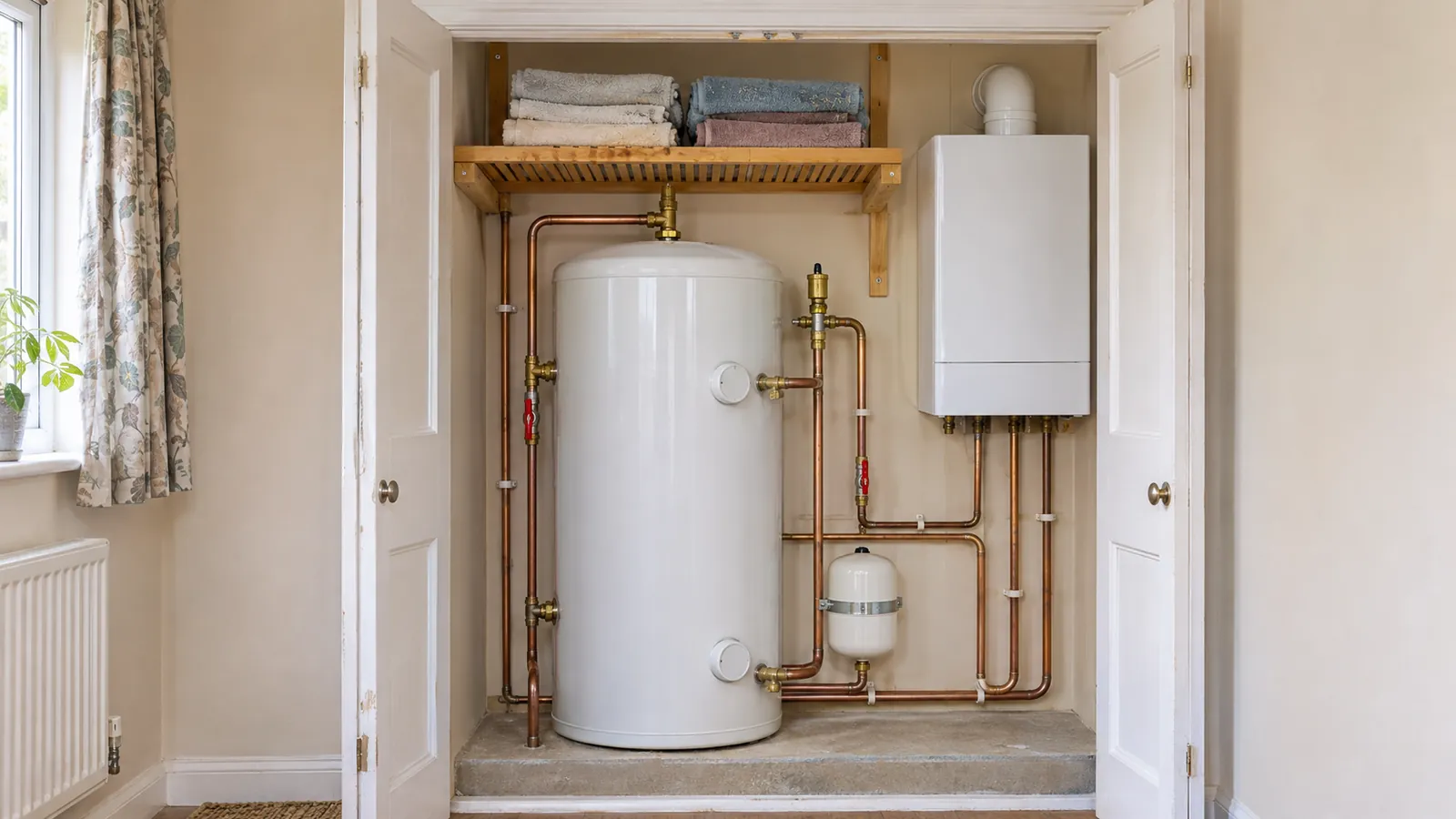
A hot water cylinder. Heat pumps don't do instant hot water. If you've got a combi now, you'll need cylinder space, often in an old airing cupboard or a utility room.
Some bigger radiators. Heat pumps run radiators cooler, so rooms with high heat loss may need a larger radiator. Our radiators for air source heat pumps guide explains how this is worked out.
Outdoor space. The outdoor unit needs a solid base, good airflow and a sensible spot for noise. Many installations count as permitted development in England if they meet the rules on size and distance from the boundary, but check yours.
A proper heat loss survey. An MCS installer must calculate the heat loss room by room. If a quote doesn't include this, walk away.
Which homes suit a heat pump?
- Reasonably insulated houses: loft insulation, cavity walls filled, decent glazing
- Homes with room for a cylinder
- Off-gas homes on oil, LPG or electric heating, where the savings are biggest
- People planning to stay a while, as payback isn't instant
- Homes with solar panels, which can feed some of the heat pump's daytime use
Which homes suit a combi?
- Small flats, where a cylinder and outdoor unit are hard to fit
- Homes needing the cheapest, quickest fix after a boiler breakdown
- Very leaky older homes where insulation work isn't possible yet
- Short-term owners who'll move before a heat pump pays off
Insulate first, either way
Whatever you choose, cutting heat loss first saves money. It also shrinks the heat pump you need and reduces how many radiators change. Start with loft insulation and draught-proofing, which are the cheapest wins.

If your boiler has just broken
You don't have to decide in a panic. Options include:
- a repair to buy time while you get heat pump quotes
- a like-for-like combi now, with plans for a heat pump at its end of life
- a heat pump now, if quotes and timing work (installs typically take a few days, plus survey and paperwork time beforehand)
Get at least two MCS installer quotes and one combi quote before committing to either.
FAQs
Is a heat pump cheaper to run than a combi boiler?
At the October to December 2026 price cap, a heat pump with a SCOP of 3 costs about the same as gas. With SCOP 3.5 or more, a heat pump tariff, or dropping the gas standing charge, it's usually cheaper.
How much is the heat pump grant?
£7,500 off an air source or ground source heat pump through the Boiler Upgrade Scheme in England and Wales, claimed by an MCS installer.
Can I replace my combi boiler with a heat pump?
Yes, but you'll need space for a hot water cylinder, an outdoor unit, and possibly some bigger radiators.
Do heat pumps work in old houses?
Many do, if the system is designed for the house's real heat loss. Very leaky homes may need insulation work first, or larger radiators.
Is a combi boiler or heat pump better for a flat?
Usually a combi, because flats often lack space for a cylinder and an outdoor unit. Some flats do suit compact heat pump setups.
How long does a heat pump last compared to a boiler?
Heat pumps are often quoted at around 15 to 20 years, against roughly 10 to 15 for a gas boiler, though both depend on servicing and installation quality.
- Combi: cheapest to install, no cylinder, existing radiators fine.
- Heat pump: £7,500 grant, needs a cylinder and a proper heat loss survey.
- At 26.32p electricity and 7.97p gas, SCOP 3 costs about the same as gas; higher SCOP is cheaper.
- Dropping gas saves the gas standing charge too.
- Insulate first, whichever you choose.