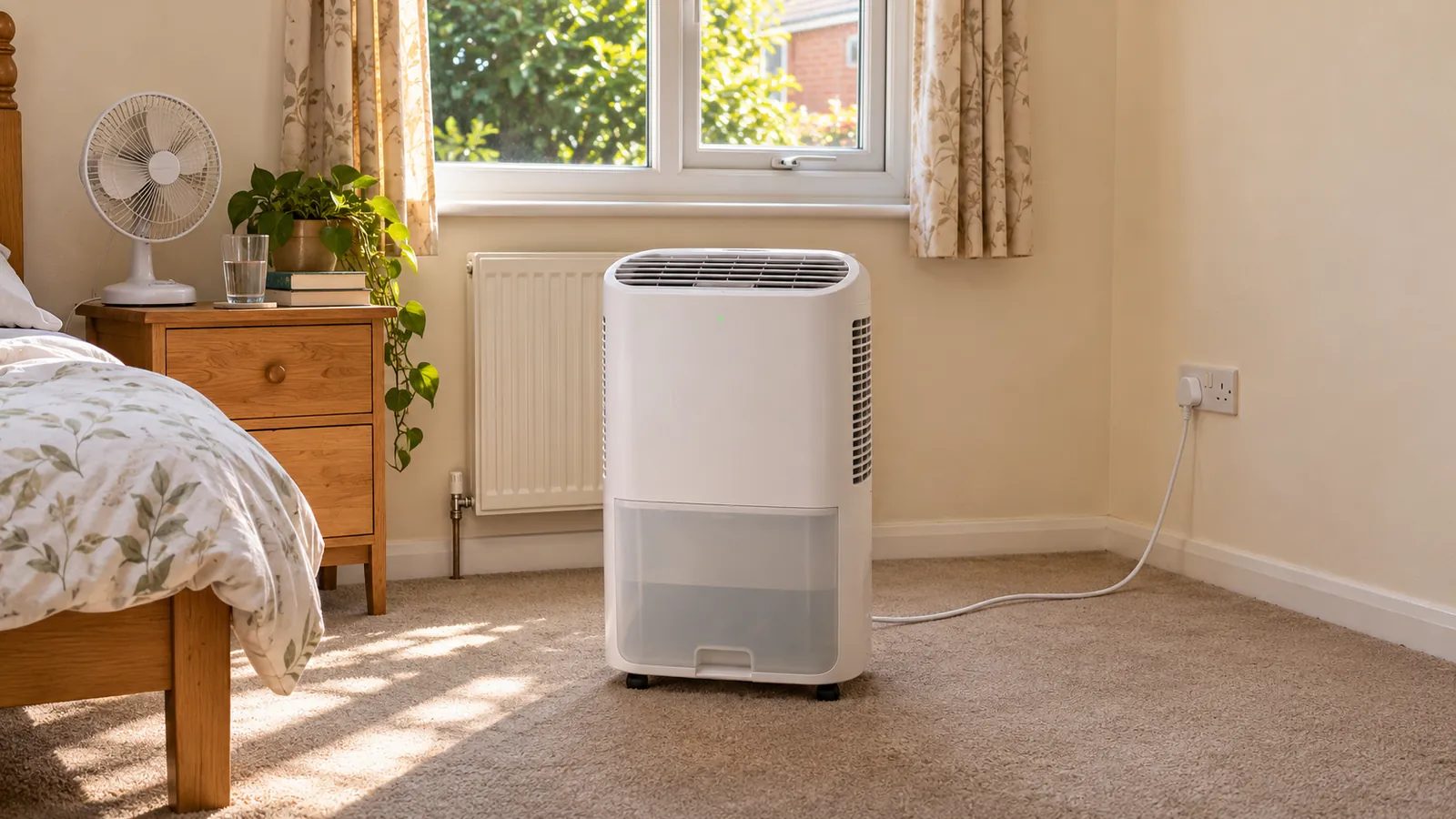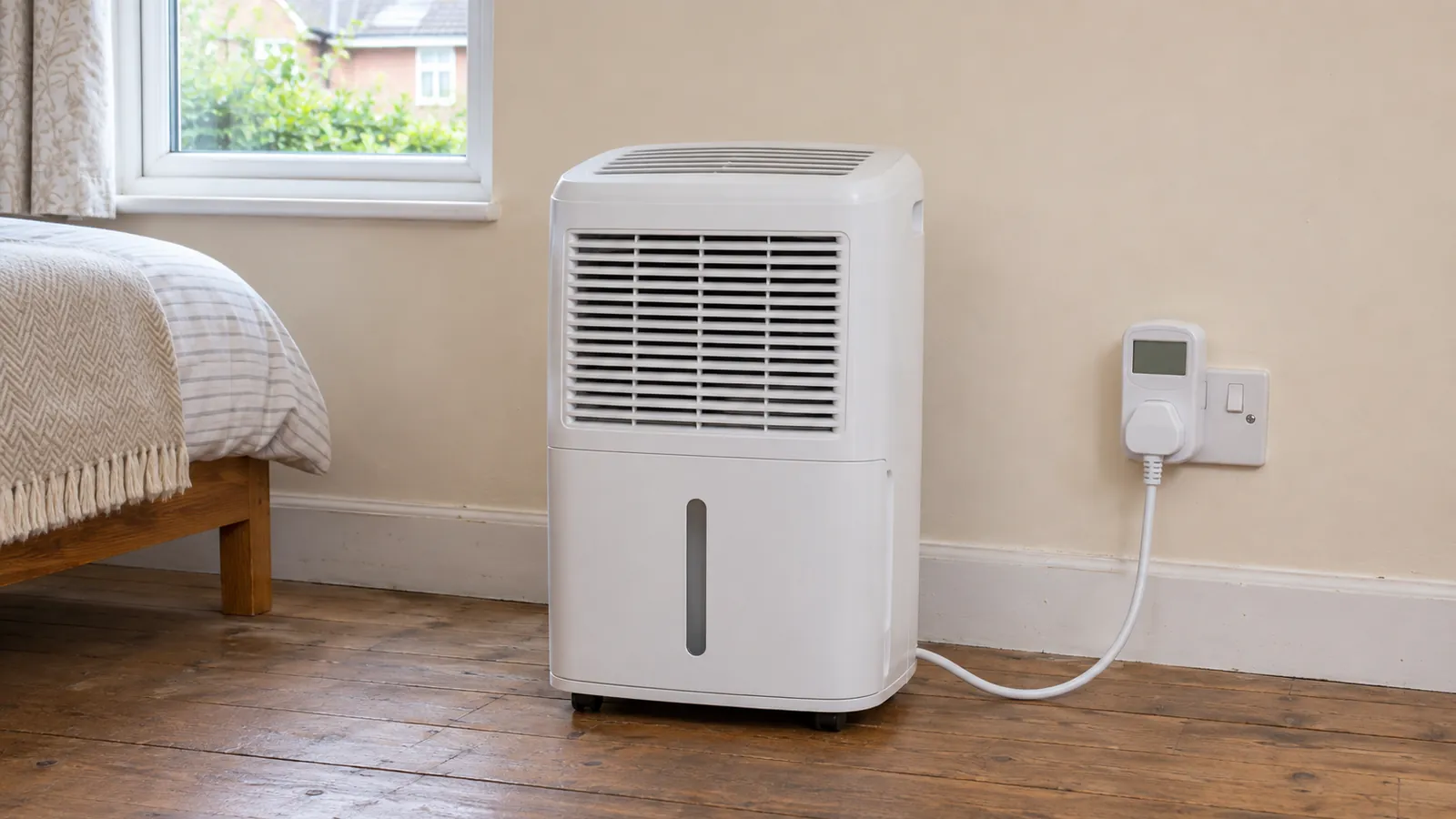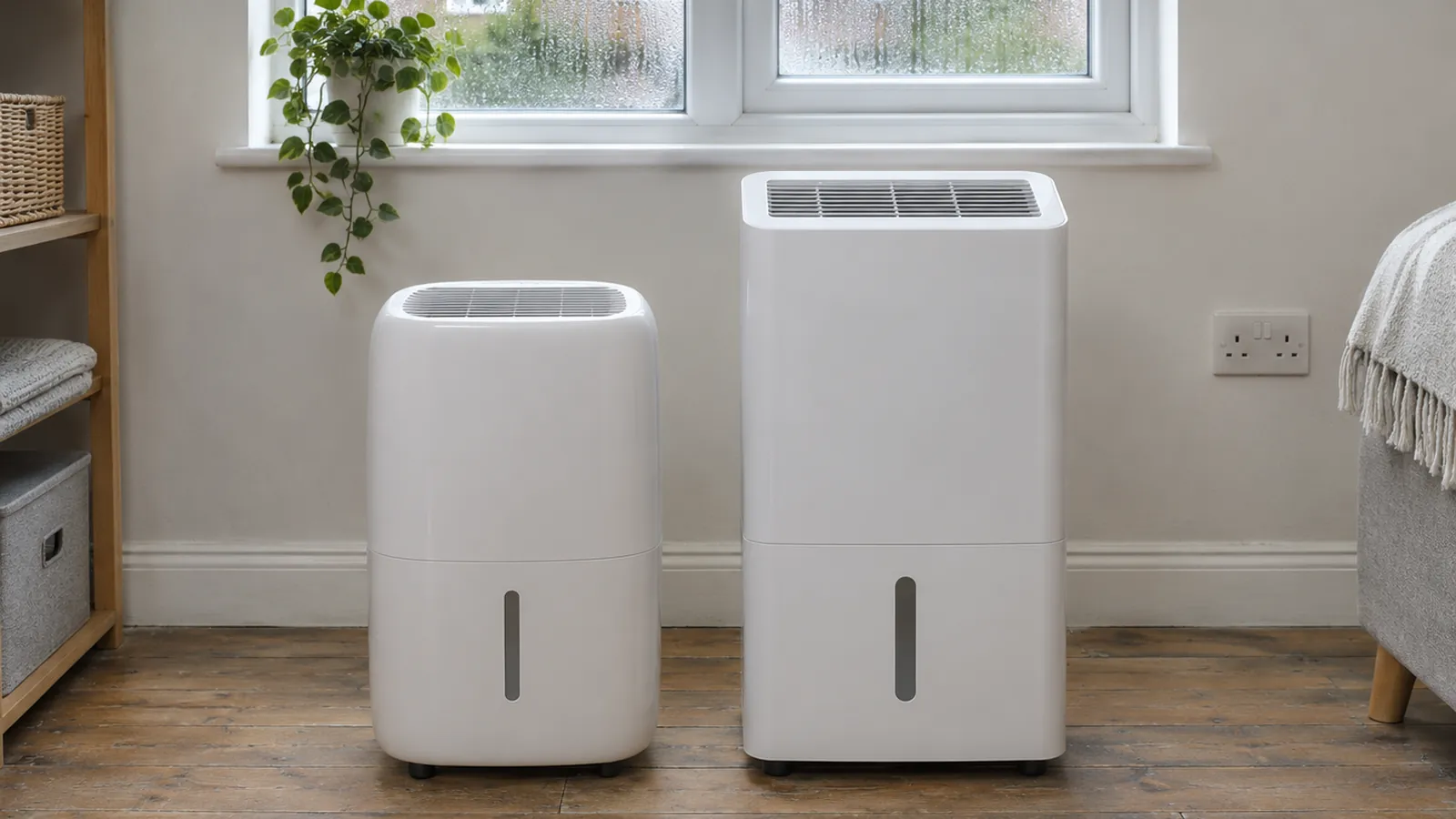

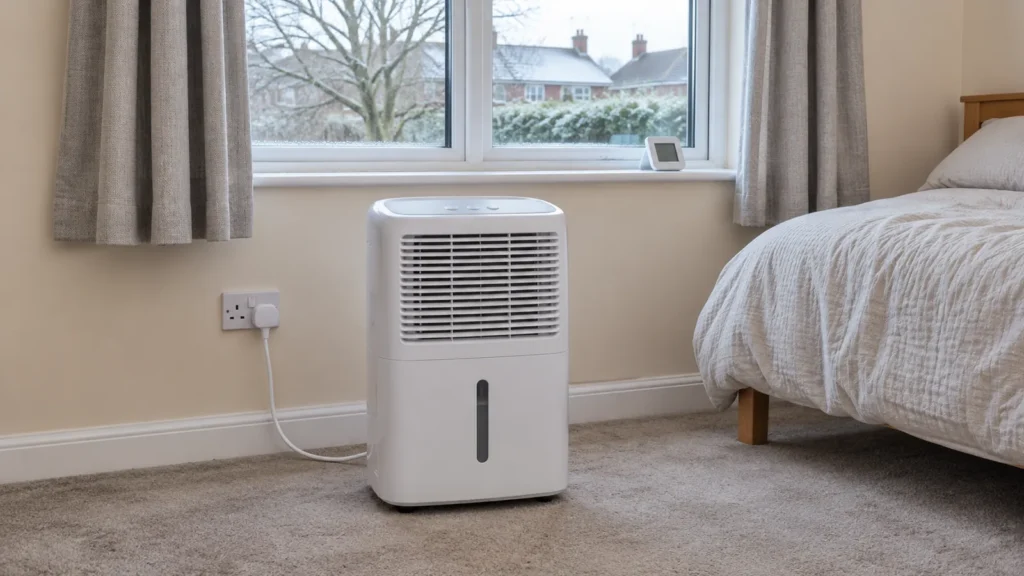
A dehumidifier pulls moisture out of the air, which cuts condensation on windows, slows mould growth, dries laundry indoors far faster, and makes rooms feel less clammy. It also helps people with dust mite allergies, because mites struggle in drier air. It won't fix rising damp, a leak or penetrating damp, because those need the water source stopped. A typical compressor dehumidifier costs a few pence an hour to run.
British homes produce a lot of moisture: showers, cooking, breathing, and above all drying clothes on radiators. A dehumidifier deals with that moisture before it turns into black spots on the window frames. For the wider picture, see our damp and mould guides.
The benefits, one by one
Less condensation on windows and walls
When warm, moist air hits a cold window or an outside wall, the water vapour turns back into liquid. Lower the humidity in the room and there's less water to condense. Most people notice a difference in streaming windows within a few days of running a dehumidifier overnight in the bedroom. Our guide to condensation on the inside of windows covers the other causes and fixes.
Less mould
Mould needs moisture to grow. Keeping indoor humidity in the 40 to 60% range makes it much harder for it to take hold on window seals, wall corners, and the back of wardrobes on outside walls. A dehumidifier won't kill mould that's already there, so clean that off first (see black mould in the bathroom for how), but it does slow regrowth a lot.
Laundry dries faster and doesn't smell musty
This is the benefit most people end up valuing most. Clothes on an airer in a closed room with a dehumidifier running often dry in a few hours instead of a day or more, and they don't get that damp, sour smell. Many machines have a laundry mode. It's usually much cheaper than a tumble dryer. Our guide on whether a dehumidifier dries clothes has the setup that works best.
Fewer dust mites
Dust mites live in bedding, carpets and soft furnishings and thrive in humid air. Studies on dust mites suggest they struggle to survive when relative humidity stays below about 50%. Keeping a bedroom drier won't get rid of them, but combined with hot washing bedding it can help people with dust mite allergies or asthma. It's a help, not a treatment, so follow medical advice.
Fewer musty smells
That damp smell in cupboards, under-stairs storage and spare rooms is usually high humidity and early mould. Drying the air often clears it. If the smell comes back quickly, there may be a hidden source; our guide on what damp smells like helps track it down.
The room can feel warmer
Damp air feels colder and clammier than dry air at the same temperature. Some people find they can set the thermostat a little lower once the air is drier. Desiccant dehumidifiers also give off noticeably warm air, which helps in cold rooms. More on this in our guide to whether a dehumidifier cools the air.
Protecting belongings
Books, photos, musical instruments, leather and stored clothes all suffer in damp air. A dehumidifier in a spare room, garage or loft conversion helps stop mildew and warping.
What a dehumidifier won't do
Be clear on this before buying, because it's where people waste money.
- Rising damp. Water wicking up a wall from the ground isn't fixed by drying the air. See our rising damp guide.
- Penetrating damp. Rain coming through a wall, a leaking gutter or a cracked render needs the outside fixed.
- Leaks. A damp patch on the ceiling from a pipe or a roof leak needs the leak fixed. Our guide to a damp patch on the ceiling helps work out which it is.
- Poor ventilation on its own. A dehumidifier helps, but you still need extractor fans in the bathroom and kitchen and trickle vents open.
A dehumidifier can also hide a problem: if a wall keeps getting wet even with the air dry, there's a water source to find.
Which type to buy
| Compressor | Desiccant | |
|---|---|---|
| Best for | Heated rooms, laundry, general use | Cold rooms, garages, unheated spare rooms |
| Power use | Lower (often roughly 150 to 300W) | Higher (often roughly 300 to 650W) |
| Effect on the room | Very slightly warmer | Noticeably warmer air out |
| Noise | Hum from the compressor | Usually quieter |
| Weight | Heavier | Lighter |
Our desiccant vs compressor guide goes into the details.
How much does it cost to run?
It depends on the wattage. At the October to December 2026 price cap rate of 26.32p per kWh:
- a 200W compressor model costs about 5.3p an hour (0.2 kWh × 26.32p)
- a 600W desiccant model costs about 15.8p an hour (0.6 kWh × 26.32p)
Most machines switch the compressor or heater off once the room reaches the target humidity, so the real cost is often lower. Our guide to how much electricity a dehumidifier uses works through daily and monthly figures.
Getting the most from one
- Close the door and windows of the room you're drying.
- Set it to around 50 to 55% rather than the lowest setting.
- Put it away from walls and curtains so air can flow.
- Run it in the room where the moisture is produced: the bedroom overnight, the laundry room when clothes are drying.
- Empty the tank, or use continuous drainage into a sink if you have one.
Our step-by-step guide on how to use a dehumidifier covers settings and placement.
FAQs
What are the benefits of a dehumidifier?
Less condensation and mould, faster indoor laundry drying, fewer dust mites, fewer musty smells, and rooms that feel less clammy.
Is it good to sleep with a dehumidifier on?
Yes, if the noise doesn't bother you. The bedroom is where a lot of overnight condensation forms. Use a quiet or night mode if it has one.
Does a dehumidifier help with mould?
It slows new mould and regrowth by keeping humidity down, but it won't remove mould that's already there. Clean that off first.
Will a dehumidifier stop condensation on windows?
It usually reduces it a lot, especially if run overnight with the door closed. Very cold single glazing may still get some.
Is a dehumidifier worth it in the UK?
For most homes with condensation, mould spots or laundry drying indoors, yes. For rising damp or leaks, no, fix the cause first.
Where is the best place to put a dehumidifier?
In the room where most moisture is produced or where the problem is worst, with the door shut and the unit away from walls.
- A dehumidifier cuts condensation and slows mould by drying the air.
- It dries indoor laundry much faster and cheaper than a tumble dryer.
- It helps with dust mites and musty smells.
- It won't fix rising damp, rain penetration or leaks.
- Running costs are a few pence an hour for a compressor model.