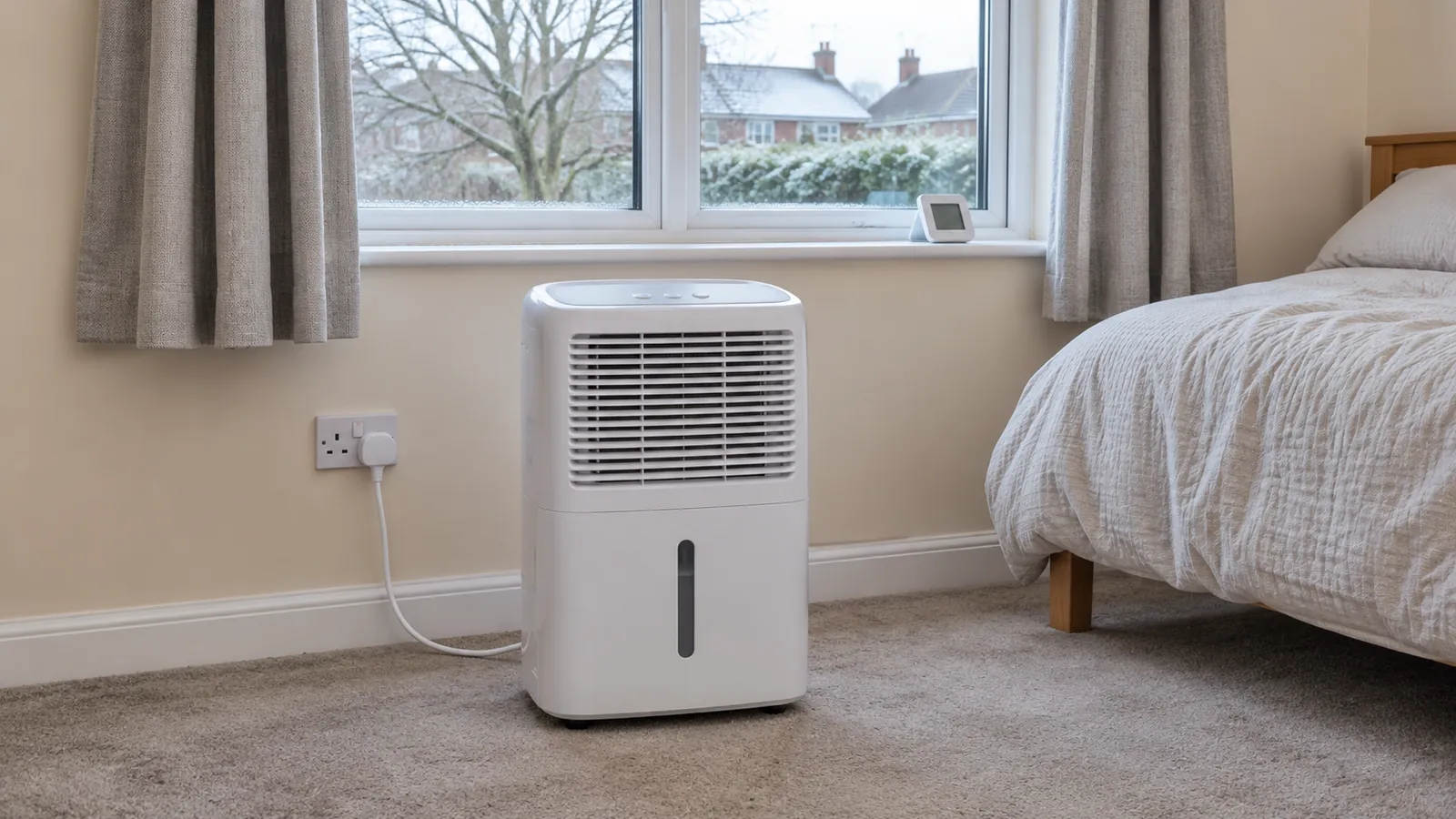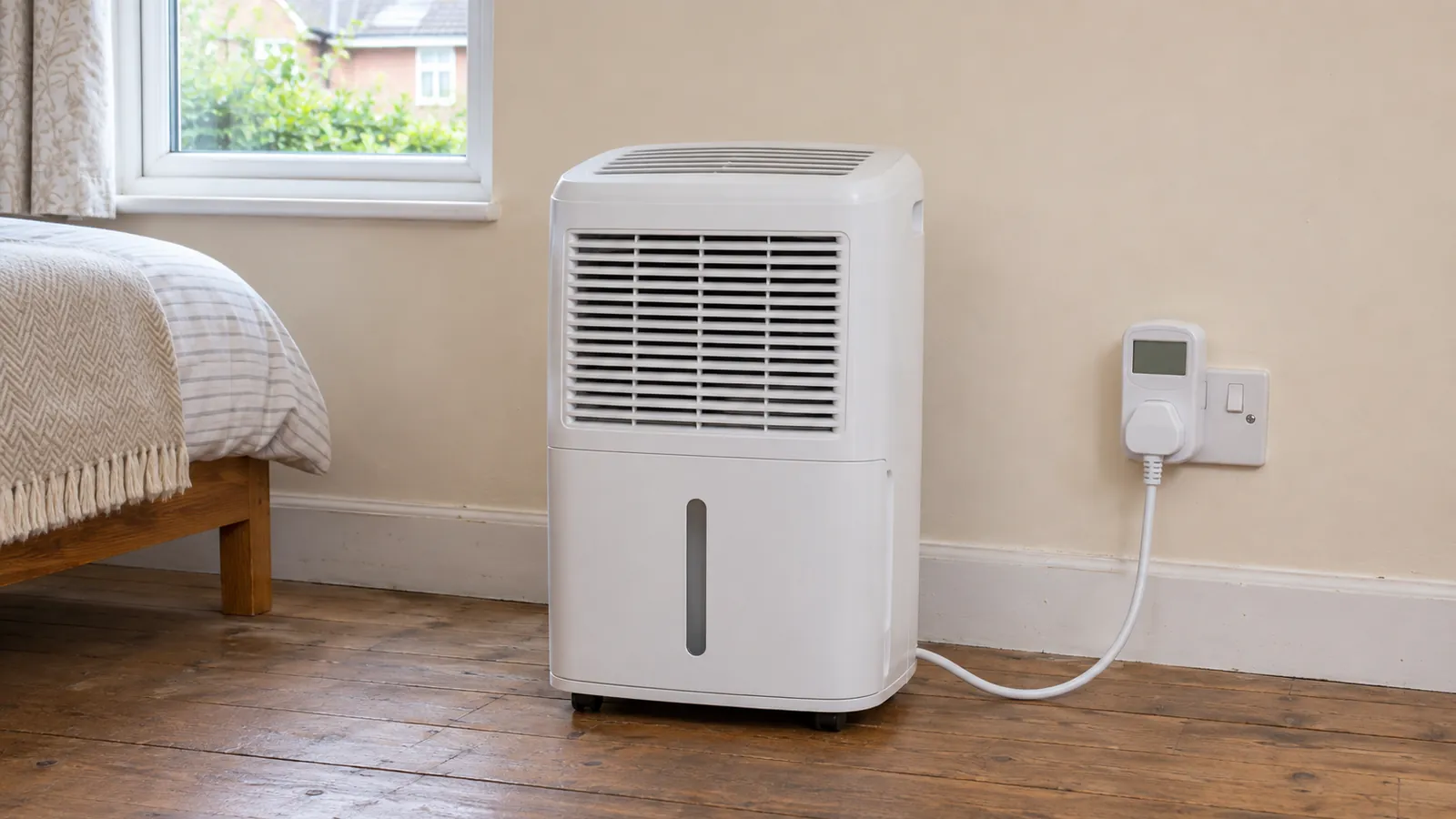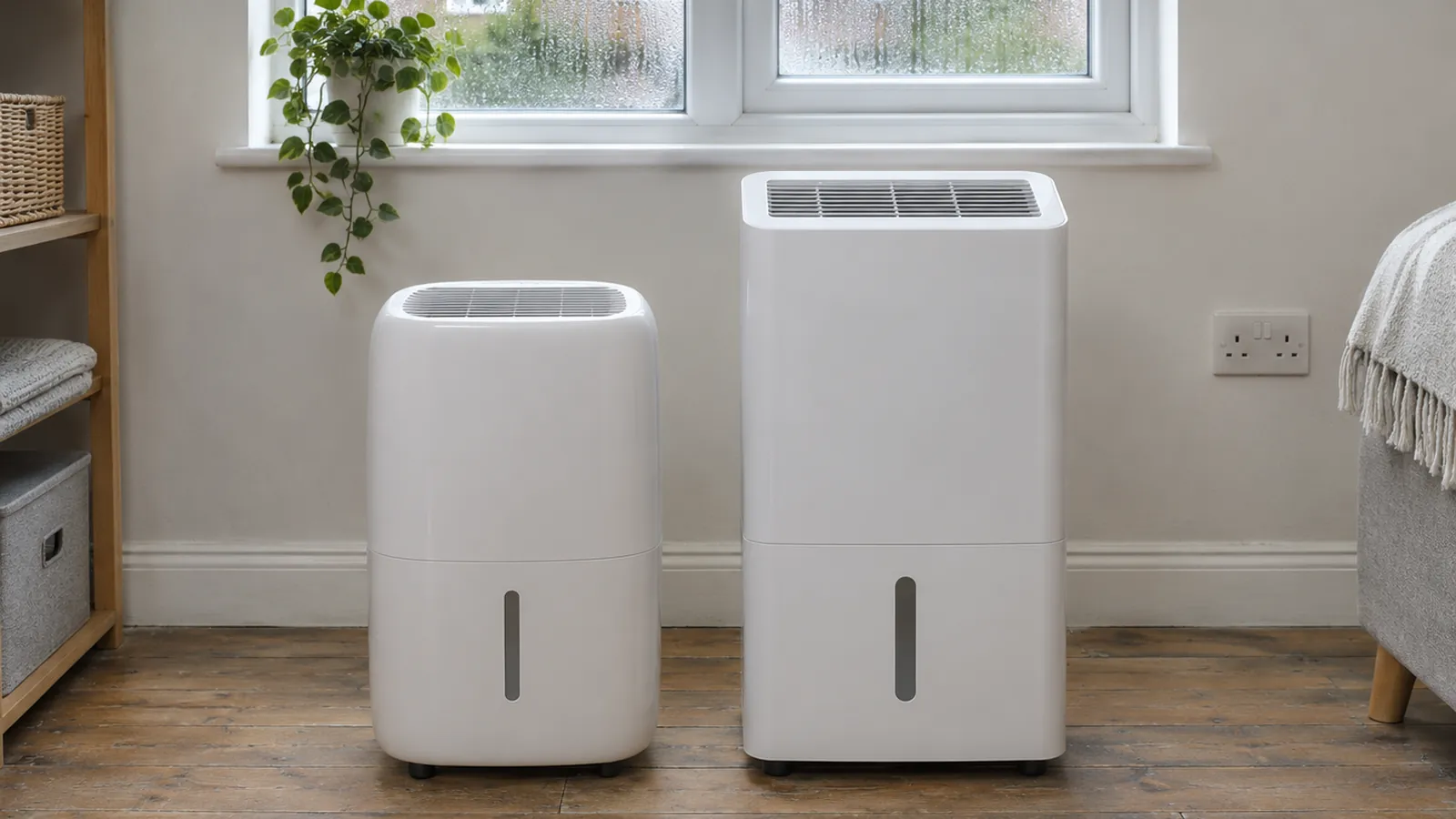

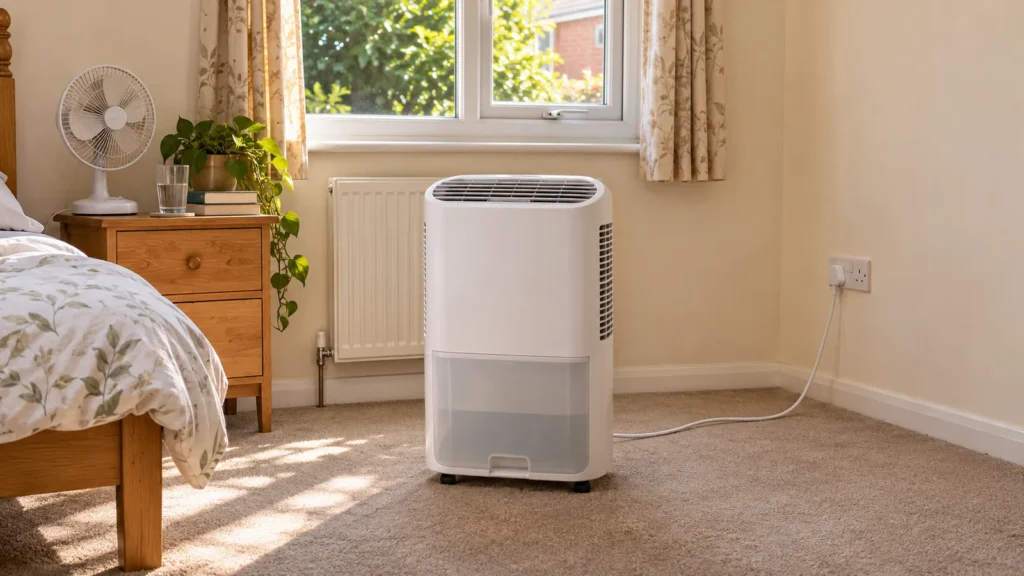
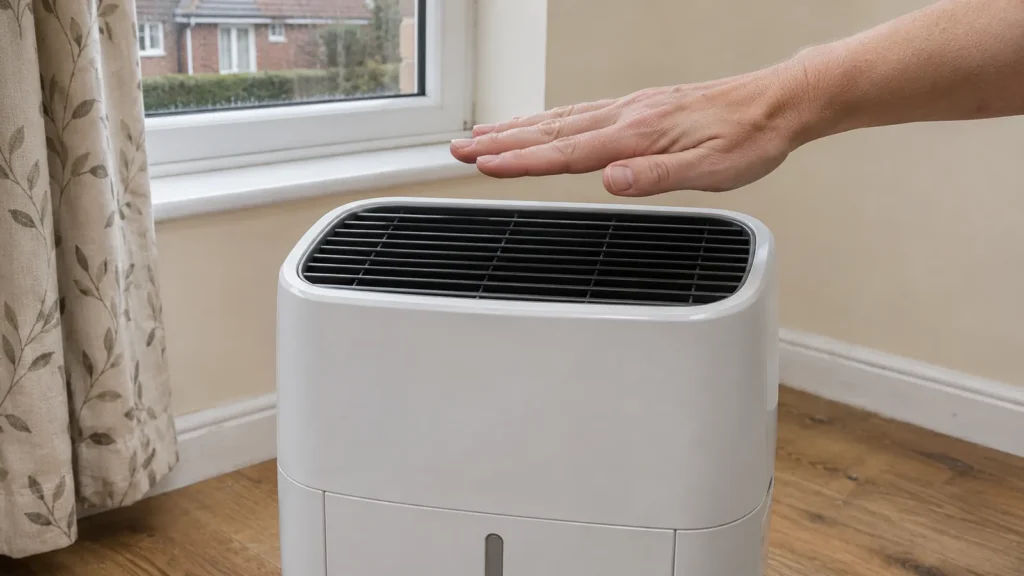
No. A dehumidifier doesn't cool the air; it makes the room slightly warmer. A compressor model typically warms the air coming out by a degree or two, and a desiccant model blows out noticeably warm air. What a dehumidifier does do is remove moisture, and in muggy summer weather drier air makes sweat evaporate more easily, so the room can feel less sticky even though it's a little warmer. If you need the room cooler, you need a fan or air conditioning.
It's an understandable mix-up: a dehumidifier looks a lot like a portable air conditioner, and both have a refrigeration circuit inside. But only an air conditioner dumps the heat outside. For more on what a dehumidifier is good for, see our dehumidifier benefits guide and our damp and mould hub.
Why a dehumidifier warms the room
Compressor dehumidifiers pull air over a cold coil. Water condenses on the coil and drips into the tank. The same air then passes over a hot coil that gets rid of the heat the system has picked up, and goes back into the room. Because the machine's motor and compressor also produce heat, and turning water vapour into liquid releases heat too, the air that comes out is slightly warmer than the air that went in. All the heat stays in the room.
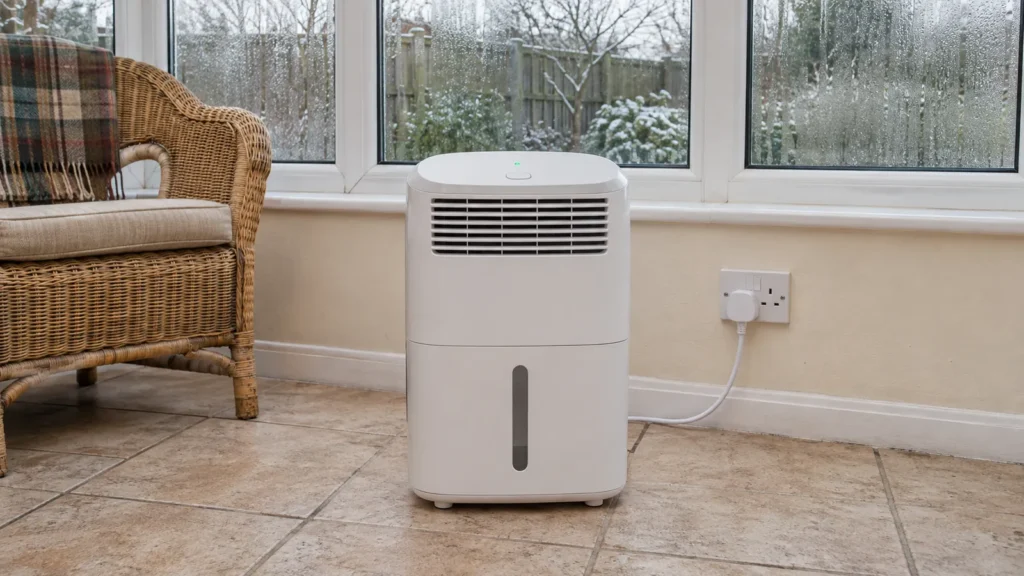
Desiccant dehumidifiers use a wheel of moisture-absorbing material, and they dry that wheel with an electric heater. Some of that heat comes out with the dry air. Desiccant models often blow noticeably warm air, which is why people use them in cold garages and conservatories.
So the more a dehumidifier runs in a closed room, the warmer that room gets, a little with a compressor, more with a desiccant.
So why does a room feel better with one on?
Your body cools itself by sweating. Sweat evaporates more easily in dry air than in humid air. On a warm, muggy day with humidity at 70 to 80%, sweat sits on your skin and you feel hot and clammy. Drop the humidity to around 50% and the same temperature feels more comfortable.
So a dehumidifier can make a humid room feel less oppressive, even while nudging the thermometer up slightly. It doesn't make a hot room cool.
Dehumidifier vs fan vs air conditioner
| Dehumidifier | Fan | Portable air conditioner | |
|---|---|---|---|
| Lowers temperature | No, raises it slightly | No, but feels cooler on skin | Yes (if vented outside) |
| Lowers humidity | Yes | No | Yes, a little |
| Running cost | Low (often 150 to 300W for compressor models) | Very low (often 20 to 60W) | High (often 800W to over 1kW) |
| Best for | Damp, condensation, laundry, muggy days | Hot dry days, moving air | Real heatwaves, hot bedrooms |
| Needs a window hose | No | No | Yes, for most portable units |
A fan doesn't cool the air either, but moving air over your skin helps sweat evaporate, which is why it feels cooler. On a hot, humid night, a fan plus a dehumidifier can be more comfortable than either alone.
Should you use a dehumidifier in summer?
It depends what you're trying to fix.
Yes, if: the house feels clammy, you dry washing indoors, there's mould in a cool room or cellar, or you get condensation in a bathroom or basement even in summer.
No, if: the room is simply too hot. A dehumidifier will add heat, and in a small room on a hot day you'll notice. Use a fan, close curtains on the sunny side during the day, and open windows when it's cooler outside in the evening.
Using one in winter: the warmth is a bonus
In winter, the slight warmth is useful. A desiccant dehumidifier in a cold spare room does two jobs at once. And because dry air feels warmer than damp air at the same temperature, many people find they can run the heating a little lower when the air is drier. See our desiccant vs compressor guide for which suits a cold room.
What about portable air conditioners with a dehumidify mode?
Many portable air conditioners have a "dry" or "dehumidify" mode. In normal cooling mode they remove some moisture anyway, as a side effect. The key difference is that an air conditioner sends its heat outside through the hose in the window. A dehumidifier has nowhere to send its heat, so it stays in the room.
Running costs
At 26.32p per kWh (the October to December 2026 price cap), a 200W compressor dehumidifier costs about 5p an hour to run. A 1kW portable air conditioner costs about 26p an hour. Our guide to how much electricity a dehumidifier uses has the full table.
FAQs
Does a dehumidifier make a room cooler?
No. It makes the room slightly warmer. It can make a humid room feel less sticky, but it doesn't lower the temperature.
Does a dehumidifier make the room hotter?
Slightly. Compressor models add a little warmth; desiccant models add noticeably more.
Is a dehumidifier the same as an air conditioner?
No. Both remove moisture, but only an air conditioner removes heat by venting it outside.
Should I use a dehumidifier in summer?
Yes if the house feels clammy or damp, or you dry washing indoors. Not if the problem is simply heat.
Can a dehumidifier help me sleep in hot weather?
It can make a muggy bedroom feel less sticky, but it adds a little heat. A fan usually helps more on hot nights; using both can work in humid weather.
Does a desiccant dehumidifier give off heat?
Yes. It uses a heater to dry its moisture-absorbing wheel, so it blows out warm air.
- A dehumidifier doesn't cool the air; it warms it slightly.
- Drier air feels less sticky, so a humid room can feel more comfortable.
- For real cooling, use a fan or an air conditioner that vents outside.
- Desiccant models give off noticeable heat, which is useful in winter.
- Dehumidifiers are cheap to run: about 5p an hour for a 200W model.