
Damp smells musty and earthy, like wet cardboard, an old cellar or a towel left in a gym bag. It's usually the smell of mould growing somewhere you can't see, such as behind furniture, inside a wardrobe, under floorboards or in a cavity. To get rid of it you have to find and dry the source. Air fresheners and sprays only cover it up.
If you've walked into a room and thought "that smells damp" but can't find anything on the walls, you're not imagining it. The nose often spots a damp or mould problem before the eye does, because the smell comes from gases mould gives off while it grows, and those travel further than the mould does.
What damp actually smells like
People describe it in remarkably consistent ways in forum threads: musty, earthy, like wet cardboard, like an old cupboard, like a damp dog (without the dog), or the smell of a charity shop in winter. It's a heavy, stale smell rather than a sharp one. Old-fashioned English has the word "foisty" for it, and that's about right.
Some tell-tale details:
- It's stronger when you first open a door, a wardrobe or a cupboard, then fades as your nose adjusts.
- It gets worse when the heating comes on, after rain, or on still, mild days when the air is damp.
- Clothes and bedding pick it up. Someone visiting says "your house smells a bit damp" and you've stopped noticing.
- It's worse in one room, one corner or one cupboard.
Not every musty smell is mould, though. Stale air in a shut-up spare room, a dirty dishwasher filter, a drain with a dry trap, a smelly washing machine or the carpet underlay in an old house can smell similar. The difference is that mouldy damp smells earthy and wet, rather than just stale or sour. A smell that's sharply sour is more likely to be a drain, a bin, or a washing machine that needs cleaning.
Why a damp smell can show up with nothing visible
Mould doesn't need to be on the wall you're looking at. It grows wherever there's moisture, something organic to feed on (paper, wood, fabric, dust, wallpaper paste) and little airflow. In a house, that's a long list of hidden places.
Behind furniture. A wardrobe, bed headboard or sofa pushed flat against a cold external wall stops air reaching it. The wall surface is cold, moisture from the room condenses on it, and mould sets in on the wall, or the back of the furniture. It's the most common answer to "damp smell but no visible damp".
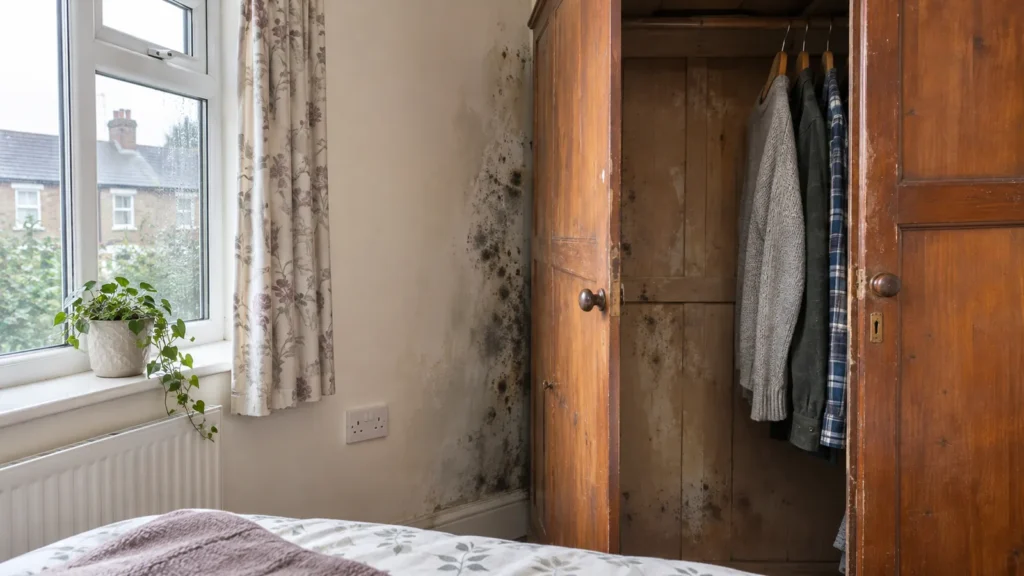
Inside wardrobes and cupboards. Clothes hold moisture. Packed tightly in a cold, unventilated wardrobe on an outside wall, they can smell damp even when the room doesn't.
Under floors and carpets. Carpet underlay, floorboards and the void beneath a suspended timber floor can all hold moisture. A damp crawl space or a floor void with blocked ventilation sends a musty smell up through gaps in the floor.
Blocked air bricks. The small perforated bricks near the base of older external walls ventilate the space under suspended floors. If they've been covered by a patio, a raised flower bed, rubble or paint, the void stays damp and starts to smell. Clear them (carefully, they should not be sealed).
Leaks. A slow leak from a pipe, a washing machine hose, a shower tray seal, a loose roof tile or a leaking gutter can soak plaster and timber for months before a stain appears. The smell is often the first sign.
Drying clothes indoors. A load of washing on a clothes airer gives off a couple of litres of water into the air. Do that in a bedroom with the door shut and you'll have a damp smell by the weekend. Does a dehumidifier dry clothes? covers a better way.
Condensation in general. Cold walls, poor ventilation and humid living are behind a lot of musty houses. The ordinary signs are streaming windows and black spots in corners, but when furniture hides them the smell is the clue. Our guide to condensation on the inside of windows explains the mechanism.
Rising or penetrating damp. Both can smell. Rising damp is rarer than people think, and often misdiagnosed. See rising damp before paying anyone for a treatment.
How to hunt the source, room by room
Do this on a day you've been away from the house for a while, or first thing in the morning, when your nose is fresh. Start with your nose, then use your hands and eyes.
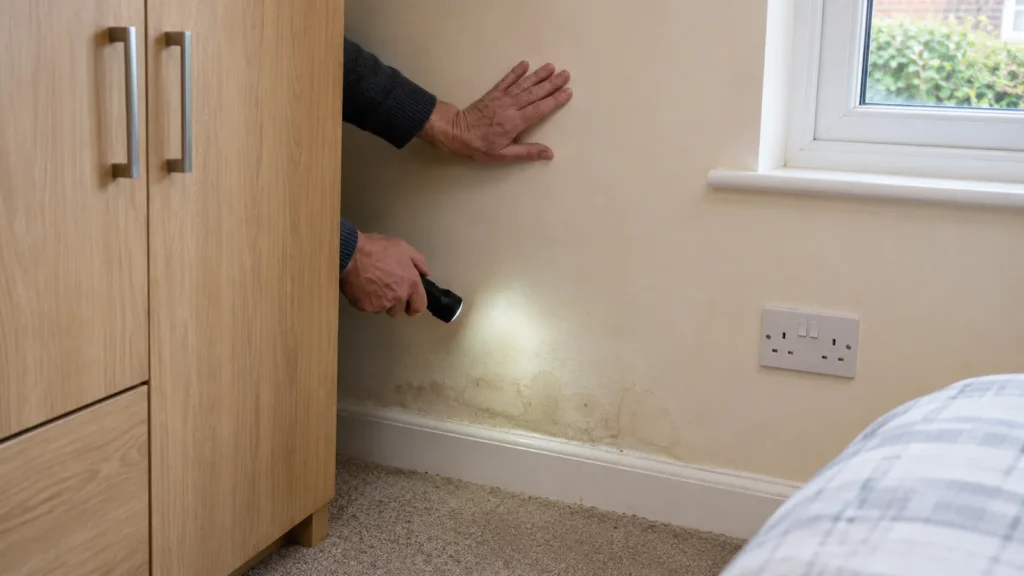
- Walk through and note where it's strongest. Open each door and take a deliberate sniff. If you can narrow it to one room, the job gets smaller.
- Move furniture. Pull wardrobes, beds and sofas at least 5 to 10 cm from external walls. Look behind them and at the back panels for black or green spotting, white fuzz, or a damp, cold feel.
- Open wardrobes and drawers. Smell the clothes. Check the back wall and floor of the wardrobe, especially in a corner.
- Check the cold corners and window reveals. Look at the top corners of rooms, behind curtains, around window frames and above doors. Run a hand over the plaster. Cold and slightly clammy is a clue.
- Lift a corner of the carpet in the room where it smells. Look at the underlay and the floor. A musty smell from underneath, or a darkened patch, is a sign.
- Look under sinks, behind the toilet and around the bath and shower. Slow leaks are common here. Dry kitchen roll pressed against pipe joints will show up a drip.
- Go outside. Check gutters and downpipes for overflow, cracked rendering, blocked air bricks, soil piled above the damp-proof course (about 150 mm below floor level is the usual guide), and missing roof tiles.
- Check the loft. Damp insulation, stained rafters and a stale smell point to a roof leak or poor ventilation.
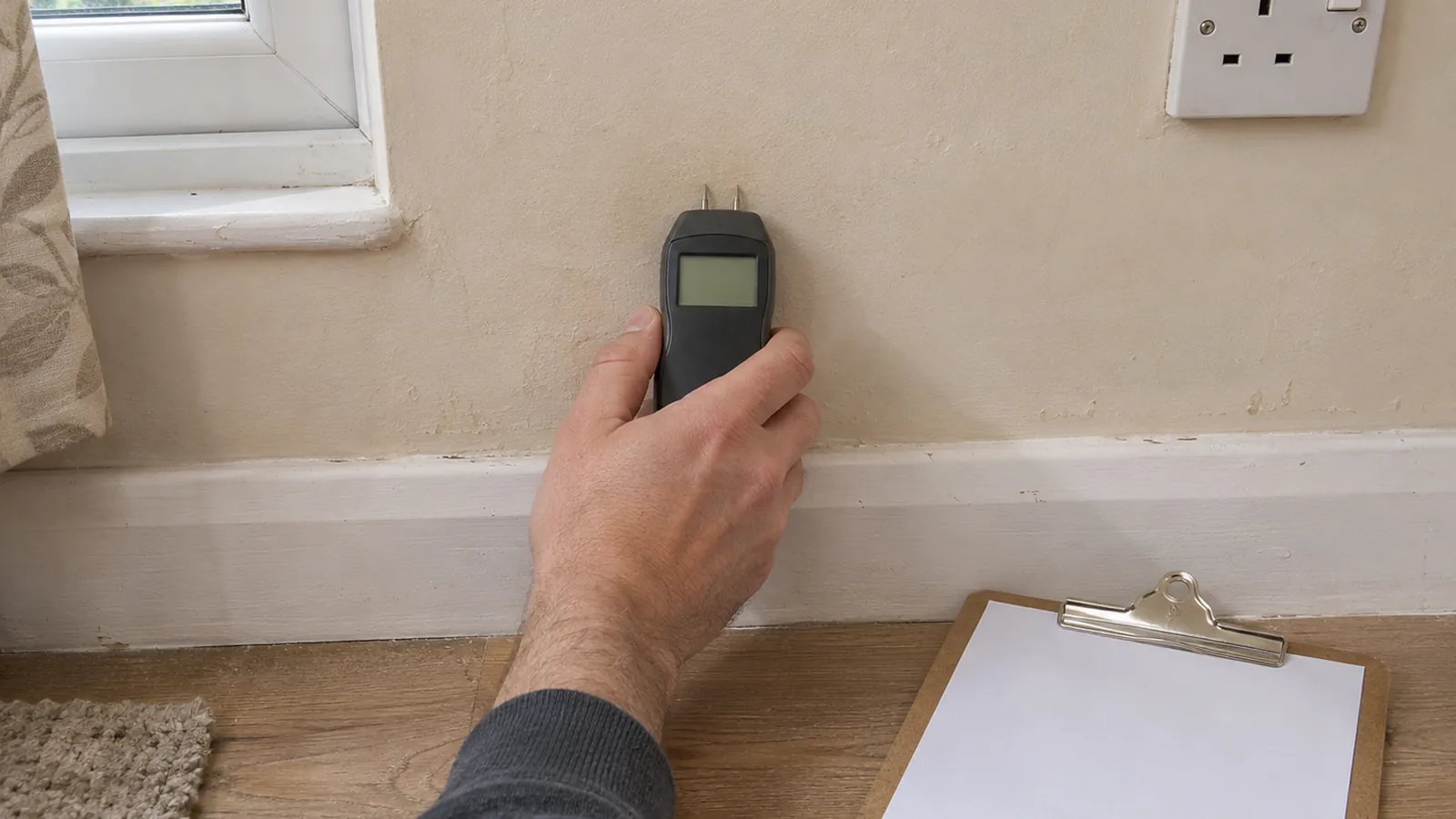
- Buy a cheap hygrometer (about £5 to £15). Readings consistently above about 60% relative humidity indoors suggest mould-friendly conditions. A moisture meter (about £15 to £40) will show a damp wall, but readings can be thrown off by salts or metal behind the plaster, so treat a high reading as a clue, not a diagnosis.
Mould smells stronger near warm surfaces and in still air. Put a small bag of dry kitchen roll or a sheet of kitchen foil against a suspect wall for a day. If it comes away damp, or condensation has formed on the foil's cold side, the wall is the culprit.
What kills the smell and what only masks it
Masks it: air fresheners, plug-ins, scented candles, sprays and "odour neutralisers". They hide the symptom for a few hours. The mould carries on.
Helps a bit: bowls of bicarbonate of soda or charcoal bags. They absorb odours and moisture from small, closed spaces like a wardrobe. They won't dry a wall.
Actually fixes it:
- Remove the moisture source. Fix the leak, clear the gutter, unblock the air brick, stop drying washing in the bedroom. Without this, nothing else sticks.
- Increase airflow. Open windows for 10 to 15 minutes a day even in winter, leave furniture off the wall, and keep wardrobe doors slightly ajar if you can.
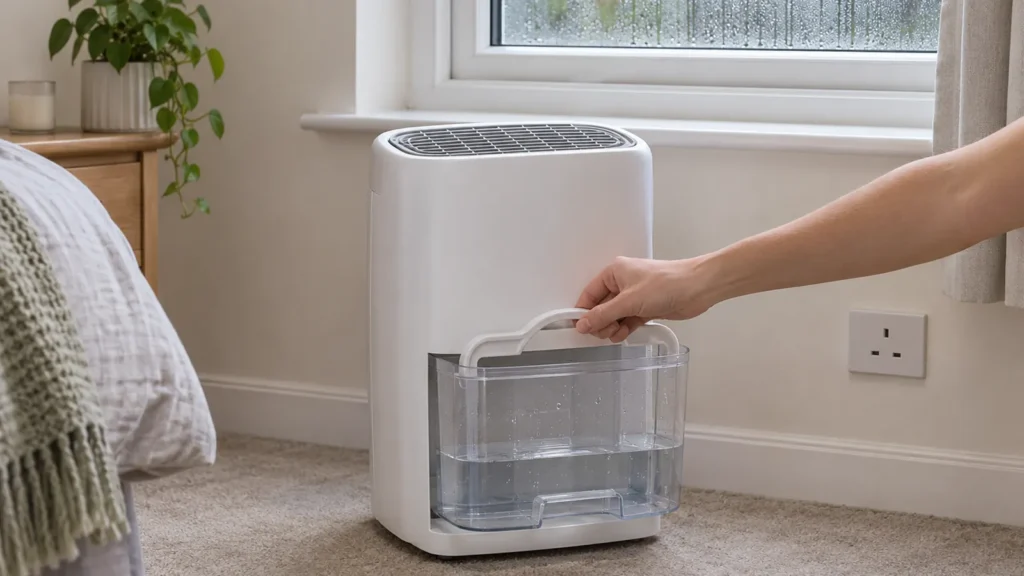
- Dry the room. A dehumidifier pulls moisture out of the air and from fabrics. A compressor model is fine in a warm room; a desiccant model works better when it's cold. See desiccant vs compressor dehumidifiers.
- Clean any mould you find. Wipe with a dedicated mould remover (or hot soapy water for a light patch), with gloves and a window open. Don't dry-brush it. The steps in our guide to mould on a bathroom ceiling apply to most hard surfaces.
- Wash or discard affected fabrics. Wash clothes and bedding hot if the care label allows. Mouldy upholstery and carpet underlay that has been soaked often can't be fully rescued.
- Keep the room warm enough. Walls that stay above the temperature where water condenses don't grow mould. A low, steady background heat beats a blast of heat for an hour. For help with running costs, see our heating guides.
Give the room a couple of weeks after you've dealt with the cause. A damp smell trapped in porous materials such as plaster, wood and fabric will take time to leave, and a lingering smell doesn't always mean the problem is back.
Is it dangerous?
A damp, musty smell is a warning, not a diagnosis. The cross-government guidance on damp and mould (GOV.UK, produced with UKHSA input) says living with damp and mould can cause or worsen coughs, wheezing, asthma and allergic reactions, and carries more risk for children, older people and people with lung conditions or weakened immune systems. If anyone in the house has breathing problems that seem worse at home, tell your GP about the damp and mould, and don't wait until it's cleared up.
If you rent, put your concerns to your landlord in writing, with photos and dates. See black mould in a rental property for what they're expected to do.
When it needs a surveyor
Try the room-by-room check first. Call in a professional if:
- the smell is strong and you can't find a source after a thorough search
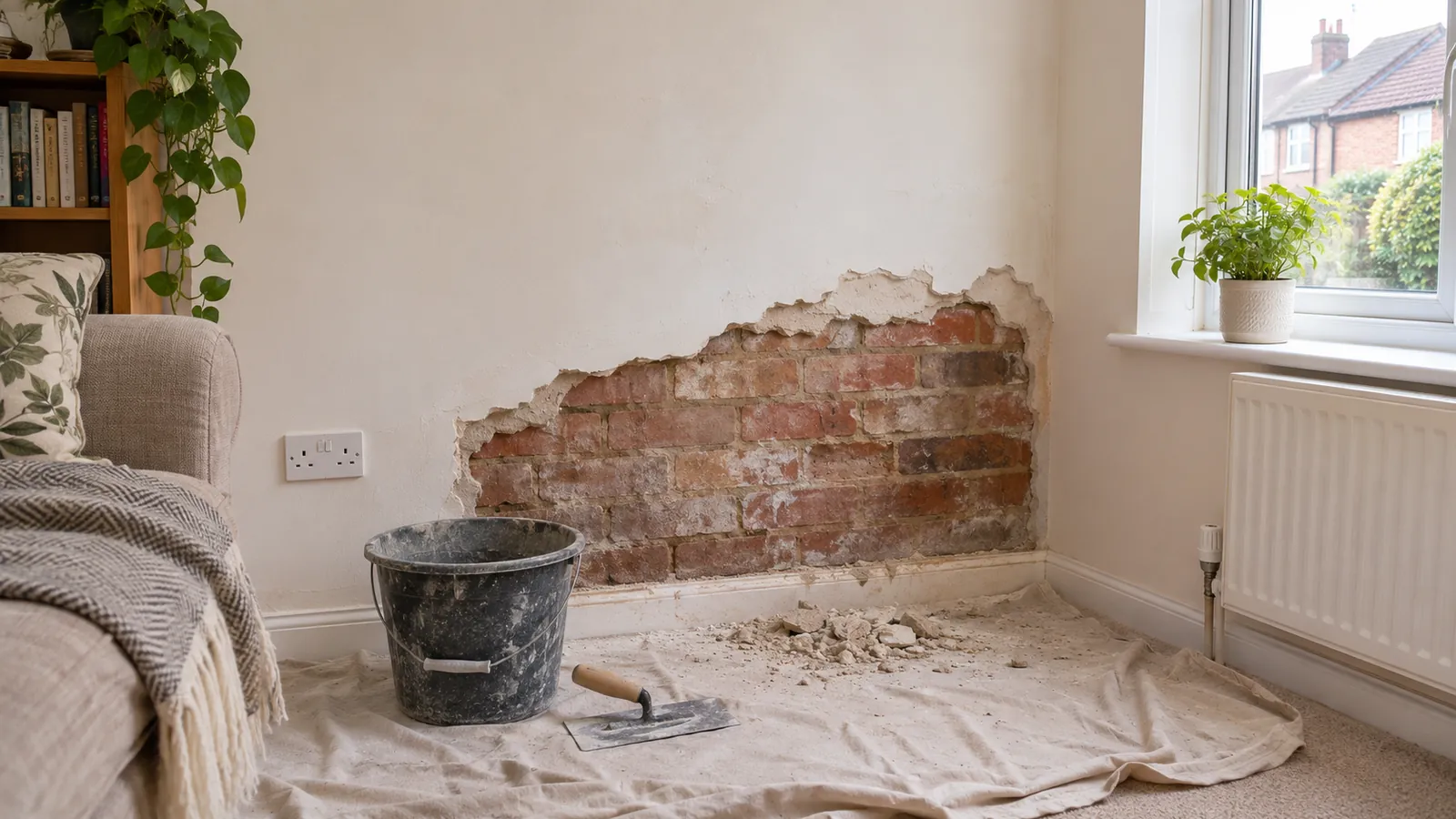
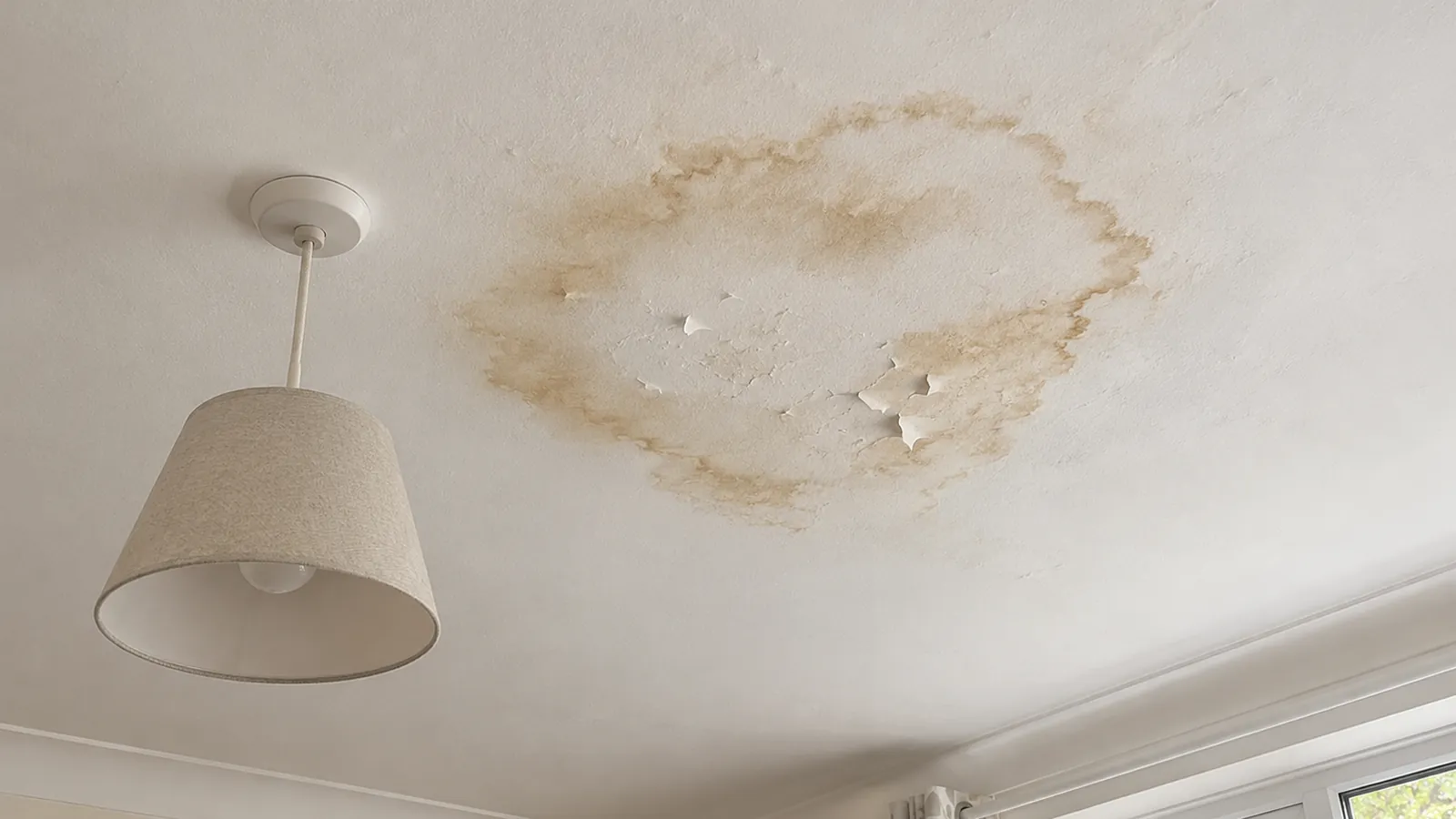
- you can see staining, bubbling paint or plaster, or a spreading tide mark
- floors feel soft, spongy or bouncy, or skirting boards are rotting
- the smell is coming from under the floor or from a cellar
- it returns within a few weeks despite better ventilation and a dehumidifier
- you're buying a house and notice the smell on a viewing (a seller's air freshener is a red flag)
Look for an independent surveyor or a Property Care Association (PCA) registered specialist, or a chartered surveyor, rather than a company that mainly sells treatments. A survey will usually cost less than the treatment it might talk you into: see damp survey cost for ranges. If you suspect a leak in the walls or under the floor, a plumber or a leak detection firm may be the right first call.
FAQs
What does damp smell like?
Musty, earthy and stale, a bit like wet cardboard, old books or a damp towel. It usually builds up in closed spaces such as cupboards and behind furniture, and it clings to clothes and bedding.
Why does my house smell damp but I can't see any damp?
Moisture and mould are often hidden: behind wardrobes and beds on cold external walls, under carpets and floors, in a wall cavity or in the loft. Drying washing indoors and poor ventilation add to it.
Can you smell damp without mould?
Yes. Damp materials such as wet timber, plaster and carpet underlay can smell musty before mould is visible. And some musty smells come from stale air, drains or dirty appliances, rather than damp.
How do I get rid of a damp smell quickly?
Open windows, move furniture off the wall, run a dehumidifier and wash fabrics. That helps within days. The smell will return unless you find and fix the moisture source.
Does a musty smell mean black mould?
Not always, and you can't tell the type of mould by smell. Any musty smell means there's likely to be mould or damp materials somewhere. Black-looking mould can be several species, and you can't judge the risk by looking at it either.
Is a damp smell worse in winter?
Often, yes. Windows are shut, heating is on and drying washing moves indoors, so more moisture hits cold surfaces. A smell that gets worse after rain points to a leak, a gutter or a wall letting water in.
- Damp smells musty, earthy and like wet cardboard, usually from hidden mould behind furniture, in wardrobes or under floors.
- Find the source by room: move furniture, check cold corners, lift carpet, look under sinks, then check outside.
- Fresheners mask it. Drying the source, ventilation and a dehumidifier remove it.
- Get a surveyor in if you can't find the source, the floor is soft or the smell keeps coming back.