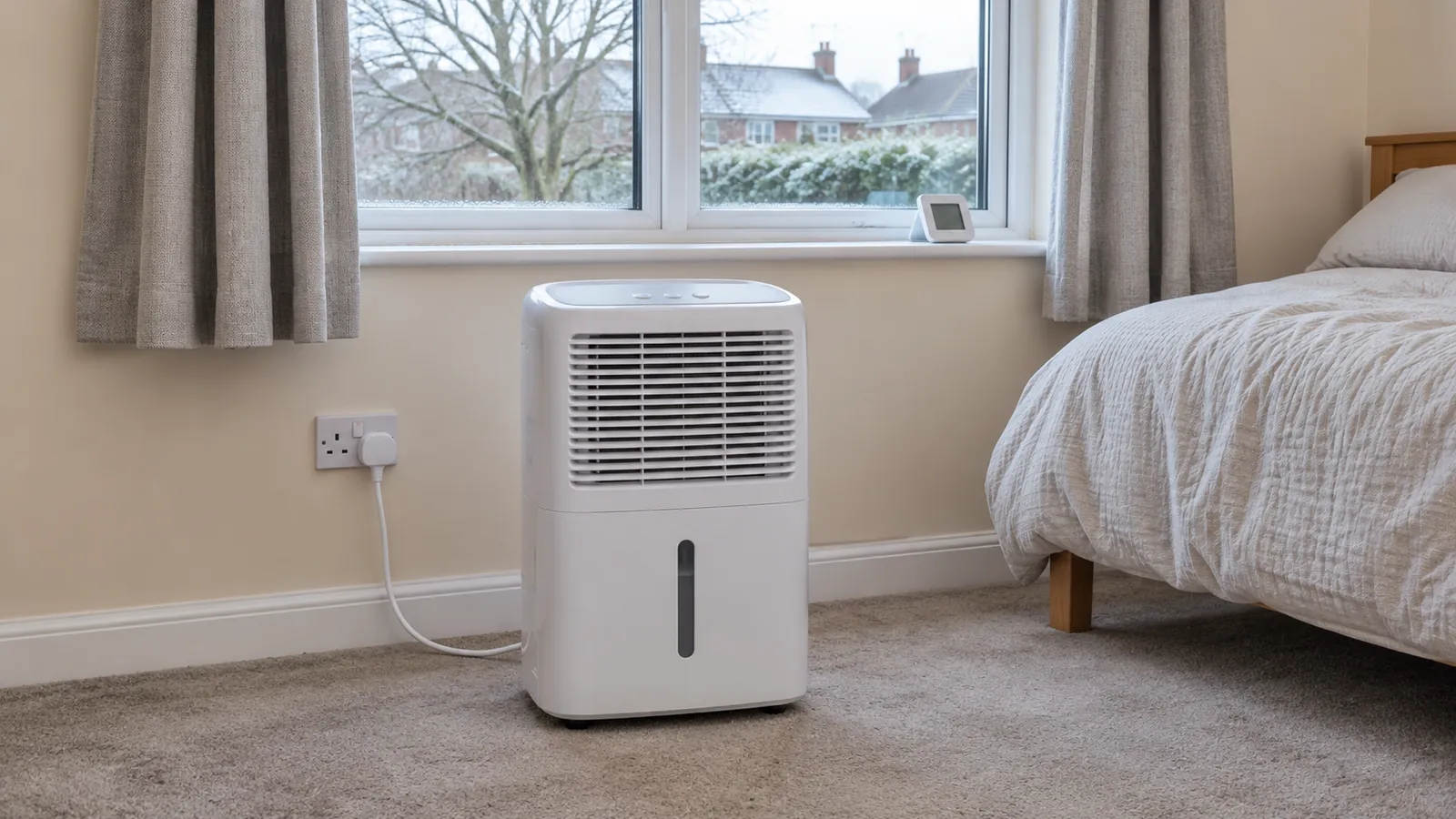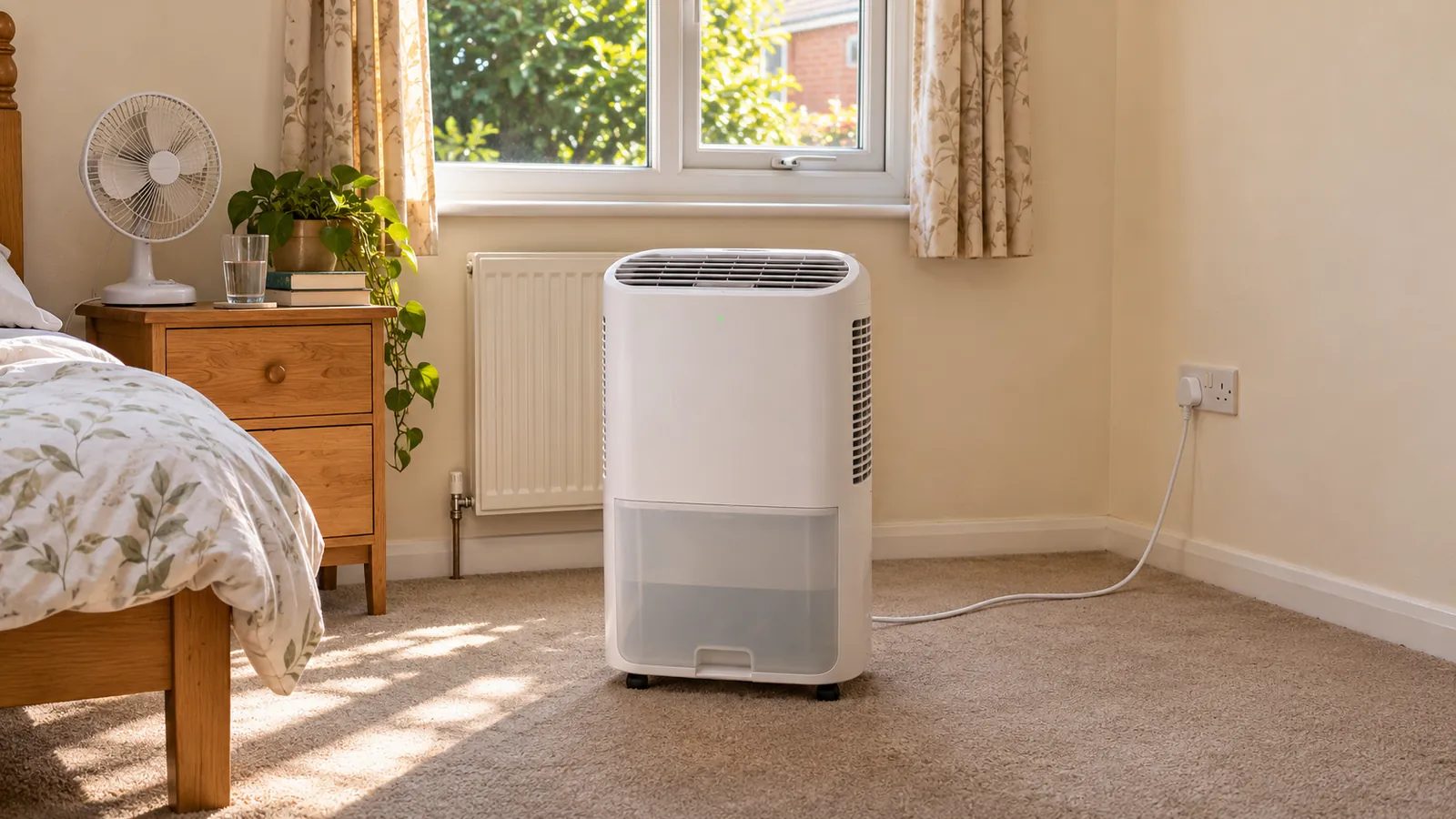

A typical compressor dehumidifier uses about 150 to 300 watts, which costs roughly 4p to 8p an hour at the October to December 2026 price cap rate of 26.32p per kWh. Desiccant models use more, usually about 300 to 650 watts, or around 8p to 17p an hour. Running a 200W compressor model for 8 hours a day costs about 42p a day, or roughly £12.60 a month, and less in practice because most machines cycle off once the room is dry.
Those figures are far lower than most people expect, and far less than a tumble dryer or an electric heater. Below are the sums for the common sizes so you can check your own machine. For the bigger picture on cutting bills, see our energy-saving guides.
How to work out your dehumidifier's running cost
You need two numbers: the wattage on the label (or in the manual) and your electricity unit rate.
Cost per hour = watts ÷ 1,000 × unit rate
So a 200W dehumidifier at 26.32p per kWh: 200 ÷ 1,000 = 0.2 kWh per hour, and 0.2 × 26.32p = 5.26p an hour.
The wattage on the label is the maximum. Compressor machines draw less once they've reached the humidity you set and the compressor switches off, leaving only the fan. So real costs are often lower than the sum.
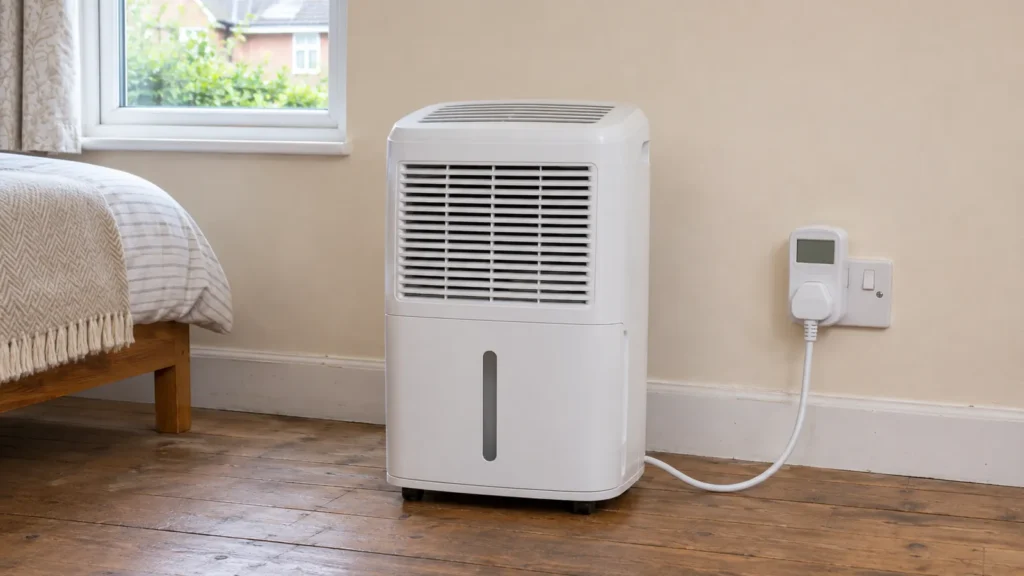
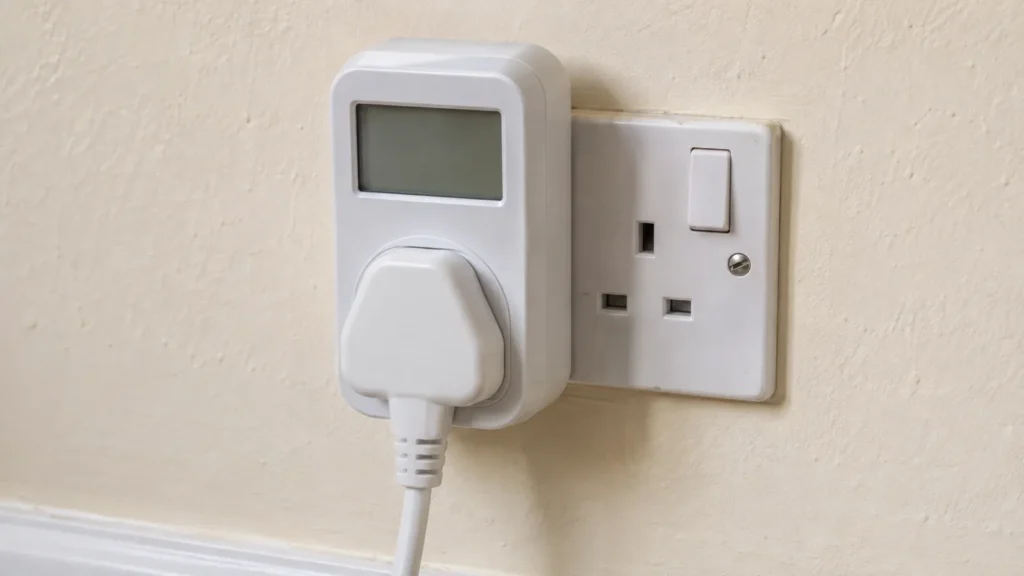
A plug-in energy monitor (a few pounds online) shows exactly what your dehumidifier uses over a day or a week. It's the easiest way to stop guessing.
Running costs by type and size
All figures use 26.32p per kWh (Ofgem price cap average, 1 October to 31 December 2026) and assume the machine runs at its full rated wattage, so treat them as the upper end.
| Dehumidifier | Typical power | Per hour | 8 hours | 24 hours |
|---|---|---|---|---|
| Small compressor (10 to 12L) | 160W | 4.2p | 34p | £1.01 |
| Medium compressor (12 to 20L) | 200W | 5.3p | 42p | £1.26 |
| Large compressor (20L+) | 300W | 7.9p | 63p | £1.90 |
| Desiccant (low setting) | 300W | 7.9p | 63p | £1.90 |
| Desiccant (full power) | 650W | 17.1p | £1.37 | £4.11 |
The litre figure (10L, 12L, 20L) is how much water a machine can remove in 24 hours in test conditions that are warmer and more humid than a typical British home. In a normal bedroom it'll pull out much less.
Monthly costs
What a month of typical use looks like, again at the full rated wattage:
- 200W compressor, 8 hours a night, 30 nights: 0.2 × 8 × 30 = 48 kWh, so 48 × 26.32p = £12.63
- 200W compressor, laundry days only (3 hours, 3 times a week): about 7.7 kWh a month, so about £2.03
- 600W desiccant, 8 hours a day, 30 days: 144 kWh, so about £37.90
With the compressor cycling off once the target humidity is reached, many people find a compressor model costs well under £10 a month in winter.
Compressor or desiccant: which is cheaper?
Compressor models are cheaper to run in a heated home. Desiccant models use more electricity, but much of it comes out as warm air, which helps in an unheated room and does part of a heater's job. In a cold garage, conservatory or spare room below roughly 10 to 15°C, a compressor loses efficiency and a desiccant can do more for the money. Our desiccant vs compressor guide explains the trade-off.
Is a dehumidifier cheaper than a tumble dryer for laundry?
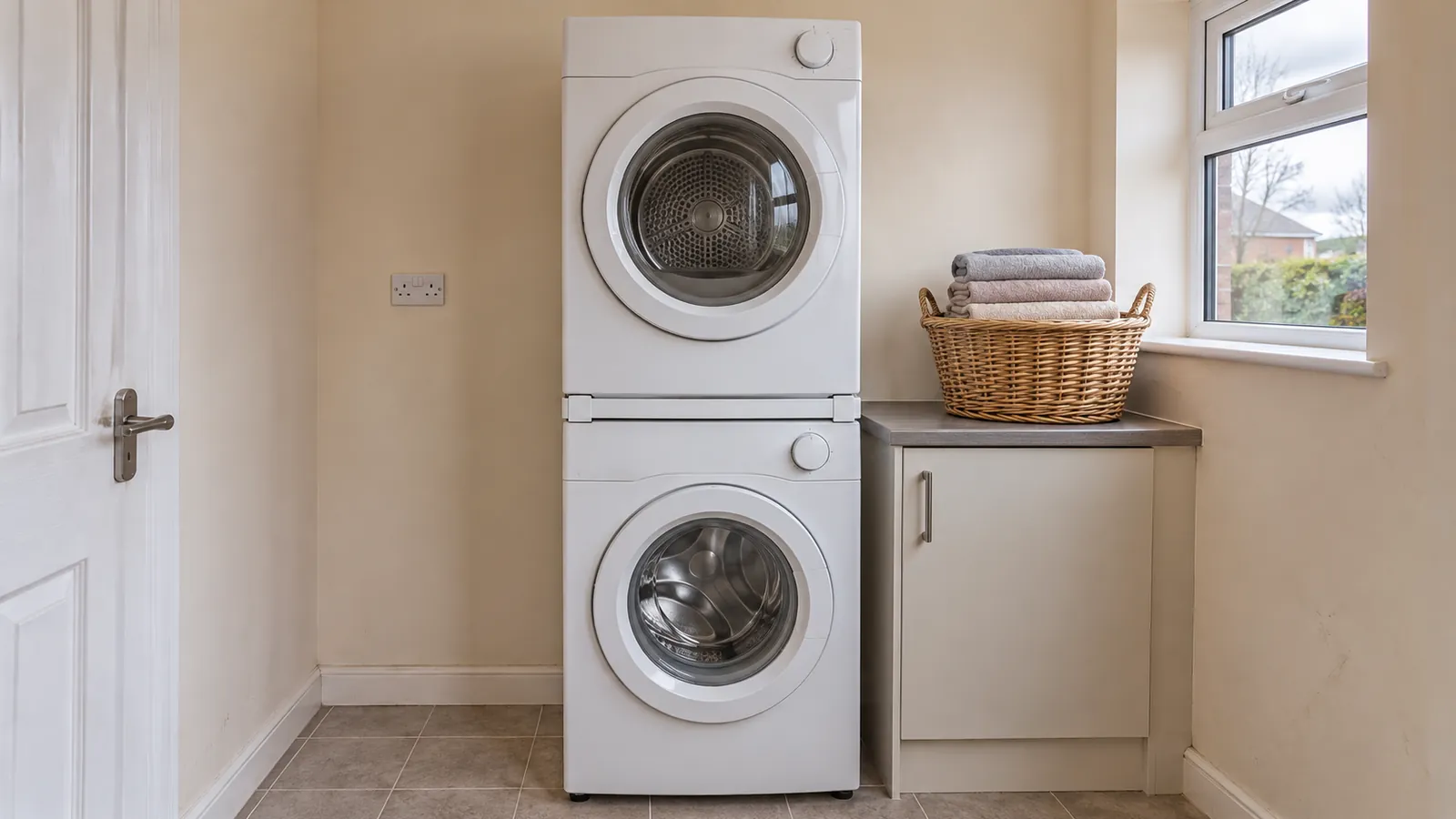
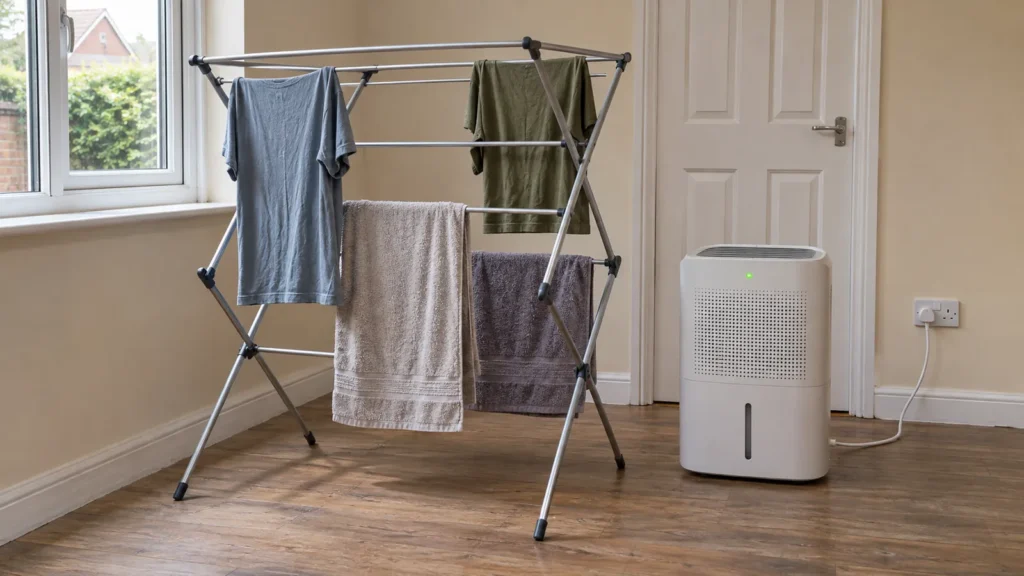
Usually by a long way. A load on an airer with a 200W dehumidifier for 3 hours uses about 0.6 kWh, around 16p. A condenser tumble dryer often uses around 4 to 5 kWh for a full load (roughly £1.05 to £1.32), and a heat pump dryer about 1.5 to 2.5 kWh (40p to 66p). The dehumidifier is slower and needs space for an airer, but the saving adds up over a winter. See our condenser vs heat pump dryer guide and whether a dehumidifier dries clothes.
Is it cheaper than putting the heating on?
They do different jobs, but in a damp house they work together. Damp air feels colder, so drying it can make a room feel warmer at the same thermostat setting. A 200W dehumidifier costs about 5p an hour; a 2kW electric heater costs about 53p an hour at the same rate. A dehumidifier won't replace heating, but it can help you run the heating less hard. Our cheapest electric heater to run guide covers the heating side.
How to cut the running cost
- Set it to 50 to 55%, not the lowest setting. Lower targets make it run almost constantly for little extra benefit.
- Close the door and windows of the room it's in.
- Run it where the moisture is: in the bedroom overnight, or wherever the laundry is.
- Clean the filter every couple of weeks. A clogged filter makes it work harder.
- Don't leave laundry mode on all the time. It usually runs flat out regardless of humidity.
- Use cheap night hours if you're on Economy 7 and the machine has a timer. See our Economy 7 times guide.
More tips are in our guide on how to use a dehumidifier.
FAQs
How much does it cost to run a dehumidifier for 24 hours?
About £1.01 to £1.90 for a typical compressor model at full rated wattage, and less in practice because it cycles off. A desiccant at full power costs around £4.
Do dehumidifiers use a lot of electricity?
No. Compressor models use about 150 to 300W, similar to a large TV, which is far less than a tumble dryer or an electric heater.
How much electricity does a dehumidifier use per day?
Running 8 hours a day, a 200W model uses about 1.6 kWh, which is about 42p a day at 26.32p per kWh.
Is it cheaper to run a dehumidifier or a tumble dryer?
A dehumidifier, by a lot. Drying a load with one costs roughly 16p, against around £1 or more for a condenser tumble dryer.
Should I leave my dehumidifier on all day?
Only if the room stays damp. Set it to around 50 to 55% and let it switch itself off once it gets there. Running it overnight in the bedroom suits most homes.
Does a desiccant dehumidifier cost more to run?
Yes, usually two to three times as much as a compressor model, but it also warms the room, which helps in cold spaces.
- Compressor dehumidifiers: about 4 to 8p an hour at 26.32p per kWh.
- Desiccant dehumidifiers: about 8 to 17p an hour, but they warm the room.
- A 200W model run 8 hours a night costs about £12.60 a month at full power.
- Drying laundry with one costs a fraction of a tumble dryer.
- Set 50 to 55% and close the door to keep costs down.