
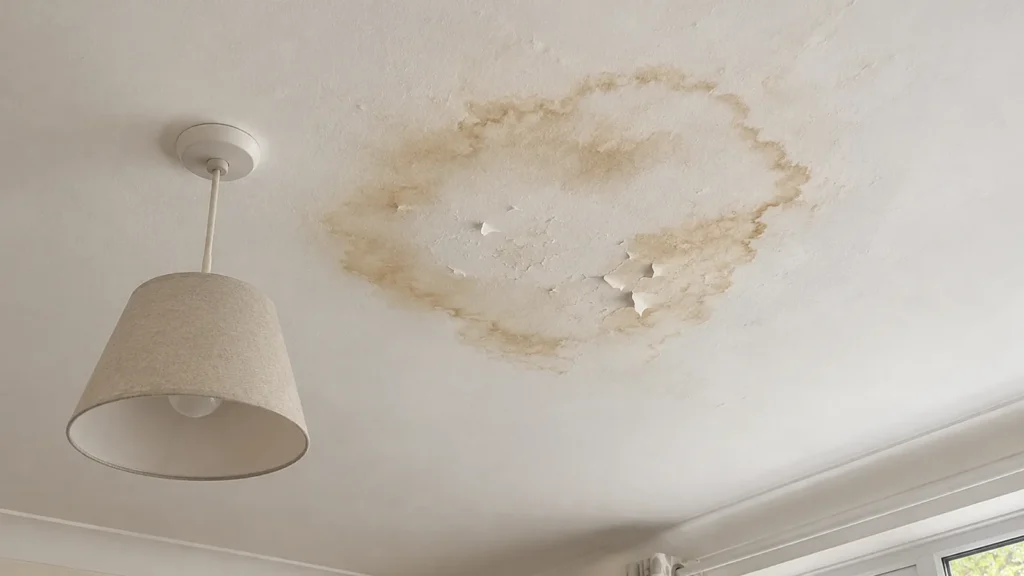
A damp patch on a ceiling is either water coming in (a roof, gutter, pipe or bathroom leak) or condensation in a cold spot. Check the timing: a patch that grows after rain points to the roof or gutters, one that appears after showers or baths points to the bathroom above, and one that comes and goes in cold, dry weather is usually condensation. If the ceiling is bulging or wet near a light fitting, keep clear and turn the power off at the consumer unit.
You look up and there's a pale brown patch above the bed, or a dark damp circle in the corner of the hallway, and no sign of a drip. That's normal. Water travels along joists and plasterboard and shows up a metre from where it got in, so the spot on your ceiling isn't always the spot to fix. It's one of the more common damp problems in UK homes, and it usually gets worse if you leave it.
Below: how to work out the cause from clues you can see without a ladder, what to do the same day, and who to call.
Do this first
Before you work out the cause, make it safe.
- Light fittings and electrics. If the patch is near a ceiling light, downlight or extractor, don't use that switch. Turn the lighting circuit off at the consumer unit. Water and wiring is the real danger here, not the stain. If it is dripping through a fitting, call an electrician.
- Bulging or sagging plasterboard. A ceiling that sags or has a soft, bulging patch is holding water. Water weighs a lot, and plasterboard can collapse. Keep people out from under it, put a bucket below, and carefully pierce the lowest point of the bulge with a screwdriver to let the water drain into the bucket, standing to the side, not directly beneath it. If it is large, leave it and call a professional.
- Take photos with the date. Pencil round the edge of the patch and note the time. Then you can see if it is growing, which helps you, a plumber or your landlord.
- If it is actively leaking from a pipe, switch off the water at the stopcock (usually under the kitchen sink) and call a plumber. If it's a heating pipe, turn the boiler off.
Which type of damp patch is it?
Look at four things: when it appears, what it looks like, what it smells like, and where it is.
| Clue | Likely cause |
|---|---|
| Appears or grows during or after rain | Roof, flashing, chimney, gutter |
| Appears after showers, baths or flushing, directly under a bathroom | Bathroom seal, waste or overflow |
| Constant, grows slowly with no weather link | Slow pipe leak (plumbing or heating) |
| Comes and goes, worst in cold, dry spells | Condensation in a cold ceiling |
| Black or grey speckles, musty smell, no brown stain | Mould from condensation |
| Brown with a darker ring ("tide mark") | Water that has dried and been re-wetted |
| Warm to touch, boiler-related timing | Heating pipe or radiator |
Leak from the bathroom above
If your patch is under a bathroom or en-suite, start here. The usual suspects are a cracked or failing seal round the bath or shower tray, a shower door or screen that splashes water onto the floor, a slow leak at the waste or overflow pipe, and grout that has failed in a tiled floor. Often the leak only happens in use, so the patch grows after someone showers and slowly dries. The bathroom upstairs may look fine.
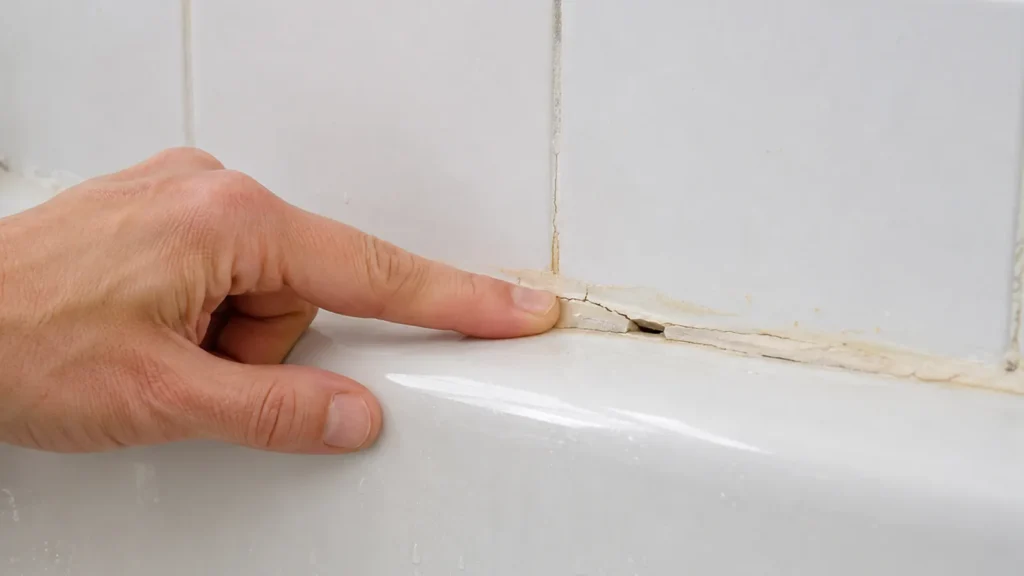
Ask whoever lives above to run the shower with the door open for 10 minutes and check the ceiling below. If the patch gets bigger, you've found it. Look at the bath and shower seals. Our guide to black mould in the bathroom covers how to cut out and redo failed silicone. If you rent, and the leak comes from a neighbour's flat, your landlord or the freeholder normally needs to arrange the fix. Contact them in writing.
Plumbing and heating pipes
A pinhole in a copper pipe or a weeping joint can soak a ceiling for weeks. A stain that is slowly growing with no link to weather or bathroom use is a sign. Water meters are a useful clue: turn off every tap and appliance, then check whether the meter still moves. If it does, there's a leak somewhere in the supply. A leaking heating pipe tends to produce a rusty brown stain and may cause the boiler pressure to drop. See boiler leaking water if the pressure is falling.
Roof, flashing, chimney and gutters
If it only shows after rain, and especially after wind-driven rain, think about the roof. Common culprits are slipped or cracked tiles, failed lead flashing round a chimney or dormer, worn mortar on a chimney stack or ridge, a blocked valley gutter or a blocked or leaking gutter overflowing down the wall. Forum threads regularly describe patches near Velux windows and chimney breasts where tiles looked fine from the ground.
You can look from outside. With binoculars from the ground, check for slipped tiles, gaps at chimney flashing and plants growing in the gutter. Don't climb onto a roof. Roofing is one of the most dangerous DIY jobs, and a roofer will look more safely.
If you can safely get into the loft, look at the underside of the roof and the timbers during or just after rain, with a torch. Dark, wet patches on the felt, wet insulation or daylight through a gap show you where. Insulation can hide a leak by soaking up the water, so the damp patch below may appear days later.
Condensation in a cold corner or under the loft
No leak, no pipe, no rain link? Then condensation is the usual answer. Warm, moist air rises and meets a cold ceiling. This is most common where loft insulation is thin or missing, at the corners where the ceiling meets an external wall, or around downlights and loft hatches that let warm air through. Forum posters regularly suspect recessed lights in the kitchen ceiling, which can leak moist air into the void above.
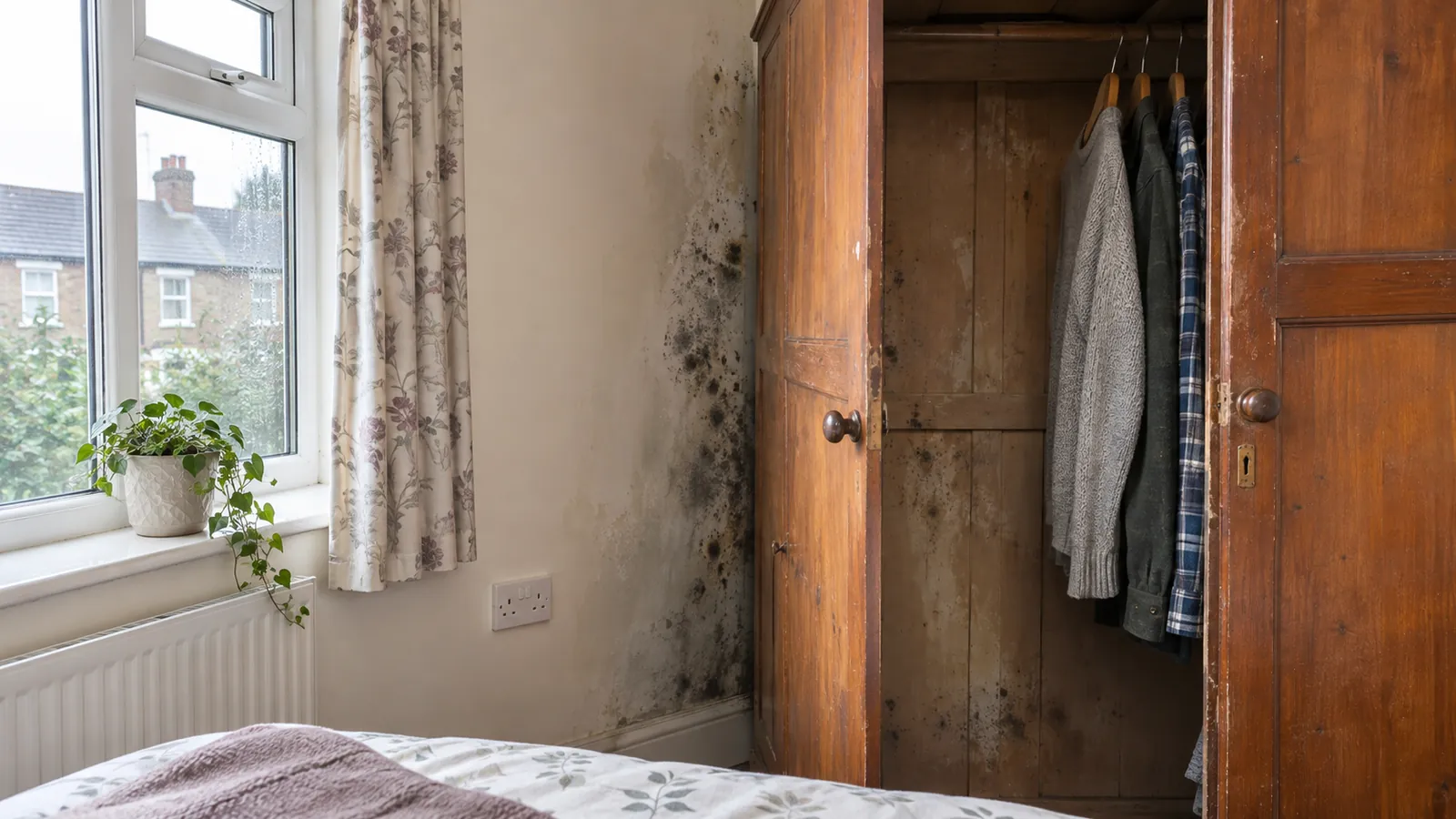
Signs: the patch is greyish or has black specks rather than brown, it's worse in cold weather and in rooms with lots of steam (kitchen, bathroom, bedroom with a damp-drying laundry rack), and it comes back after you've dried it. A brown tide mark points to water, while grey-black mould points to condensation. Read our guide to condensation on the inside of windows for what to do about humidity in general, and our loft insulation guide for topping up the layer above the ceiling (270 mm of mineral wool is the modern recommendation).
Mould on a bathroom ceiling specifically is covered in mould on bathroom ceiling.
Other causes
- Water tank or cylinder in the loft overflowing or weeping.
- Washing machine or dishwasher leaks upstairs.
- Pest damage. Rodent urine in the void can leave brown marks, and has been reported by homeowners who assumed it was damp.
- An old, dried stain that was never painted properly, which looks damp but is dry. Press it. If it's dry and hard and doesn't grow, it may just be a past leak.
Reading the stain
Brown or yellow: water has passed through the plaster and carried dirt and old dust with it. A darker ring around the edge shows where the patch has previously stopped and dried. Multiple rings suggest repeated wetting. An old stain with multiple rings that hasn't changed in months may be historic.
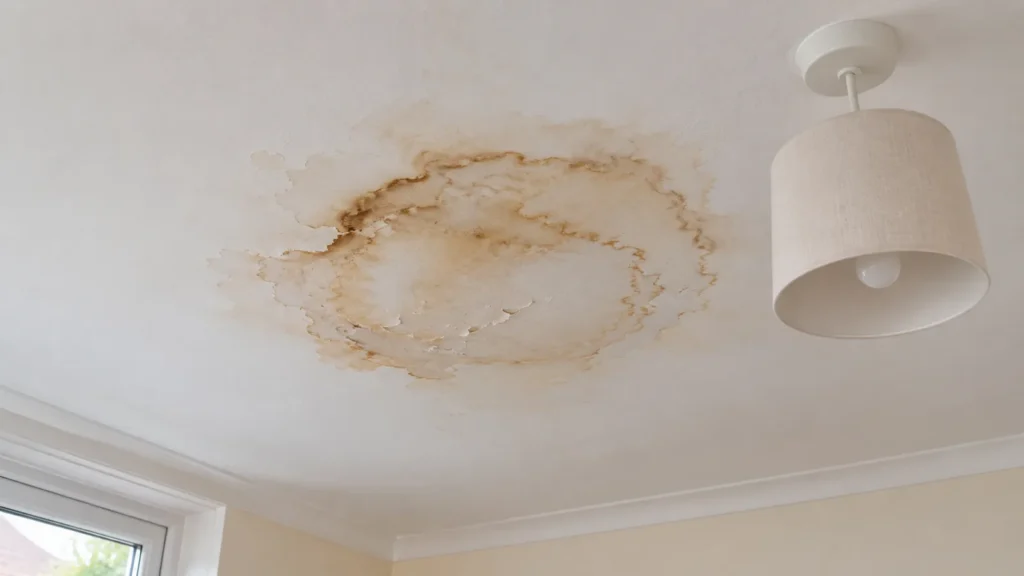
Grey or black speckles: mould, so condensation or long-standing dampness.
Pale, soft and bubbling paint: moisture in the plaster.
Wet and sagging: active leak. Treat as urgent.
What to do next, step by step
- Make it safe (see above).
- Find the pattern. Note when it grows over a week: after rain, after showers or neither.
- Trace the source before you do anything to the ceiling. Check the bathroom above, check the loft, look at the roof from the ground and the gutters.
- Stop the water. Reseal the bath, fix the pipe, clear the gutter or have the roof repaired.
- Dry the ceiling out completely. A dehumidifier in the room with the windows shut helps, and so does time. A thick plastered ceiling can take weeks.
- Only then decide about the stain.
If the ceiling has an old textured coating (Artex) from before 2000, don't scrape or sand it. It may contain asbestos. Get it tested before any repair work. HSE has guidance on this.
Who to call
| Problem | Who to call | Ballpark cost (2026 estimates) |
|---|---|---|
| Leaking pipe or tank | Plumber | £80 to £250 for a call-out and simple repair; more if floors need lifting |
| Bath or shower seal | You, or a plumber or bathroom fitter | £5 to £10 for sealant; £60 to £150 to hire someone |
| Roof tiles, flashing, chimney | Roofer (check TrustMark or a Competent Roofer scheme) | £150 to £500 for minor repairs; higher with scaffold |
| Gutter clearing or repair | Gutter cleaner or roofer | £50 to £200 |
| Ceiling light or electrics wet | Electrician | £80 to £200 plus |
| Plaster or ceiling repair | Plasterer | £150 to £400 for a patch; more for a full ceiling |
| Unknown cause or widespread damp | Independent damp surveyor | See damp survey cost |
These are estimates, and prices depend on your region, access, whether scaffolding is required and how much of the ceiling needs replacing. Get at least two quotes. Be cautious about any firm that offers a "free damp survey" and then sells a chemical treatment. A patch on a ceiling is rarely rising damp. If you suspect it, check our guide to rising damp, but note that rising damp happens at the bottom of walls, not ceilings.
If you rent, report it to your landlord or letting agent in writing with photos. They are generally responsible for repairs to the roof, pipes and structure. Water leaking from a flat above is dealt with via the landlord or managing agent.
If you have home insurance, check whether it covers escape of water or storm damage. Take photos before you start repairs and keep receipts.
Painting over a ceiling stain
Don't paint until the source is fixed and the ceiling is fully dry. Paint over damp plaster blisters and the stain bleeds through within days.
When it's dry:
- Scrub off any mould with a mould remover and let it dry.
- Cut away loose or flaking paint and any soft plaster, and fill with a ready-mix filler.
- Apply a stain-blocking primer or stain-block paint. This is a specific product (look for "stain block" or "damp stain blocker"), not ordinary emulsion. Two coats may be needed for a heavy brown stain.
- Finish with ceiling paint, or anti-mould paint in kitchens and bathrooms.
If the stain bleeds through again, the ceiling isn't dry or the source isn't fixed.
FAQs
What causes a damp patch on the ceiling with no leak?
Usually condensation: warm, moist air meeting a cold ceiling, often where loft insulation is thin or around downlights. Water can also travel along joists, so the leak could be some distance from the patch.
Why is there a damp patch on my ceiling after rain?
Water is likely getting in through the roof, flashing, chimney or an overflowing gutter. Check the loft during rain with a torch and have a roofer inspect it.
Is a brown stain on the ceiling dangerous?
The stain itself isn't. The risks are water near electrics, a collapsing wet ceiling, and mould if it stays damp. Fix the cause promptly.
Can I paint over a damp patch on the ceiling?
Only once the leak is repaired and the ceiling is completely dry. Use a stain-blocking primer first, or the brown will show through.
How long does a wet ceiling take to dry?
It depends on how much water got in and how well the room is ventilated. It can be days for a light patch, and weeks for soaked plaster and insulation. Don't paint until it is dry.
Should I pop a bulging ceiling?
If it's bulging and you cannot call someone quickly, making a small hole at the lowest point lets water drain safely into a bucket. Stand to one side and keep the power off. If it is big or near wiring, keep out and call a professional.
- Timing is the quickest clue: rain means roof or gutters, showers mean the bathroom above, cold dry weather means condensation.
- Keep electrics off near a wet ceiling, and stay clear of bulges.
- Fix the source and let it dry before painting, then use stain-block primer.
- Costs vary a lot. Get more than one quote and photograph everything for insurance or your landlord.