

An EPC rating of D is average, not bad. It covers SAP scores of 55 to 68 out of 100, and about a third of homes in England (35% in the English Housing Survey for 2024) are rated D, second only to C. It means the home is moderately efficient, typical of an older house with some insulation and a gas boiler. You can sell or live in a D-rated home without any problem. The main catch is for landlords: privately rented homes in England and Wales are expected to need at least a C by 1 October 2030 under the government's plans. Many D homes can reach C with a few cheaper upgrades.
EPC bands run from A (most efficient) to G (least). Our EPC ratings explained guide covers how the score is calculated. More help is on our insulation and EPC hub.
Where D sits on the scale
| Band | SAP score | What it usually means |
|---|---|---|
| A | 92+ | Very efficient, often new-build with solar |
| B | 81 to 91 | Typical modern new-build |
| C | 69 to 80 | Good: well-insulated older home or newer build |
| D | 55 to 68 | Average: older home with some improvements |
| E | 39 to 54 | Below average: little insulation, older heating |
| F | 21 to 38 | Poor |
| G | 1 to 20 | Very poor |
Because D covers a wide range, a home at 67 is very close to C, while one at 55 has further to go. Check your actual score, not just the letter. It's on the certificate, which you can find free on the government's EPC register.

D used to be the most common band, but that has changed as homes have been upgraded. The English Housing Survey found the share of D-rated homes fell from 43% in 2022 to 35% in 2024, while C rose to 52%, so more of the homes around you are now likely to be C.
What a D means for your bills
The EPC rating is mainly based on how much energy the house needs for standard heating, hot water and lighting, and its cost. A D-rated home will typically cost more to heat than a C, and less than an E or F. The certificate shows estimated costs, but those use standard assumptions about how you live and older fuel prices, so your real bills can be quite different.
Is a D OK when buying or selling?
Yes. There's no minimum EPC rating to sell or buy a home you'll live in. A D is normal for older houses and won't put most buyers off. Some lenders offer slightly better "green mortgage" rates for A to C homes, so a C can help a little, but it's rarely a deal-breaker.
If you're buying, the recommendations page of the EPC is useful: it lists improvements and their estimated effect on the rating.
Renting: the rules for landlords
- Currently, privately rented homes in England and Wales must have at least an E (unless a valid exemption is registered).
- The government has said it will raise the minimum to C by 1 October 2030 for privately rented homes, with a cap on how much landlords must spend and a new EPC system being brought in. Details, including the spending cap, have been changing, so check the latest guidance on gov.uk before planning work.
If you're a tenant in a D-rated home, it's legal to let now. If you're a landlord, it's worth planning the upgrades now rather than in 2029 when every installer is busy. Our guide to black mould in rental property covers other landlord duties.
Scotland has its own rules and timetable, so check the Scottish Government guidance if your property is there.
The cheapest upgrades to get from D to C
The best order depends on the house, and your EPC's recommendations page is a good starting point. Common upgrades, roughly in order of cost:
- Loft insulation to around 270mm. One of the cheapest, most effective improvements. See our loft insulation guide.
- Low-energy lighting throughout. Cheap, and it counts on the EPC.
- Heating controls: a programmer, a room thermostat and thermostatic radiator valves (TRVs) if missing.
- Hot water cylinder insulation and a cylinder thermostat, if you have a cylinder.
- Cavity wall insulation, if the walls have an unfilled cavity.
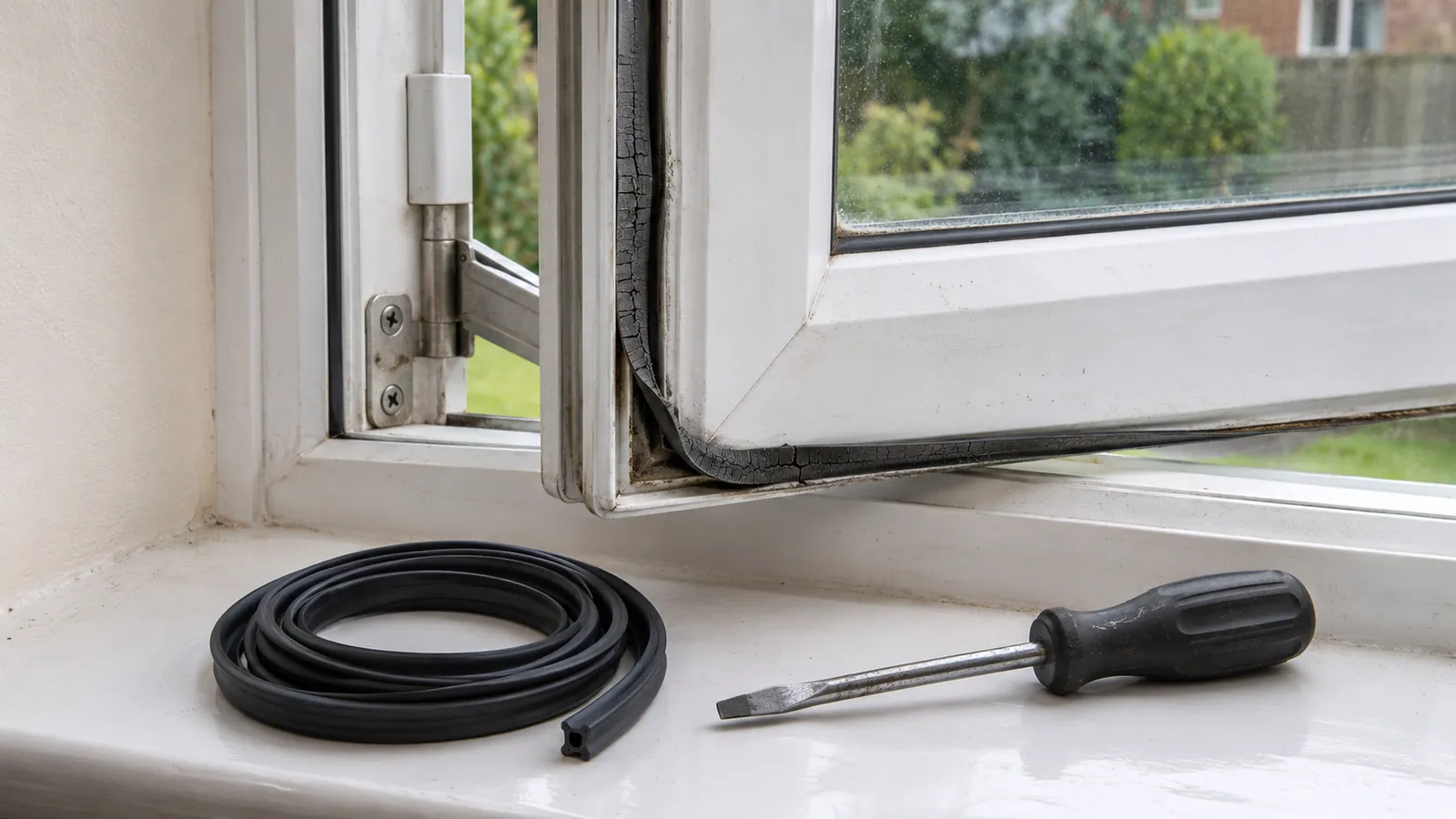
- Draught-proofing doors and windows. See our draught-proofing guide.
- A new condensing boiler if the old one is very inefficient.
- Solar panels, which can push a rating up noticeably on many homes.
- Double glazing, if you still have single glazing.
A high D (say 64 to 68) may reach C with just the first few. A low D usually needs something bigger, like cavity wall insulation, a new boiler or solar.

Getting a new EPC after improvements
An EPC lasts 10 years, but you can get a new one any time. If you've done upgrades since the last certificate, a new assessment will usually show a better score. It costs roughly £60 to £120 in 2026 depending on the house and area. See our EPC certificate cost guide.
Before the assessor arrives, gather proof of improvements they can't see: insulation receipts, the cavity wall guarantee, boiler paperwork and loft photos. Assessors can only record what they can see or what you can prove, and missing evidence is a common reason a rating comes out lower than expected.
FAQs
Is an EPC rating of D good?
It's average. About a third of homes in England are rated D, so it's normal for an older home, but a C or better means lower bills and fewer upgrade worries.
Can I rent out a house with an EPC rating of D?
Yes, at the moment. The current minimum for private rentals in England and Wales is E. The government plans to raise it to C by 1 October 2030.
What is the SAP score range for EPC D?
55 to 68 out of 100.
How can I improve my EPC rating from D to C?
Start with loft insulation, LED lighting, heating controls and draught-proofing, then consider cavity wall insulation, a newer boiler or solar panels. Your EPC's recommendations list is a good guide.
Does an EPC rating of D affect selling a house?
Not much. There's no minimum rating to sell, and D is common for older homes. Some lenders offer slightly better rates for A to C homes.
How much does it cost to go from EPC D to C?
It varies widely, from a few hundred pounds for loft insulation and lighting in a high D, to several thousand for a new boiler, wall insulation or solar on a low D.
- D is average: about a third of homes in England are rated D.
- It's SAP 55 to 68, so check how close you are to C (69).
- No minimum rating applies when you sell or live in your home.
- Landlords should plan for C by 1 October 2030 in England and Wales.
- Loft insulation, lighting, controls and draught-proofing are the cheapest steps.