
The most effective fix for noise from upstairs is treating the floor above (acoustic underlay or a floating floor), because footsteps start there. If you can only work from below, the best option is an independent ceiling: a new ceiling hung on its own joists or acoustic hangers, with acoustic mineral wool above and two layers of acoustic plasterboard. Resilient bars are a thinner, cheaper middle ground. These work well for voices and TV noise; results on footsteps and thuds vary more, so manage your expectations before you spend thousands.
Noise from the flat or room above is one of the most common soundproofing jobs, and one of the most disappointing when done without understanding the type of noise. For walls, see our sound insulation for walls guide. More help is on our insulation and EPC hub.
Footsteps or voices? It changes everything
Airborne noise: voices, TV, music. Sound in the room above makes the floor and ceiling vibrate. Adding mass and an isolated layer below cuts it well.
Impact noise: footsteps, dropped objects, chairs scraping, washing machines on a spin. The floor above is struck directly and the vibration runs through the joists into your ceiling. This is much harder to fix from below, because it also travels into the walls around your room (flanking).
UK forum threads show this split clearly. Several people report that a new independent ceiling helped a lot with voices and TV but did much less for footsteps than they'd hoped. Others found it helped footsteps noticeably. The difference often comes down to how well it was built, and whether the noise was also coming down through the walls.
Start upstairs if you possibly can
If you own the flat above, or your neighbour is willing, treating the floor up there beats almost anything underneath:
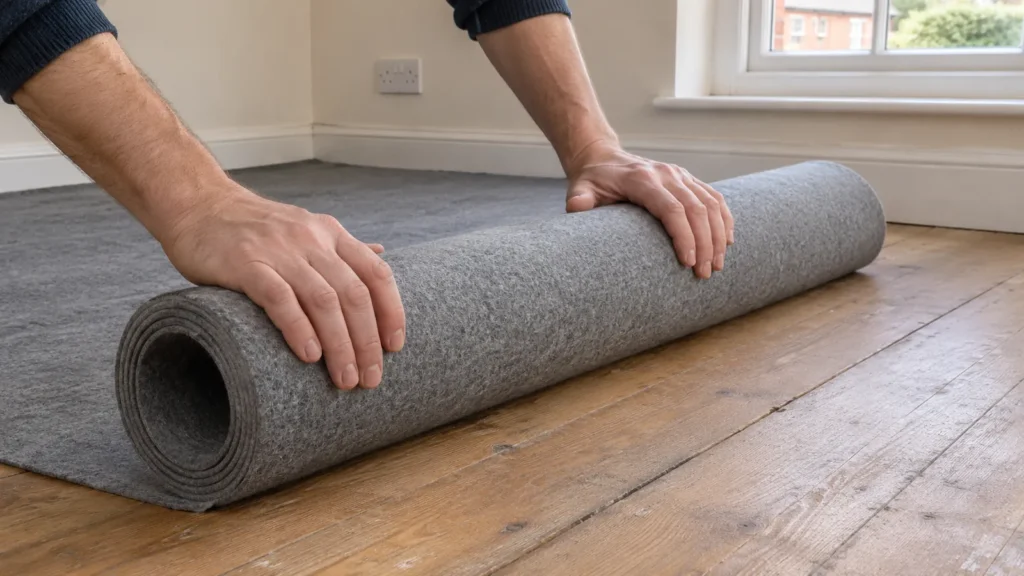
- Thick rugs and acoustic underlay under carpet or laminate cut footstep noise a lot, cheaply.
- A floating floor, with a resilient layer between the floorboards and a new floor surface, isolates the footfall from the joists.
- Hard floors (laminate, wood, tiles) without proper acoustic underlay are the classic cause of new noise complaints. In many leasehold flats, the lease requires carpet or approved underlay. Check yours.
Options from below
1. Fill the void between the joists
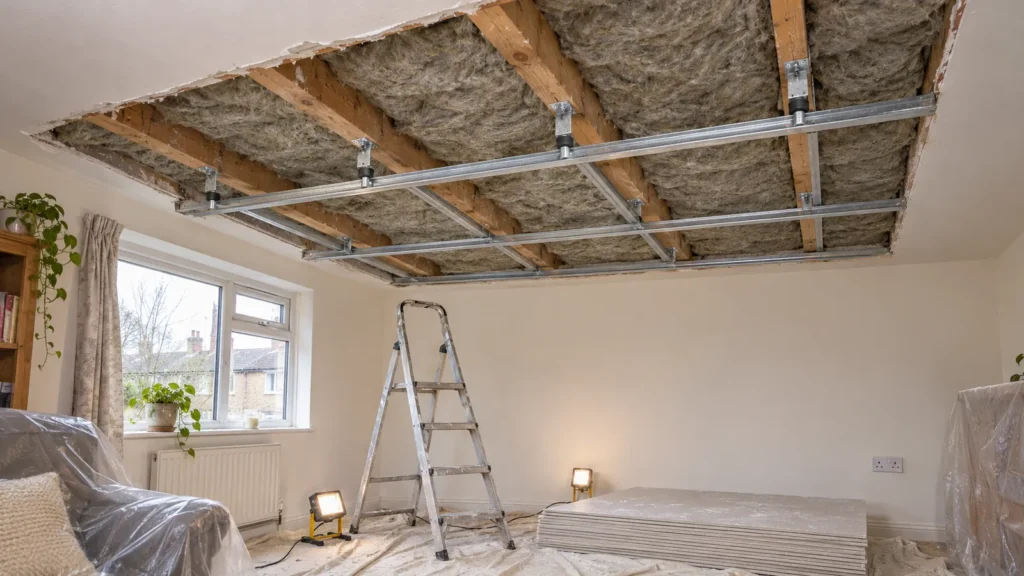
If the ceiling is coming down anyway (after a leak, say; see our guide to a damp patch on the ceiling), put acoustic mineral wool (around 100mm, a dense acoustic grade) between the joists. It soaks up sound in the cavity. On its own, with the old ceiling put back up, it helps a bit with airborne noise but very little with footsteps.
2. Resilient bars with acoustic plasterboard
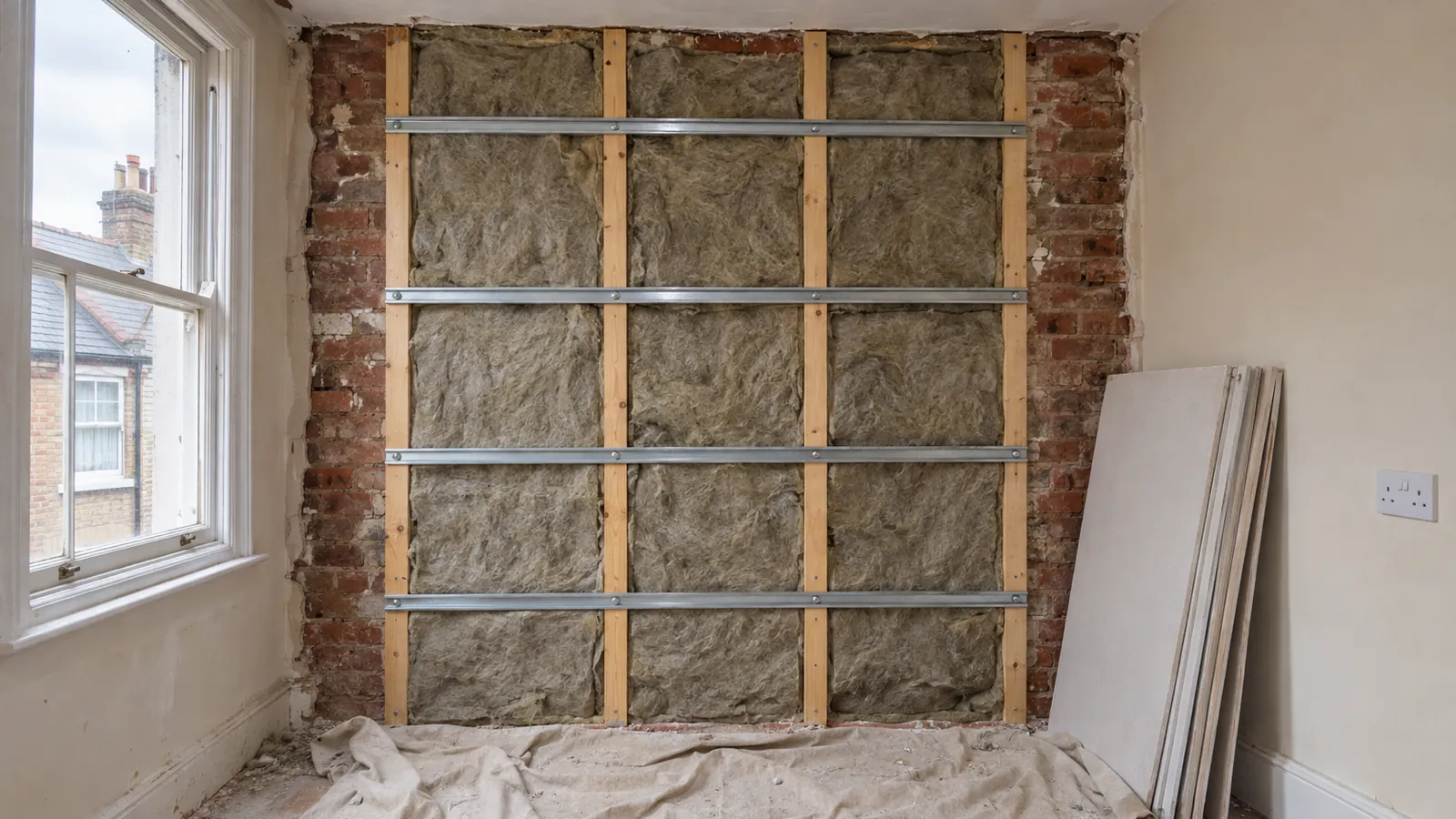
Metal resilient bars are fixed across the joists, and two layers of acoustic plasterboard are screwed to the bars only. The bars flex and absorb some vibration. This loses only about 30 to 50mm of ceiling height plus the board thickness.
The weak point: a single screw going through the bar into a joist can short-circuit the system. It's a job where workmanship matters more than the products.
3. Acoustic hangers or clips
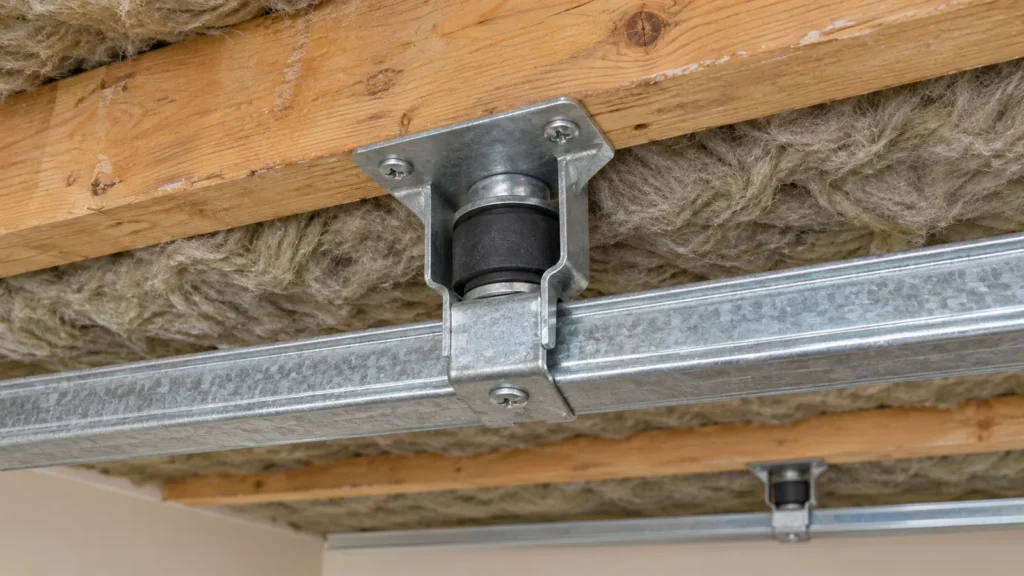
Rubber-isolated hangers are screwed to the joists and hold a metal ceiling grid below them. Acoustic plasterboard is fixed to the grid. Better isolation than resilient bars and more forgiving. Some hangers are height-adjustable, which helps with uneven old joists.
4. An independent ceiling
The best option from below. New joists (or a metal frame) span from wall to wall without touching the existing ceiling joists. Mineral wool goes in the gap and two layers of acoustic plasterboard go underneath. Because there's no direct connection, much less vibration gets through.
The costs: you lose more height (often 100 to 200mm, depending on span and design), it needs the room's span to suit, and it's a big job.
What doesn't work
- Acoustic foam tiles stuck to the ceiling. They reduce echo, not noise from upstairs.
- One layer of plasterboard screwed straight to the old ceiling. Small gain, if any.
- Expanding foam or polystyrene in the gaps. Too light, and can make some frequencies worse.
Don't forget the walls and gaps
Even a great ceiling can be undermined by:
- flanking noise through the walls (the joists sit in them), which a ceiling alone can't stop
- recessed downlights, which make holes in the new ceiling. Use surface lights or acoustic-rated fittings and hoods
- pipe and cable holes, which should be sealed with acoustic sealant
- gaps at the edges, which should be left slightly open and filled with flexible acoustic sealant rather than plaster
Insulating the loft above a top-floor ceiling for warmth is a separate job, covered in our loft insulation guide. It does little for noise between flats.
What it costs in 2026
Rough 2026 estimates for an average bedroom or living room, and what moves the price is room size, lighting, ceiling height, access and whether old plaster has to come down:
| Approach | Typical cost per room (fitted) |
|---|---|
| Acoustic underlay and rugs upstairs | £100 to £500 |
| Mineral wool between joists (ceiling already down) | Adds £100 to £300 in materials |
| Resilient bars + acoustic plasterboard | Roughly £1,000 to £2,000 |
| Acoustic hangers + acoustic plasterboard | Roughly £1,300 to £2,500 |
| Independent ceiling | Roughly £1,800 to £3,500+ |
Add plastering, electrics and decorating. Forum posters have reported spending several thousand pounds for two rooms, so get a specific quote.
Rules, flats and permission
- Leasehold flats: the ceiling joists and the floor above usually belong to the building, not you. Check your lease and get the freeholder's consent before fixing into joists or removing the ceiling.
- Fire protection: the ceiling between flats is usually a fire separation. Any new ceiling must keep that protection, using fire-rated boards and fittings. A specialist installer will know the requirements.
- Building regulations: changing the sound or fire separation between flats, or converting a house into flats, falls under building regulations (Approved Document E for sound). Ordinary improvements in your own house usually don't need approval, but check if in doubt.
- Talk to your neighbour. Often the cheapest fix is a rug, an acoustic underlay, or moving a washing machine off a suspended floor.
FAQs
What is the best way to soundproof a ceiling from upstairs noise?
Treating the floor above with acoustic underlay or a floating floor. From below, an independent ceiling with mineral wool and two layers of acoustic plasterboard works best.
Can you soundproof a ceiling against footsteps?
Partly. An independent ceiling or acoustic hangers can reduce footstep noise, but results vary, and noise can still travel through the walls. Treating the floor above is more reliable.
How much ceiling height will I lose?
Around 50 to 80mm with resilient bars or hangers, and often 100 to 200mm with an independent ceiling.
How much does it cost to soundproof a ceiling?
Roughly £1,000 to £3,500 per room in 2026 depending on the method, plus electrics and decorating.
Do I need permission to soundproof my ceiling in a flat?
Often yes. The joists and floor above usually belong to the building. Check your lease and ask the freeholder before starting.
Does acoustic foam stop noise from upstairs?
No. Foam reduces echo inside a room but doesn't block noise coming through the ceiling.
- Work out whether it's footsteps (impact) or voices (airborne).
- Treating the floor above beats anything you do below.
- From below: independent ceiling best, acoustic hangers next, resilient bars thinnest.
- Watch for downlights, gaps and noise through the walls.
- In flats, check the lease and fire separation before starting.