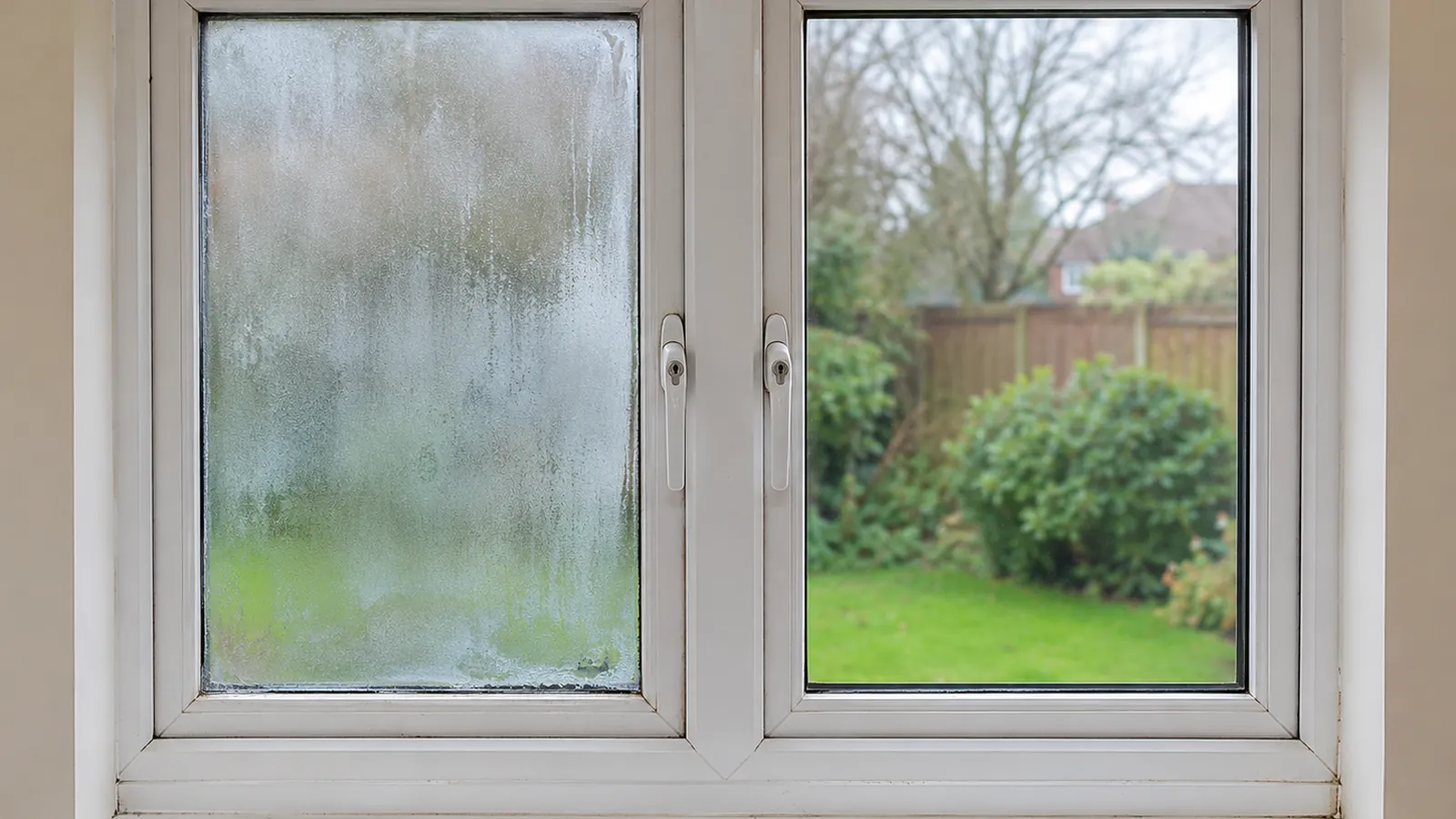


There are two different "seals" on a double-glazed window. The rubber gaskets round the frame and the glass stop draughts and rain, and you can usually replace them yourself for a few pounds a metre. The seal round the sealed glass unit keeps the gap between the panes dry; when it fails, the glass mists up between the panes and the only fix is a new glass unit. If you feel a draught or see gaps, it's the gaskets. If there's condensation you can't wipe off, it's the unit.
People search "window seal" for both problems, and the fixes couldn't be more different. Telling them apart takes a minute, and the cheaper one is a DIY job. For misting between the panes, see our blown double glazing guide. More help is on our insulation and EPC hub.
Which seal has failed?
| Symptom | Seal that's failed | Fix |
|---|---|---|
| Draught round the opening edge | Frame gasket (sash seal) | Replace the rubber gasket |
| Whistling in wind | Frame gasket, or the window needs adjusting | Replace gasket or adjust the hinges/keeps |
| Water coming in round the frame | Gasket, glazing seal or outside silicone | Replace gasket or reseal outside |
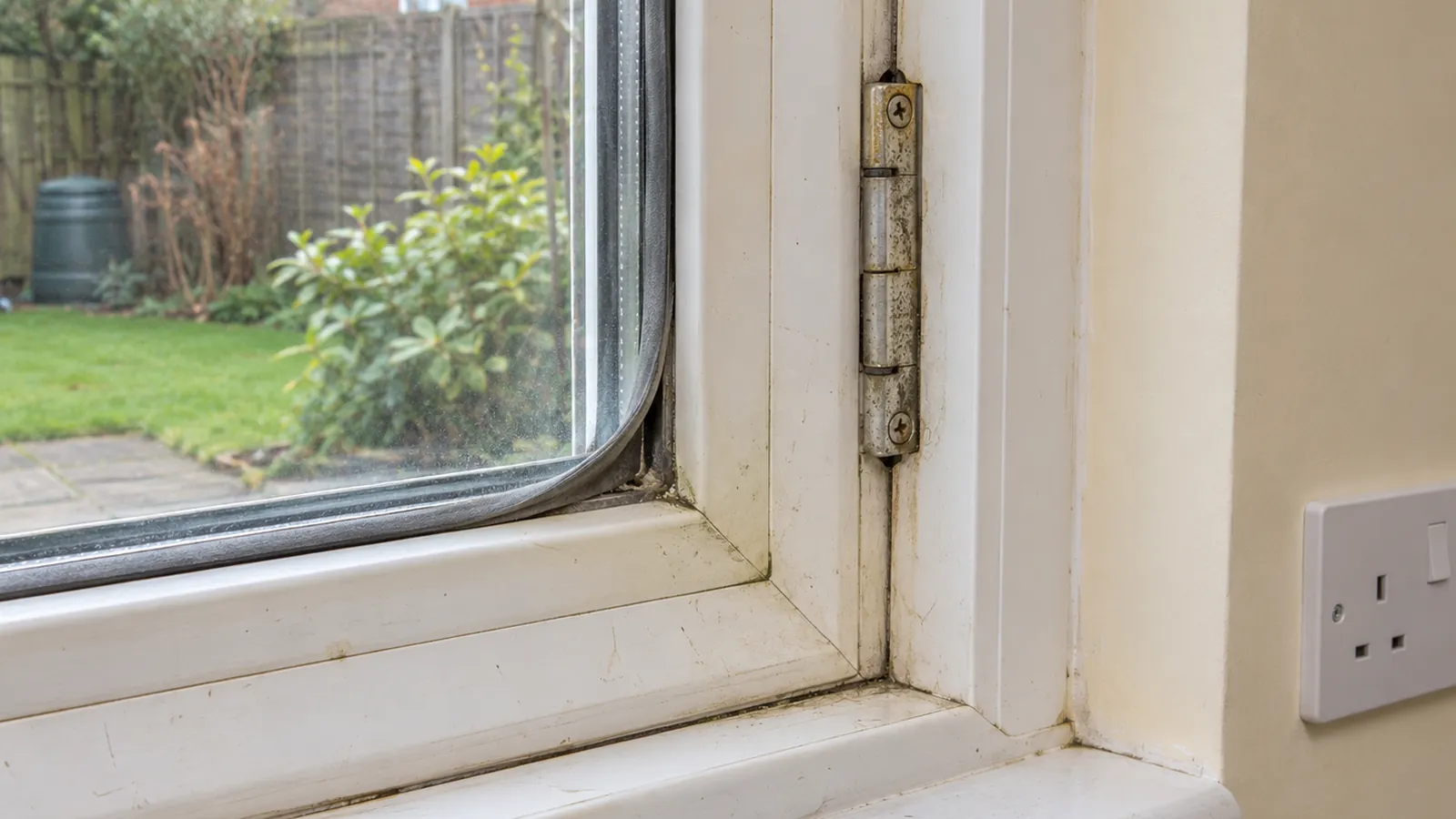
| Black rubber shrunk away from the glass corners | Glazing gasket | Replace the glazing gasket |
| Mist or water droplets between the panes | Sealed unit edge seal | New sealed glass unit |
| Condensation on the inside surface | Neither, it's room humidity | See our condensation guide |
Signs your rubber gaskets need replacing
- The rubber has gone hard, cracked or flat and no longer springs back when you press it
- It has shrunk, leaving gaps at the corners
- It's pulling out of its groove
- You can feel a draught with the window shut and locked (hold the back of a wet hand near the edges)
- A strip of paper shut in the window slides out easily
Rubber gaskets typically last around 10 to 15 years, sometimes less in strong sun.

First, check it's not just the adjustment
Before buying anything, check whether the window just isn't closing tightly. Many uPVC windows have adjustable cams (round or oval knobs) on the edge of the opening sash. Turning these with an Allen key or pliers pulls the sash tighter against the frame. A worn hinge can also let the sash drop and leave a gap at the top. A quick adjustment sometimes cures a draught completely.
Types of rubber window gaskets
uPVC windows usually use one or both of these:
- Bubble gasket: a hollow, rounded profile. Common as the main weather seal round the frame. Squashes when the window closes.
- Wedge or flipper gasket: a flat or angled strip that presses against the glass. Common as the glazing seal holding the glass in.
Gaskets come in different sizes and profiles to fit different window systems. The key measurement is the width of the groove they push into (often around 3 to 5mm), plus the shape of the rubber.
The easiest way to match it: pull a short length of the old gasket out of a corner and take it with you, or compare it carefully with the profile drawings on a supplier's website.
How to replace uPVC window seals
What you need: replacement gasket (measure the full length round the frame and add 10%), a flat-blade screwdriver or plastic scraper, scissors or a sharp knife, a cloth and some warm soapy water, and optionally a small roller for pressing seals in.
- Open the window fully. Work on a dry day.
- Pull the old gasket out. Start at a corner or the join and pull it steadily out of its groove. Old rubber may snap; pick out any bits left behind.
- Clean the groove. Wipe out dirt, grit and any old glue with soapy water and let it dry fully.
- Fit the new gasket. Start in the middle of the top or a side (not in a corner). Push the gasket's foot into the groove with your thumb or a roller, working along a little at a time. Don't stretch it as you go. Stretched rubber shrinks back later and opens gaps at the corners.
- Go round the corners. Many gaskets can be pushed round corners in one length, slightly bunched. Others need cutting and butting tightly. Follow the type you've bought.
- Join the ends. Cut the end slightly long so the two ends press tightly together. Some people put a dab of suitable adhesive on the join.
- Close and test. Shut the window. It may feel stiffer at first while the new rubber beds in. Repeat the paper test.
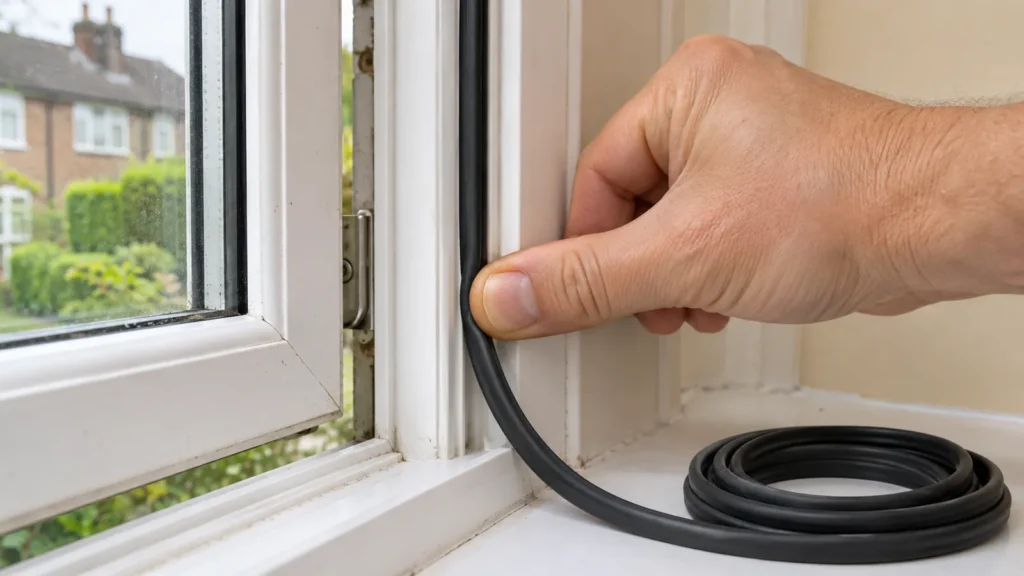
If the new gasket makes the window very hard to lock, the rubber is too thick for your frame. Don't force the handle. Swap for a smaller size, or adjust the cams slightly.
Replacing the glazing gasket round the glass
The gasket that holds the glass in is fiddlier. On many windows, you have to remove the glazing beads (the plastic strips holding the glass) to get at it, and that means the glass unit can move. It's doable, but if the glass is large or heavy, or you're not confident, get a glazier. Never remove beads on an upper-floor window from outside.
Replacing the outside silicone
Water getting in round the outside of the frame, rather than through the opening edge, often means the silicone between the frame and the brickwork has cracked or come away. Cut out the old silicone, clean the surfaces, and run a new bead of exterior-grade frame sealant. Rain penetration can cause damp patches round windows, so don't leave it; see our guide on how to fix damp.
What it costs
Rough 2026 estimates, and what moves the price is the gasket type, window size and how many windows are done at once:
| Job | DIY | Professional |
|---|---|---|
| Rubber gasket (per window) | £5 to £20 in materials | £40 to £100 per window, less per window for several |
| Adjusting cams and hinges | Free | Often part of a repair callout |
| Replacing a misted sealed unit | Not a DIY job | Often around £80 to £250 per unit, depending on size and glass type |
When the window isn't worth fixing
If the frames are badly warped, the hinges and locks are worn, several units have misted, and the seals have all failed, the window may be near the end of its life. Our guide to how long double glazing lasts helps you decide between repair and replacement. In the meantime, draught-proofing can help.
FAQs
Can you replace the rubber seals on uPVC windows?
Yes. Most uPVC window gaskets push into a groove and can be replaced with basic tools. Match the profile and groove size first.
How do I know if my window seals have failed?
Draughts, gaps at the corners, hard or cracked rubber, or whistling in wind point to the gaskets. Mist between the panes means the sealed unit has failed.
Can you replace just the seal on a double-glazed unit?
No, not the seal between the panes. If the unit mists between the panes, it needs a new glass unit. Only the rubber gaskets can be replaced on their own.
How much does it cost to replace window seals?
DIY gaskets cost roughly £5 to £20 per window. A professional typically charges around £40 to £100 per window.
Why is my window whistling when it's windy?
Usually worn gaskets or a sash that isn't pulled tight. Try adjusting the cams first, then replace the seals.
How long do uPVC window seals last?
Rubber gaskets usually last around 10 to 15 years, depending on sun exposure and quality.
- Draughts and gaps = rubber gaskets; mist between the panes = sealed unit.
- Check the cam adjusters before buying new seals.
- Match the gasket profile and groove size using a piece of the old seal.
- Don't stretch the new gasket as you fit it.
- Misted units need a new glass unit, not a new seal.