

The roof is the main reason most conservatories are too cold in winter and too hot in summer, because thin polycarbonate or old glass lets heat straight through. The options, from cheapest to most effective, are: roof blinds or window film, a DIY foil quilt or insulated panels fixed inside, a professionally fitted insulated internal ceiling, or replacing the roof with a solid tiled roof. A solid roof makes the biggest difference but costs the most and usually needs Building Regulations approval. Whatever you choose, keep the room ventilated, or you'll swap a cold room for a damp one.
Conservatories were sold for years as a cheap extra room. In reality many are only usable for a few months a year: freezing from November to March, and far too hot on a sunny day in June. Forums are full of people asking whether insulating the roof is worth it, which method works and whether they need permission. For the bigger picture on insulation and EPC ratings, see our insulation and EPC guide.
Why is my conservatory so cold in winter and hot in summer?
A typical house wall with cavity insulation holds heat in well. A conservatory roof does not.
- Polycarbonate roofs (the ribbed plastic sheets on many 1990s and 2000s conservatories) are thin, often 16mm–25mm. They let a lot of heat out in winter and a lot of sun in during summer.
- Older glass roofs without modern coatings behave in much the same way.
- The roof is a large area facing the sky, so on a clear night it loses heat fast, and on a sunny day it gains heat fast.
- Light frames and thin dwarf walls add to the problem.
The result is a room that changes temperature quickly. Heat it in winter and the warmth escapes through the roof. In summer, the sun pours in and can't get out, the greenhouse effect.
Insulating the roof tackles the biggest single source of the problem. It won't fix single-glazed side windows or draughty doors, so look at those too. Our guide to draught-proofing covers doors and frames.
Conservatory roof insulation options compared
| Option | Winter warmth | Summer heat | Light lost | Estimated cost (2026) |
|---|---|---|---|---|
| Roof blinds | Small improvement | Good improvement | Some (when closed) | Roughly £800–£3,000 fitted |
| Solar / insulating window film | Small | Moderate | Slight tint | Roughly £300–£1,500 |
| DIY foil quilt / multifoil with cladding | Moderate | Moderate | Most roof light | Roughly £300–£1,000 in materials |
| Fitted insulated ceiling (panels inside) | Good | Good | Most roof light | Roughly £1,500–£5,000 |
| Replacement glass roof (modern coated) | Moderate to good | Good | Very little | Roughly £4,000–£10,000+ |
| Solid tiled roof replacement | Best | Best | Most roof light (unless roof lights fitted) | Roughly £5,000–£15,000+ |
These are estimated ranges for a typical medium-sized conservatory. Size, roof shape, region and the condition of the frame all affect the price, so get at least three quotes.
Option 1: Roof blinds and window film
Roof blinds are pleated or roller blinds fitted to the underside of the roof panels. In summer they block a lot of sun, which is where they work best. In winter they add a little insulation by trapping a layer of air, but they're not a real fix for a cold room.

Window film is applied to the glass or polycarbonate. Solar-control film reflects some summer heat. Low-emissivity (low-e) film can reduce heat loss through glass slightly. Check the film is suitable for your roof material, as some films are designed only for glass.
Good for: a conservatory that's mainly too hot, a tight budget or a rented home.
Option 2: DIY foil quilt or insulated panels inside
Many people insulate the roof from inside themselves. The usual method:
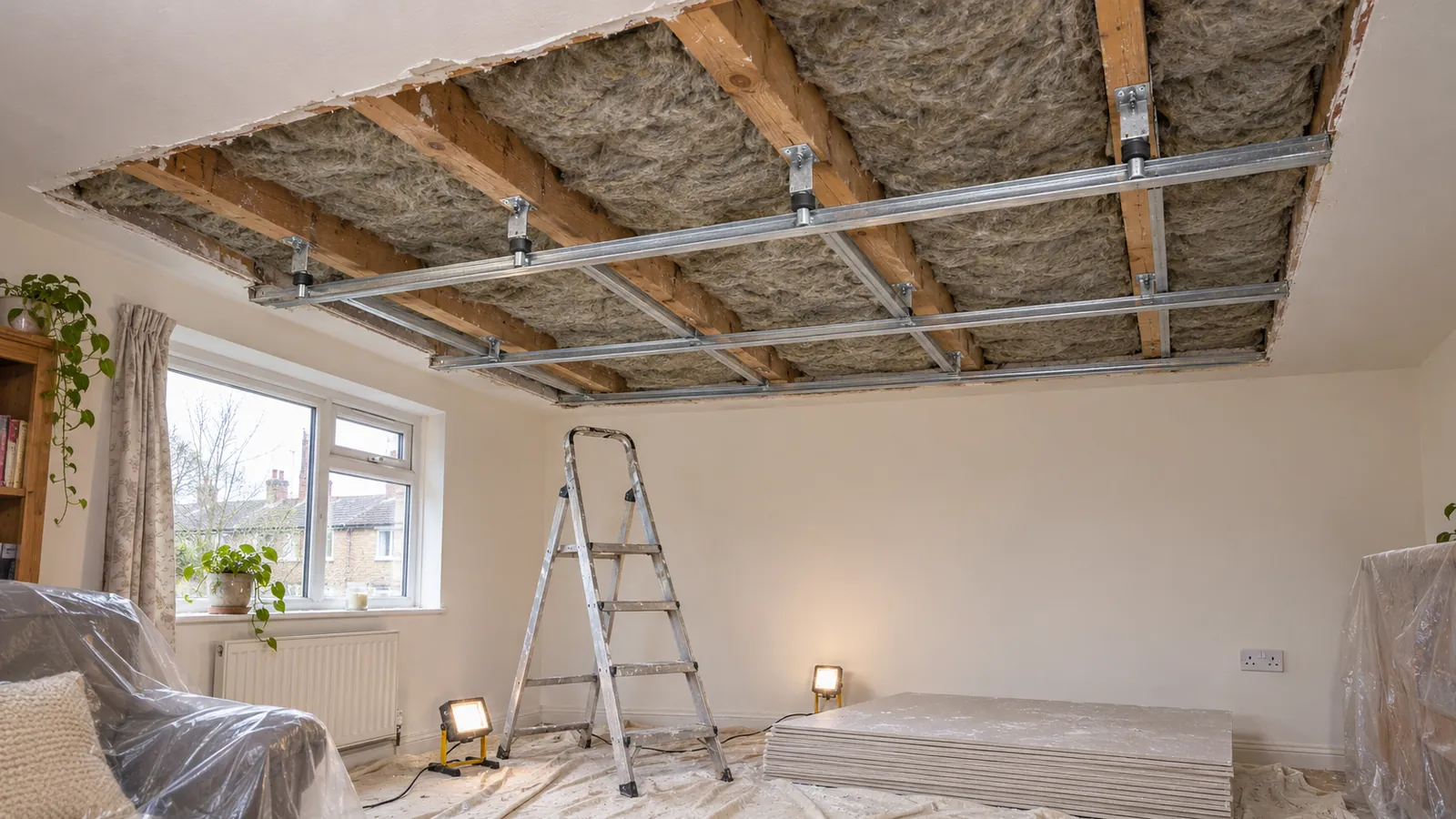
- Fix timber battens across the inside of the roof bars, screwed into the frame (check you won't puncture seals or glazing).
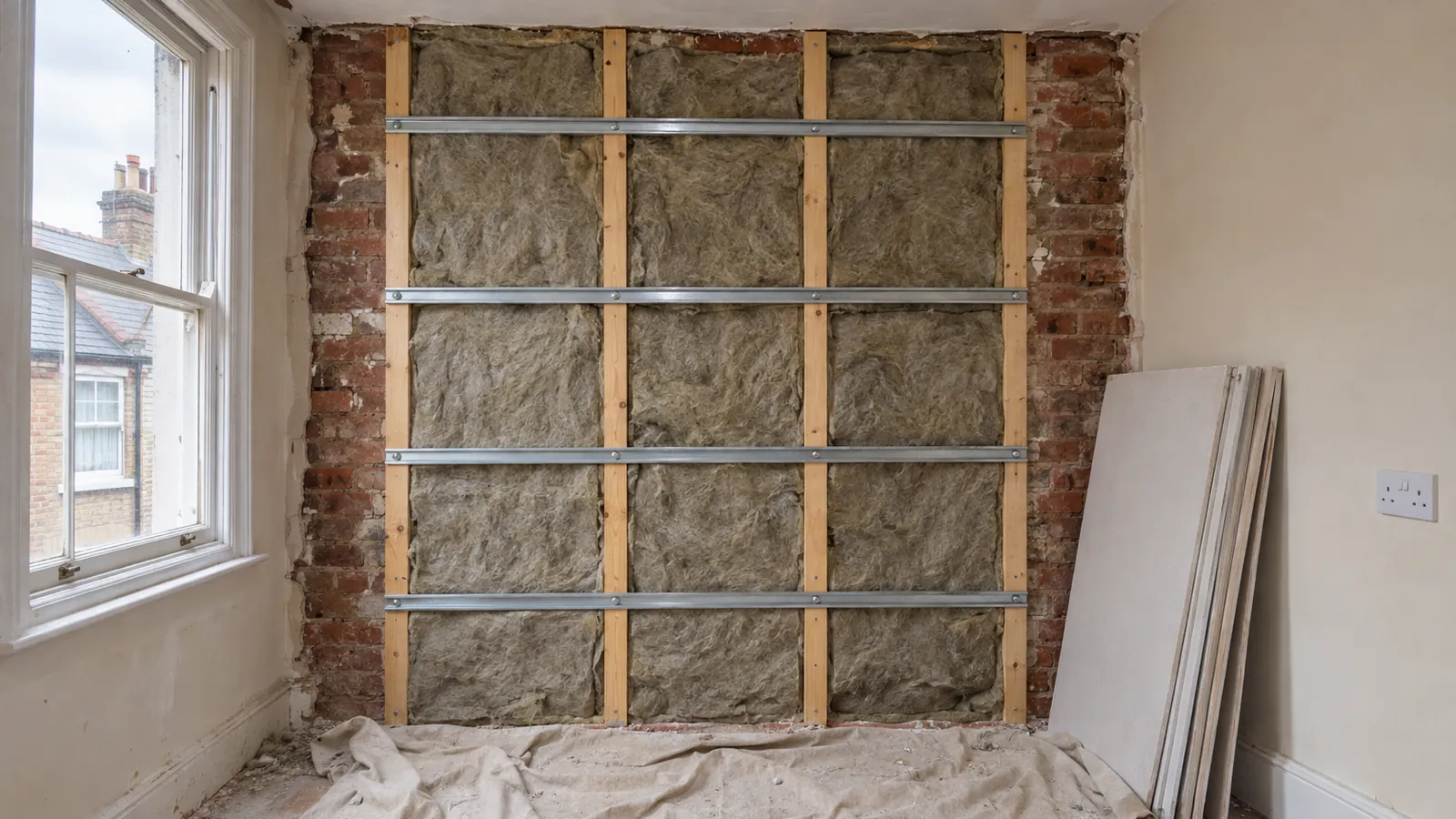
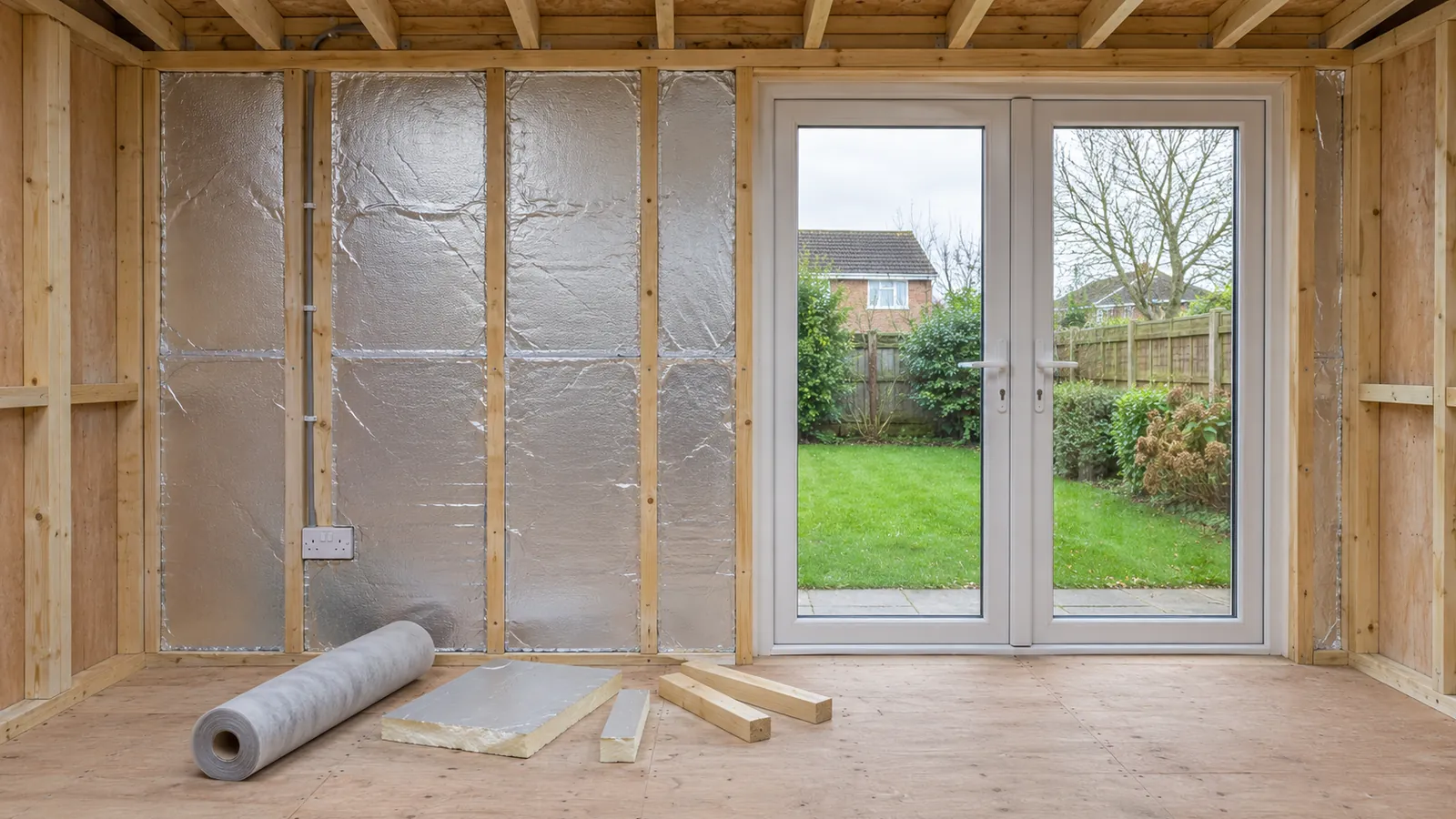
- Staple a multifoil insulation quilt to the battens, overlapping and taping all joints. Some people use PIR boards between battens instead.
- Add a second set of battens to create a small air gap (multifoil works better with an air gap each side).
- Line the ceiling with PVC cladding panels or tongue-and-groove timber.
- Add LED downlights or a ceiling light if you need it (the room will be darker).
Is a DIY conservatory roof insulation kit worth it?
DIY kits and foil quilt can make a noticeable difference, especially against summer heat. But be realistic: thin multifoil doesn't perform like thick insulation, and the old roof is still there above it. Expect the room to feel more comfortable rather than like a proper room of the house.
Don't block any vents in the roof or frame, and don't seal up the conservatory completely. Trapping moist air between the old roof and new ceiling can lead to condensation, mould and rotting battens. Ask the frame manufacturer or an installer before drilling into the roof bars, as you may damage the seals or void a warranty.
Option 3: Professionally fitted insulated ceiling
Many companies fit an insulated internal ceiling under the existing roof. They typically use thicker insulation boards or a multi-layer system, with a plasterboard or PVC finish and often with built-in lighting.
Pros:
- Quicker and usually cheaper than a full roof replacement
- Less disruption: the old roof stays in place
- Can make a real difference in both winter and summer
Cons:
- The old polycarbonate or glass stays above, and can still leak or discolour
- Results depend heavily on the quality of the system and fitting
- The room loses daylight through the roof
- It may affect the conservatory's exempt status under Building Regulations (see below)
Ask what insulation thickness and U-value the system achieves, and whether it comes with an accredited certificate or building control sign-off.
Option 4: Replace the roof with a solid or tiled roof
Replacing the whole roof with a lightweight solid tiled roof (often called a "warm roof") turns the conservatory into something much closer to an extension. The new roof is insulated to modern standards, finished with lightweight tiles or slates, and often has a plastered ceiling inside.
This is the most effective option, but:
- It's the most expensive
- The existing frame and base must be strong enough to take the new roof's weight, so a surveyor or installer needs to check
- It normally needs Building Regulations approval (see below)
- The room will be darker unless you add roof windows or glazed panels
Before and after conservatory roof insulation: what to expect
People who switch to a solid insulated roof generally report a room they can use most of the year, with far less overheating in summer. With an internal insulated ceiling, the improvement is usually noticeable but smaller. With blinds or film alone, the main benefit is in summer. If your side windows are single glazed, or the base and dwarf walls aren't insulated, the room will still lose heat through those.
Option 5: A modern glass roof
If you want to keep the light, a replacement glass roof with modern solar-control and low-e coatings performs much better than old polycarbonate. It won't match a solid roof in winter, but it can cut summer overheating a lot while keeping the bright room you bought the conservatory for.
Condensation and ventilation risks
Insulating a conservatory roof changes how moisture behaves in the room. The common problems:

- Condensation in the hidden void between the old roof and new ceiling, if moist air leaks into it
- More condensation on the windows, if the room is sealed up more tightly and not ventilated
- Mould on cold corners and frames, especially if you dry washing in the conservatory
Conservatories are popular places to dry clothes, but that puts a lot of water into a room with lots of cold glass. It's the same process as condensation on the inside of windows in the house.
To keep condensation down:
- Keep trickle vents and roof vents open.
- Open a window for a few minutes each day, even in winter.
- Don't dry washing in the conservatory without a dehumidifier.
- Keep the room at a steady low temperature rather than letting it get icy.
- Make sure any insulated ceiling has a vapour control layer on the warm side, sealed at the joints.
If you already have damp or mould, our guide to fixing damp explains how to tackle it.
Do I need Building Regulations approval to insulate a conservatory roof?
These rules apply to England. Wales is similar; Scotland and Northern Ireland have their own rules. Always check with your local building control.
Why conservatories are normally exempt
A conservatory is usually exempt from Building Regulations if:
- It's at ground level
- Its floor area is under 30m²
- It's separated from the house by external-quality walls, doors or windows
- It has its own independent heating (not just an extension of the house central heating), or none
- Its roof and walls are mainly glazed or translucent (some councils set specific percentages)
When a roof change needs approval
Building control bodies are clear that replacing a glazed or polycarbonate roof with a solid roof normally needs Building Regulations approval. Once most of the roof is no longer translucent, the structure stops being treated as a conservatory and is treated more like an extension. The new roof then has to meet the structural and thermal (Part L) standards in force when you apply. Part L was updated in June 2022, with stricter insulation levels for new and replacement roofs.
Some solid roof systems have a certificate from LABC or another body showing they can meet the regulations if installed correctly. Ask your installer about this, and whether they'll handle the building control application.
An insulated internal ceiling is less clear-cut. The exemption for conservatories depends on most of the roof being translucent, and a ceiling that covers the whole roof changes that. Check with your local building control before you start, so you know whether approval is needed.
Removing the doors or wall between the house and the conservatory also ends the exemption, whatever you do with the roof.
Do I need planning permission?
Changing the roof of an existing conservatory doesn't usually need planning permission, as long as you don't make it bigger or higher. Listed buildings, conservation areas and homes where permitted development rights have been removed may differ. Check with your council or the Planning Portal.
Without approval, an unauthorised solid roof can cause problems when you sell: buyers' solicitors usually ask for completion certificates. It can also be unsafe if the frame wasn't designed for the weight.
Heating the conservatory once it's insulated
Even with an insulated roof, a conservatory loses more heat than a normal room. If it's separated from the house by external doors, it should have its own heating to stay exempt.
Small electric heaters are the simplest option:
- An oil-filled radiator with a thermostat gives steady background heat. See our guide to oil-filled radiator running costs.
- Wall-mounted panel heaters save floor space.
- An infrared panel can work well for a seating area.
Check what a heater will cost with our running cost calculator.
Is conservatory roof insulation worth it?
It depends on how you use the room:
- You want to use it all year as a living room or office: a solid insulated roof or a good-quality insulated ceiling is usually worth considering.
- It's mainly too hot in summer: blinds, solar film or a modern glass roof may be enough.
- The frame or base is in poor condition: spend money on a survey first. You may be better replacing the conservatory or building a proper extension.
- You plan to sell soon: a properly approved solid roof can make the room more appealing; an unapproved one can cause problems.
Compare the cost against how many extra months you'll actually use the room.
FAQs
What is the best insulation for a conservatory roof?
For the best results, a replacement solid roof with modern insulation. If you want to keep the existing roof, a professionally fitted insulated ceiling is the next most effective, followed by DIY foil quilt or PIR boards with cladding. Blinds and film mainly help with summer heat.
Can I insulate my conservatory roof myself?
Yes, many people fit multifoil or insulation boards with PVC cladding from inside. Avoid drilling into glazing seals, keep vents open, fit a vapour control layer and check with building control, as a ceiling that covers the whole roof can affect the exempt status.
Does insulating a conservatory roof cause condensation?
It can if moist air gets into the gap above the new ceiling or the room is sealed up without ventilation. Seal a vapour control layer on the warm side, keep vents open and don't dry washing in there without a dehumidifier.
How much does it cost to insulate a conservatory roof?
As an estimate, from a few hundred pounds for DIY foil and cladding, roughly £1,500–£5,000 for a fitted insulated ceiling, and roughly £5,000–£15,000 or more for a solid tiled roof replacement. Prices vary a lot by size and region.
Do I need planning permission for a solid conservatory roof?
Usually not, if you don't change the size or height. But you normally do need Building Regulations approval. Listed buildings and conservation areas may have extra rules.
Will a solid roof make my conservatory part of the house?
It makes the room much more like an extension, and it's then treated more like one under Building Regulations. If you also remove the doors between the house and the conservatory, it must meet the full standards for an extension.
- The roof is the main cause of a cold or overheating conservatory.
- Blinds and film help mainly in summer; insulated ceilings and solid roofs help all year.
- Replacing the roof with a solid roof normally needs Building Regulations approval.
- Keep the room ventilated and fit a vapour control layer, or condensation will follow.
- Get a survey and at least three quotes before spending thousands.