
A draught excluder seals the gap where cold air gets in. Fit a brush or rubber strip to the bottom of external doors, foam or rubber seals around door frames and opening windows, a brush flap on the letterbox and a cover on the keyhole. Add a chimney balloon or cap to unused fireplaces and fill gaps in floorboards and skirting. Most of it is cheap DIY. Never block trickle vents, air bricks, extractor fans or the air supply to a fire or gas appliance.
Draughts make a room feel colder than the thermostat says. That pushes you to turn the heating up, and the warm air you've paid for leaks straight out through gaps. Draught-proofing is one of the cheapest ways to make a home feel warmer. It's part of our wider insulation and EPC guide.
Why draught-proofing is worth doing
The Energy Saving Trust lists DIY draught-proofing as one of the cheapest, most cost-effective energy-saving jobs in a typical home. The exact saving depends on how draughty your home is now, its size, and the price of energy. Check the Energy Saving Trust website for its current estimates.
Draught-proofing helps in a few ways:
- Comfort. A home with no cold air moving around feels warmer at a lower temperature.
- Lower bills. Warm air stays in, so the heating doesn't have to work as hard.
- Less noise. Good seals also cut outside noise.
Older homes with timber doors, sash windows, suspended wooden floors and open chimneys usually gain the most.
Draught-proofing vs ventilation: what you must not block
A home needs fresh air. Without it, moisture builds up, and you get condensation on the inside of windows, mould and stale air. Draught-proofing is about stopping uncontrolled gaps, not sealing the house airtight.
Never block these:
- Trickle vents in the tops of window frames
- Air bricks and vents in outside walls, which ventilate under suspended floors
- Extractor fans in kitchens and bathrooms
- Wall vents that supply air to an open-flued gas fire, boiler, wood burner or open fire. These appliances need air to burn safely. Blocking them can cause dangerous carbon monoxide build-up.
If you have a gas fire, wood burner or open-flued boiler, get advice from a Gas Safe registered engineer or HETAS-registered installer before sealing the room. Fit a carbon monoxide alarm in any room with a fuel-burning appliance.
Be extra careful in kitchens and bathrooms, which produce lots of moisture. And in rooms that already have damp or mould, fix the moisture problem first. Our damp and mould guide explains how.
How to find draughts
On a cold, windy day, walk around the house and check:
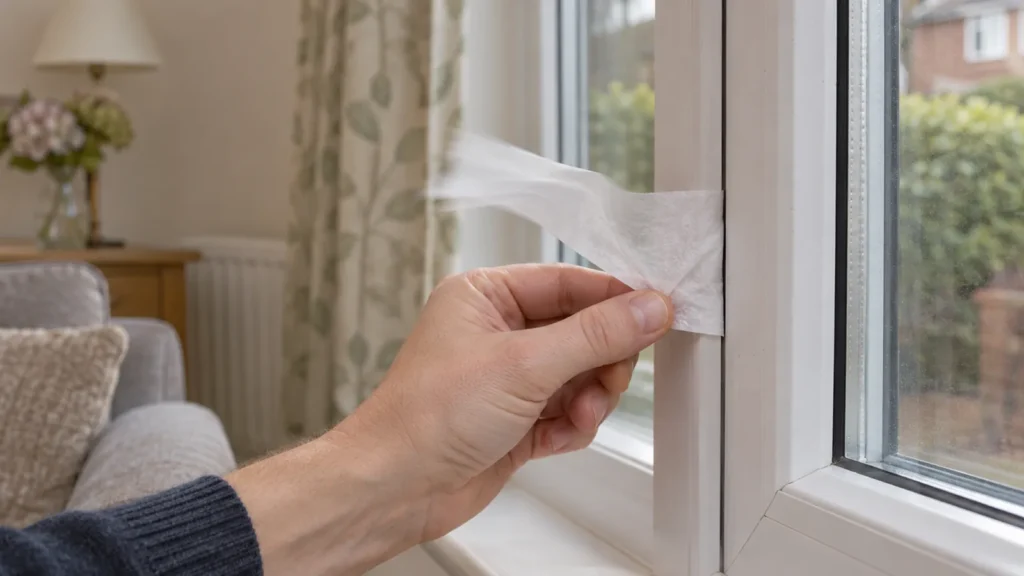
- Around and under doors, especially front and back doors
- Around window frames and where opening windows close
- Letterboxes and keyholes
- Fireplaces and chimneys
- Gaps in floorboards and under skirting boards
- The loft hatch
- Where pipes and cables go through walls and floors, often under sinks and behind the boiler
- Old cat flaps, unused vents and gaps around outdoor taps
A simple test: hold the back of your hand, a strip of tissue or a lit incense stick near the gap. If it flutters or the smoke blows sideways, you've found a draught. Never use a naked flame near curtains or gas appliances.
Door draught excluders
Doors are usually the biggest source of draughts. There are different fixes for different parts of the door.
Bottom of door draught excluder
The gap under an external door can let in a lot of cold air. Options:
| Type | Best for | Rough cost |
|---|---|---|
| Brush strip | Uneven floors, doors over mats or thresholds | £8–£25 |
| Rubber or PVC blade strip | Smooth, level floors | £8–£20 |
| Hinged or rising flap | Doors over carpet where a strip would drag | £15–£30 |
| Automatic drop-down seal | Neat finish, seal drops when the door shuts | £25–£60 |
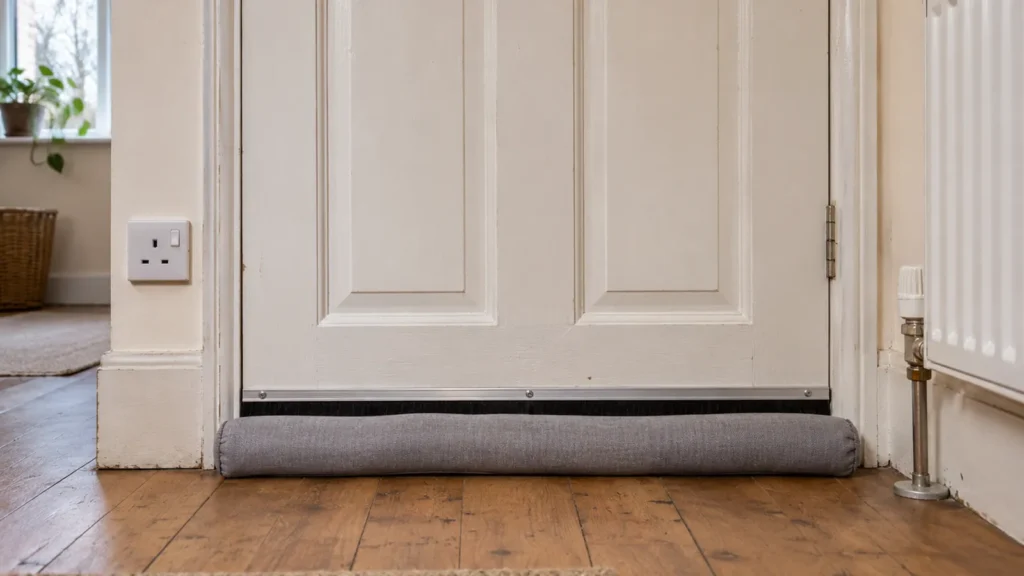
| Draught excluder cushion (sausage) | Internal doors, renters, quick fix | £8–£25 |
Screw-on strips last longest. Self-adhesive strips are quicker but tend to peel off doors that get a lot of use.
For external doors, measure the width of the door and cut the strip to fit with a hacksaw. Set it so the brush or blade just touches the floor or threshold when the door is closed. If it's too low, the door will drag.
Door frame draught excluder
Air also leaks through the gap between the door and the frame on the sides and top. A door frame draught excluder, sometimes sold as a door surround draught excluder, fixes this.
- Self-adhesive foam strip. The cheapest option, good for internal doors. Lasts a year or two.
- Rubber strips in E, P or D profiles. More durable. Pick the profile to match the size of the gap. P and E profiles suit larger gaps.
- Brush strips in a plastic or metal carrier. Fitted to the frame. Good for doors that stick or have uneven gaps.
Clean the frame well before fitting self-adhesive strips and press them firmly. Check the door still closes and latches easily. If you have to slam it, the strip is too thick.
Internal door draught excluder
Internal doors don't need sealing as tightly as external ones. A draught excluder cushion or weighted draught excluder is ideal for keeping heat in the room you're using, such as a living room off a cold hallway. Double-sided "twin" excluders slide under the door and move with it.
Leave internal doors to bathrooms and kitchens free to let air move, unless they already have a working extractor fan.
Extra-long excluders for French and patio doors
For wide double doors, buy a long draught excluder cut to length, or two strips that meet in the middle. On French doors, also check the seal where the two doors meet, which is often worn on older doors.
Garage door draught excluder
An up and over garage door draught excluder is usually a rubber seal along the bottom edge or a threshold strip fixed to the floor. It's worth doing if the garage is attached to the house or if you use it as a workshop or utility space.
Letterbox and keyhole covers
A bare letterbox is a direct hole to the outside.
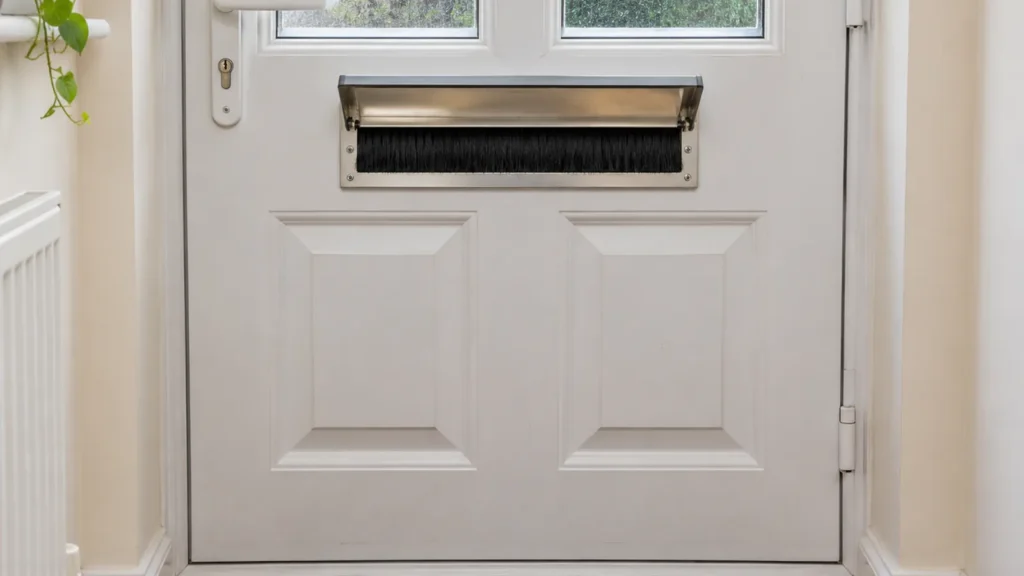
- Letterbox brush or flap: fits to the inside of the door, around £10–£25
- Keyhole cover: a small swinging metal disc, a few pounds
Both are easy to fit with a screwdriver.
Windows
Opening windows
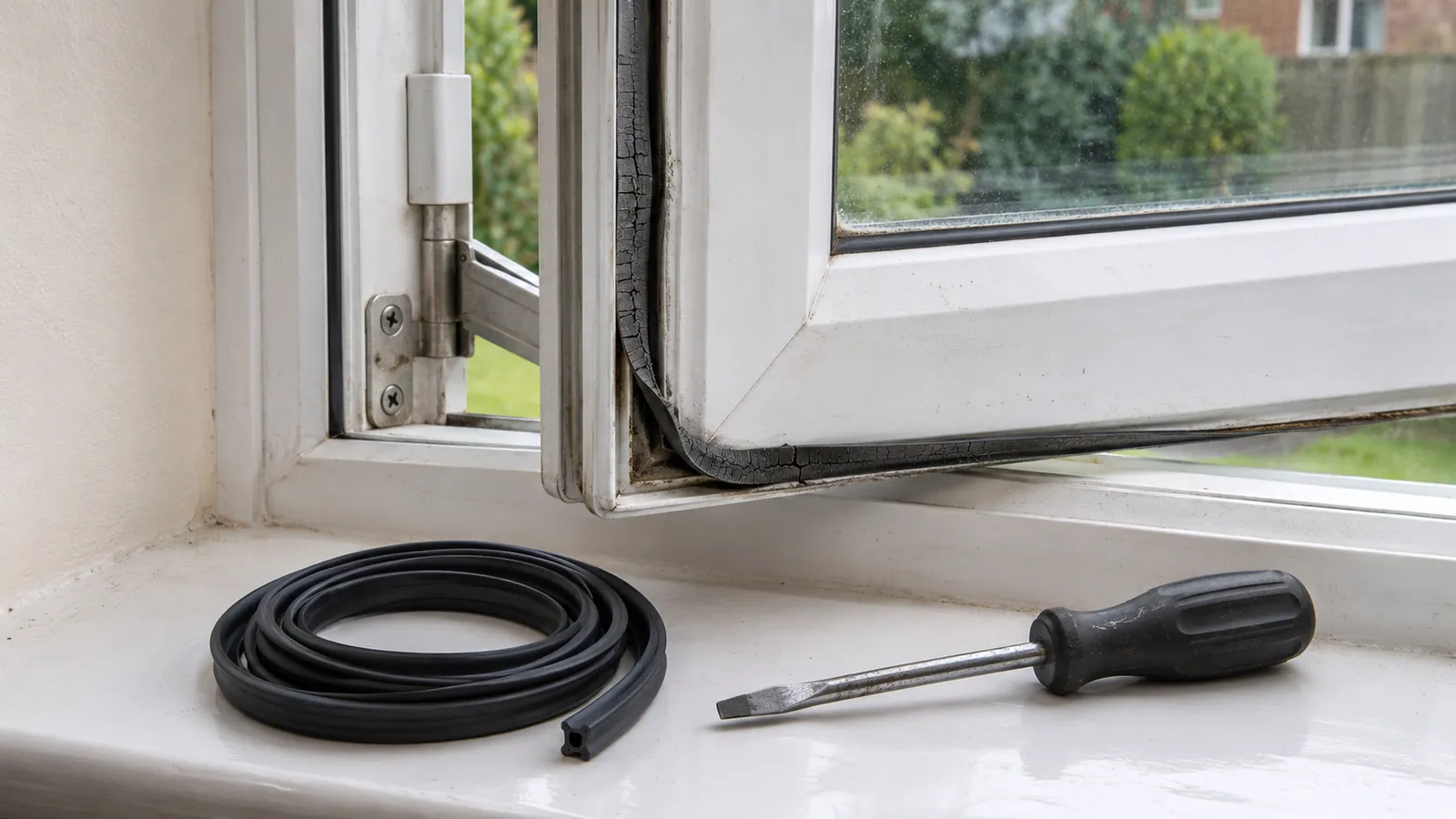
Fit self-adhesive foam or rubber strips where the opening part of the window closes against the frame. Leave fixed panes alone. Check the window still closes and locks easily after fitting.
On modern uPVC or aluminium windows, draughts usually mean the rubber gaskets are worn or the hinges and locks need adjusting. A window repair company can replace gaskets and adjust the window for much less than new windows.
Sash windows
Old sash windows can be very draughty. Brush strips can be fitted to the sashes and frame, and specialist firms can fully draught-proof sash windows while keeping them working. This is a good option in older and listed homes where replacing windows isn't allowed.
Gaps between the frame and the wall
Use a suitable silicone or decorator's sealant to fill gaps between the window frame and the plaster or brick. Use an external-grade sealant outside.
Don't seal over trickle vents. If your windows have them, keep them open, especially in bedrooms. They provide the background ventilation a well-sealed home needs.
Chimneys and fireplaces
An unused open chimney can let a lot of warm air escape and cold air in. Options:
- Chimney balloon: an inflatable bag that sits inside the chimney, roughly £20–£40. Easy to fit and remove.
- Chimney sheep or wool draught excluder: a felt plug that fits into the flue, a similar price.
- Chimney cap: fitted to the chimney pot by a roofer or sweep. Keeps rain out of unused chimneys.
A chimney still needs a little ventilation to stop it getting damp. Most chimney draught excluders let a small amount of air through on purpose.
Always remove a chimney balloon or plug before lighting a fire. Never fit one in a chimney that serves a working gas fire, wood burner or boiler. If you're not sure whether a flue is in use, ask a chimney sweep or Gas Safe registered engineer.
Floorboards and skirting boards
Suspended timber floors (common in older homes) let cold air rise through the gaps between the boards and under the skirting.
- Gaps between floorboards: fill with a flexible filler, silicone sealant, or thin wooden or rubber filler strips pushed into the gap
- Gap under skirting boards: run a bead of silicone or decorator's sealant along the bottom
- Rugs and underlay: a quick way to cut draughts in a rented home
Remember the space under a suspended floor must stay ventilated through the air bricks outside. Sealing the gaps in the boards is fine. Blocking the air bricks is not, as it can lead to damp and timber rot.
Other gaps worth sealing
- Loft hatch: fit a foam or brush seal around the hatch frame and insulate the top of the hatch. See our guide to loft insulation.
- Pipes and cables: fill gaps where pipes go through walls and floors with expanding foam or sealant. You'll often find these under kitchen sinks and behind the toilet.
- Old extractor holes and unused vents: if a vent is no longer needed for any appliance, ask a professional before blocking it.
- Cat flaps: choose one with a brush seal and magnetic closing.
How much does draught-proofing cost?
| Job | DIY cost | Professional cost |
|---|---|---|
| Foam strips for a few windows and doors | £10–£30 | Not usually needed |
| Brush or rubber strip on an external door | £10–£30 | £50–£120 per door |
| Letterbox brush and keyhole cover | £15–£30 | Usually DIY |
| Chimney balloon or wool plug | £20–£40 | Chimney cap £100–£300 |
| Floorboard gaps (one room) | £20–£60 | £150–£400 |
| Full sash window draught-proofing | Not usually DIY | £150–£400+ per window |
| Whole-house professional draught-proofing | — | Several hundred pounds upwards |
These are rough guides for 2026. Prices vary by region and the size of the job.
Draught-proofing for renters
You can usually do most of this without changing anything permanent:
- Draught excluder cushions for doors
- Removable self-adhesive foam strips on windows and internal doors
- A chimney balloon in an unused fireplace
- Thick curtains, ideally thermal-lined, drawn at dusk
- Rugs over draughty floorboards
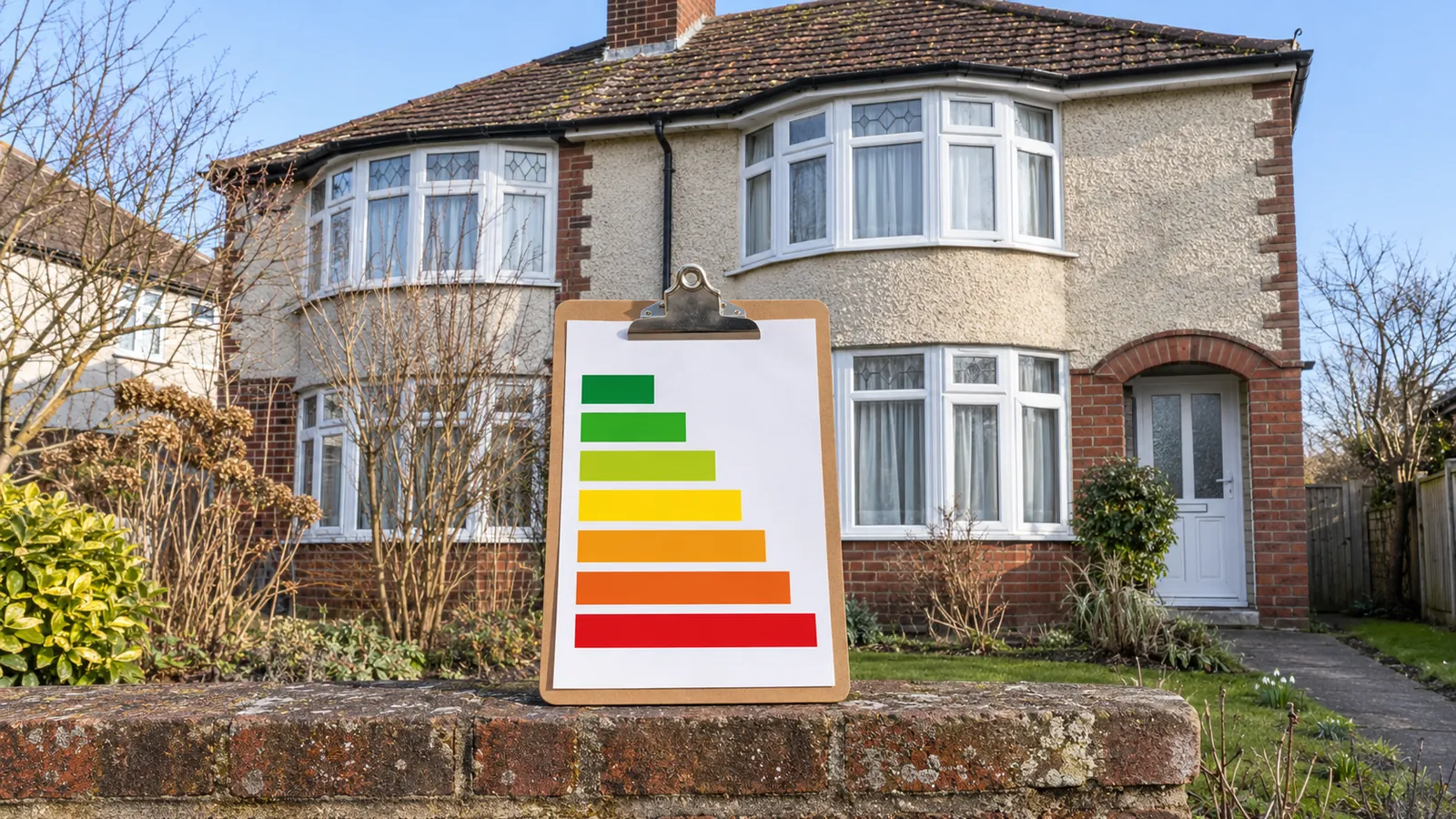
Ask your landlord before fitting anything permanent. If your home is very cold and draughty, the landlord may need to improve it. Check the property's EPC rating too, as most private rentals in England and Wales must meet a minimum standard (currently band E, rising to C by 2030). If you're using portable heaters to cope, see which is the cheapest electric heater to run.
FAQs
What is the best draught excluder for a front door?
A screw-on brush strip or hinged flap at the bottom, a rubber or brush seal around the frame, a letterbox brush and a keyhole cover. Together these seal all the usual gaps. A brush strip copes best with uneven floors and door mats.
Do draught excluders really work?
Yes. Stopping cold air coming in through gaps makes rooms feel noticeably warmer and helps the heating work less hard. The Energy Saving Trust lists DIY draught-proofing as one of the most cost-effective home energy jobs.
Can draught-proofing cause condensation?
It can if you also block ventilation. Keep trickle vents open, use extractor fans and air rooms regularly. Seal only the uncontrolled gaps, not the vents that are meant to be there.
Should I draught-proof a room with a gas fire or wood burner?
Take care. These appliances need a supply of air to burn safely. Never block their air vents. Ask a Gas Safe registered engineer (for gas) or a HETAS-registered installer (for wood burners) before sealing the room, and fit a carbon monoxide alarm.
How long do draught excluder strips last?
Self-adhesive foam strips usually last a year or two before they flatten or peel. Rubber and brush strips last several years. Screw-fitted strips last longest on doors you use a lot.
Is draught-proofing worth it in a new home?
New homes are usually well sealed already. Check the doors and loft hatch, and make sure trickle vents and extractor fans are working. In a newer home, ventilation is often more important than extra draught-proofing.
- Start with the biggest gaps: external doors, letterbox, chimney and loft hatch.
- Use brush or flap strips for door bottoms and foam or rubber seals around frames and windows.
- Fill gaps in floorboards and skirting, but keep the air bricks outside clear.
- Never block trickle vents, extractor fans or air vents for fires and gas appliances.
- Most draught-proofing is cheap DIY and makes a home feel warmer straight away.