
Wet (water) underfloor heating can be a little cheaper to run than radiators, mostly because it works at a lower water temperature. Electric underfloor heating is not: at 26.32p per kWh against 7.97p for gas, it costs roughly three times as much per unit of heat as a gas boiler with radiators. Installation reverses the picture. Radiators are the cheapest to fit, wet underfloor heating costs thousands more (especially as a retrofit), and electric mats sit in between for a single room. Underfloor heating comes into its own with a heat pump, because both like low water temperatures.
Most of the articles you find for this are written by people who sell one or the other, and the answer you get tends to match what is in their shop. The forum threads are more honest but usually miss the arithmetic. So this piece puts numbers on it, using the Ofgem price cap average for 1 October to 31 December 2026: gas at 7.97p per kWh and electricity at 26.32p. If you want the wider picture of heating options first, see our heating guide. We have a separate piece on electric underfloor heating if you are only doing one room.
What are we actually comparing?
Three systems get lumped together under "underfloor heating versus radiators", and they behave very differently.
- Radiators on a gas boiler. Water at roughly 55 to 70°C goes round steel panels. The most common setup in UK homes.
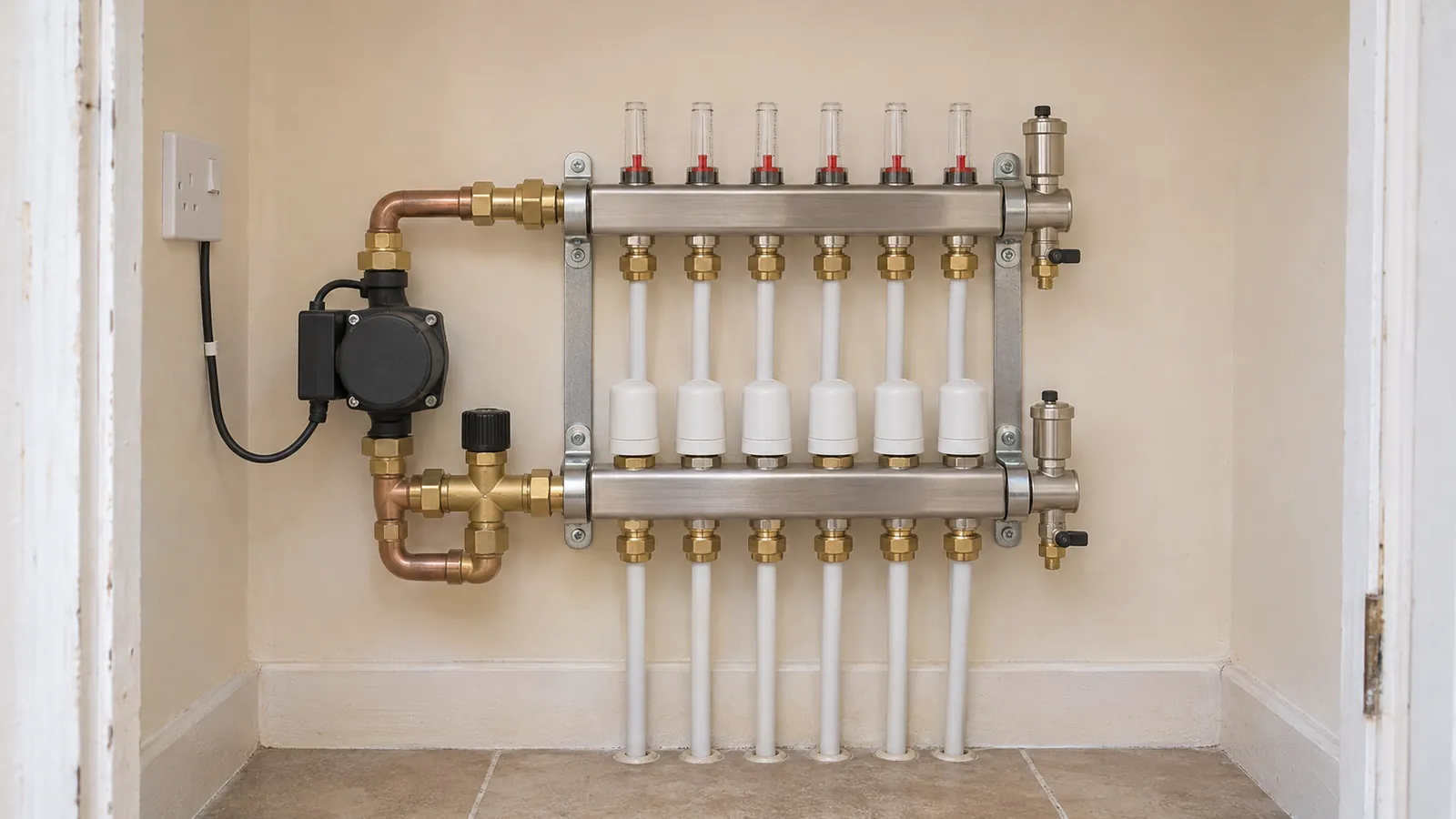
- Wet underfloor heating. Plastic pipe laid in a loop under the floor, fed with water from a boiler or heat pump at around 35 to 50°C. The whole floor becomes a low-temperature radiator.
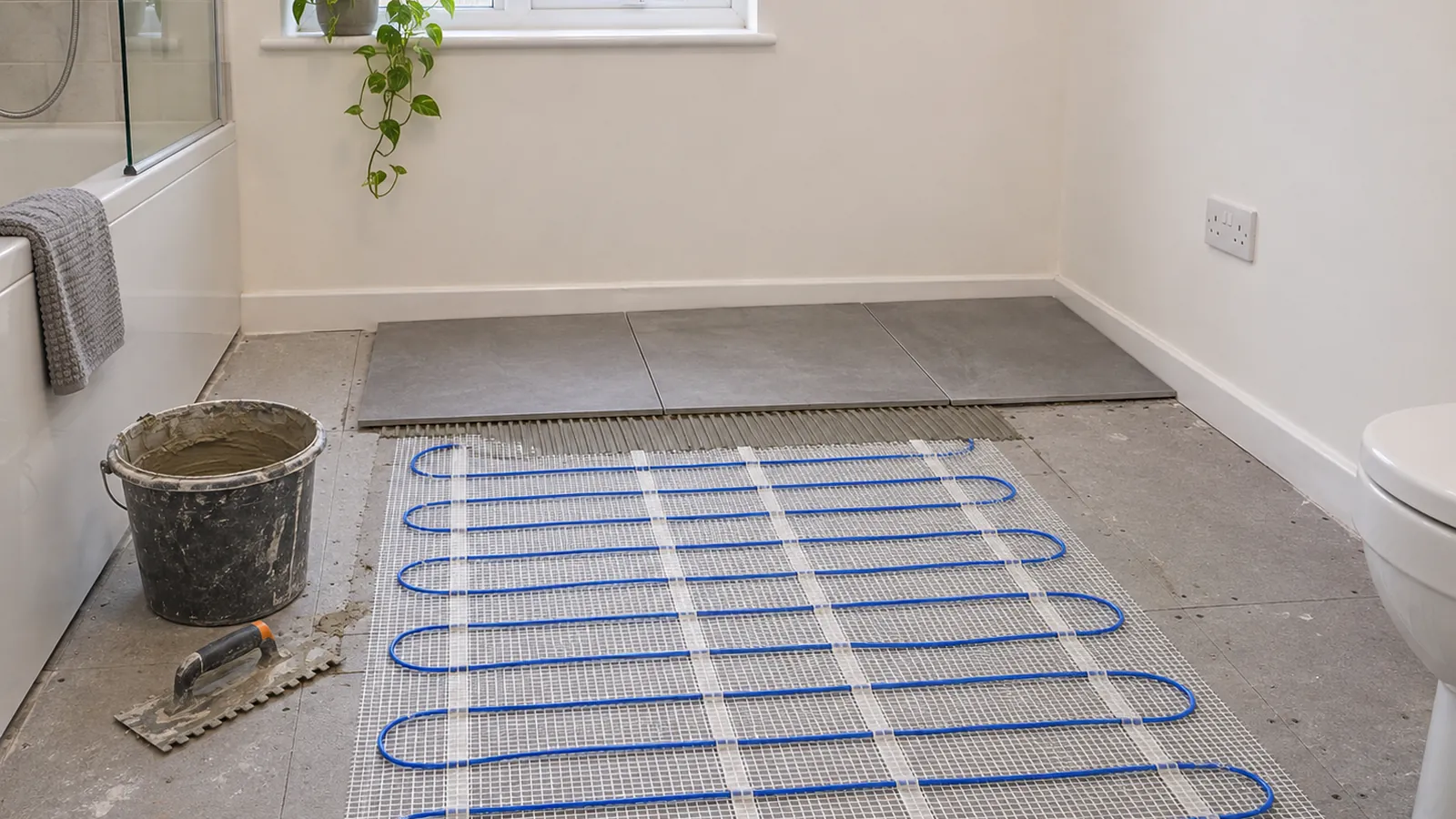
- Electric underfloor heating. Mats, cables or film under the floor finish, heated directly by electricity.
The running cost question depends on which pair you are comparing, so keep them apart.
Installation cost
All of these are 2026 estimates, and they move with floor area, floor build-up, region and how much disruption the installer has to deal with. Get at least three quotes.
Radiators. If you already have a boiler and pipework, replacing a radiator typically costs a few hundred pounds fitted (roughly £200 to £500 depending on size and type). A whole new radiator system in a typical three-bed home usually lands somewhere around £3,000 to £6,000 including labour. They are the cheap option because the pipes are small and the heat output per pound is high.
Wet underfloor heating, new build. This is where it is cheapest, because the pipes go into the screed as part of the floor build. One new-build source puts the extra over radiators at about £1,000 to £2,500 for a three-bed house, but that is a vendor's estimate, so treat it as a rough guide.
Wet underfloor heating, retrofit. Much more expensive. In an existing house you either dig up the floor and re-lay it with insulation, pipes and screed, or use a low-profile system that sits on top of the existing floor and raises it by around 15mm or more. Costs commonly run well into the thousands for a whole ground floor, and a whole-house retrofit can reach five figures. Anything that involves lifting floors, re-hanging doors and re-tiling pushes the price up quickly. The manifold, controls and pump are part of it too.
Electric mats. Cheap to fit, particularly in a bathroom. A mat kit for a small room is often under £200 for the heating itself, and installed cost for a bathroom is commonly in the hundreds to low thousands depending on the tiling and the electrician. Electrical work in a bathroom falls under Building Regulations (Part P), so use a registered electrician.
Underfloor heating only makes sense in a retrofit if you are lifting the floor anyway: a new extension, a kitchen refit or a damp-proofing job. Doing it as a standalone upgrade is where the bills get frightening.
Running cost: the sums
The bit nobody shows. Heat is measured in kWh, and what you pay depends on what produces it.
Say a house needs 10,000 kWh of heat a year. That is a reasonable round figure for an averagely insulated home, though yours could be half or double that. It is only an illustration.
Gas boiler with radiators
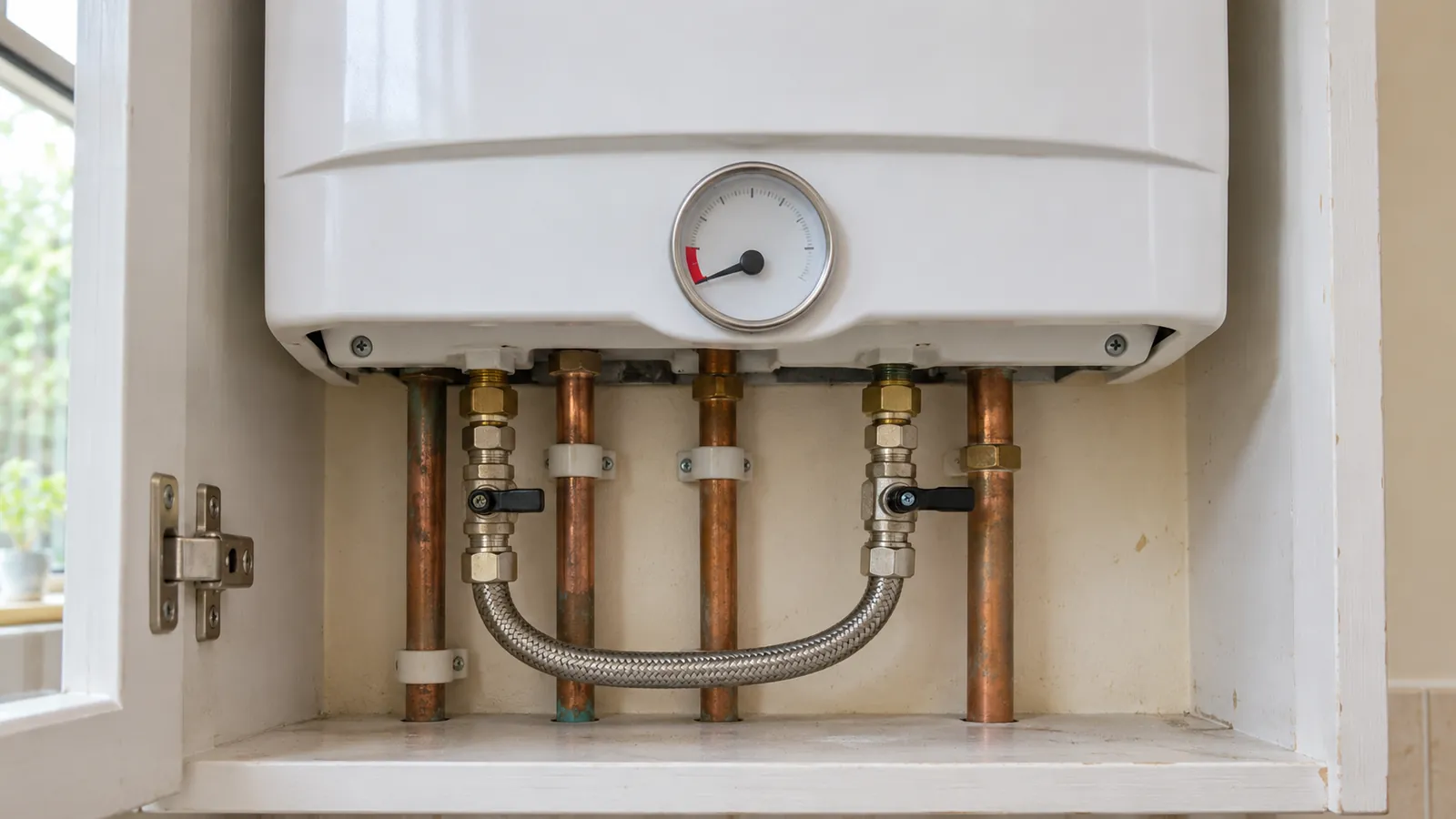
A modern condensing boiler running radiators at high temperatures may achieve something like 85% in real life, since it often can't condense properly (see boiler temperature).
- Gas needed: 10,000 ÷ 0.85 = about 11,765 kWh
- Cost: 11,765 × £0.0797 = about £938 a year
Gas boiler with wet underfloor heating
The lower water temperature lets the boiler condense more. If that lifts real-world efficiency to about 90%:
- Gas needed: 10,000 ÷ 0.90 = about 11,111 kWh
- Cost: 11,111 × £0.0797 = about £886 a year
That is roughly £50 a year better, which is about 5%. Some sources claim savings of 20 to 25% for wet underfloor heating on a boiler, but there are two problems with that. They compare against radiators at their worst, and they often depend on the underfloor system being installed in a better-insulated build. Others (including figures quoted by Nu-Heat) say running costs are generally comparable. The honest answer is: a small saving at best on gas, and not enough to pay back a retrofit.
Electric underfloor heating
Electric heating is effectively 100% efficient at the point of use.
- Electricity needed: 10,000 kWh
- Cost: 10,000 × £0.2632 = £2,632 a year
That is about 2.8 times the radiators-on-gas figure. A whole house on electric underfloor heating is a bad idea unless the home is very well insulated or you have cheap time-of-use power. This matches Which?, which says electric underfloor heating is more expensive than radiators to fit and run, with the exception of heating a single room.
Heat pump with underfloor heating
A heat pump produces more heat than the electricity it uses. The ratio is the seasonal coefficient of performance (SCOP). It is higher when the flow temperature is lower, and that is why underfloor heating suits it. Typical values are around 3 to 3.5 for a good installation, though real homes vary.
- At SCOP 3.0: 10,000 ÷ 3.0 = 3,333 kWh × £0.2632 = about £877 a year
- At SCOP 3.5: 10,000 ÷ 3.5 = 2,857 kWh × £0.2632 = about £752 a year
Heat pump with radiators
Radiators need warmer water, so the SCOP is lower, perhaps 2.7 if the radiators are big enough to run at around 45 to 50°C.
- 10,000 ÷ 2.7 = 3,704 kWh × £0.2632 = about £975 a year
Comparing them
| System | Approx. annual running cost (10,000 kWh of heat) |
|---|---|
| Gas boiler + radiators (85%) | £938 |
| Gas boiler + wet underfloor (90%) | £886 |
| Electric underfloor (100%) | £2,632 |
| Heat pump + underfloor (SCOP 3.0 to 3.5) | £752 to £877 |
| Heat pump + radiators (SCOP 2.7) | £975 |
So in this example: electric underfloor heating costs about three times as much to run. Wet underfloor on gas is marginally cheaper. A heat pump with underfloor beats gas and radiators by something like £60 to £190 a year, and the gap is wider with a better SCOP. Real bills depend on insulation, how many hours you heat, and how well the system is set up. These are illustrative numbers, not quotes.
Electric underfloor heating in one room
Because the whole-house numbers are so ugly, think per room. A 5m² bathroom mat at 150W per m² is 750W, or 0.75kW.

- Cost per hour at full power: 0.75 × £0.2632 = about 20p
- If it runs the equivalent of 4 hours at full power a day for 180 days (720 hours): 720 × 0.75 = 540 kWh × £0.2632 = about £142 a year
The same 540 kWh of heat from a gas radiator at 85%: 540 ÷ 0.85 = 635 kWh × £0.0797 = about £51 a year.
A £90 difference a year is easy to live with for a warm bathroom floor. That is why electric is the sensible choice for a small room that has no easy pipework, and an expensive one for a living room.
Comfort and warm-up time
Warm-up. Radiators respond quickly: the panel is warm in minutes and the room follows. Underfloor heating in a thick screed has a lot of mass to warm up, so it can take several hours to bring a cold room up to temperature, and it also keeps giving heat for hours after it switches off. That makes it better at steady background heating and worse for "I'm home at six and want it warm at six". Low-profile systems and electric mats under thin floors respond faster. Weather-compensating or smart controls (see our Nest vs Hive comparison for what smart thermostats can and can't do) help, but you will still run it as a long, low heat rather than short bursts.
Comfort. This is the real reason people choose it. The heat comes up evenly from the floor, there are no cold corners, no radiators taking up wall space, and your feet are warm. People with mobility issues or small children often appreciate it. Radiators are fine, but they create warm and cool zones in a room and use a lot of wall.
Flooring limits
Floor finish matters more than most guides admit, because the heat has to get through it.
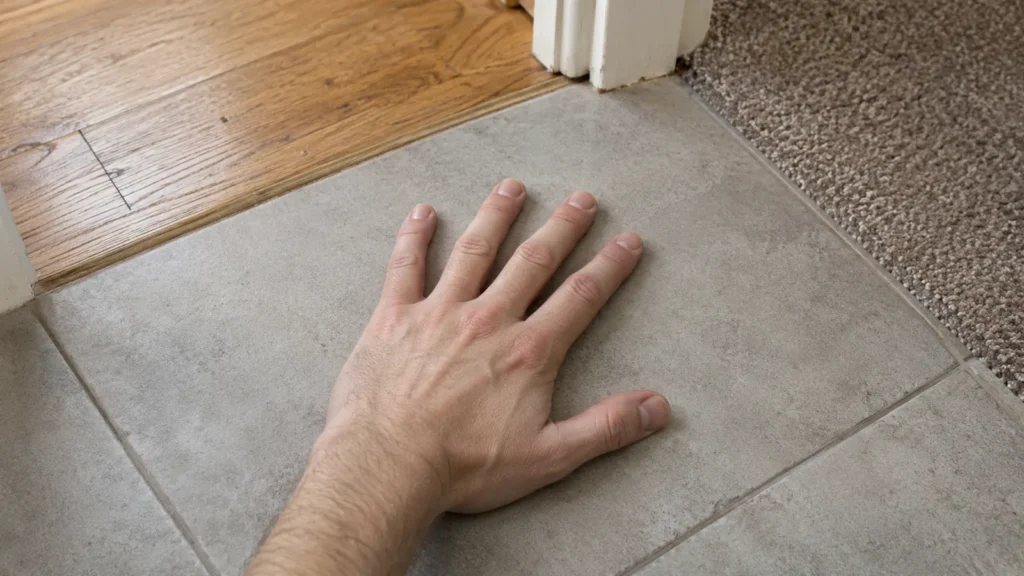
- Tile, stone and polished screed are the best. They conduct well and hold heat.
- Engineered wood is usually fine but with a maximum surface temperature, commonly around 27°C, so check the manufacturer's guidance. Solid wood is more sensitive to drying and movement.
- Laminate and vinyl usually work if the product is rated for underfloor heating.
- Carpet works but adds resistance. Thick carpet with a thick underlay can choke the output, so choose a thin, low-tog combination if you are going this way.
Most floor coverings should state their underfloor heating suitability or thermal resistance, so check before you buy.
Also check the heat output. A well-designed wet system might deliver around 70 to 100W per m² of floor, which is plenty in a well-insulated room and not enough in a draughty Victorian one. Radiators can be sized up to overcome a heat loss; underfloor heating is limited by the floor area and the maximum surface temperature. Insulation is the foundation: see our guides on loft insulation and draught-proofing.
Heat pumps and lower flow temperatures
This is the strongest argument for wet underfloor heating. A heat pump is most efficient when the water it makes is as cool as possible. Underfloor heating works with water at around 35 to 45°C because of its large surface area, whereas radiators in most existing UK homes were sized for 70°C or so and need either upsizing or a higher temperature to deliver the same heat.
That means:
- New build or major renovation with a heat pump: wet underfloor heating is an excellent pairing, and likely the cheapest to run.
- Existing house with a heat pump: you often don't have to rip up the floors. Many installers swap some radiators for larger ones and add insulation. The upfront cost is lower and the running cost not much worse.
Check current government support for heat pumps on gov.uk, because grant levels and eligibility change. Whichever way you go, a heat pump needs a proper heat-loss calculation from the installer, not a rule of thumb.
Which rooms suit which?
- Bathrooms and en-suites: electric mat under tiles. Small, cheap to fit and cheap enough to run for an hour or two a day.
- Kitchens: electric is easy if you are re-tiling. If you are replacing the whole floor and have a wet system elsewhere, extending it is cheaper than a one-off.
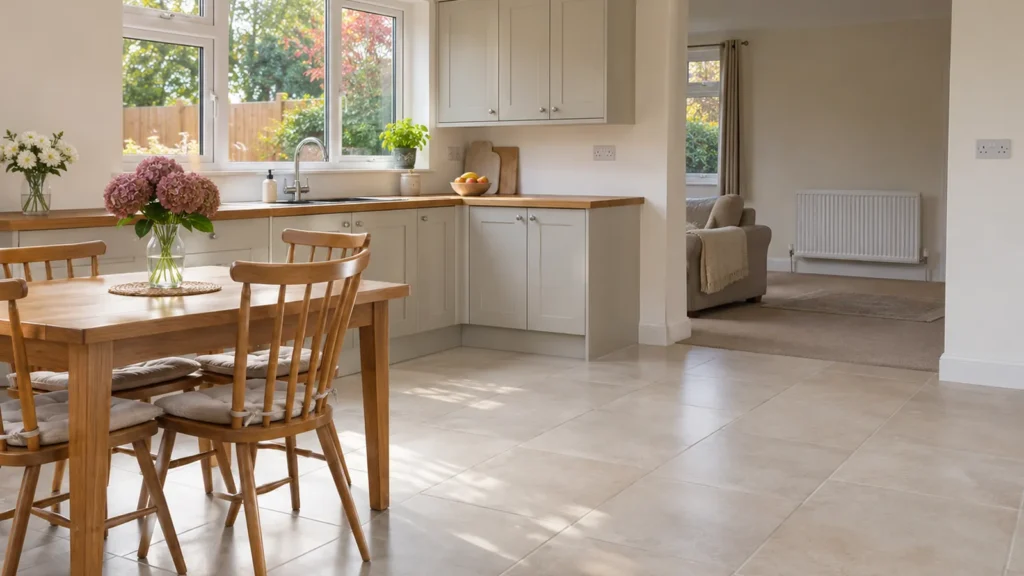
- Open-plan ground floor in a new build or extension: wet underfloor heating, particularly with a heat pump. Good use of the floor area.
- Upstairs bedrooms in an existing house: radiators. Retrofitting wet underfloor heating to timber floors is possible but rarely worth it.
- Conservatories: electric underfloor can take the chill off, but as the only heat source in a glass room, it will be expensive. Check our cheapest electric heater to run guide for the alternatives.
- Rented homes: radiators, or portable heaters. You can't pull up a landlord's floor.
So, is underfloor heating cheaper than radiators?
For a whole house on gas, wet underfloor heating is a few per cent cheaper to run at best, and a lot more expensive to fit in an existing home. For a whole house on electricity, it is much more expensive to run. With a heat pump, wet underfloor heating is the best fit and is often the cheapest long-term, but the difference against well-sized radiators is not huge. The best use of money in an existing gas-heated home is almost always insulation and a better set of controls.
FAQs
Is underfloor heating cheaper to run than radiators?
Water-based underfloor heating is slightly cheaper than radiators on a gas boiler or a heat pump, because it works at a lower flow temperature. Electric underfloor heating is much more expensive to run than gas radiators: at 26.32p per kWh against 7.97p, it costs about three times as much per unit of heat.
How much does it cost to run electric underfloor heating per day?
A 5m² mat at 150W per m² uses 0.75kW. At 26.32p per kWh that is about 20p an hour at full power. A thermostat cycles it on and off, so the real daily cost is lower than running it flat out. Four hours at full power would be about 79p.
Is wet or electric underfloor heating cheaper?
Wet costs more to fit and less to run. Electric costs less to fit and a lot more to run. Electric is best for a single small room; wet is best for whole floors, especially with a heat pump.
Can you have underfloor heating with a heat pump?
Yes, and it is one of the best pairings. Underfloor heating works at low water temperatures, which lets the heat pump run at a higher efficiency. You can also run a heat pump with radiators, but they usually need to be larger.
Does underfloor heating take longer to heat up?
Yes, particularly in a screed floor. It can take several hours to warm a cold room, and it holds heat after it switches off. It suits steady, low-level heating better than short blasts.
Can I add underfloor heating to an existing house?
You can. Electric mats are the easiest for one room. Wet low-profile systems can go over an existing floor but raise its height, and cutting into floors is where retrofits get expensive. Ask for a heat-loss calculation before you commit.
- Electric underfloor heating costs about three times as much to run as gas radiators (26.32p against 7.97p per kWh).
- Wet underfloor heating on gas saves a few per cent at most, and costs thousands more to retrofit.
- Underfloor heating and heat pumps suit each other because both work at low water temperatures.
- Electric mats make sense in a bathroom or other small room; radiators are best for most existing homes.
- Check flooring suitability and insulation before choosing either.