
If you have a combi boiler that supports OpenTherm, Nest and Tado both use it and Hive does too, but only in single-zone homes. If you have a separate hot water cylinder or several heating zones, check the wiring before you check the app. Nest is the "set it and let it learn" choice. Hive is simpler, and it is the one most likely to come with a British Gas engineer. Tado is the one to look at if you want room-by-room control with radiator valves. Prices and features change, so check the maker's compatibility checker for your boiler before you buy.
Search for this and you get a pile of "who wins" articles, most of them from boiler installers and affiliate sites, and a few forum threads where people say things like "I swapped Hive for Nest and it feels better" without saying what boiler they have. The boiler is the thing that matters. A smart thermostat is a clever switch (and, with OpenTherm, a clever conversation with your boiler), so what it can do depends on what it is plugged into. If you are still working out your setup, start with our heating guide and come back.
The short version
| Google Nest | Hive | Tado | |
|---|---|---|---|
| Style | Learns your routine, adjusts itself | Schedules you set, with optional helpers | Geofencing and app control, strong on rooms |
| OpenTherm | Yes, on compatible boilers | Yes, single zone only | Yes, on its newer X thermostat |
| Hot water control | Yes, on systems with a cylinder | Yes, on/off and boost, not the water temperature | Yes |
| Multi-zone | Supports some zoned systems, check compatibility | Up to 6 zones with extra thermostats (needs existing zoned wiring) | Yes, plus smart radiator valves |
| Subscription | Not needed for core features | Hive+ £3.99 a month or £39.90 a year, optional | AI Assist £29.99 a year, optional |
| Fitting | DIY or installer | DIY or British Gas engineer | DIY or installer |
The subscription prices for Hive and Tado come from their own sites at the time of writing. Google's UK store pages couldn't be read at the time of writing, so treat what follows on Nest as the general picture and check the current UK listing.
Which models are we talking about?
This is where people get tangled, because the names get reused.
Nest. The Nest Learning Thermostat has a fourth-generation model, but it launched in the US and Canada. In the UK, the third-generation Nest Learning Thermostat (the stainless steel or copper round one) and the cheaper Nest Thermostat E have been the models on sale. Check Google's UK store for what is currently listed, because stock and lines change. Typical UK pricing for the Learning model has sat somewhere around £200 to £280 depending on retailer and finish, and a "fitted by an installer" option costs more.
Hive. The current Hive Thermostat is listed at £119 on Hive's site (a little less for Hive+ members), with a wireless and a wired version, and a Thermostat Mini is also mentioned. It comes with a receiver that goes next to the boiler or in place of the old wiring centre.
Tado. Tado's current range is the "X" line: the Smart Thermostat X, Smart Radiator Thermostat X, a Wireless Receiver X, Bridge X, and a separate Heat Pump Optimizer X. Tado's own site says one Smart Thermostat X covers relay, OpenTherm and S-Plan setups in a single device.
Those are all manufacturers describing themselves, so treat the headline claims with the usual caution.
Combi boiler, system boiler or regular boiler?
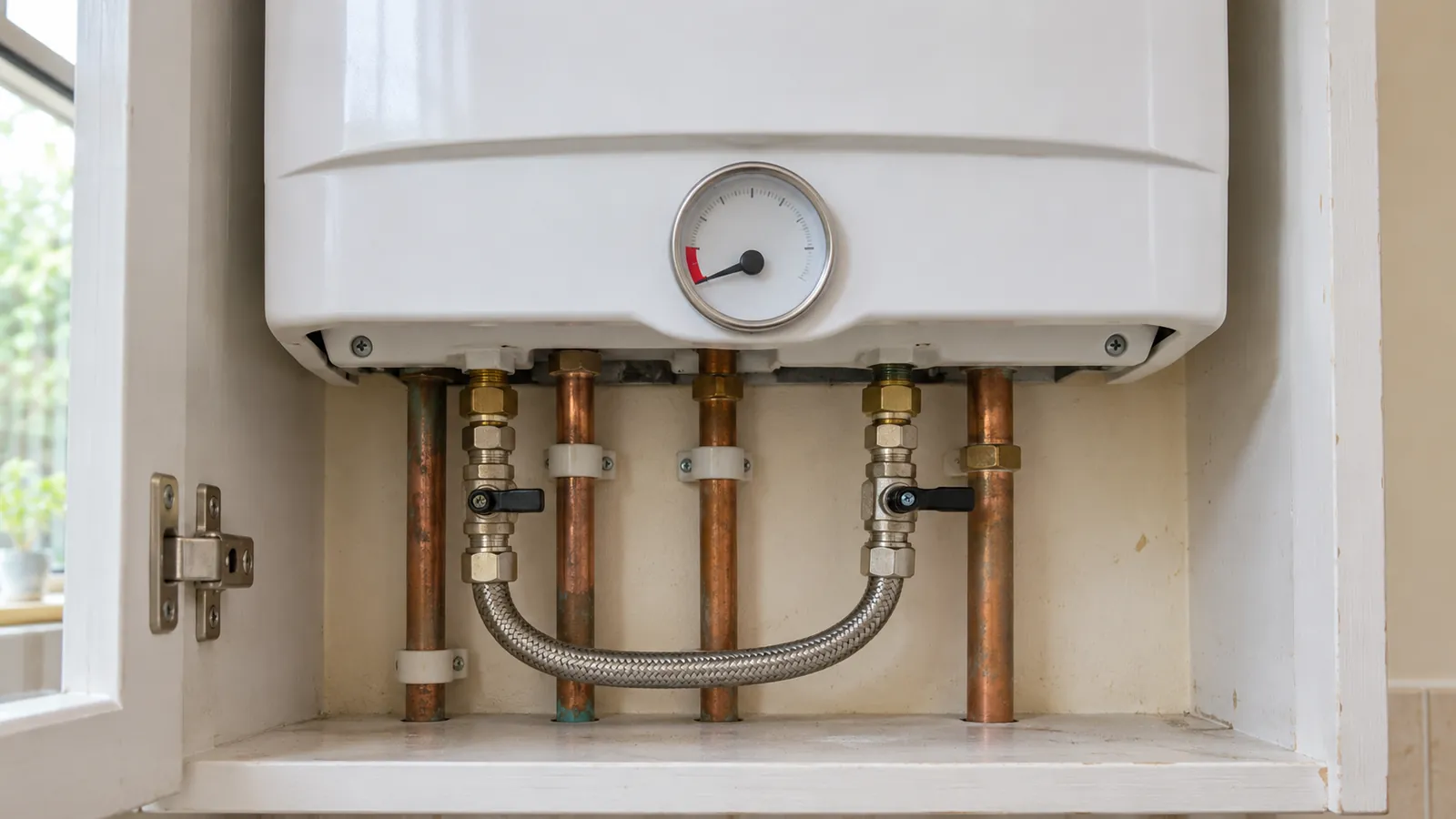
Work out which you have first. Our guide to what type of boiler you have takes two minutes.
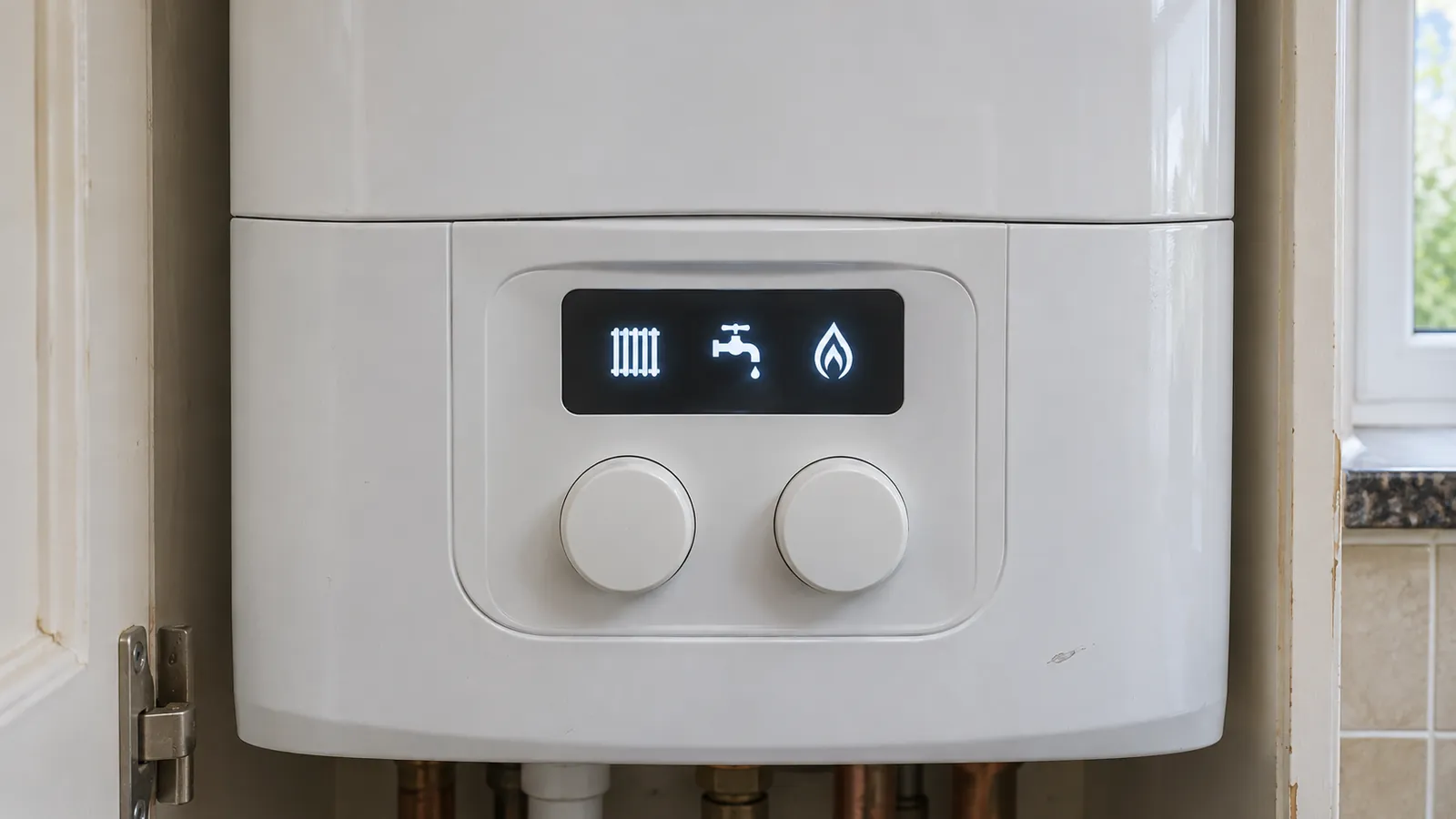
Combi boiler. There is no hot water cylinder. The thermostat only has one job: tell the boiler when to fire for the heating. Any of the three will do that. What separates them is whether they can talk to the boiler (OpenTherm) rather than just switch it on and off.
System or regular boiler with a cylinder. Now there are two things to control: heating and stored hot water. All three brands support hot water control, but read the detail. Hive's page says you can switch hot water on and off, set schedules and boost for anything from five minutes to six hours, but you can't set the water temperature through the thermostat. That is normal, because the cylinder thermostat does that job, and it should stay at 60°C anyway (see what temperature your boiler and cylinder should be).
Zoned systems. If your house has separate heating zones, say upstairs and downstairs with two motorised valves, you need a thermostat per zone. Hive says it supports up to six zones, but only where you already have a multi-zone setup, and OpenTherm doesn't work with Hive in multi-zone. Tado states that its OpenTherm isn't limited to single-zone homes, though that is Tado describing itself. Nest compatibility with zoned setups depends on the wiring, so use Google's compatibility checker rather than guessing.
OpenTherm: why it matters and what it does
A normal thermostat is on or off. The boiler hears "heat" and runs flat out at whatever flow temperature the dial says, then switches off when the room is warm. That cycling is hard on efficiency.
OpenTherm is a two-way language between thermostat and boiler. The thermostat can ask for a certain flow temperature, and the boiler can reply with what it is doing. In practice, the thermostat can ask for a lower flow temperature that matches how far the room is from target, and the boiler modulates down instead of blasting on and off. A condensing boiler only recovers extra heat from its exhaust when the water returning to it is cool enough (generally below about 55°C), so running lower and for longer is where the gas saving comes from. We explain the principle in our guide to boiler temperature.
How big is the saving? Be wary of the numbers. Hive says OpenTherm can give up to 12% extra savings, and Nest quotes UK customers saving 8.4% to 16.5% on heating bills, but those are manufacturer figures from particular conditions. They do show the direction. Your own result depends on your radiators, your insulation and how much your boiler can modulate.
Two catches:
- Your boiler has to support OpenTherm. Most modern combis do, but not all, and some older ones use a proprietary system instead. Check the boiler manual or the maker's compatibility tool, and don't assume.
- Don't assume a thermostat that "is OpenTherm" will work fully on your boiler. Forum threads are full of people who found the receiver for their old setup wouldn't drive a newer combi and needed a replacement receiver. One mismatch is enough to turn "smart" into "switch".
Also, if your boiler has a weather compensation or load compensation feature of its own, the thermostat's OpenTherm control can override the dial on the boiler's front panel. If you have already lowered your flow temperature, check how the two interact, because you may be fighting yourself.
Fitting: DIY or installer?
A smart thermostat is low-voltage control wiring, not gas work, so you don't need to be Gas Safe registered to swap one. You are replacing a wall thermostat and fitting a receiver, which usually means connecting a few terminals. That said, it is mains wiring at the receiver in many setups, so isolate the boiler's power first, and if you aren't confident about identifying terminals, get a competent person to do it. Hive's site says its DIY route is for people who are competent in electrical wiring, and Tado has criticised Hive's guides as being written for professionals, though that is a competitor's claim.
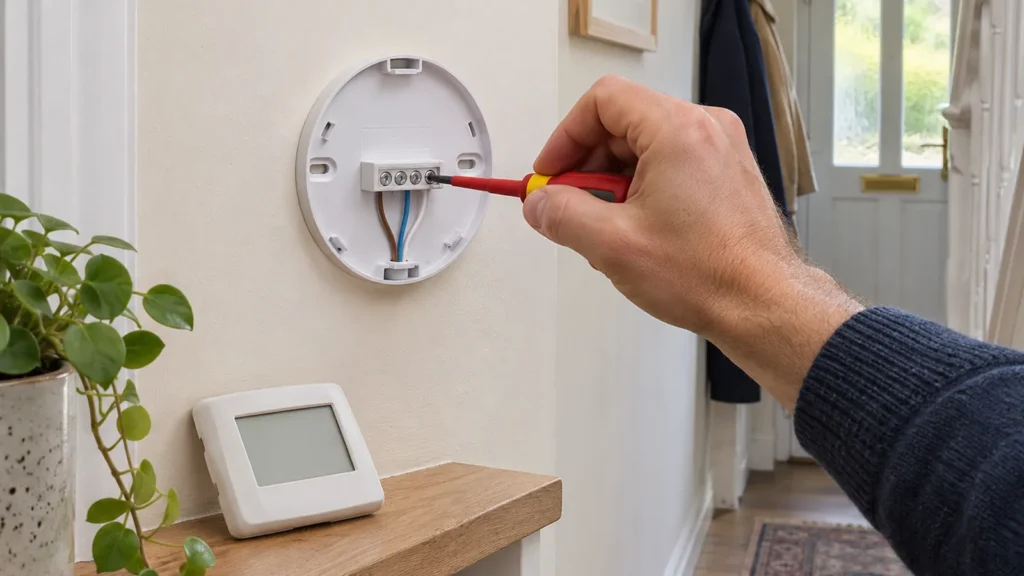
A few points that save grief:
- Photograph the old wiring before you disconnect anything.
- Check whether your old thermostat is battery powered or mains powered. This tells you what the new system will need.
- Don't open the boiler casing. You never need to for a wall thermostat, and anything inside the boiler is for a Gas Safe engineer.
- Tenants: ask your landlord. A thermostat swap is usually fine in principle, but it is their system.
If the installer route appeals, Hive offers installation by British Gas engineers (Hive says a year of Hive+ is included with the professional install), and Nest and Tado both have approved installers. Prices vary with region and the work involved, but an installed smart thermostat has often been quoted in the region of £225 to £325 depending on the model and boiler.
App features and day-to-day use
Nest is built around learning. You turn the dial for a few days and it builds a schedule, uses your phone's location to know when the house is empty, and tells you what it has done. It is the one for people who do not want to think about heating. The downside is the same: it makes decisions for you, and if you have an irregular household it can feel like it is guessing.
Hive is the hands-on one. You build schedules yourself, boost heating or hot water with a tap, and pay extra for Hive+ features such as Away Mode, Saver Mode and Schedule Assist. It is also the best known for an on-wall experience that is easy for the whole household to understand. Tado leans on location. Its paid AI Assist tier (£29.99 a year on its site) adds geofencing, preheat before arrival, open window detection and automated flow temperature optimisation. Without it you still get the basics.
Radiator valves and room-by-room control
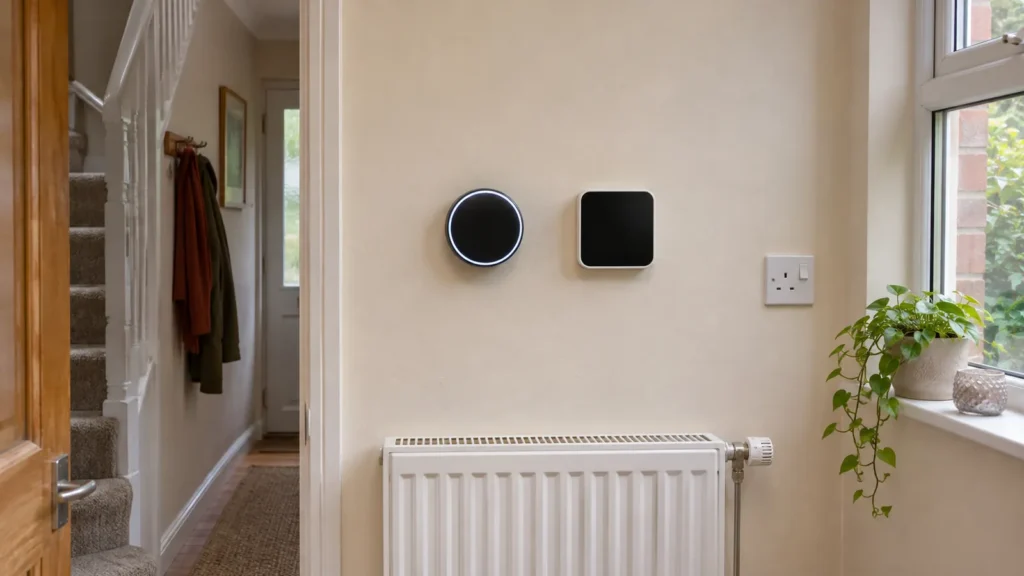
One thermostat on the hall wall controls the temperature in the hall. If the back bedroom is cold and the living room is roasting, the thermostat can't fix that. Smart radiator valves can, because each radiator gets its own sensor and schedule.
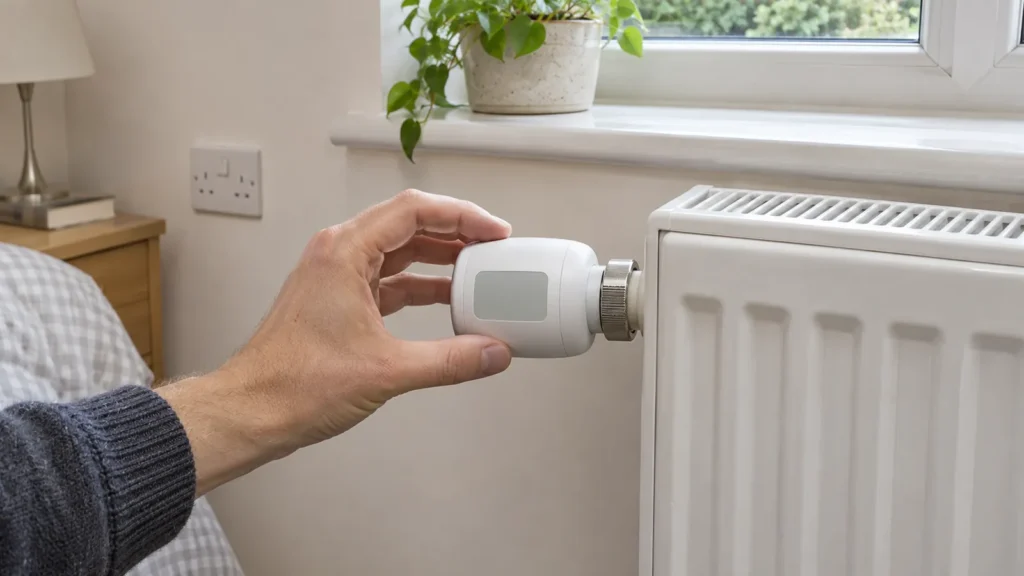
Tado's Smart Radiator Thermostat X fits on to existing valve bodies without wiring or boiler access and is USB-C rechargeable. Hive has its own radiator valves, but they run the system in relay mode, so you lose the OpenTherm modulation on a combi. Nest's radiator valve ecosystem is not a major part of the UK offering, so if room-by-room control is the point, Tado is the obvious candidate.
A word of caution: smart TRVs are best in houses with a few rooms you rarely use. If you are heating every room all day, they will not save much. And you need to leave the room with the thermostat itself fully open, or the boiler won't have anywhere to send its heat. Our boiler pressure guide is worth a read if you start bleeding radiators after fitting new valves.
Subscriptions: what do you actually pay for?
None of the three locks the basic job (set a temperature, run a schedule, control it from your phone) behind a monthly fee. The extras differ:
- Hive+ is £3.99 a month or £39.90 a year, per Hive's site, and adds features such as Away Mode, Saver Mode, Budget Tracker and Schedule Assist.
- Tado AI Assist is £29.99 a year, per Tado's site, and adds geofencing, adaptive heating and flow temperature optimisation.
- Nest doesn't ask for a subscription for its core thermostat features in the UK, but check the listing before you buy.
Over five years, Hive+ costs about £200 and Tado's tier about £150. Run the sum: £39.90 × 5 = £199.50, and £29.99 × 5 = £149.95. Whether those features save you that much is down to your household.
Which should you pick?
Pick Nest if you want the least involvement, you have a compatible boiler and you are already in the Google ecosystem. Check the boiler compatibility tool, particularly if you have a hot water cylinder or zones.
Pick Hive if you want something simple that the rest of the household will understand, you like the idea of a British Gas-backed install, and you have a single-zone combi or a straightforward system boiler. Decide beforehand whether the extra Hive+ features are worth the subscription.
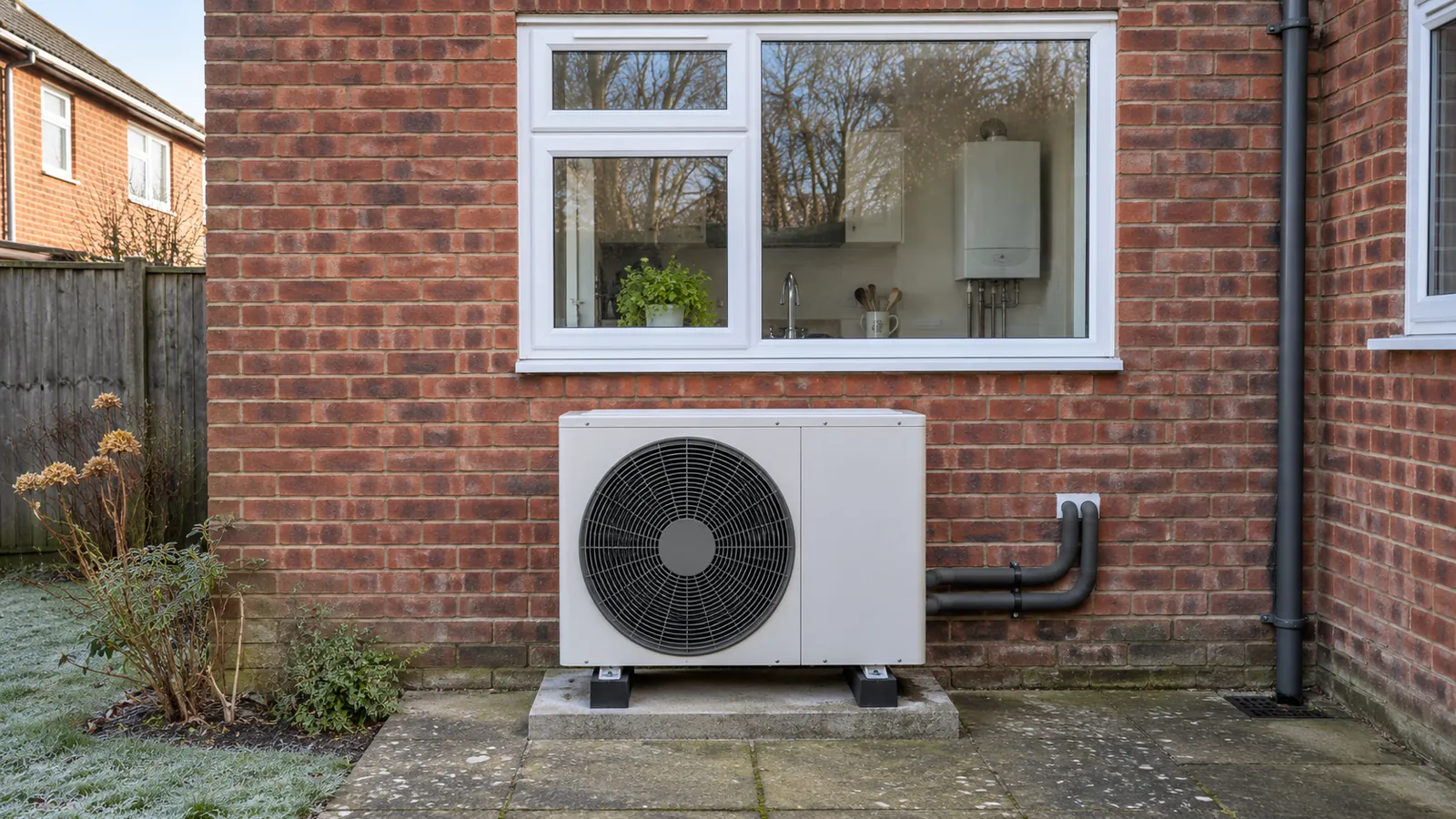
Pick Tado if you want radiator valves, you have a house with rooms that need different temperatures, or you have a heat pump (Tado sells a separate optimiser for that). It is also the one most often named as the most OpenTherm-flexible by independent installers' guides, though the evidence is mostly the manufacturer and trade sites.
Don't bother with any of them if your problem is that the house is cold because the radiators are undersized or the loft is bare. A smart thermostat tunes how you use heat, not how well it is kept in. Do loft insulation first, and see our new combi boiler cost guide if the boiler itself is the issue.
FAQs
Is Nest or Hive better for a combi boiler?
Both work with most combis, and both support OpenTherm on compatible boilers (Hive in single-zone only). Check your boiler against each brand's compatibility tool, because a mismatch is the thing that causes trouble, not the brand.
Can I install a Nest or Hive thermostat myself?
Often yes. It is low-voltage control wiring rather than gas work, so it doesn't need a Gas Safe engineer. But you are connecting terminals, sometimes at mains voltage at the receiver, so isolate the power and use a qualified person if you aren't sure what you are looking at.
Do Nest and Hive work with a hot water cylinder?
Yes, both can control a separate hot water circuit. Hive lets you switch it on and off, schedule it and boost it, but you set the water temperature on the cylinder.
Is there a monthly fee for Hive or Nest?
Hive's core functions work without paying, with Hive+ optional at £3.99 a month or £39.90 a year. Nest doesn't require a subscription for its core thermostat features in the UK, but confirm on Google's UK store.
Does a smart thermostat really save money?
It can, mainly by stopping heating when no-one is home and, with OpenTherm, by letting a condensing boiler run cooler. Manufacturer claims run from about 8% to 20%, but they are best case. A well-set programmable thermostat gets part of the way there for nothing.
What is the best smart thermostat for a combi boiler?
There isn't one answer. For a straightforward single-zone combi, Nest, Hive and Tado all work. If you want radiator valves and room control, look at Tado. If you want the simplest schedule-driven experience, look at Hive.
Do I need a hub?
Hive's site is unclear about whether a separate hub is in the box, so check the product listing before you order. Tado uses a bridge for some setups. Check what is included for your chosen model.
- Check the boiler first: combi, system, zoned and OpenTherm support decide what each thermostat can do.
- OpenTherm lets the boiler modulate and run cooler, which is where the gas saving comes from.
- Hive's OpenTherm works in single-zone homes only; Tado says its version is not limited that way.
- Hive+ is £3.99 a month or £39.90 a year and Tado's AI Assist is £29.99 a year, both optional.
- Fitting is low-voltage work and needs no Gas Safe registration, but get help if you are unsure about wiring.
- Insulation and radiator sizing matter more than the thermostat brand.