
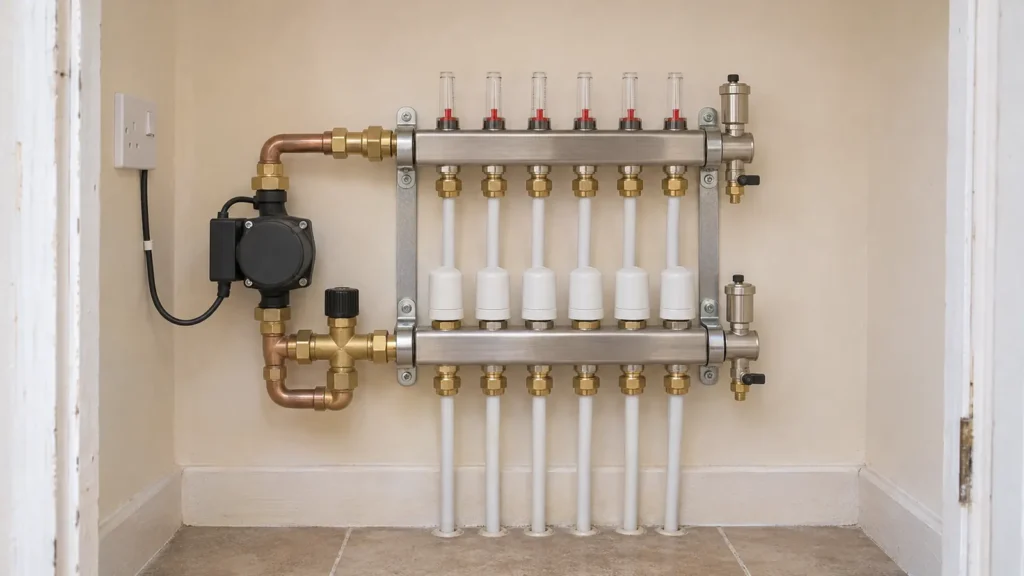
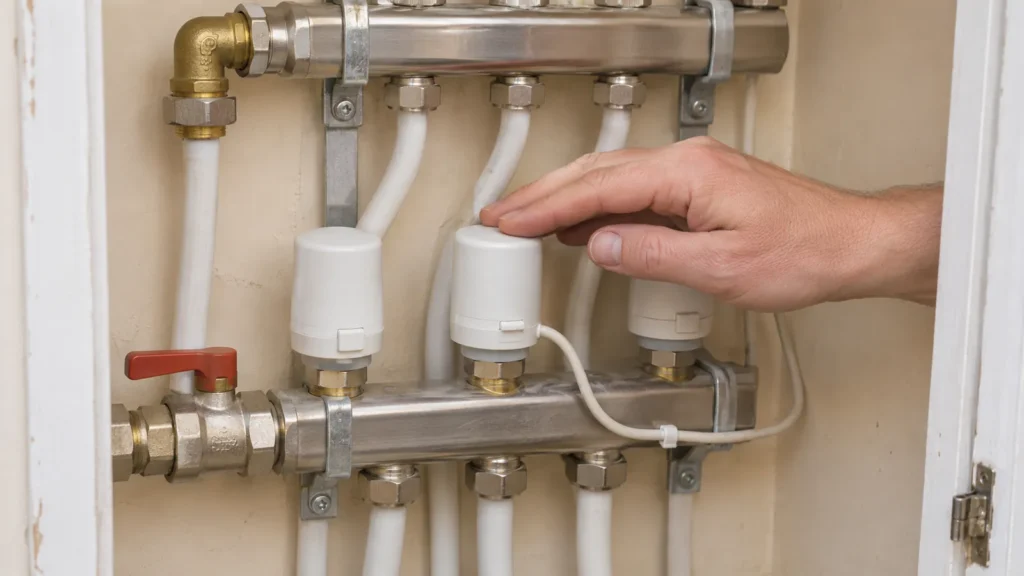
An underfloor heating manifold is the set of pipes, valves and gauges that splits hot water from your boiler or heat pump into separate loops under the floor. The top bar (flow) sends warm water out to each loop and the bottom bar (return) collects it back. Flow meters show how much water goes through each loop, and the electric actuators open and close loops when a room thermostat calls for heat. If one room is cold, the manifold is usually the first place to look: a stuck actuator or a closed flow meter is the most common cause.
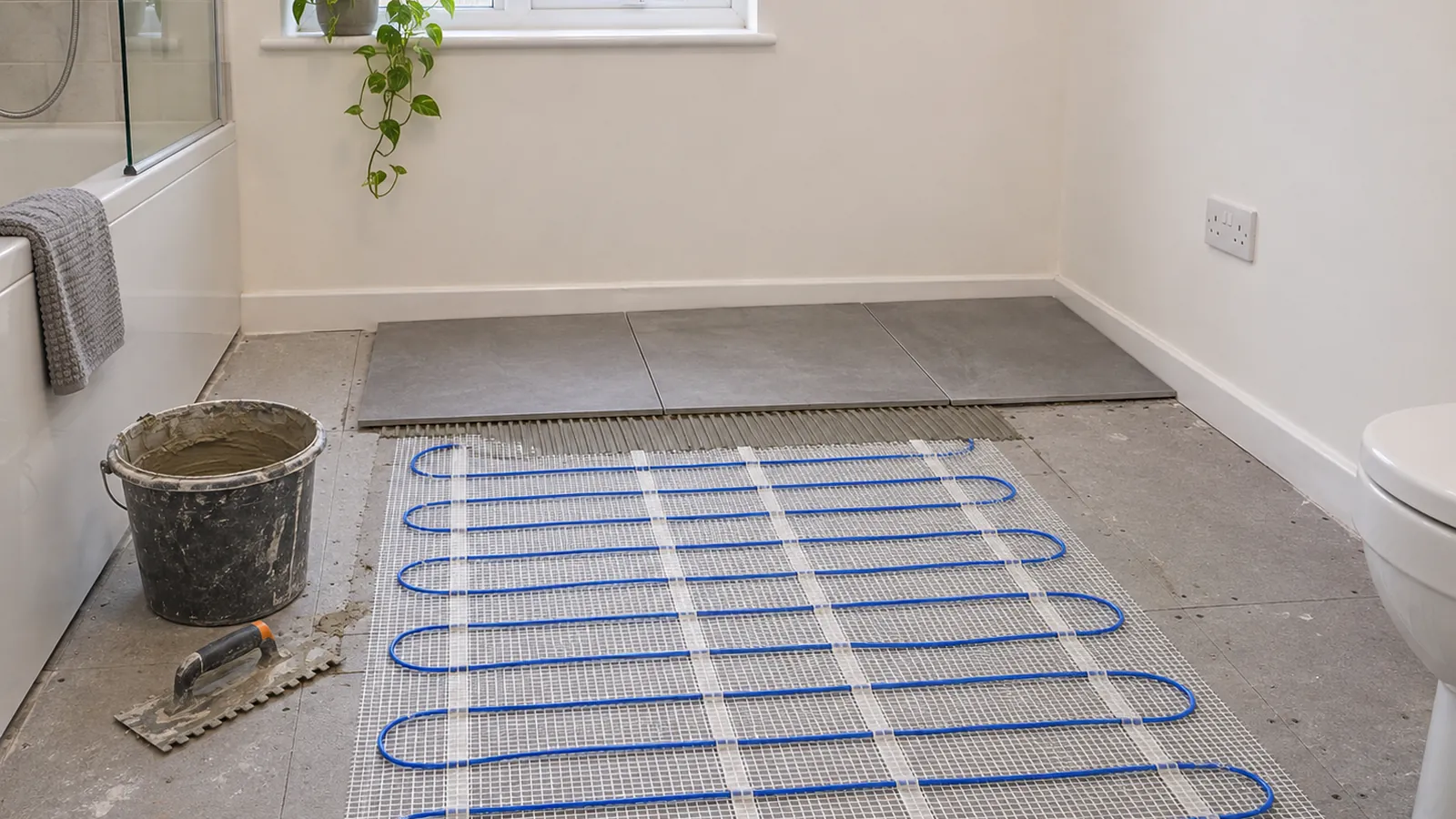
This applies to wet (water-based) underfloor heating. Electric mats and cables don't have a manifold at all; see our electric underfloor heating guide for those. And if you're still deciding between systems, our underfloor heating vs radiators comparison covers costs and comfort. More heating help is on our heating hub.
Where is the manifold?
Usually in a cupboard, utility room, under the stairs or behind an access panel on the ground floor, roughly central to the rooms it serves so the pipe runs are short. It looks like two horizontal metal bars, one above the other, with pairs of plastic pipes dropping into the floor from each bar. Each pair is one loop. Bigger rooms often have two or three loops.
The parts of an underfloor heating manifold
| Part | What it does | What you'll see |
|---|---|---|
| Flow bar | Sends warm water out to each loop | Top bar, often with clear flow meters on it |
| Return bar | Collects cooled water back from each loop | Bottom bar, with actuators or caps on each port |
| Flow meters | Show and set the water flow through each loop | Clear tubes with a float or marker, usually in litres per minute |
| Actuators | Open or shut a loop when its room thermostat calls for heat | White or grey caps, usually on the return bar, with a wire coming out |
| Pump | Circulates water round the floor loops | A round pump on a pipe beside the manifold |
| Mixing or blending valve | Mixes return water with hot boiler water to bring it down to a floor-safe temperature | A valve with a dial, often with a thermometer next to it |
| Isolating valves | Shut the whole manifold off for maintenance | Lever or butterfly valves where the main pipes join |
| Air vents and drain cocks | Let air out and allow filling or draining | Small brass fittings at the end of each bar |
| Wiring centre | Connects room thermostats to actuators, pump and boiler | A plastic box on the wall nearby with terminal blocks |
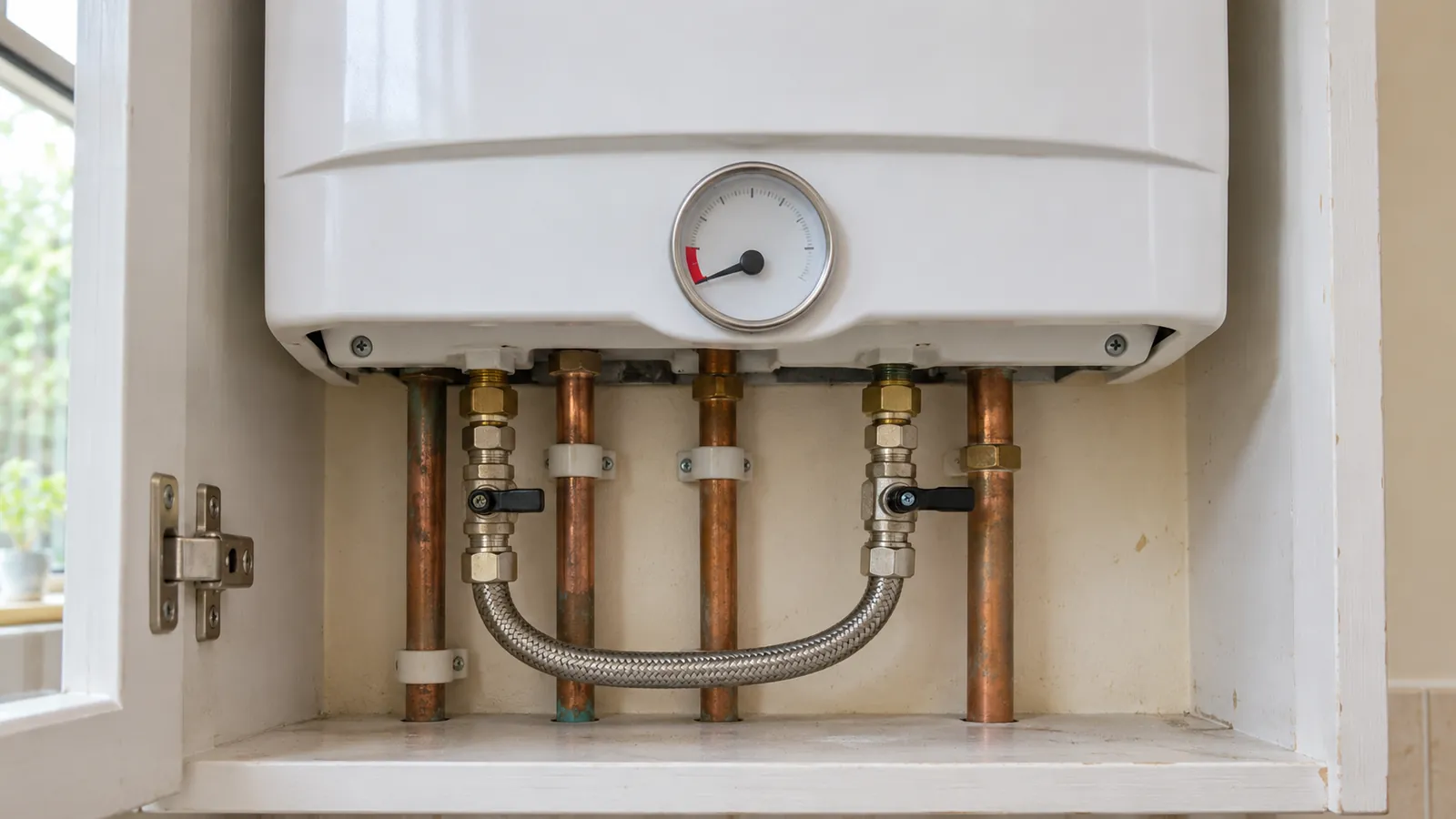
Not every system has its own pump and mixing valve. Systems run by a heat pump often send water at floor temperature already, so there's no mixing needed.

How it works, step by step
- A room thermostat drops below its set temperature and sends a signal to the wiring centre.
- The wiring centre powers that room's actuator, which slowly opens its loop. Thermal actuators take a few minutes to open fully, so don't expect an instant response.
- The wiring centre tells the pump to run and the boiler or heat pump to fire.
- Hot water reaches the mixing valve, which blends it down to the floor water temperature (often somewhere in the 35 to 55°C range on boiler systems, depending on the floor and the design).
- Water travels round the open loop, gives up its heat to the floor, and returns to the bottom bar.
- When the room reaches temperature, the actuator closes and, if no other rooms need heat, the pump and boiler stop.
Floors respond slowly. A screed floor can take a couple of hours to warm up noticeably, which is why most underfloor heating is set to run at a steady temperature or with a long setback overnight, rather than switched fully off and on like radiators.
How to read the flow meters
Each flow meter has a float or a coloured marker that sits against a scale, usually in litres per minute. Installer guidance commonly puts individual loops somewhere around 1 to 3 litres per minute, depending on loop length, pipe spacing and how much heat the room needs. The exact figure for your house should be on the design sheet the installer left (often taped inside the cupboard or in the paperwork).
Two things to know:
- A reading of zero on a loop with its room calling for heat means no flow. Either the actuator hasn't opened, the flow meter is closed, or there's air or a blockage in the loop.
- Flow meters can only be read accurately when the pump is running and the loop is open. Check them with the heating on.
The flow meter glass gets dirty over time, especially on older systems with sludge, and can become hard to read. That's a sign the system water needs cleaning and an inhibitor top-up.
What balancing means
Short loops have less resistance than long ones, so water naturally takes the easy route and the longest loops get the least. Balancing means adjusting each flow meter so every loop gets the flow it was designed for. You usually turn the flow meter's top collar (or a separate valve under a cap) to restrict the shorter loops, which pushes more water to the longer ones.
Balancing should be done by the installer when the system is commissioned. If you have the design sheet, you can check the flows yourself. Without it, you're adjusting blind, and it's easy to make one room better and another worse. If several rooms are uneven, ask a heating engineer to rebalance it.
One room or loop is cold: what to check
Work through these in order before calling anyone out.
- Is the room thermostat actually calling for heat? Turn it up a few degrees and check the display shows heating. Check its batteries if it's wireless.
- Has the actuator opened? Many actuators have a small indicator that rises or changes colour when open. Others feel warm when powered. If its neighbours are open and it isn't, the actuator may have failed. Replacement actuators are inexpensive and clip or screw on, but they're wired into the wiring centre, so get an electrician or heating engineer to fit one if you're not confident with mains wiring.
- Is the flow meter showing any flow? If the actuator is open but the meter reads zero, the flow meter might have been turned off, or there's air in the loop.
- Is there air in the system? Gurgling, or loops that run for a while and then stop, suggest air. The manifold has vents for this. Releasing air drops the system pressure, so check the pressure gauge afterwards (see our boiler pressure guide if your system runs from a combi).
- Is the pipe going into the floor warm? Carefully feel the flow pipe for that loop just below the manifold. Warm going in but a cold floor suggests very low flow. Cold going in means water isn't reaching it.
Don't take an actuator off with the system hot and running if you're not sure what you're doing. Some actuators sit on a valve that opens fully when the actuator is removed, which is useful for testing but means that loop will heat constantly until you put it back.
The whole floor is cold
If every loop is cold, the problem is upstream of the loops:
- Boiler not firing. Check the boiler display for a fault code. Our Vaillant fault code list covers the most common ones.
- Pump not running. A pump that's stuck may hum without moving water, or be completely silent. It should feel faintly vibrating when running.
- Mixing valve set too low. If someone has turned the dial down, the floor will barely get warm. Check its setting against the installer's figure.
- Wiring centre fault. Look for indicator lights. Many wiring centres show which zones are calling for heat and whether the pump and boiler relays are active.
How much does a new manifold cost?
Prices vary widely depending on the number of ports, whether it includes a pump and mixing valve, and the brand. As a rough 2026 guide, a plastic or stainless steel manifold for a few rooms can cost from around £150 to £400 to buy, and a complete pack with pump and blending valve costs more. Fitting is a plumbing job that involves draining and refilling the system, connecting pipework and wiring, and rebalancing. Labour often costs as much as the parts, sometimes more. Get a quote that includes commissioning and balancing, not just fitting.
Most manifold problems don't need a new manifold. Actuators, flow meters, air vents and pumps can all be replaced individually.
Looking after the manifold
- Keep the manifold cupboard clear so you can see the gauges.
- Have the system water checked at the boiler service. Underfloor heating pipes are long and slow, which makes them prone to sludge if the inhibitor gets diluted.
- Leave the design sheet with the manifold. It makes balancing and fault-finding far quicker.
- If you hear running water noises that never stop, or the pressure keeps dropping, look for leaks at the manifold joints. A slow drip here can go unnoticed for months. Our guide to a combi boiler losing pressure covers how to trace one.
FAQs
What does an underfloor heating manifold do?
It splits water from your boiler or heat pump into separate floor loops, controls the flow through each one, and opens or closes them when room thermostats call for heat. It brings the water down to a floor-safe temperature on many boiler systems too.
How do I know if an underfloor heating actuator is faulty?
If its room is calling for heat, the other actuators have opened, and this one shows no change on its indicator and stays cold after 10 minutes, it has likely failed. An electrician or engineer can test whether it's getting power.
What should the flow meters on underfloor heating read?
It depends on the design, but many loops sit somewhere around 1 to 3 litres per minute. The correct figures for your system should be on the installer's design sheet.
Why is only one room cold with underfloor heating?
Usually a stuck actuator, a closed flow meter, air in that loop or a thermostat fault. Check them in that order at the manifold.
Can I balance underfloor heating myself?
You can adjust the flow meters if you have the design flow rates. Without them, it's trial and error and easy to make worse. Get an engineer if you don't have the figures.
How hot should the water in underfloor heating be?
Much cooler than radiators. On boiler systems it's commonly mixed down to somewhere around 35 to 55°C depending on the floor type and design, and heat pump systems often run at the lower end. Follow your installer's setting.
- The top bar sends water out, the bottom bar brings it back, and each pipe pair is one loop.
- Flow meters show how much water each loop gets; zero flow on a calling room is the key clue.
- One cold room: thermostat, actuator, flow meter, air, in that order.
- Whole floor cold: boiler, pump, mixing valve, wiring centre.
- Keep the installer's design sheet with the manifold for balancing.