
For most condensing combi boilers, set the radiator (heating) dial to around 60°C or a little lower, and the tap (hot water) dial to about 50°C. A lower heating temperature lets the boiler condense, which means it recovers more heat from its exhaust and uses less gas. If you have a hot water cylinder, keep the stored water at 60°C to control Legionella bacteria, as the Health and Safety Executive advises. In very cold weather or in a poorly insulated home, you may need to turn the heating dial up so rooms still get warm.
Most boilers leave the factory, or get left by the installer, with the heating temperature turned up high. That heats radiators quickly, but it often stops a modern boiler from running at its most efficient. For more ways to keep your heating working well, see our home heating guide.
The two dials on your boiler
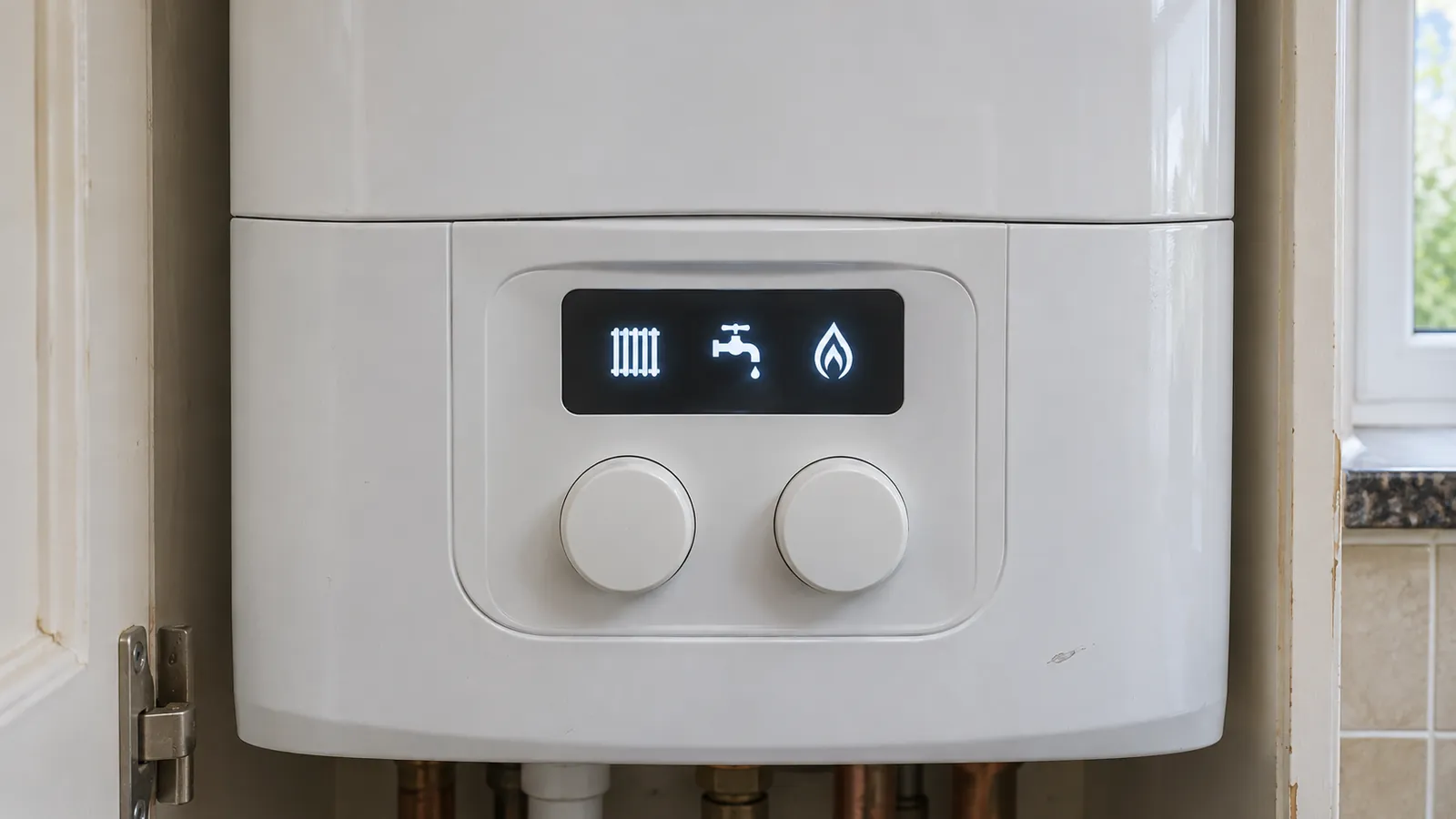
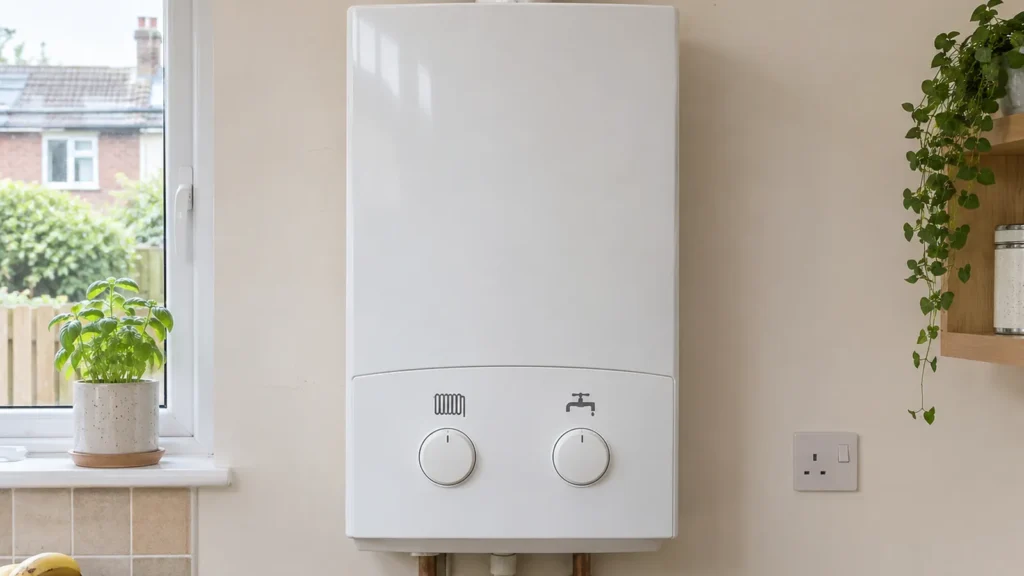
Most combi boilers have two temperature controls, either as dials or as settings on the display:
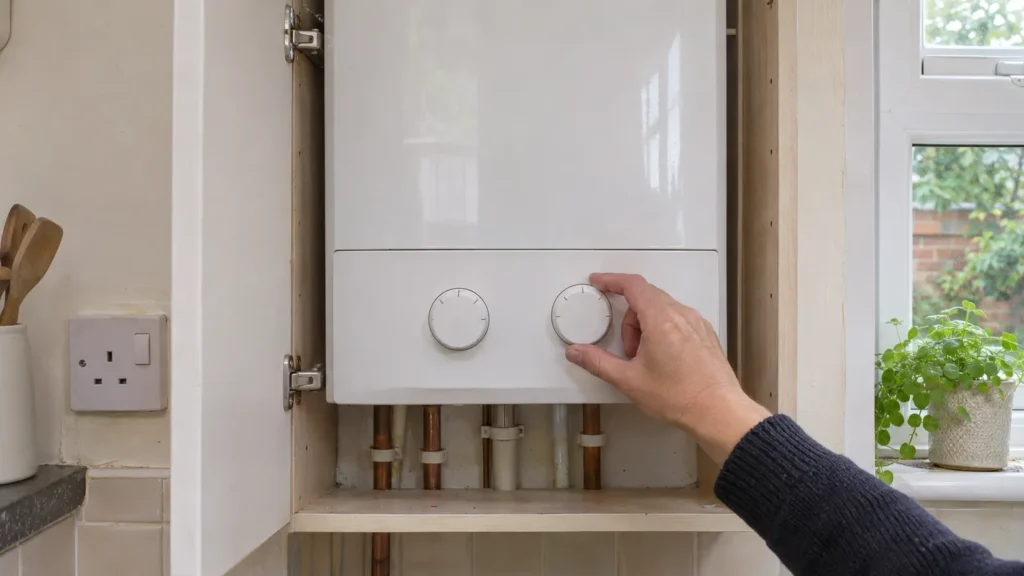
| Symbol | What it controls | What it isn't |
|---|---|---|
| Radiator symbol | The flow temperature: how hot the water is when it leaves the boiler and goes to your radiators | It isn't the room temperature. Your thermostat controls that |
| Tap symbol | The temperature of the hot water at your taps and shower | It doesn't affect the heating |
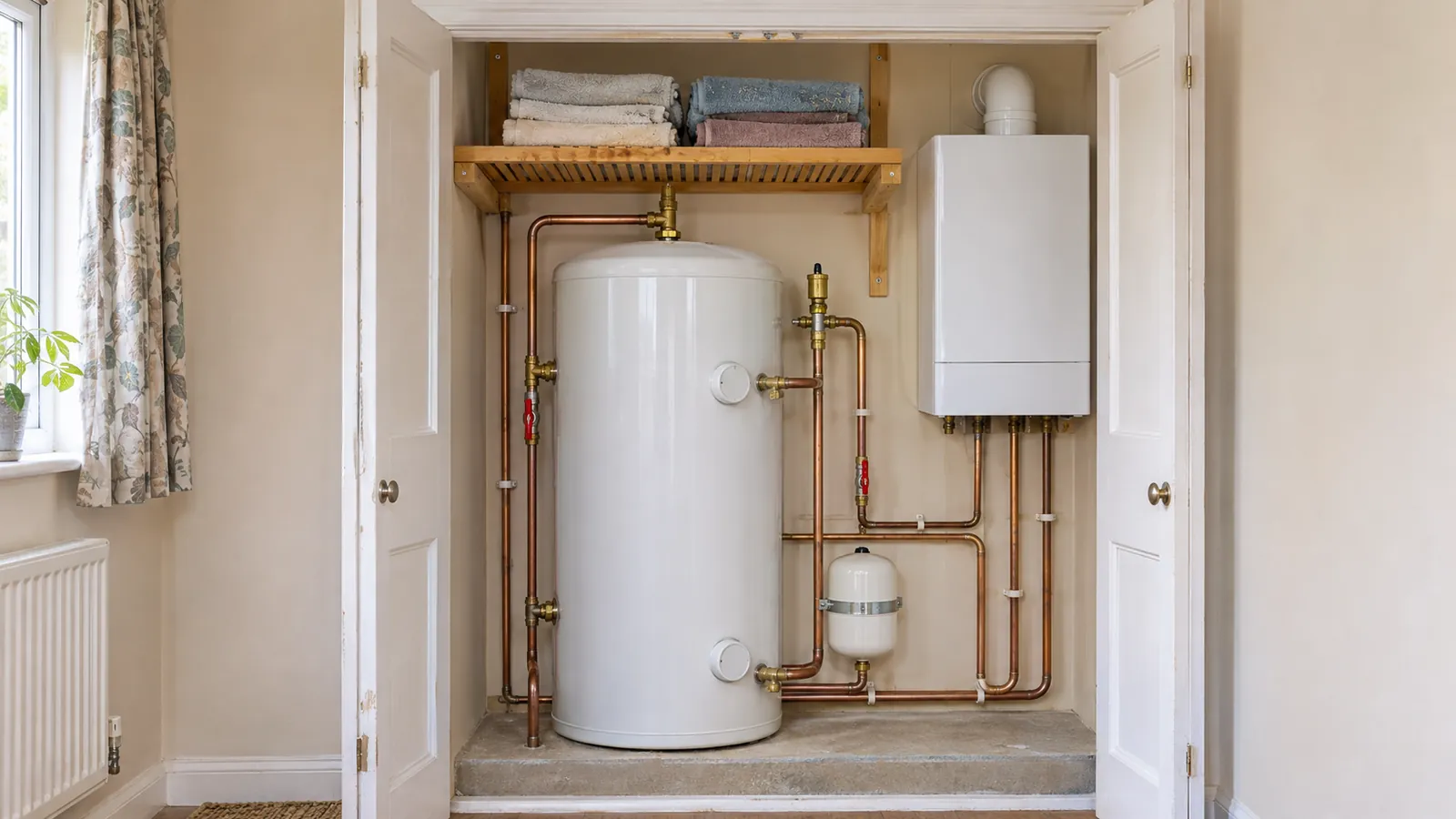
System and regular boilers usually have only the radiator dial. Their hot water temperature is set by the cylinder thermostat, a small dial strapped to the side of the hot water cylinder. Not sure which type you have? Use our guide: what type of boiler do I have?
Flow temperature and your room thermostat do different jobs. The thermostat (for example, set to 19–21°C) decides when the heating switches on and off. The boiler's radiator dial decides how hot the water in the radiators is while it's on. Turning the boiler dial down doesn't make your home colder in the end; it usually makes it heat up more slowly and more steadily.
Why a lower flow temperature can save gas
Modern gas boilers are condensing boilers. They have an extra heat exchanger that captures heat from the hot exhaust gases. When those gases cool enough, the water vapour in them condenses, releasing extra heat back into your heating water.
That only happens properly when the water returning to the boiler from the radiators is cool enough, generally below about 55°C. If the flow temperature is set at 70–80°C, the return water is often too hot for the boiler to condense, so it runs less efficiently than it was designed to.
Lowering the flow temperature to around 60°C or below gives the boiler a much better chance of condensing for more of the time.
You'll know you have a condensing boiler if there's a plastic condensate pipe running from it to a drain, and a white plume from the flue on cold days.
What about the savings?
The saving depends on your home, your radiators, your boiler and how you use your heating, so there isn't one figure that fits everyone. The charity Nesta has run campaigns encouraging people to lower their combi boiler flow temperature, and energy advice groups such as the Energy Saving Trust also recommend it as a simple, free change. Treat it as a small but worthwhile saving rather than a dramatic one.
Best combi boiler settings
A good starting point for a condensing combi boiler in a typical UK home:
| Setting | Starting point | Notes |
|---|---|---|
| Heating (radiator dial) | 55–60°C | Try lower in mild weather if your rooms still get warm |
| Hot water (tap dial) | About 50°C | Hot enough for showers and washing up, without scalding |
| Room thermostat | 18–21°C | Set what's comfortable for your household |
Your boiler may show the setting as a number, a bar scale or a dial without numbers. If there are no numbers, check the user manual: many manuals include a chart that matches each dial position to a temperature.
You're only changing the settings on the front controls of the boiler. Don't remove the boiler casing or adjust anything inside it. Only a Gas Safe registered engineer should work inside a gas boiler. Smell gas? Leave the building and call 0800 111 999.
How to change your boiler's flow temperature
The exact steps vary by make and model, but the process is usually:
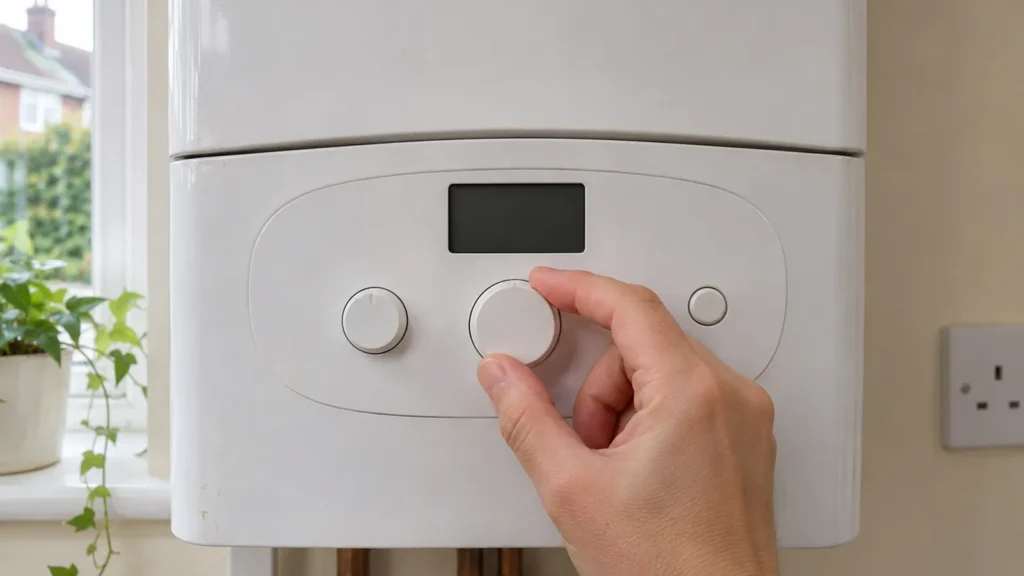
- Find the heating control. It's the dial or button with a radiator symbol.
- Check the current setting before you change anything, so you can go back if needed. Take a photo.
- Turn it down to about 60°C (or the dial position that matches it in your manual).
- Leave it for a few days and see whether your home still gets warm enough.
- If it's comfortable, try 55°C, then test again. If rooms take too long to warm up, go back up a step.
Some boilers, especially those controlled by a smart or "weather compensating" thermostat, set the flow temperature automatically. If yours does, the dial on the boiler may be overridden by the thermostat. Check the app or the thermostat's settings instead.
Common makes
- Worcester Bosch Greenstar: the heating temperature is usually on the front control panel, either a dial or the display menu. If your boiler stops working after a change, see our guide to resetting a Worcester boiler.
- Vaillant ecoTEC: adjust the heating temperature with the "+" and "−" buttons under the radiator symbol on the display.
- Ideal Logic and Vogue: use the heating dial or the heating buttons on the front panel.
- Baxi: most models have a heating dial or buttons marked with a radiator symbol.
Your user manual will show the exact controls. Manufacturers usually publish manuals online if you've lost yours.
When to turn the boiler temperature up
A lower flow temperature isn't right for every home or every day. You may need to turn it up when:
- It's very cold outside and your rooms can't reach the thermostat setting
- Your radiators are small for the room. A lower flow temperature means each radiator gives out less heat, so undersized radiators struggle. Check with our radiator BTU calculator
- Your home is draughty or poorly insulated, so it loses heat faster than lower-temperature radiators can replace it
- You need to warm a cold house quickly, for example after a holiday
A sensible approach is to run lower in autumn and spring, and turn up a step in the coldest weeks only if you need to.
If one or two rooms never get warm at a lower flow temperature, those radiators may be too small or have air in them. Bleed them first. If they're still cool at the top, see our guide to combi boiler losing pressure because bleeding radiators lowers the pressure, and you may need to top it up.
Hot water temperature: combi vs cylinder
Combi boilers
A combi heats water only when you turn on a tap, so there's no tank of warm water sitting around. Around 50°C at the boiler is usually hot enough for washing up and showers, while lowering the risk of scalding. If you have young children or elderly relatives at home, scalding is a real risk with very hot water, so don't set the tap dial higher than you need.
Setting the tap dial very high doesn't make the water arrive any faster. It mainly makes the water hotter than you need, so you add more cold at the tap.
Hot water cylinders (system and regular boilers)
With stored hot water, temperature matters for safety as well as comfort. The Health and Safety Executive (HSE) advises that stored hot water should be kept at 60°C or above, and distributed to taps at 50°C or above to control the growth of Legionella bacteria, which cause Legionnaires' disease.
In practice:
- Set the cylinder thermostat to 60°C.
- Don't lower it to save money. The safety risk outweighs the small saving.
- Make sure your boiler's flow temperature is high enough to heat the cylinder to 60°C. Many system boilers handle this automatically with a separate hot water setting. If your cylinder isn't reaching temperature, ask a heating engineer to check.
- Fit thermostatic mixing valves at baths and basins if scalding is a concern. A qualified plumber can do this.
If you have a hot water cylinder, don't turn its thermostat below 60°C to cut bills. The HSE recommends that temperature to stop Legionella growing in stored water.
What is boiler flow rate?
"Flow rate" usually means one of two things:
- Hot water flow rate (combi boilers): how many litres per minute of hot water the boiler can deliver, for example at a temperature rise of 35°C. Bigger combis can supply more water at once. You'll find the figure on the boiler's data sheet. If your shower runs cool when someone else turns on a tap, your combi or your mains water supply may not have enough flow for two outlets at once.
- Heating flow rate: how much water the pump moves round your radiators. This is set by the installer and isn't something you adjust from the front panel.
Flow rate and flow temperature are different things. Flow temperature is how hot the water is; flow rate is how much of it moves. If you're comparing combi boilers, look at the hot water flow rate in litres per minute, not just the kW output.
Will a lower boiler temperature cause problems?
For most homes, no. A few things to know:
- Rooms may warm up more slowly. Put the heating on a little earlier if you use a timer.
- Radiators feel warm, not hot. That's normal and expected at a lower flow temperature.
- It's easy to reverse. If it doesn't suit your home, turn the dial back up.
If your boiler shows a fault code or stops working after a change, it's very unlikely to be caused by lowering the temperature. Note the code and look it up, for example in our Vaillant boiler fault codes guide, or check your pressure.
Other easy ways to cut heating costs
Lowering the flow temperature works best alongside other simple steps:
- Use your thermostat and timer so the heating only runs when you need it.
- Fit or use thermostatic radiator valves (TRVs) to keep rooms you don't use cooler.
- Bleed radiators that are cold at the top.
- Get your boiler serviced every year by a Gas Safe registered engineer.
- Reduce draughts around doors and windows.
If you heat some rooms with portable heaters as well, see which is cheapest to run in our guide to the cheapest electric heater to run.
Thinking of upgrading the thermostat as well? Nest vs Hive covers which ones can actually turn your boiler's flame down rather than just on and off.
FAQs
What temperature should my combi boiler be set to?
For a condensing combi, a heating (radiator) setting of about 55–60°C and a hot water (tap) setting of about 50°C is a good starting point. Turn the heating up a step if your rooms don't get warm enough in very cold weather.
What should my boiler temperature be in winter?
Start at about 60°C on the heating dial. In the coldest weeks you may need to go higher if your rooms can't reach the temperature set on your thermostat, especially if your radiators are small or your home is draughty.
Does turning down the boiler temperature save money?
For most condensing boilers it can save a little gas, because a lower flow temperature lets the boiler condense and recover more heat. The size of the saving depends on your home and how you use the heating.
What is the difference between the radiator and tap dials on a boiler?
The radiator dial sets how hot the water going to your radiators is. The tap dial sets how hot the water at your taps and shower is. Neither one is your room temperature, which is set by your thermostat.
What temperature should a hot water cylinder be?
The HSE advises storing hot water at 60°C or above to control Legionella bacteria. Set the cylinder thermostat to 60°C and don't lower it to save money.
Is 70°C too high for a boiler?
It isn't dangerous, but on a condensing boiler a flow temperature of 70°C or more usually stops it condensing efficiently. Unless you need the extra heat in very cold weather, try 60°C or lower.
What is boiler flow temperature?
It's the temperature of the water leaving the boiler to go to your radiators. You set it with the dial or button marked with a radiator symbol.
Why are my radiators only warm, not hot?
At a lower flow temperature, radiators feel warm rather than hot. That's normal. If the room still gets to the temperature on your thermostat, everything's working. If it doesn't, turn the boiler up a step, and bleed any radiators that are cold at the top.
- The radiator dial sets the flow temperature; the thermostat sets the room temperature.
- About 55–60°C on the heating dial helps a condensing boiler run efficiently.
- About 50°C on the tap dial is enough for a combi's hot water.
- Keep stored hot water in a cylinder at 60°C for safety.
- Turn it up a step if your rooms don't get warm in very cold weather.