
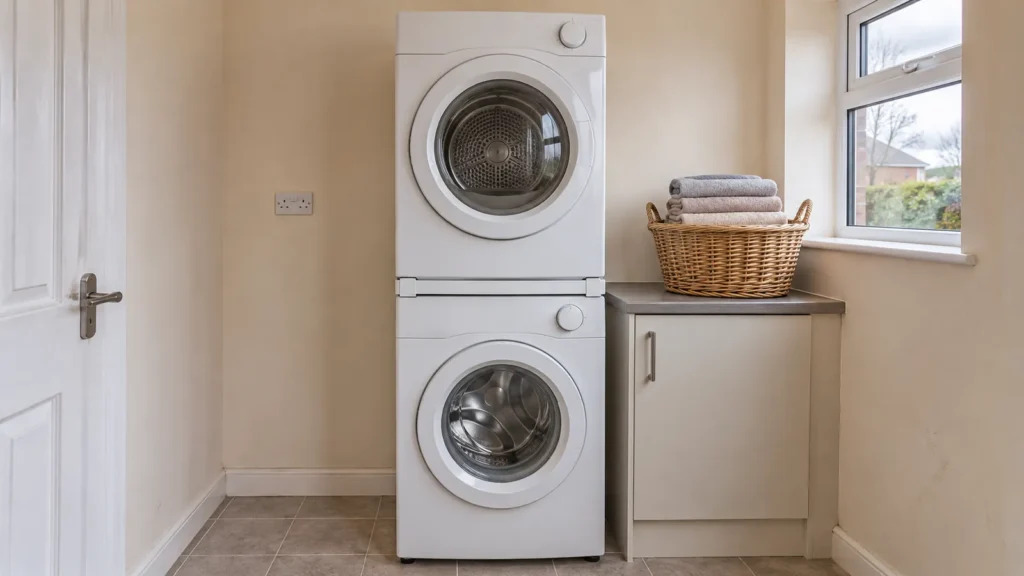
A heat pump dryer uses roughly half the electricity of a condenser dryer. A typical 8kg condenser uses around 4 to 5 kWh for a full load (about £1.05 to £1.32 at 26.32p per kWh), while a heat pump dryer uses around 1.5 to 2.5 kWh (about 40p to 66p). If you dry three or four loads a week, a heat pump dryer usually saves somewhere around £80 to £140 a year and pays back its higher price within a few years. The trade-offs are longer drying times and a higher purchase price.
Both collect the water in a tank or drain it away, so neither needs a vent hose out of a window. The difference is how they heat the air. If you dry most washing without a dryer, our guides on whether a dehumidifier dries clothes and on heated clothes airers are worth a look. More bill-cutting ideas are on our energy-saving hub.
How each type works
Condenser dryer. An electric element heats the air, the hot air tumbles through the clothes and picks up moisture, then it passes over a condenser that cools it so the water drops out into a tank. The air is reheated from scratch every time round, which is where the energy goes.
Heat pump dryer. Instead of an element, it uses a small heat pump (like a fridge working in reverse) to heat the air and then cool it to pull the water out, recycling the heat round the drum. It runs cooler and reuses most of its heat, so it uses much less electricity.
Cost per load and per year
Figures use 26.32p per kWh (Ofgem price cap average, October to December 2026). Energy use varies between models and load sizes, so check the label of any model you're considering.
| Condenser (8kg) | Heat pump (8kg) | |
|---|---|---|
| Energy per full load | About 4 to 5 kWh | About 1.5 to 2.5 kWh |
| Cost per full load | About £1.05 to £1.32 | About 40p to 66p |
| 3 loads a week (156 a year) | About £164 to £205 | About £62 to £103 |
| 5 loads a week (260 a year) | About £274 to £342 | About £103 to £171 |
The working for the middle of each range: a condenser at 4.5 kWh × 26.32p = £1.18 a load; a heat pump at 2 kWh × 26.32p = 53p a load. That's about 65p saved per load, or about £101 a year at three loads a week.
How long does a heat pump dryer take to pay back?
Heat pump dryers usually cost more than condenser models of the same brand and size. As a rough 2026 guide, the gap is often £100 to £300, though sales can narrow it.
- At three loads a week, saving about £100 a year, a £200 price difference pays back in about two years.
- At one load a week, saving about £34 a year, it takes around six years.
A dryer typically lasts around 8 to 12 years, so for families who use one regularly, a heat pump dryer usually works out cheaper overall.
Drying time
This is the main downside. Because it dries at lower temperatures, a full cotton load in a heat pump dryer often takes 2.5 to 3.5 hours, compared with roughly 1.5 to 2.5 hours in a condenser. If you dry several loads back to back, that matters. If you put one load on in the evening, it doesn't.
Other differences worth knowing
| Condenser | Heat pump | |
|---|---|---|
| Purchase price | Lower | Higher |
| Running cost | Higher | About half |
| Drying time | Faster | Slower |
| Drying temperature | Hotter | Cooler, gentler on fabrics |
| Heat given off into the room | Noticeable | Much less |
| Maintenance | Empty tank, clean lint filter, rinse condenser | Empty tank, clean lint filter and extra filter, keep heat exchanger clean |
| Where it can go | Almost anywhere | Works best in a room above roughly 5 to 10°C |
That last point catches people out. Heat pump dryers can struggle in a garage or outhouse in winter. Check the manual's minimum room temperature before putting one somewhere unheated.

When a condenser still makes sense
- You only use a dryer occasionally, so savings would be small.
- You need fast drying for several loads in a row.
- A cheap condenser fits a tight budget now.
- It's going somewhere cold where a heat pump would struggle.
When a heat pump dryer makes sense
- You use a dryer three or more times a week.
- You wash for a family all year round.
- You want gentler drying for clothes.
- You want to cut electricity use for the long term.
Ways to cut the cost of either
- Spin at the highest speed the fabric allows. Less water in means less drying.
- Fill the drum properly, but don't overload it.
- Use sensor drying rather than timed drying.
- Clean the lint filter after every load, and the condenser or heat exchanger as the manual says.
- Part-dry on an airer and finish in the dryer.
FAQs
Is a heat pump dryer cheaper to run than a condenser?
Yes. It typically uses around half the electricity, so a full load costs roughly 40p to 66p compared with about £1.05 to £1.32 for a condenser at 26.32p per kWh.
How much does a condenser dryer cost per load?
Roughly £1.05 to £1.32 for a full 8kg load at 26.32p per kWh, depending on the model and how wet the clothes are.
Why do heat pump dryers take longer?
They dry at a lower temperature and recycle their heat, which saves energy but takes more time, often an hour or more longer for a full load.
Is a heat pump dryer worth the extra money?
If you use it three or more times a week, usually yes. The savings typically cover the higher price within a few years.
Can I put a heat pump dryer in a garage?
Only if it stays warm enough. Many need the room above roughly 5 to 10°C to work well, so check the manual.
Is a dehumidifier cheaper than a tumble dryer?
Yes, much cheaper per load, though slower. Our dehumidifier running cost guide has the figures.
- Heat pump dryers use about half the electricity of condenser dryers.
- At 26.32p per kWh, that's about 53p a load against about £1.18.
- At three loads a week, a heat pump dryer saves about £100 a year.
- Heat pump dryers are slower and dislike cold rooms.
- Occasional users may be fine with a cheaper condenser.