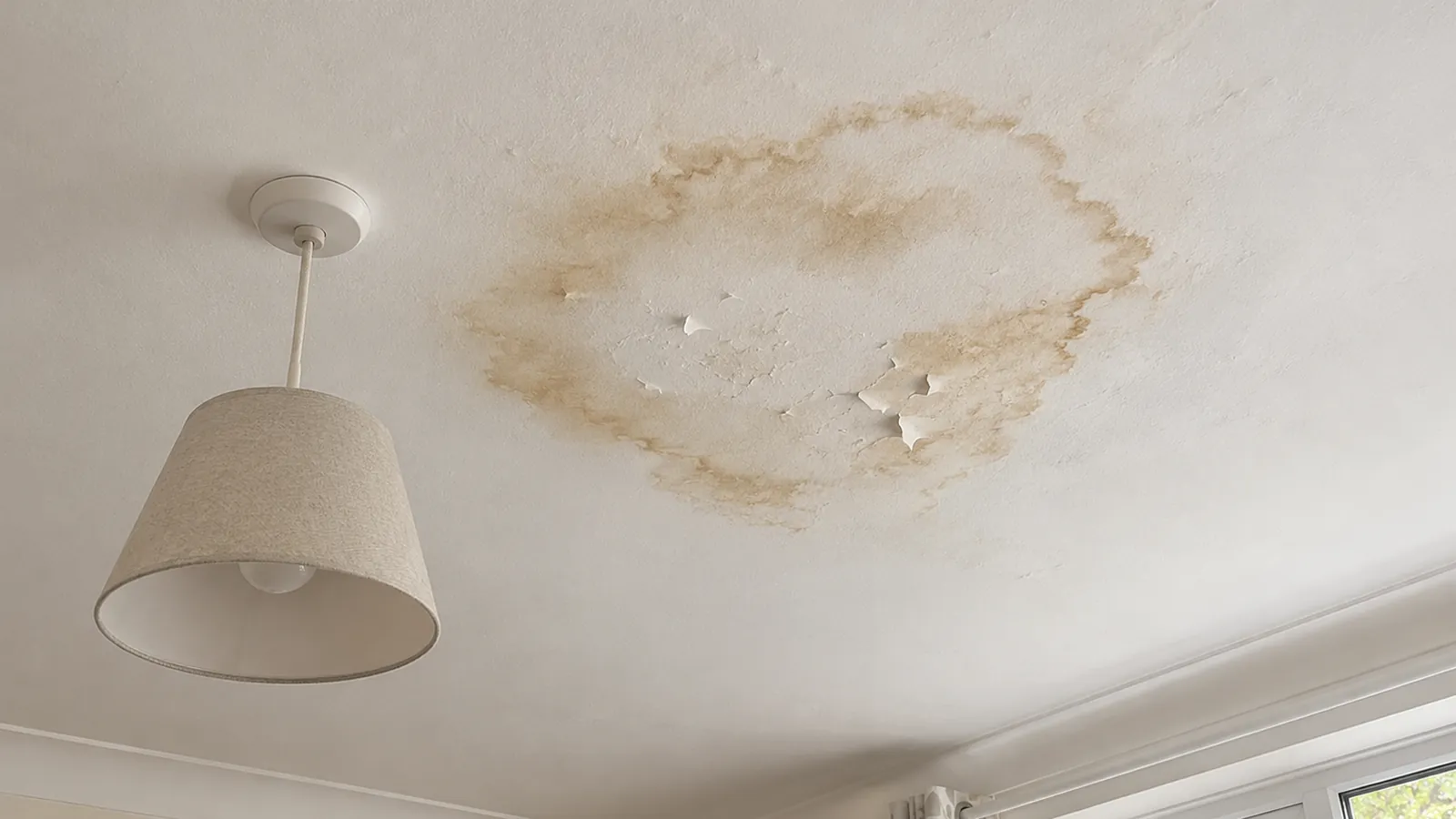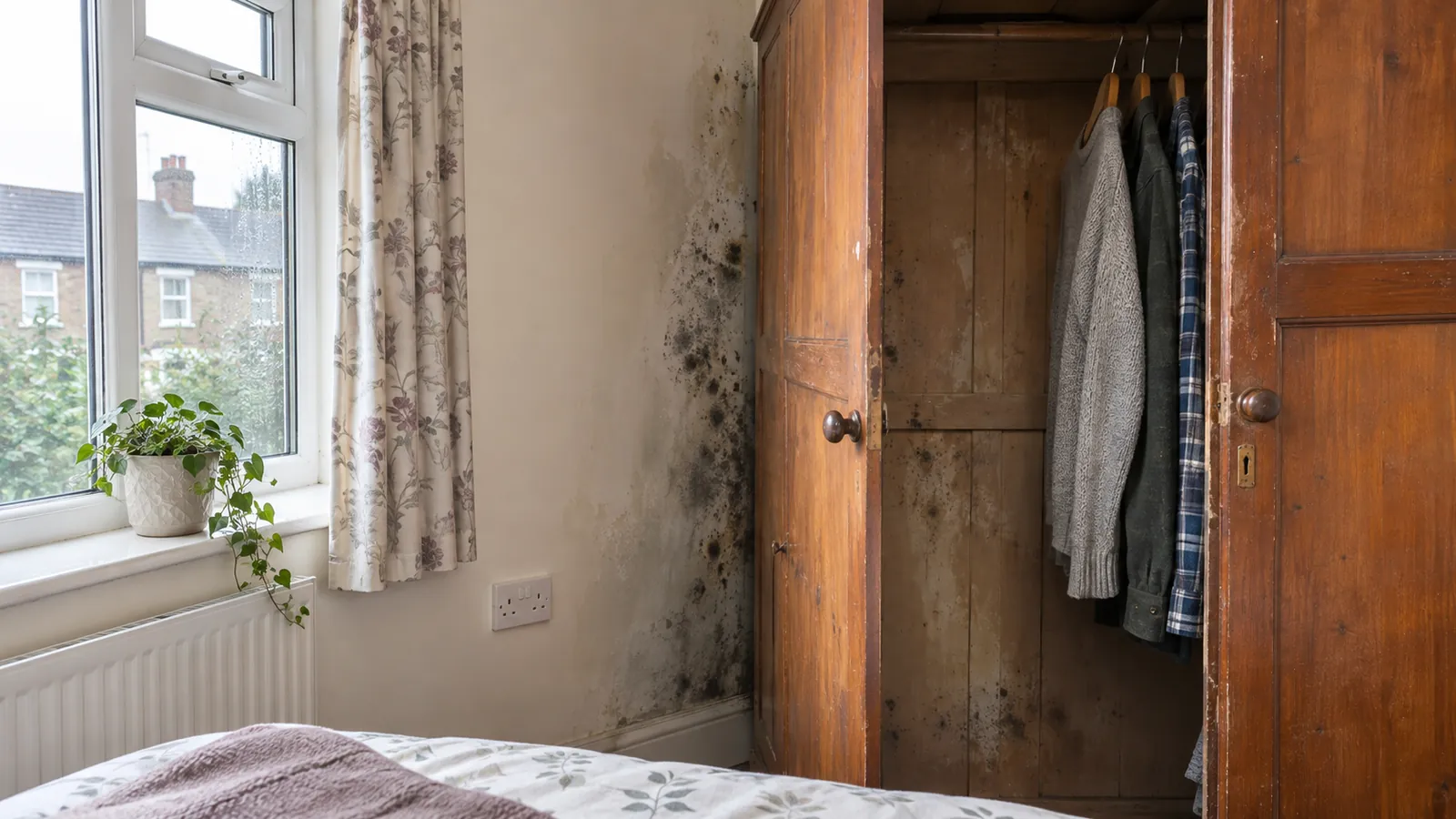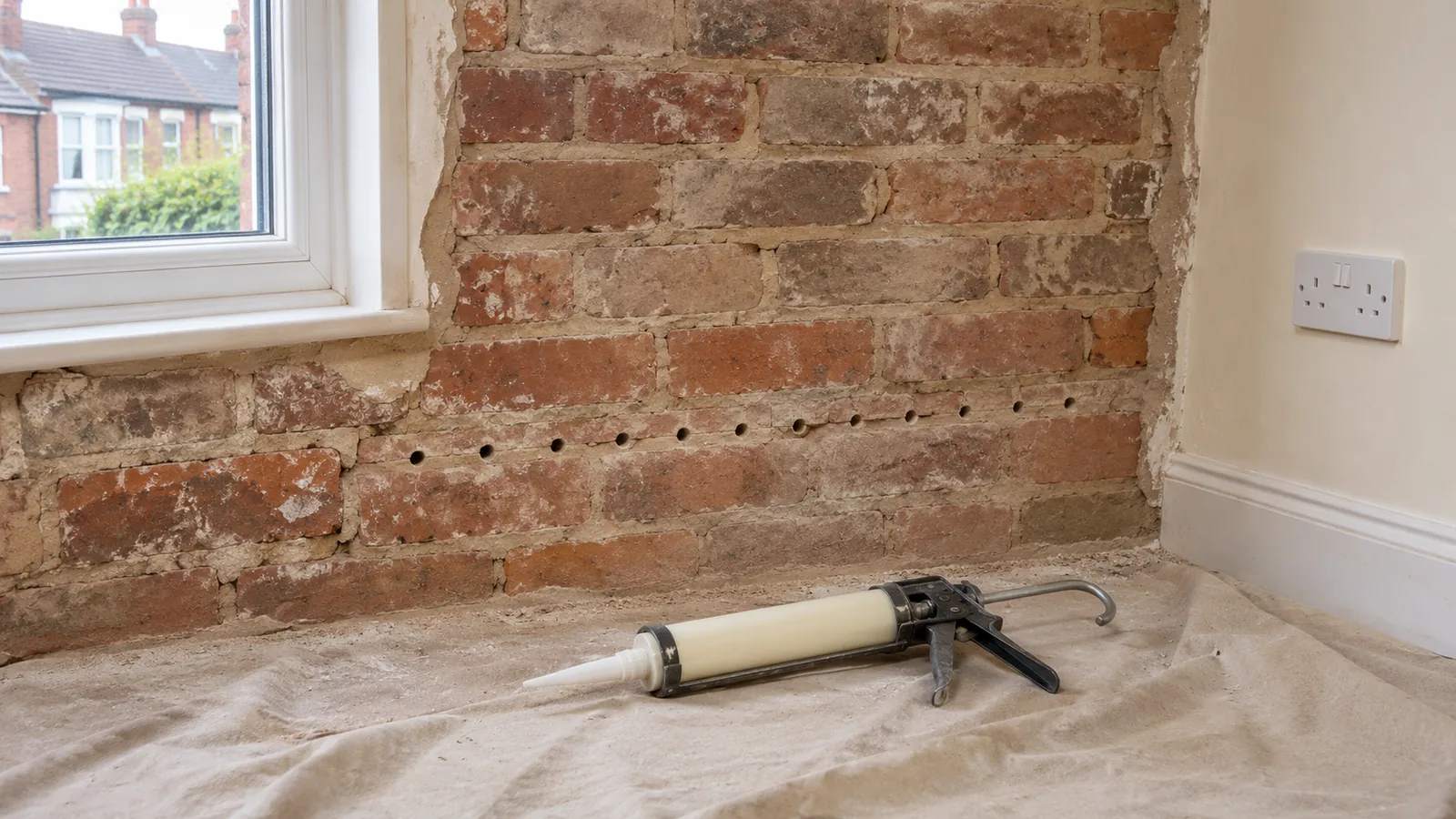


To fix damp, first work out which type you have, because each has a different cure. Condensation (the most common in UK homes) is fixed with better ventilation, steady heating and less indoor moisture. Penetrating damp is fixed by repairing the outside of the building: gutters, downpipes, pointing, render, roofs and window seals. Leaks need the pipe, seal or appliance repaired. Rising damp is rare and is often caused by high ground levels or blocked air bricks, so fix those before paying for a damp-proof course. Dry the wall out, then redecorate with breathable materials.
Damp is one of the most common problems in British homes, and one of the most often misdiagnosed. People spend thousands on injection treatments when the real problem was a blocked gutter or a steamy bathroom. For everything else on the topic, see our complete guide to damp and mould.
Step 1: Work out which type of damp you have
Every fix starts with the cause. Look at where the damp is, when it's worst and what it looks like.
| Type | Where it shows | When it's worst | What it looks like |
|---|---|---|---|
| Condensation | Windows, cold outside walls, corners, behind furniture, bathrooms, bedrooms | Winter, mornings, after showers and cooking | Water droplets, black mould spots, musty smell |
| Penetrating damp | Any height on outside walls, ceilings, around windows and chimneys | After heavy or wind-driven rain | Patches that grow and shrink with the weather, often with a tide mark |
| Plumbing leak | Below bathrooms, kitchens, radiators, pipes, boilers | All year, often getting steadily worse | A spreading, often round patch, sometimes with brown staining |
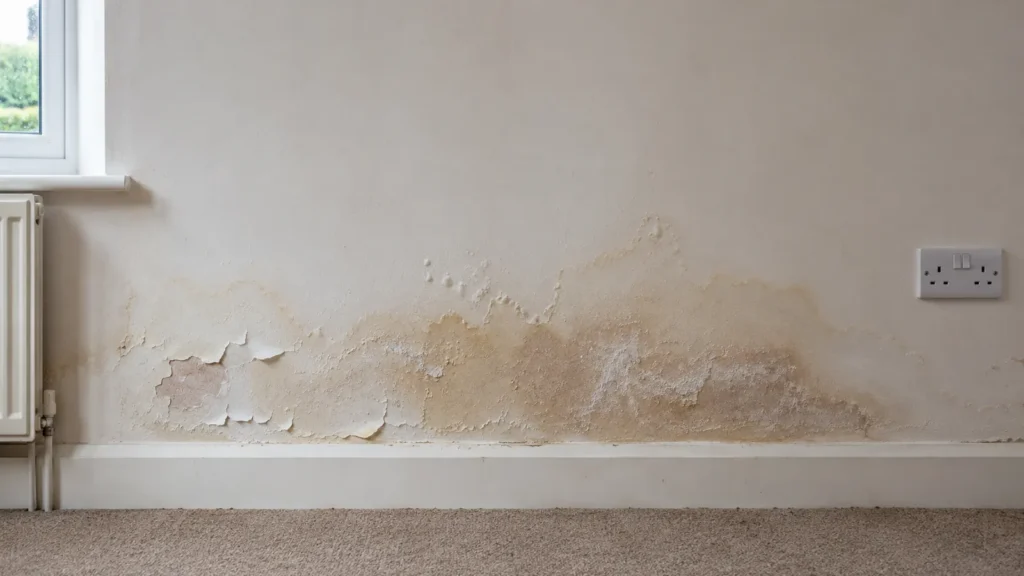
| Rising damp | Ground-floor walls, up to about 1 metre from the floor | All year, sometimes worse in wet seasons | A horizontal tide mark, salt deposits, flaking paint and plaster, rotten skirting |
A cheap hygrometer is your first tool. If your rooms are regularly above about 60–65% relative humidity, condensation is very likely to be part of the problem, even if you also have another type of damp.
Quick tests you can do yourself
- The foil test. Tape a square of kitchen foil tightly to the damp wall for 24–48 hours. If moisture forms on the room side, it's condensation. If it forms behind the foil, the moisture is coming from inside the wall.
- The rain test. Watch the patch after a heavy rain. If it darkens or spreads within a day or two, suspect penetrating damp.
- The water meter test. Turn off all taps and appliances, then watch your water meter for 30–60 minutes. If it moves, you may have a hidden leak.
- Check the outside. Walk around the house in the rain if you can. Look for overflowing gutters, leaking downpipes, splashing water and soil heaped against the walls.
Moisture meters are easy to misread. Cheap pin meters are designed for wood. On plaster and brick they react to salts and some building materials, so high readings don't always mean the wall is wet. Use them to compare areas, not to diagnose rising damp.
How to fix condensation
Condensation causes most of the damp and mould in UK homes. Warm, moist air meets a cold surface and turns back into water. The fix is to cut the moisture you produce, get rid of the rest, and keep surfaces warmer.

Step by step:
- Ventilate the wet rooms. Use the bathroom extractor fan during and for 15–20 minutes after showers. Use the cooker hood whenever you cook, ideally one that vents outside. Keep the doors shut so steam doesn't spread.
- Open trickle vents at the top of windows and leave them open all winter.
- Dry clothes outside where you can. If not, dry them in one room with the door shut and a window open, or with a dehumidifier.
- Heat steadily. Keep rooms at a steady, moderate temperature instead of letting them go cold then blasting the heat. Don't shut off cold rooms completely.
- Air bedrooms each morning for 10–15 minutes.
- Leave gaps behind furniture on outside walls so air can move.
- Run a dehumidifier in the worst rooms to bring humidity down to roughly 40–60%.
- Clean off any mould with a suitable mould remover, and fix the cause so it doesn't come back.
Our guides to condensation on the inside of windows and mould on a bathroom ceiling go into more detail.
Long-term fixes for condensation
If the simple steps don't work, look at the building itself:
- Extractor fans in kitchens and bathrooms that work properly and are big enough
- Loft and wall insulation, to keep inside surfaces warmer
- Better glazing, or secondary glazing, to replace cold single panes
- Positive input ventilation (PIV) units, which gently push filtered air into the home, useful in some houses and flats
If you're renting and the landlord won't act, keep a record of the problem with dated photos and report it in writing. Landlords have duties around damp and mould, and the rules for social housing have been strengthened in England.
How to fix penetrating damp
Penetrating damp is rainwater getting into the walls or roof from outside. You fix it from the outside first. Treating the inside on its own just hides it.
Step by step:
- Clear and repair gutters and downpipes. Blocked or cracked gutters pour water straight down the wall. This is the most common cause and often the cheapest to fix.
- Check the roof and flashings. Slipped tiles, cracked lead flashing around chimneys, and failed valleys let water in. Use a roofer for anything at height.
- Repoint brickwork where the mortar is cracked or missing. On older homes, use a lime mortar, not hard cement, so the wall can still breathe.
- Repair cracked render and paint. Small cracks let water in but stop it drying out.
- Reseal around windows and doors with a suitable exterior sealant, and check window sills drip properly.
- Check chimneys. Unused chimneys may need a cap that still allows ventilation, and the stack may need repointing.
- Let the wall dry out before redecorating. This can take weeks or months, depending on how wet it got.
Be careful with "waterproof" coatings on old walls. Sealing a solid brick or stone wall with a non-breathable coating can trap moisture inside and make damp worse. Get advice from someone who understands traditional buildings first.
How to fix damp from plumbing leaks
Leaks are often mistaken for other types of damp. A damp patch on a ceiling below a bathroom, or on a wall near a radiator or boiler, should make you suspect a leak first.
Step by step:
- Find the source. Check under baths, showers, sinks and toilets, around radiator valves, the washing machine and dishwasher, and the boiler.
- Check bath and shower seals. Failed silicone and grout are very common causes of damp ceilings below bathrooms. Reseal them.
- Tighten or replace leaking fittings. Small drips from compression fittings and radiator valves are often easy fixes. Call a plumber if you're not sure.
- Check the boiler. If water is coming from the boiler, turn off the water supply to it and call a Gas Safe registered engineer. Never open the boiler casing yourself. Our guide to a boiler leaking water explains what to check safely.
- Turn off the water at the stopcock if the leak is serious.
- Dry out the area with good ventilation or a dehumidifier, and check for any damage to floorboards or ceilings.
A damp patch on a ceiling with no obvious leak is often a slow leak from a bath, shower or pipe above, or condensation in a cold loft. Check the room above first, then the loft.
How to fix rising damp
True rising damp happens when groundwater soaks up through a wall because the damp-proof course (DPC) has failed, is missing or has been bridged. It's much rarer than many companies suggest, and many cases of "rising damp" turn out to be condensation, penetrating damp or a leak.
Step by step:
- Check that it's really rising damp. Look for a tide mark up to about a metre high, salt deposits and damage that stays all year. Read our guide to rising damp signs and causes.
- Lower ground levels outside. Soil, patios or paths should usually sit at least 150mm below the DPC. Raised flower beds against the wall are a common cause.
- Clear air bricks so the space under timber floors can ventilate.
- Remove bridges. Render, plaster or rubble that crosses the DPC can let damp bypass it.
- Fix any nearby leaks and drainage problems, such as a leaking drain or downpipe at ground level.
- Only then consider a new DPC. If the DPC really has failed, a chemical DPC injection may be recommended. Get an independent survey first.
- Replaster with suitable materials. Damp walls often need salt-contaminated plaster removed and replaced with a suitable plaster, after they've dried.
How much does damp-proofing cost?
Prices vary a lot depending on the house, the area and how much replastering is needed. These are typical UK ranges, not quotes:
| Work | Typical UK cost |
|---|---|
| Clear gutters and downpipes | £60–£200 |
| Repair or replace sections of guttering | £100–£600 |
| Repoint brickwork (per m²) | £40–£80 |
| Lower ground levels, clear air bricks | DIY to a few hundred pounds |
| Chemical damp injection (per metre of wall) | Roughly £70–£150, plus replastering |
| Damp injection for a whole terraced house | Roughly £1,500–£3,500 |
| Replastering affected walls | £500–£2,500+ |
| New extractor fan (fitted by an electrician) | £150–£350 |
| Positive input ventilation unit (fitted) | £400–£1,000 |
Get at least two written quotes for any damp-proofing over a few hundred pounds, and check exactly what the guarantee covers and who backs it. An insurance-backed guarantee is worth more than a company's own promise.
When to call a damp surveyor
You can fix a lot of damp yourself, especially condensation and simple gutter problems. Call an independent surveyor when:
- You can't work out which type of damp you have
- The damp keeps coming back after you've fixed the obvious causes
- You can see rotting skirting boards, soft floors or a musty smell from under the floor
- Someone has quoted you for expensive damp-proofing
- You're buying a home and the survey has flagged damp
A good independent surveyor will tell you the cause and the cheapest proper fix. Our guide to damp survey costs explains what you'll pay and how to choose one.
How to dry out a damp wall
Once you've fixed the cause, the wall still has to dry before you redecorate.
- Keep the room warm and ventilated.
- Run a dehumidifier in the room with the door shut. Our dehumidifier running cost calculator shows what it will cost.
- Remove wet wallpaper and any vinyl or non-breathable paint so the wall can dry.
- Be patient. A wet solid wall can take many weeks, sometimes months, to dry fully.
- Redecorate with breathable paint once the wall is dry. Don't paint over damp with "damp-seal" paint unless you've fixed the cause, or it will just come back somewhere else.
How to stop damp coming back
- Keep gutters clear, ideally checking them every autumn
- Keep indoor humidity around 40–60%
- Use extractor fans every time you shower or cook
- Keep the heating on low and steady through the winter
- Keep soil and paving below the DPC
- Check the outside of your home each year for cracked render, missing mortar and slipped tiles
For costs of specific fixes, see damp injection cost, and for tenants, black mould in a rental property.
Stain spreading across the ceiling? Start with damp patch on the ceiling. Can smell it but can't see it? Try what damp smells like.
FAQs
What is the best way to fix damp?
Find the type and cause first. Condensation needs better ventilation and heating. Penetrating damp needs outside repairs. Leaks need fixing at the source. Rising damp is rare and often caused by high ground levels or blocked air bricks.
Can I fix damp myself?
Often, yes. Condensation, blocked gutters, high ground levels and leaking seals are usually DIY or small jobs. Work at height, gas appliances and electrical work should be left to professionals.
Does a dehumidifier fix damp?
A dehumidifier is very effective against condensation and helps dry walls after a leak or penetrating damp is fixed. It won't fix the cause of penetrating damp, a leak or rising damp on its own.
Who should I call about damp in my house?
For an unbiased diagnosis, an independent damp surveyor or chartered building surveyor. For specific repairs, a roofer, plumber or builder. If you rent, report it to your landlord in writing first.
Is damp injection worth it?
Only if an independent survey confirms true rising damp and a failed DPC. Many walls diagnosed with rising damp are actually wet from condensation, leaks or outside problems, which injection won't fix.
What does damp smell like?
Usually musty, earthy or like wet cardboard. A musty smell with no visible damp can mean mould behind furniture, under floors or in cupboards.
Can I paint over damp?
Not until you've fixed the cause and the wall has dried. Painting over damp, even with anti-damp paint, usually just moves the problem.
- Work out the type of damp before you fix anything.
- Condensation is the most common type. Ventilate, heat steadily and cut moisture.
- Penetrating damp is fixed from the outside: gutters, pointing, render, roofs.
- Suspect a leak for damp below bathrooms, kitchens and radiators.
- True rising damp is rare. Fix ground levels and air bricks before any injection.
- Get an independent survey before paying for expensive treatment.