An independent damp survey costs about £250–£600 in the UK, depending on the size of the property and where you live. A combined damp and timber survey costs roughly £300–£700. Free surveys are offered by many damp-proofing companies, but they're also selling the treatment. For any problem that could cost more than a few hundred pounds to fix, an independent surveyor (for example one with the PCA's CSRT qualification, or a chartered building surveyor) is usually money well spent.
A good damp survey tells you what kind of damp you have, what's causing it and the cheapest proper fix. A bad one sells you an injection treatment you didn't need. Here's what you should pay, what's included, and how to pick the right surveyor. New to damp? Start with our complete damp and mould guide.
Damp survey costs in the UK
| Survey type | Typical cost | Who it's for |
|---|---|---|
| "Free" damp survey (damp-proofing company) | £0 | Quick look, but the surveyor sells the treatment |
| Independent damp survey (flat or small house) | £250–£400 | Homeowners wanting an unbiased diagnosis |
| Independent damp survey (3–4 bed house) | £350–£600 | Larger homes, multiple problem areas |
| Damp and timber survey | £300–£700 | Buyers, mortgage lenders, homes with suspect floors or joists |
| Damp and mould survey (often for landlords/tenants) | £250–£500 | Rentals, disputes, health concerns |
| Specialist report for a mortgage or sale | £350–£800 | When a lender asks for an "independent damp report" |
London and the South East are usually at the top of these ranges. Prices often include VAT, but check.
What does a damp survey involve?
A proper survey usually takes 1–3 hours and includes:
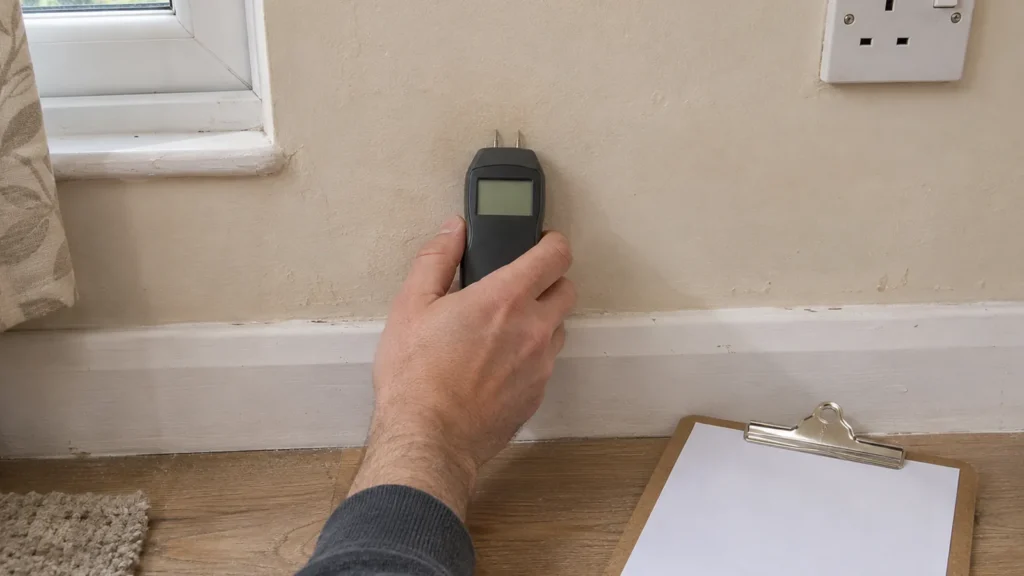
- An inside inspection of affected walls, floors and ceilings, with moisture readings (damp meter, and ideally more reliable tests such as calcium carbide or salt analysis where needed).
- An outside inspection of ground levels, air bricks, render, pointing, gutters, downpipes, roof and window seals.
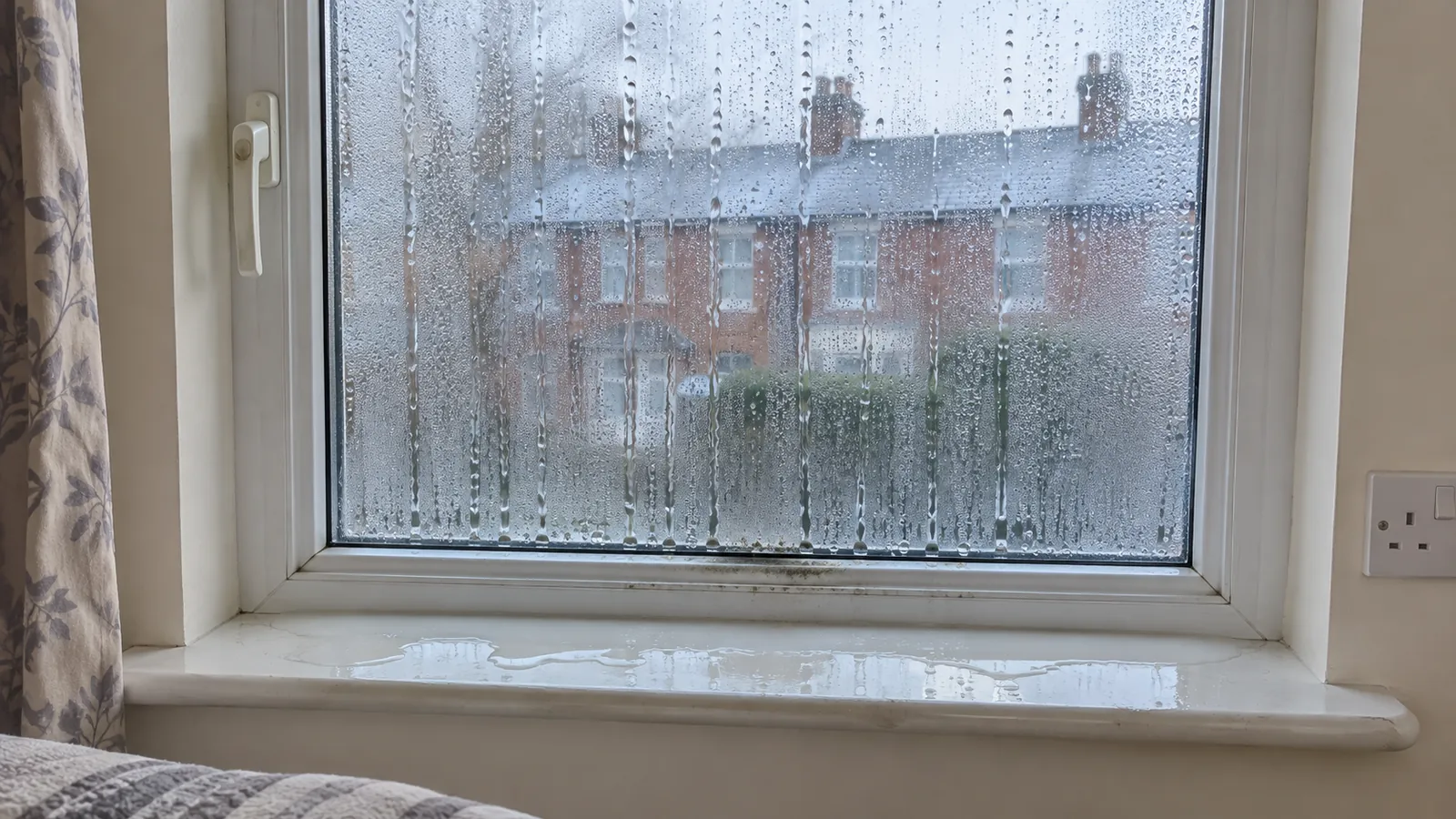
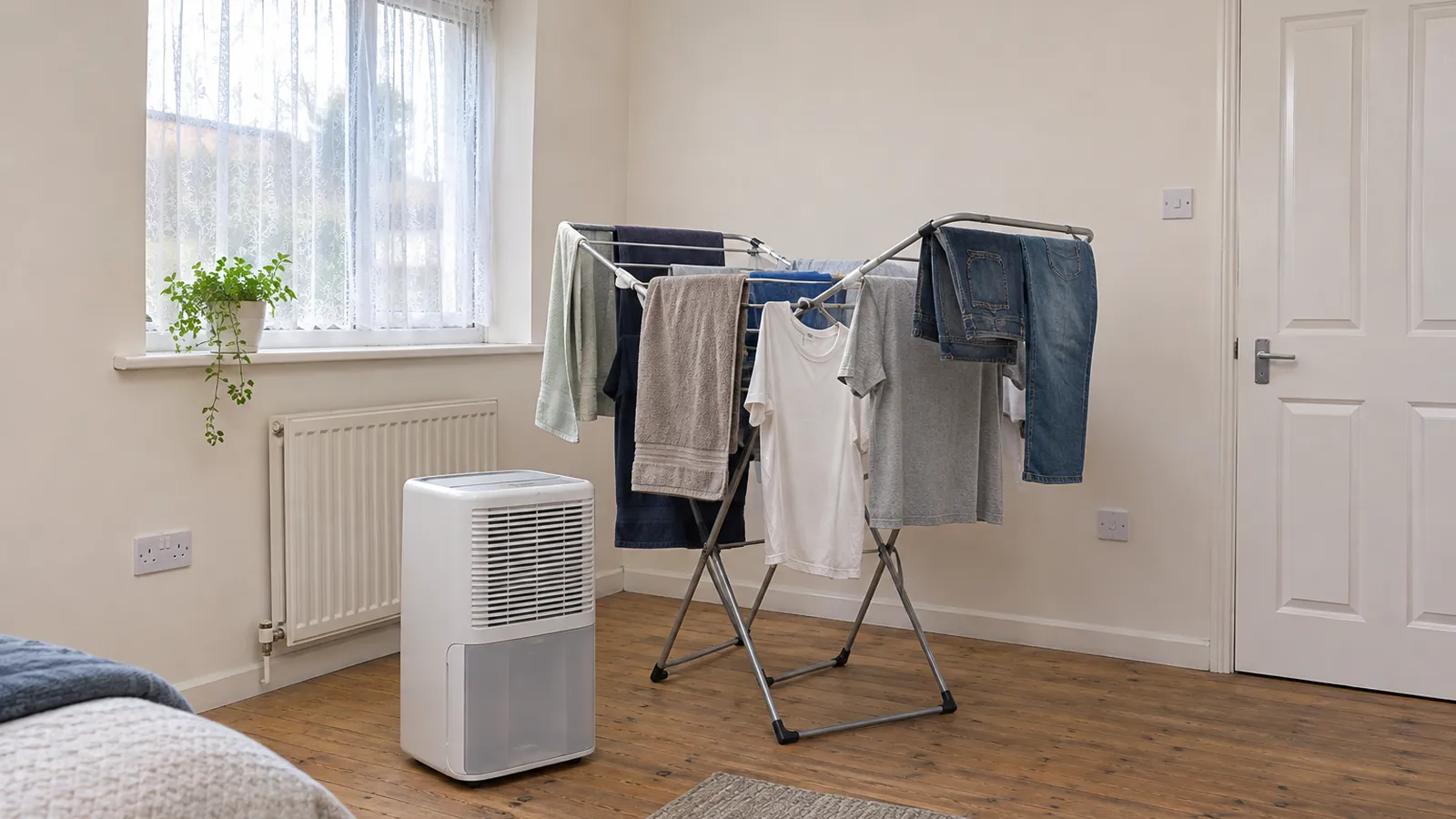
- Checks for condensation: humidity readings, ventilation, heating patterns.
- Timber checks (in a damp and timber survey) for rot and woodworm in floors, skirting and joists.
- A written report with the diagnosis, the likely cause and recommended repairs in order of priority, usually with photos.
Ask before you book: "Will the report explain the cause, and will it include the cheapest effective fix, not just a treatment quote?" A good independent surveyor will say yes.
Free vs independent damp surveys
| Free survey (damp-proofing company) | Independent survey | |
|---|---|---|
| Cost | £0 | £250–£600 |
| Surveyor's interest | Sells the treatment | Paid for the diagnosis only |
| Typical outcome | Quote for injection DPC, tanking or membranes | Diagnosis of the cause plus a prioritised list of fixes |
| Good for | Getting a treatment quote once you know what's needed | Finding out what's really wrong |
Free surveys aren't always bad, and some companies are excellent. But a meter reading near the bottom of a wall is easy to present as "rising damp", and real rising damp is much rarer than it's often said to be. See rising damp: signs, causes and cost.
Who should do a damp survey?
- A chartered building surveyor (RICS), especially for older or listed homes.
- A surveyor with the PCA's CSRT qualification (Certificated Surveyor in Remedial Treatment), often called a "PCA damp survey". Choose one who is independent of any treatment company where possible.
- For older solid-wall homes, a surveyor experienced with traditional buildings and breathable materials.
Questions to ask a surveyor:
- Are you independent, or do you or your company sell treatments?
- What tests will you use beyond a moisture meter?
- Will you inspect the outside of the property?
- What will the written report include, and how soon will I get it?
When do you need a damp survey?
- Buying a home where the HomeBuyer report or lender has flagged damp
- A damp patch you can't explain, or one that keeps coming back after redecorating
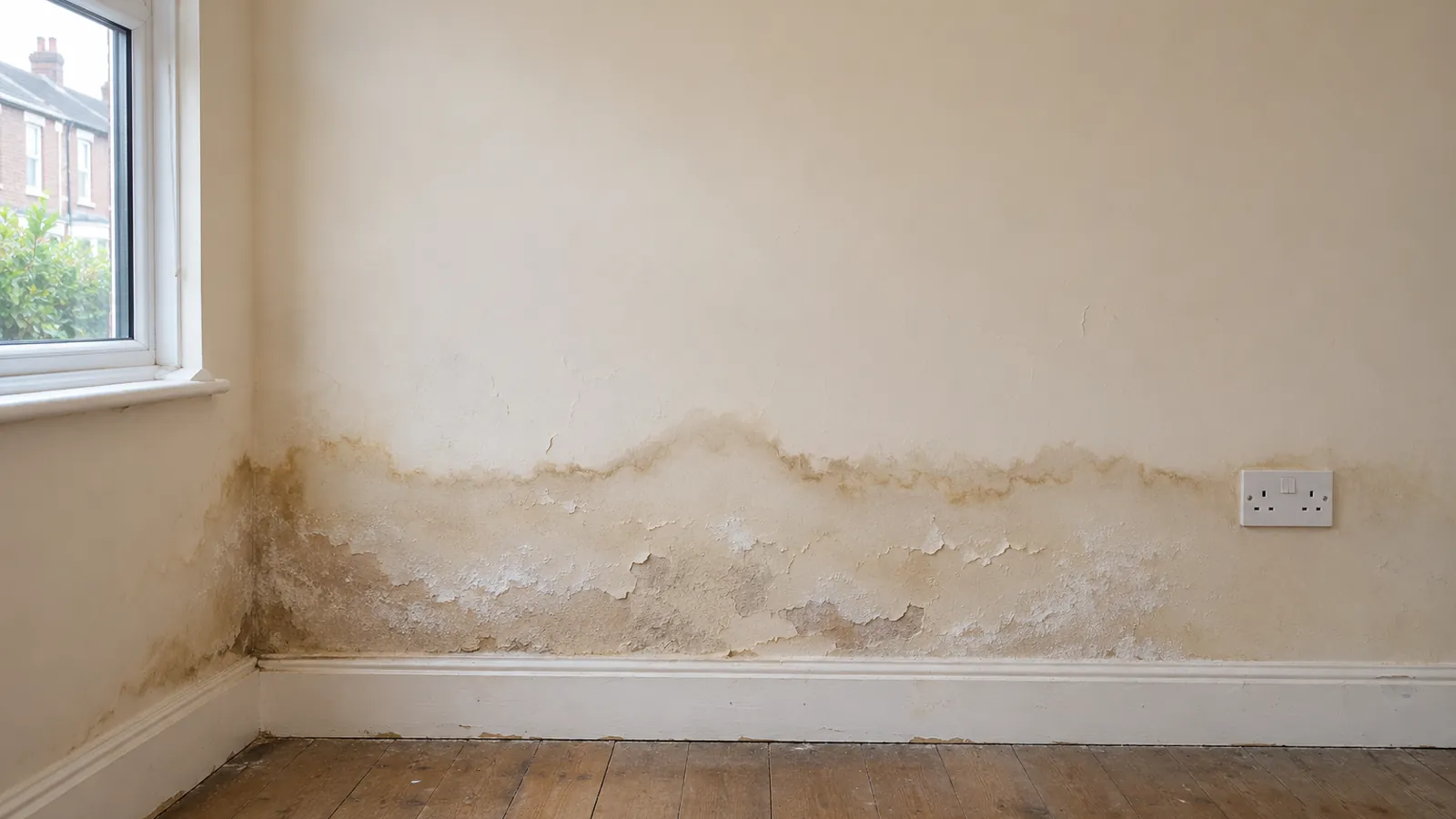
- A tide mark or salt deposits low down on walls
- Rotting skirting boards or soft floors
- A dispute with a landlord or tenant about damp and mould
- Before paying for any damp treatment costing more than a few hundred pounds
You probably don't need one if the problem is clearly condensation: black mould spotting on cold walls and windows in winter. Try ventilation and heating fixes first.
How much does damp-proofing cost after a survey?
| Work | Typical UK cost |
|---|---|
| Fix gutters, downpipes, air bricks, ground levels | £100–£1,000 |
| Repoint brickwork (per m²) | £40–£80 |
| Chemical DPC injection (whole terraced house) | £1,500–£3,500 |
| Replastering affected walls | £500–£2,500+ |
| Cellar tanking / membrane | £3,000–£10,000+ |
Most surveys find the fix is at the cheaper end of this list.
If a surveyor recommends expensive treatment, get a second opinion and at least two written quotes, and check who backs any guarantee (an insurance-backed guarantee is worth more than a company promise).
FAQs
How much does a damp survey cost in the UK?
About £250–£600 for an independent survey, depending on property size and location. Damp and timber surveys cost roughly £300–£700.
Are free damp surveys worth it?
They can give you a treatment quote, but the surveyor is usually selling that treatment. For an unbiased diagnosis, pay for an independent survey.
What is a PCA damp survey?
A survey by someone holding the Property Care Association's CSRT qualification. The PCA is the trade body for damp and timber treatment, so check whether the surveyor is independent or works for a treatment company.
How long does a damp survey take?
Usually 1–3 hours on site, with the written report following within a few days.
Do mortgage lenders require a damp survey?
Sometimes. If a valuation or HomeBuyer report flags damp, the lender may ask for a specialist damp and timber report before releasing funds.
Can a damp survey find the cause of mould?
Yes. A good survey distinguishes condensation mould from rising or penetrating damp and recommends the right fix for each.
- An independent damp survey costs about £250–£600; damp and timber about £300–£700.
- Free surveys come from companies selling the treatment.
- A good report explains the cause and the cheapest proper fix.
- Get a second opinion before paying for expensive damp-proofing.