
Mould on wood is usually a surface growth you can clean off with white vinegar or a mild soap solution, then dry thoroughly. Wear a mask and gloves, vacuum with a HEPA vacuum first if it's fluffy, and keep water to a minimum. Skip bleach: it mostly sits on the surface of porous wood, and the water in it soaks in. If the wood is soft, crumbly, cracked into cubes, or has cobweb-like strands, it may be rot rather than mould, and that needs a specialist.
Wood holds moisture, and mould needs only a little damp, some dust or grease to feed on, and still air. That's why it turns up on the back of a wardrobe against a cold outside wall, under a bed, on window frames that collect condensation, and on any furniture pushed tight to a wall. The mould isn't the real problem. The damp that let it grow is. The cleaning is easy enough, but if the same patch keeps returning, read our wider guide to damp and mould too.
What kind of mould is it?
Look at it in good light, and don't poke it.
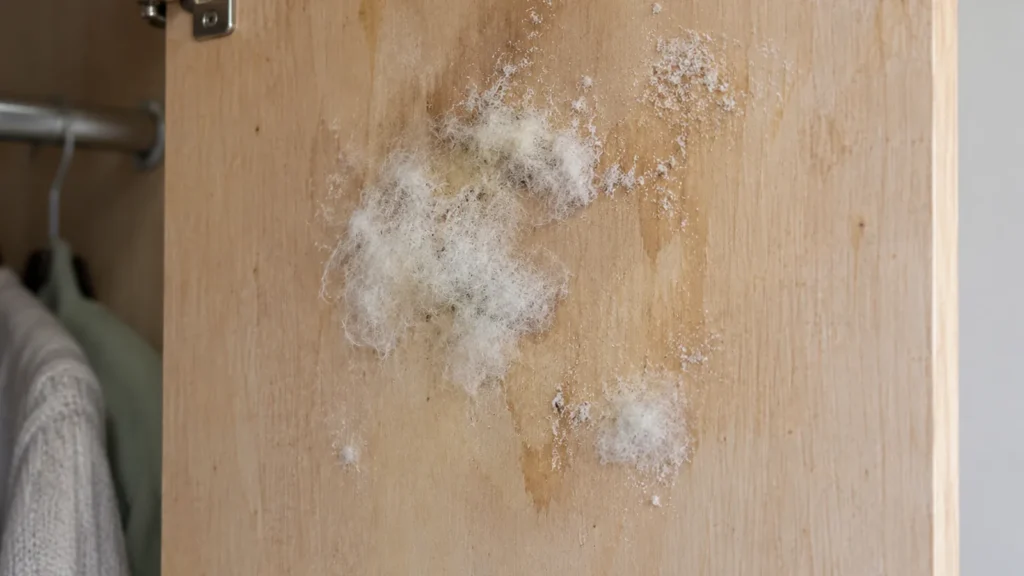
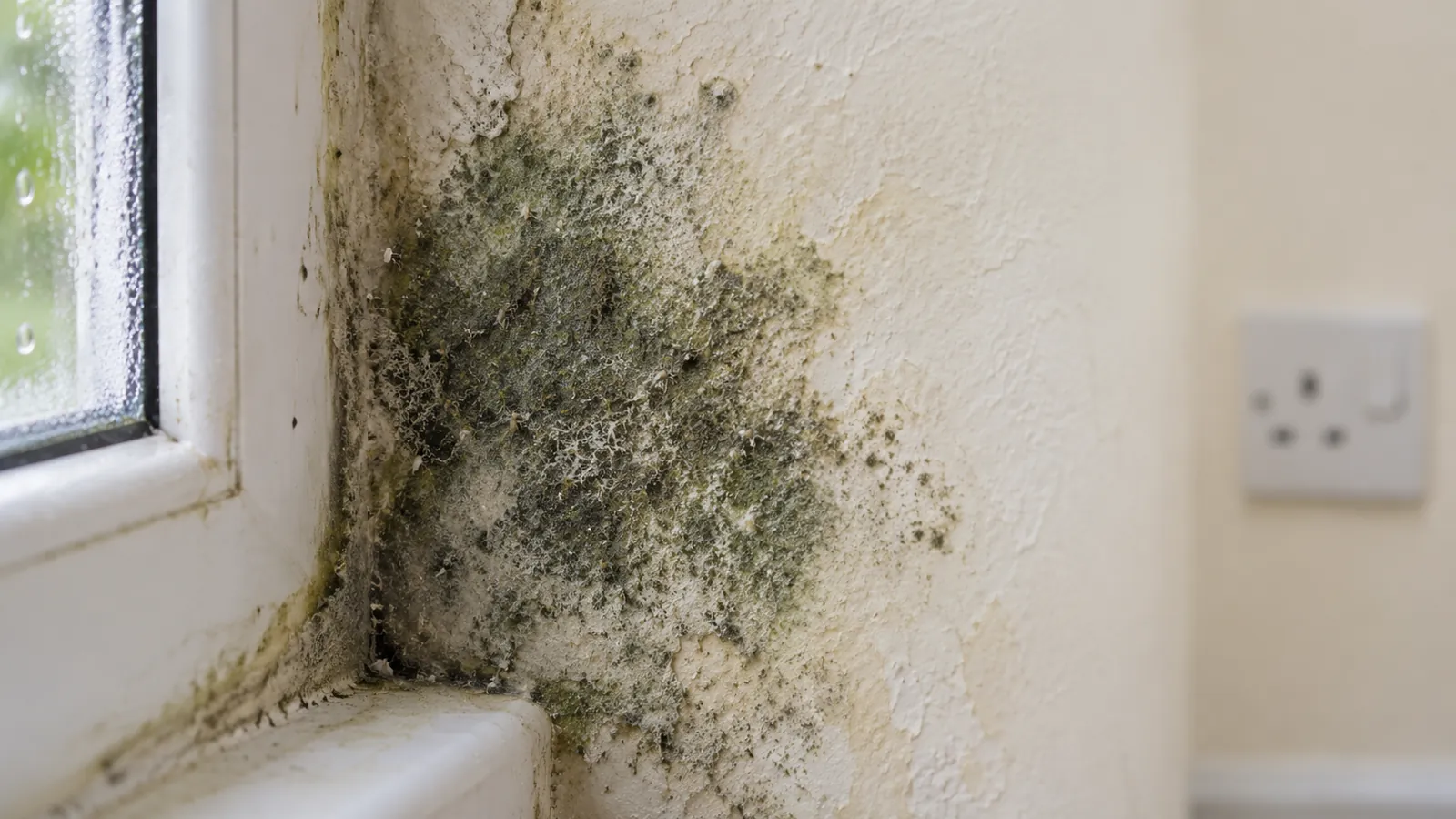
White fuzzy or powdery mould is very common on wooden furniture and wardrobes, especially in a cold bedroom. It's often mistaken for dust or for mineral salts. If it smears or smells musty, it's mould. Dry wiping spreads spores around, so vacuum it first.
Green, grey or black spots are also surface moulds. Black patches are the ones people worry about, and our piece on black mould covers the health side and your rights if you rent. For wood, the practical point is that colour doesn't tell you the species or how risky it is. Treat all of it as something to clean off carefully and then stop it feeding.
Dark staining that doesn't wipe off may be the mould's pigment stuck in the grain, not live mould. It's common on bare wood, and you may not get it out without sanding. Mumsnet posters dealing with a mouldy beech cot report the mould went with a soak but the wood stayed greyish in places.
Is it dry rot instead?
Mould sits on the wood. Rot is the wood itself being eaten. A quick check with a screwdriver tip or your thumb on a sill or beam: surface mould leaves the wood hard underneath, while rotten wood feels soft, spongy or crumbles.
Signs that point to dry rot (the type most surveyors worry about):
- Wood that is darker brown and cracks across the grain into cube-shaped pieces
- Wood that crumbles to powder in your fingers
- White or grey cotton-wool growth or cobweb-like strands, sometimes with a mushroom-like fruiting body
- Orange-brown rusty dust (spores) on nearby surfaces
- A damp, mushroomy smell
- Growth that spreads across brick or plaster, not just along the timber
Wet rot tends to cause softer wood with splits running along the grain, mostly where timber is directly wet, like window sills and bottom corners of frames and door frames. Some sources argue about terminology, but the useful point is the same: if wood is soft, you're past surface mould.
If you suspect dry rot, especially in floor joists, roof timbers, skirting or window frames that crumble, stop and call a qualified timber and damp specialist (look for a PCA or CTA member) for a survey. Don't strip or spray it yourself. Dry rot can spread through masonry and the wrong treatment fails. Renters should tell their landlord in writing.
If you've got a damp patch on a wall alongside the rot, our damp survey cost guide will help with what to expect.
What you need and how to stay safe
Wear an FFP2 or FFP3 mask, gloves and eye protection, and open a window. Disturbing mould puts spores into the air, which matters more if anyone in the home has asthma, a weak immune system or is pregnant; in that case let someone else do it.
You'll want:
- A HEPA vacuum (or an ordinary vacuum plus patience; a normal one can blow spores around)
- White vinegar, in a spray bottle
- Warm water, washing-up liquid, soft cloths and an old toothbrush
- Dry towels or a dehumidifier to finish
Take the item outside if you can. Bag the cloths afterwards and bin them, don't put them back in the kitchen drawer.
Why vinegar and not bleach
Bleach works well on tile and sinks, which are non-porous. Wood is porous. Bleach's chlorine tends to stay near the surface and bleach whitens the stain, while the water in it soaks into the grain and can feed the roots left below. You end up with a pale patch, a wet piece of wood and mould back within weeks. It can also damage finishes and discolour the wood. Several mould-on-wood guides and manufacturers of fungicidal sprays make the same point, and some mould sprays state on the label that they're not for use on wood. Check yours.
White vinegar is milder and acidic, and the usual advice from home-care sources is that it works on many household moulds and doesn't leave wet chemical residue. It's not a laboratory-proven cure-all, so the real work is the drying and the damp. Dilute it or test a hidden spot first, since vinegar can dull some varnishes and waxes.
How to clean mould off wood, by finish
Start every job the same way: vacuum the loose growth with a brush attachment, outside if possible. Then:
Painted or varnished wood (modern wardrobes, window frames, skirting). The surface is sealed, so this is the easy case. Spray with white vinegar, leave for about an hour, then wipe with a cloth wrung nearly dry in warm soapy water. Rinse with a clean damp cloth and dry immediately with a towel. Washing-up liquid in warm water works too, and a Mumsnet poster with mouldy window frames reports success with a stiff toothbrush and soapy water. If the paint is flaking or bubbling, the damp has got in behind it.
Bare, raw or unsealed wood (back panels, drawer insides, inside of wardrobes). It soaks everything up, so use the smallest amount of liquid. Dab with a cloth lightly dampened with vinegar, let it sit, then wipe with a barely-damp cloth. Dry at once, ideally in fresh air or with a fan or dehumidifier. If a stain remains after drying, light sanding with fine paper (and your mask on) removes the surface layer, and you can reseal afterward.
Antique, French-polished or waxed furniture. Be gentler. Water rings and ruined polish are harder to fix than mould. Test a hidden spot, vacuum, then wipe with a cloth barely dampened with a little diluted vinegar or soapy water and dry straight away. Rewax afterwards. If the piece is valuable or the surface is flaking, speak to a furniture restorer before you scrub.
Garden furniture. Three parts warm water to one part washing-up liquid with a soft brush works, according to one UK furniture retailer, then rinse and dry in the sun. Avoid pressure washers, which can raise the grain and drive water in.
The stuff that rarely works: spraying and leaving. Wood has to dry fully afterward. Put the item somewhere with moving air and, if you can, a dehumidifier. Our guide on using a dehumidifier covers placement and settings.
Mould on wooden window frames
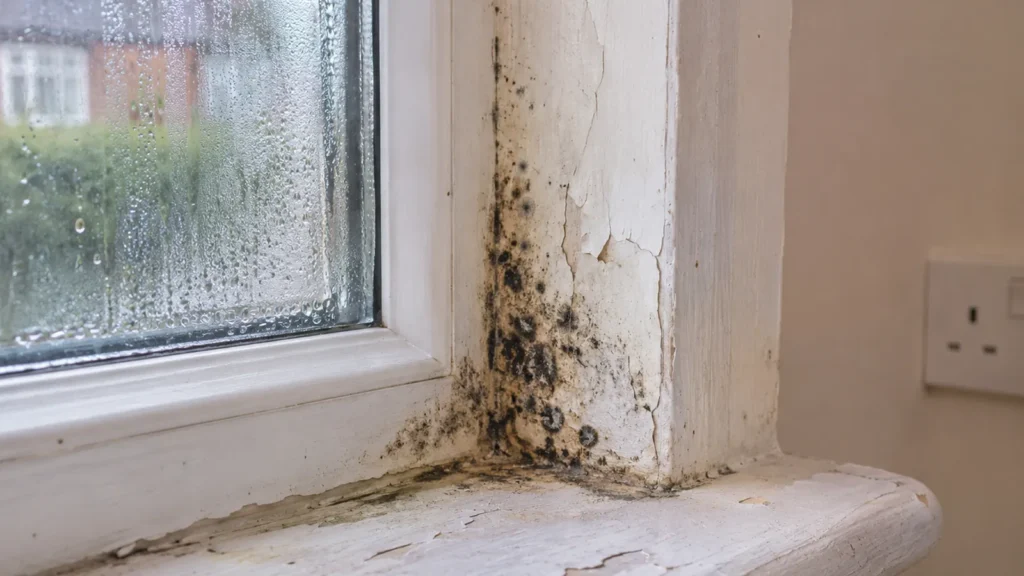
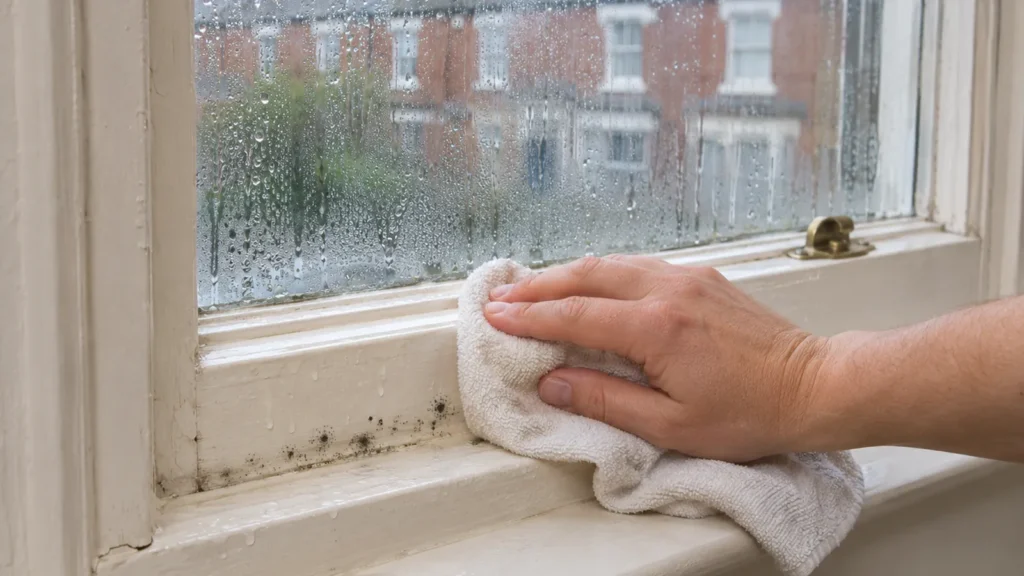
This is nearly always condensation. The glass is cold, water runs down and pools on the sill and bottom rail, and the wood or paint stays damp all night. Clean as for painted or varnished wood above, then look at what's making it wet. Our condensation on windows guide covers that. Wipe the glass and sill dry in the morning, run extractor fans, and keep the room warm enough. Press the corners of the frame with a screwdriver tip: if it goes in easily, you have rot, and it needs a joiner, not a cloth.
Mould on the back of a wardrobe or furniture
Your wardrobe is sitting against a cold external wall, so the wall surface is colder than the room, moisture condenses in the trapped gap and the back panel grows white fuzz. You'll often see it only when you move the piece, and the clothes smell musty first.
What helps:
- Pull furniture away from external walls by at least 5–10cm so air can move behind it. Many people suggest putting it on an internal wall instead.
- Don't pack wardrobes tight. Leave gaps between clothes, and don't stack boxes against the back.
- Keep the room above about 15–16°C and under about 60% humidity. A cheap hygrometer will show you.
- Let it breathe. Occasionally leave doors open for an hour, particularly after drying laundry in the room.
- Use a dehumidifier in the room, not tucked inside the wardrobe. Moisture absorber tubs in the wardrobe help a bit at the margins, but they don't fix a damp wall.
- Check the wall behind. If the wall itself has black mould or feels damp, deal with it first. Mould on a bathroom ceiling and how to fix damp both cover the principles.
Stopping it coming back
Cleaning is half the job, because mould returns wherever damp does. Pretty much every forum reply to a "furniture turning green" thread says the same thing: find out why it's damp.
- Keep indoor humidity around 40–60%.
- Ventilate while you cook, shower and dry washing. Don't dry clothes on radiators in the same room without a dehumidifier.
- Fix leaks, blocked gutters and failed sealant outside.
- Keep a gap behind furniture on cold walls and don't stack things against them.
- Reseal or repaint bare wood once it's fully dry, using a mould-resistant paint if the spot is problem-prone.
- Check again after a couple of weeks. Fresh fuzz means the damp hasn't gone.
FAQs
Is mould on wood dangerous?
Mould spores can irritate airways and trigger asthma or allergies, so wear a mask and gloves when cleaning. Persistent mould in your home is worth sorting properly, and a GP is the person to ask if anyone's symptoms are worrying.
Can you sand mould off wood?
Yes, on bare wood, after vacuuming, with a mask on. Sanding removes the surface growth and some staining. It won't cure the damp, and it's not a good idea on antique finishes.
Will mould damage the wood?
Surface mould on its own usually doesn't weaken wood, though it can stain it and ruin the finish. Rot fungi are different; they break the timber down, and that's what you need a specialist for.
Can I keep the furniture after cleaning?
Usually, yes, once it's clean, fully dry and the cause is fixed. Soft items like mattresses, upholstered pieces and clothing near the mould may need a hot wash or throwing out.
What's the white stuff on the wood, and is it mould?
White fuzz that smears and smells musty is usually mould. White crystals or a chalky, hard crust can be salts or a waxy bloom. Rub a bit with a damp cloth: mould smears, salts dissolve or flake.
Should I use a mould killer spray?
Check the label. Some say not for use on wood and many aren't suitable for bare timber. Vinegar or soapy water, plus drying, covers most surface mould.
- Wear a mask, vacuum first, and use as little liquid as you can.
- White vinegar or soapy water beats bleach on porous wood.
- Soft, crumbly or cubed wood or cobweb strands means call a specialist about rot.
- Dry it fully and pull furniture away from cold external walls.
- If mould returns, the damp is still there.