
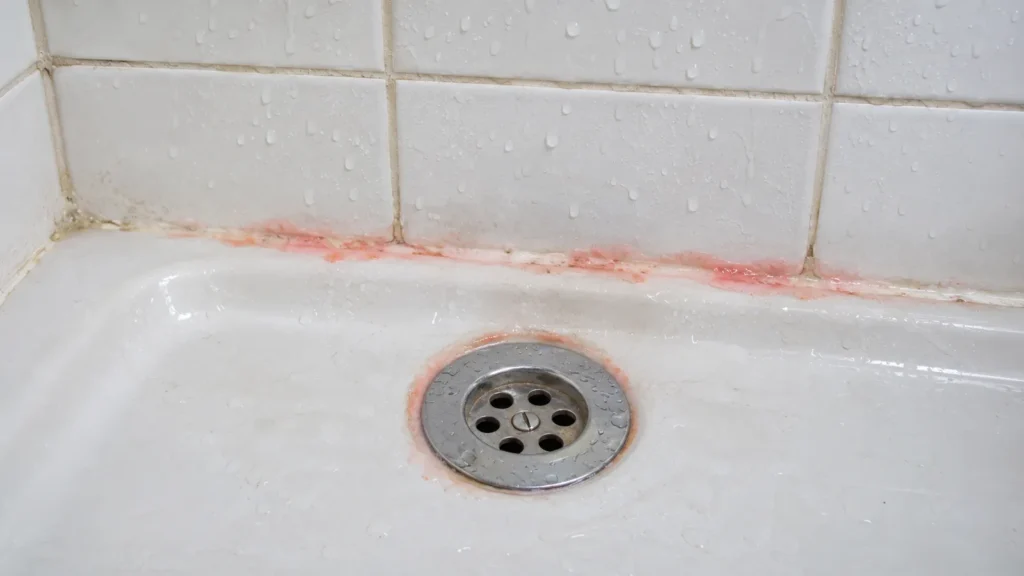
Pink "mould" in the shower is usually not mould at all, but a bacterium called Serratia marcescens that forms a slimy pink or orange film. It feeds on soap and shampoo residue and loves wet surfaces. To remove it, scrub with a paste of bicarbonate of soda and washing-up liquid, rinse, then disinfect with a diluted bleach solution or a bathroom disinfectant (never mixed with other cleaners). To stop it coming back, dry the shower after use, run the extractor fan for at least 15 to 20 minutes, and clean weekly before the film builds up again.
It's one of the most common bathroom complaints, and it comes back quickly because the conditions that grew it are still there. Pink slime is easy to clean; keeping it away is about moisture and soap scum. For black spots in the same places, see our guide to black mould in the bathroom. More help is on our damp and mould hub.
What pink mould actually is
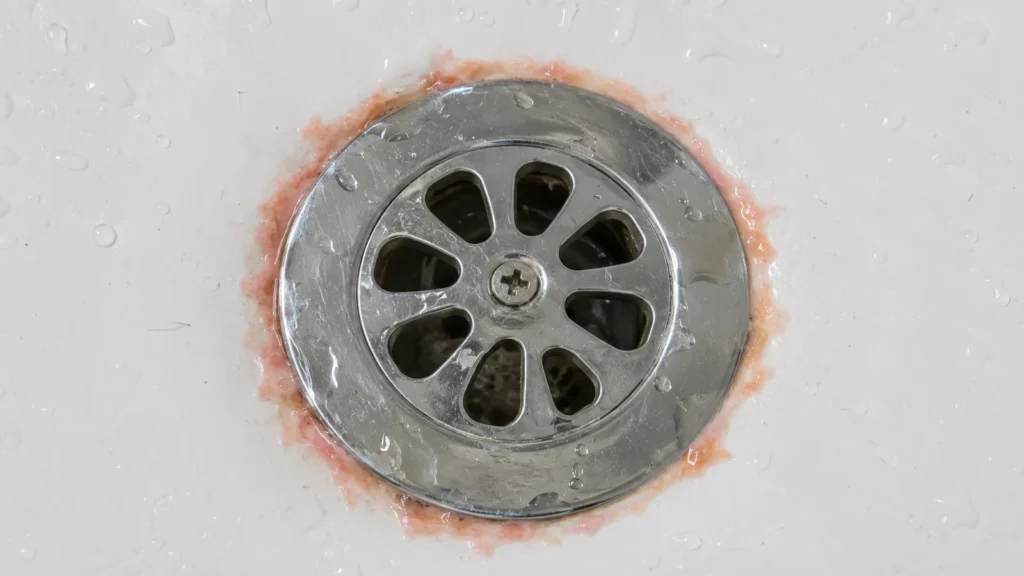
The pink, orange or reddish film round plugholes, grout lines, the bottom of shower curtains and the toilet bowl waterline is usually Serratia marcescens, a bacterium found in soil, water and dust. It gets its colour from a red pigment it produces. It's airborne, so you can't keep it out entirely; it lands, finds a wet, soapy surface, and grows.
It's slimy and wipes away easily at first, unlike black mould, which roots into silicone and grout. The two often appear together, because they like the same conditions.
Is pink mould dangerous?
For most healthy people, it's not a big health worry, but it's not something to leave. Serratia marcescens can cause infections in people with weakened immune systems, and in hospitals it's a known cause of infection. Don't let it build up round a toothbrush or contact lens case, and clean it more carefully if anyone in the house is unwell, elderly, very young, or recovering from surgery. If you're worried about a health issue, ask your GP or pharmacist.
Where it grows
- Round the plughole and shower drain
- Along grout lines, especially near the floor of the shower
- On silicone where the tray meets the tiles
- On the bottom edge of shower curtains and screen seals
- Inside shower heads and on toothbrush holders
- At the waterline in toilet bowls
- In pet water bowls and humidifiers
How to clean pink mould off grout and tiles
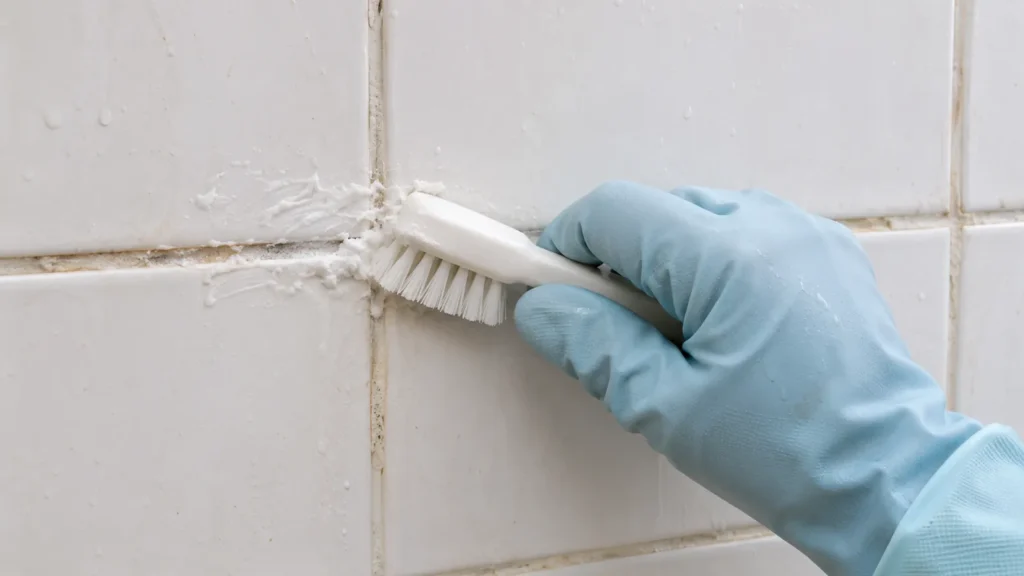
You need: rubber gloves, bicarbonate of soda, washing-up liquid, an old toothbrush or grout brush, a cloth, and a bathroom disinfectant or thin bleach. Open the window and turn on the fan.
- Rinse the area with warm water.
- Make a paste of bicarbonate of soda with a squirt of washing-up liquid and a little water.
- Scrub the paste into the pink areas with the brush, working along grout lines and round the drain.
- Rinse well with warm water.
- Disinfect. Apply a bathroom disinfectant or a diluted bleach solution, following the product's instructions. Leave it for the contact time on the label (often around 10 minutes), then rinse.
- Dry everything with a towel or squeegee.
Never mix bleach with vinegar, ammonia or other cleaners. It releases toxic gas. Use one product at a time, rinse between them, and keep the room ventilated. Check that bleach is suitable for natural stone tiles before using it, as it can damage some stone and coloured grout.
Cleaning silicone, shower curtains and shower heads
Silicone sealant: pink slime on the surface wipes off with the paste and disinfectant. If dark or pink staining has gone into the silicone, cleaning won't shift it. Cut it out and reseal. Our black mould in the bathroom guide covers resealing step by step.
Plastic shower curtains: most can go in the washing machine on a warm wash with a couple of towels to scrub them, then hang to dry. Replace cheap ones that stay stained.
Shower heads: unscrew the head, soak it in a mix of white vinegar and warm water for an hour or so to loosen limescale, scrub the nozzles, rinse, and refit. Disinfect separately if needed, rinsing well between products.
Why it keeps coming back
Pink slime returns fast if the shower stays wet and soapy. The common reasons:
- Soap scum. Body wash, shampoo and conditioner residue is its food. Rinsing the walls after a shower helps.
- Standing water. Puddles round the drain or along the tray edge.
- Poor ventilation. An extractor fan that's too weak, switched off too soon, or clogged with fluff.
- Damaged grout or sealant. Porous, cracked grout holds moisture and gives the bacteria somewhere to hide.
How to stop pink mould coming back
- Squeegee or wipe the walls and tray after every shower. It takes a minute and makes the biggest difference.
- Run the extractor fan during the shower and for at least 15 to 20 minutes after, or fit one with an overrun timer or humidity sensor.
- Leave the screen door or curtain open after showering so the area dries.
- Clean weekly with a bathroom cleaner, before the film gets established.
- Rinse away shampoo and body wash from the walls and tray.
- Seal the grout once it's clean and dry, and repair cracked grout or sealant.
- Store bottles off the floor of the shower. Wet bottle bottoms are a favourite spot.
If your bathroom always stays damp, the room may need better ventilation. Our guides to mould on the bathroom ceiling and to condensation cover fixing that. A dehumidifier can help in windowless bathrooms; see dehumidifier benefits.
Pink mould in a rented home
Occasional pink slime is usually a cleaning matter for the tenant. But if the bathroom has a broken or missing extractor fan, leaking seals or damaged grout that keeps causing mould, that's a repair issue for the landlord. Our guide to black mould in rental property explains your rights.
FAQs
What causes pink mould in the shower?
Usually the bacterium Serratia marcescens, which grows on wet surfaces with soap and shampoo residue. Poor ventilation and standing water make it worse.
Is pink mould worse than black mould?
They're different. Pink slime is bacteria and wipes off easily; black mould roots into silicone and grout. Both should be cleaned, and both thrive on damp.
Does bleach kill pink mould?
A diluted bleach solution or bathroom disinfectant kills it on surfaces, but scrub off the film first. Bleach alone doesn't remove the slime or stop it returning.
Can vinegar remove pink mould?
Vinegar can help with light film and limescale, but a bicarbonate paste plus a proper disinfectant works better. Never mix vinegar with bleach.
Why does pink mould come back so quickly?
Because the shower stays wet and soapy. Squeegeeing, good ventilation and weekly cleaning stop it re-establishing.
Is pink mould harmful to health?
Usually low risk for healthy people, but it can cause infections in vulnerable people. Keep it away from toothbrushes and contact lens cases.
- Pink "mould" is usually Serratia marcescens bacteria, not mould.
- Scrub with a bicarbonate paste, rinse, then disinfect. Never mix bleach with other cleaners.
- Staining inside silicone means cutting it out and resealing.
- Squeegee after showers and run the fan for 15 to 20 minutes after.
- Clean weekly to stop the film coming back.