
Mould mites are tiny, pale, slow-moving mites (around a third of a millimetre long) that feed on mould and the fungi that grow on damp surfaces and food. You usually see them as moving white or grey "dust" on damp windowsills, walls, new plaster, stored food or books. They don't bite, but they can trigger allergies, and they're a clear sign that the room is too damp. To get rid of mould mites, dry the room out (aim for 40–60% humidity), clean off the mould they feed on, throw away infested food, and keep humidity down so they can't come back.
Spotting tiny bugs crawling over a damp wall is unsettling, but mould mites are one of the most common pests in UK homes, and they're nearly always a symptom of a moisture problem rather than a problem in their own right. Fix the damp and the mites go. For the wider picture, see our complete guide to damp and mould.
What are mould mites?
Mould mites are tiny arachnids (related to spiders, not insects) that live on mould. The most common species found in homes is Tyrophagus putrescentiae, sometimes called the mould mite or cheese mite. They're close relatives of the storage mites that live in flour, cereal and pet food.
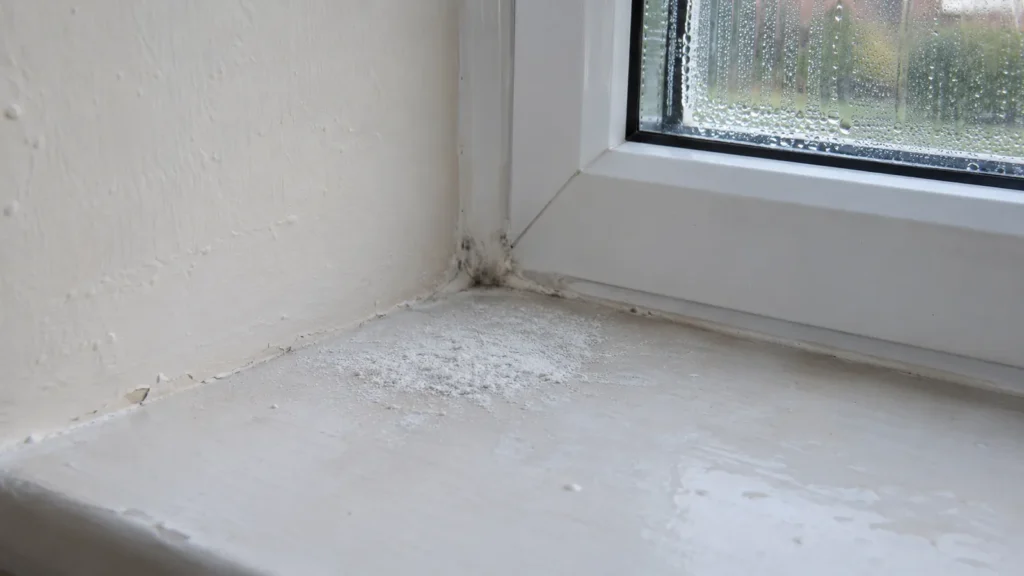
Like other mites, they need two things to survive: high humidity and a food source. Mould supplies both. In a damp room they can breed quickly, which is why people often go from "nothing" to "hundreds of them" within a couple of weeks of a wet spell.
People also call them:
- Mould bugs or damp bugs
- Damp mites
- Plaster mites (common in new-build homes where the plaster is still drying)
- Cheese mites or flour mites (when they turn up in food)
What do mould mites look like?
Individually they're barely visible to the naked eye. What most people actually notice:
- Moving dust. A fine white, grey or beige powder on a windowsill or wall that seems to shift when you look closely.
- Tiny pale specks, roughly the size of a grain of fine salt, often clustered around mould spots, window seals or the edges of damp patches.
- A brownish "dust" on food, such as on the surface of flour, cereal, dried fruit, pet food or cheese, sometimes with a faint sweet or musty smell.
Under a magnifying glass (or your phone camera zoomed in) you'll see a small, oval, whitish body with eight legs and long hairs. They move slowly, unlike the darting movement of booklice or silverfish.
Press a strip of clear sticky tape onto the area and look at it under good light or a magnifier. If the specks have legs and were crawling before you trapped them, you have mites (or booklice), not just dust.
Where do mould mites live in the home?
Anywhere damp enough for mould to grow can host mould mites. The most common places in UK homes are:
| Where | Why they're there |
|---|---|
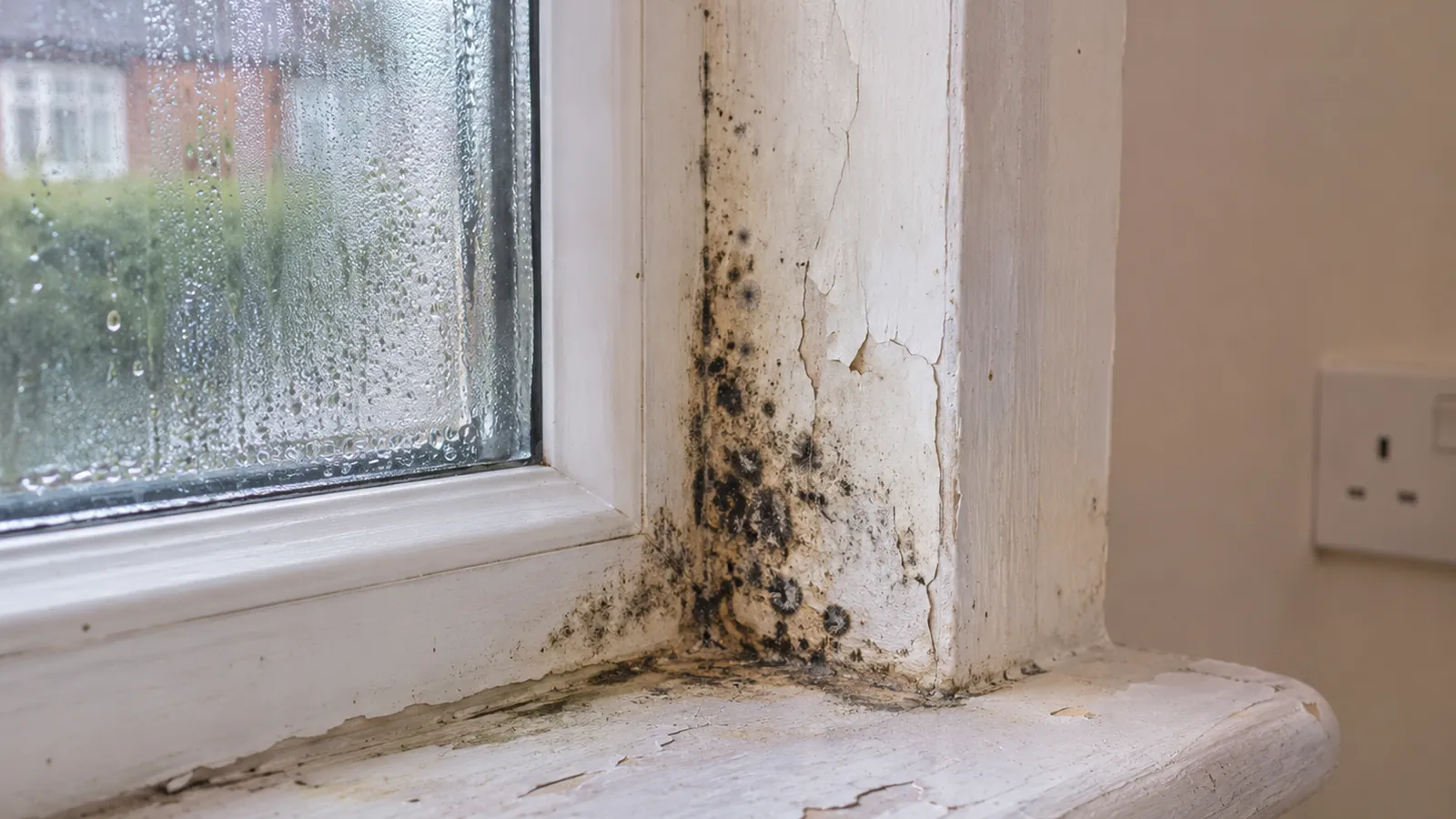
| Window frames, seals and sills | Condensation runs down the glass every morning and keeps the seals wet |
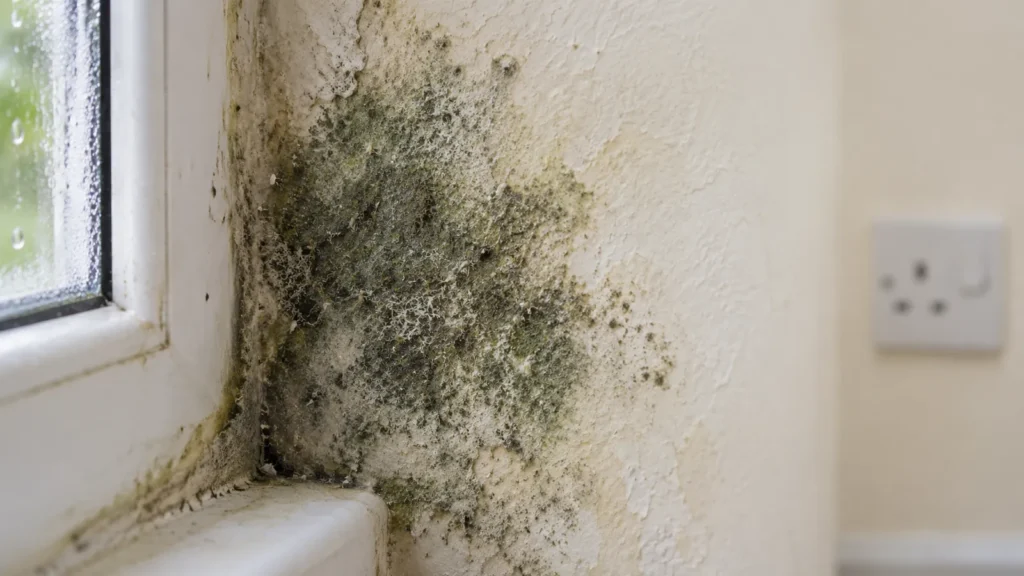
| Cold external walls and corners | Cold bridges stay damp and grow mould behind furniture |
| New plaster in new builds or extensions | Fresh plaster holds a lot of water for months while it dries out |
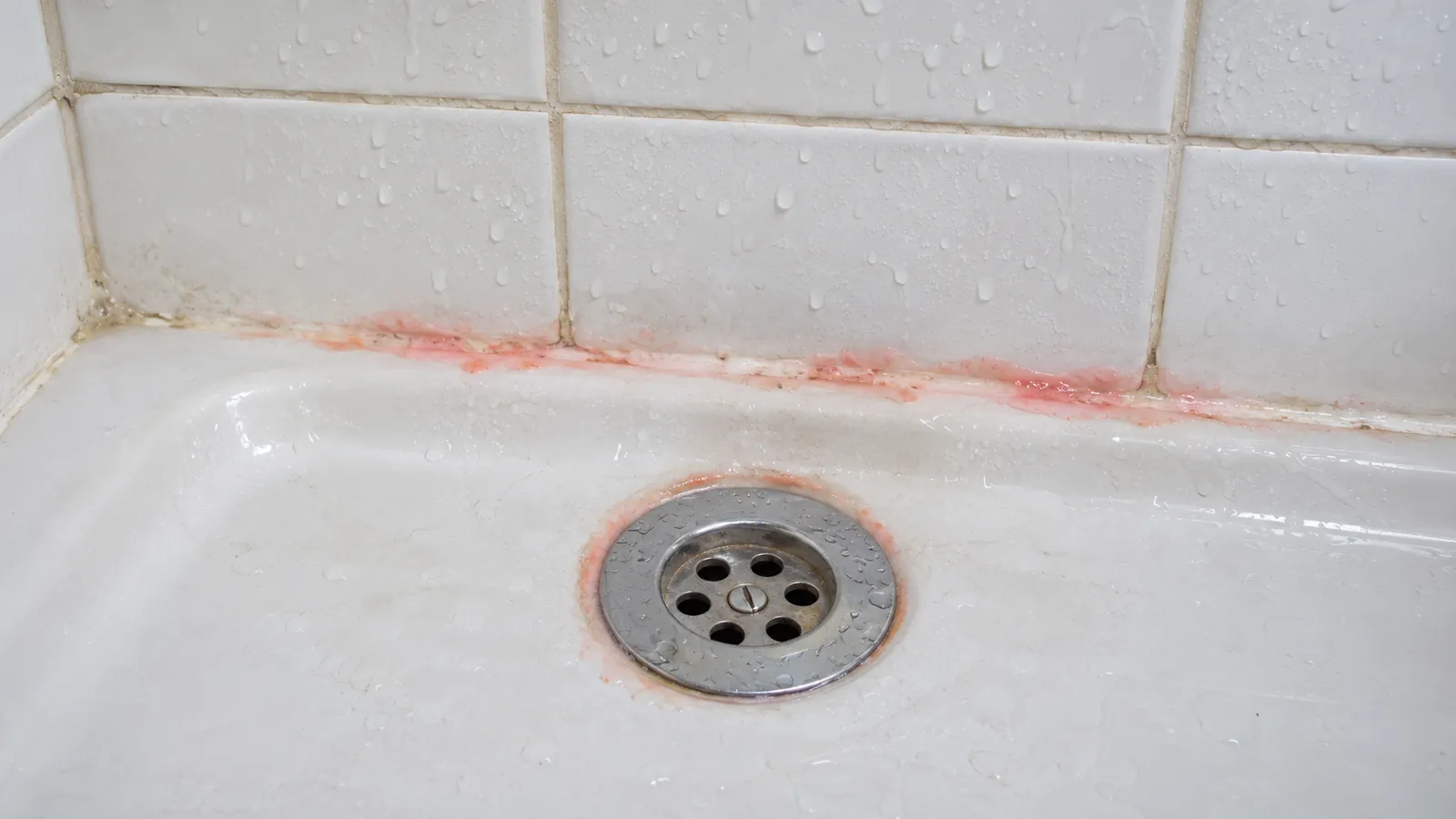
| Bathrooms and kitchens | Steam, poor extraction and silicone sealant that stays wet |
| Behind wardrobes and beds | Air can't circulate against cold walls, so mould grows unseen |
| Food cupboards | Flour, cereal, dried fruit, pet food and cheese stored in a humid kitchen |
| Books, papers and cardboard | Paper absorbs moisture in damp lofts, cellars, garages and spare rooms |
| Mattresses and soft furnishings | Damp bedrooms where condensation forms overnight |
Mould mites in new builds
New homes are a classic case. Building a house uses a lot of water (plaster, screed, concrete and paint), and it can take 12 months or more for everything to dry out. Add modern airtight windows, closed trickle vents and clothes drying indoors, and humidity stays high. Many new-build owners first notice mould mites on window reveals and walls in the first autumn and winter. Keep trickle vents open, run extractor fans and heat the home steadily during that first year.
Are mould mites harmful?
Mould mites don't bite or sting people, and they don't spread disease the way some insects do. But that doesn't mean they're completely harmless.
- Allergies. Like dust mites, mould mites and their droppings can trigger allergic reactions in some people, such as sneezing, a runny nose, itchy eyes or skin rashes, and they may make asthma worse.
- The mould itself. The mould the mites feed on is a health concern in its own right. NHS guidance says damp and mould can cause breathing problems, allergies and asthma attacks, and affect the immune system. Babies and children, older people, and anyone with a skin condition, asthma or other breathing problem, or a weakened immune system are most at risk.
- Food. Food with visible mites should be thrown away. Eating heavily infested food can cause stomach upsets or allergic reactions in some people.
If you or someone in your home has wheezing, a cough, breathing problems or skin reactions that seem worse at home, see your GP. Mention that you have damp, mould and mites in the home.
Mould mites vs dust mites vs booklice
It's easy to confuse mould mites with other tiny household pests. Knowing which one you have tells you what to fix.
| Mould mites | Dust mites | Booklice | |
|---|---|---|---|
| What they eat | Mould and fungi | Flakes of human skin | Mould and starchy materials (book glue, wallpaper paste) |
| Visible? | Just about, as moving white "dust" | No, microscopic | Yes, about 1–2 mm, pale and fast-moving |
| Where you see them | Damp walls, windowsills, food, new plaster | Not seen; live in beds, carpets and sofas | Books, paper, windowsills, food cupboards |
| Legs | Eight (arachnid) | Eight (arachnid) | Six (insect) |
| Main cause | High humidity plus mould | Bedding and warmth | High humidity plus mould |
| Fix | Dry the room, remove mould | Hot-wash bedding, reduce humidity | Dry the room, remove mould |
The fix for mould mites and booklice is the same: reduce the humidity and remove the mould they're living on.
How to get rid of mould mites
You can't get rid of mould mites for long by spraying or vacuuming alone. They come straight back unless the room dries out. The steps below work together.
1. Find and fix the moisture source
Work out why the room is damp. In most UK homes it's condensation: moisture from cooking, showers, breathing and drying clothes indoors settling on cold surfaces. But it can also be a leak, penetrating damp through a wall, or rising damp. Our guide on how to fix damp walks you through identifying which type you have.
2. Bring the humidity down
Mould mites struggle to survive when relative humidity stays below about 50–60%. Buy a cheap digital hygrometer (around £10) and aim for 40–60%.
- Run a dehumidifier in the affected room, with the door closed, for a few days. Empty it regularly. Most people see the windows dry up quickly. Use our dehumidifier running cost calculator to see what it costs: at 26.32p per kWh, a 200W dehumidifier running for 8 hours uses 1.6 kWh, so it costs about 42p a day.
- Ventilate. Open trickle vents, run extractor fans in kitchens and bathrooms, and open windows for 10 minutes in the morning.
- Heat steadily. Cold rooms condense more. Keeping rooms at a steady low temperature is better than letting them go cold and then blasting the heating.
- Stop drying clothes on radiators. If you must dry indoors, use a closed room with a dehumidifier or an extractor fan running.
3. Clean off the mould and the mites
Once the room is drying out, remove their food source.
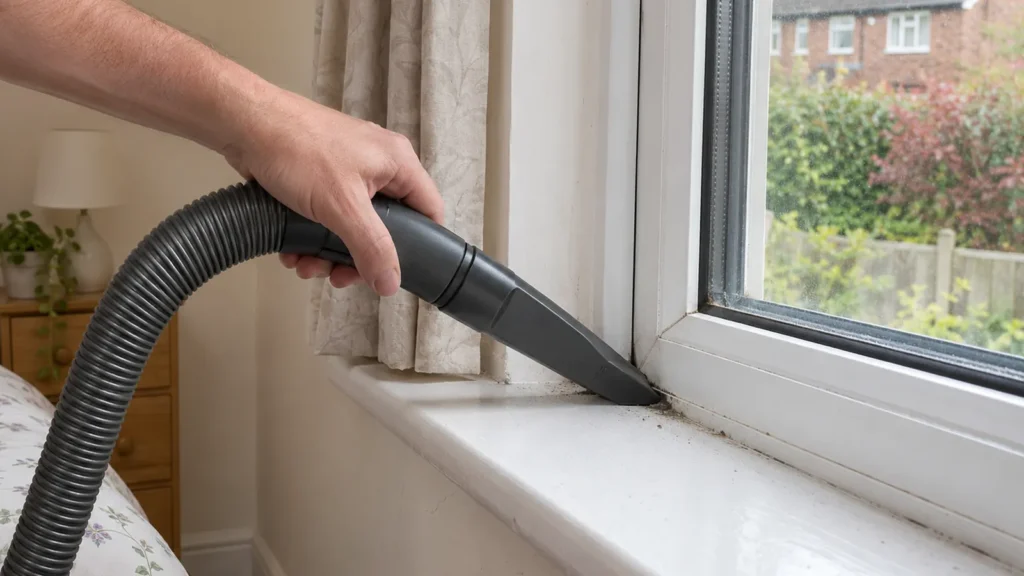
- Vacuum gently with a vacuum fitted with a HEPA filter, using the crevice tool along sills, seals and skirting. Empty or bin the bag outside straight away.
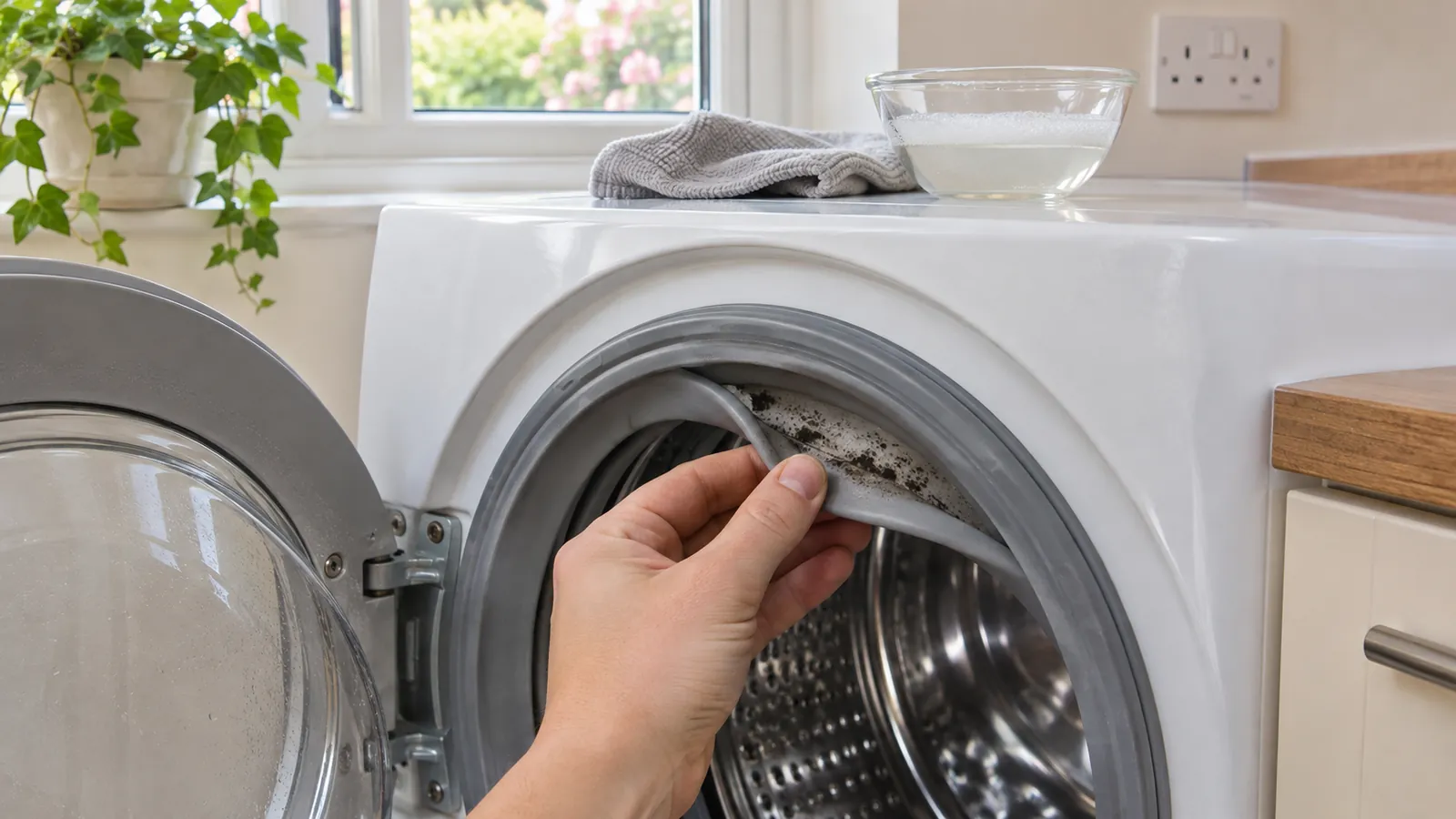
- Clean mouldy surfaces with a mould remover or a mild detergent solution. Wear gloves, goggles and a mask, and wet the mould before wiping so you don't spread spores. Our guide to removing mould covers the safe method step by step.
- Wipe hard surfaces with a damp cloth and then dry them thoroughly.
- Hot-wash affected curtains, bedding and washable soft furnishings at 60°C, then dry them fully (outside or in a tumble dryer).
- Move furniture a few centimetres away from cold external walls so air can circulate.
Don't flood the area with water or bleach. Mites thrive on damp, and soaking walls and sills can make the problem worse. Clean, then dry.
4. Deal with infested food
If you find mites in food cupboards:
- Throw away any food with visible mites or a brown dusty layer. Put it in a sealed bag in the outside bin.
- Empty the cupboard and vacuum the corners and shelf edges.
- Wipe the shelves and let them dry completely before restocking.
- Store flour, cereal, rice, dried fruit, pet food and similar dry goods in airtight containers.
- Buy smaller packs that you use up quickly, and keep the cupboard away from the kettle, hob and other steam sources.
5. Books, papers and stored items
Move books and paperwork out of damp rooms, lofts and garages. Let them dry in a warm, ventilated room. Badly affected cardboard boxes are best recycled. Use plastic storage boxes with lids for anything kept in a loft, garage or under the stairs.
Do insecticides or sprays work?
Generally, no, not on their own. Insect sprays don't fix the humidity that lets mites breed, and spraying chemicals on food areas, bedding and children's rooms isn't a good idea. Some people use natural products such as diatomaceous earth along sills, but evidence that they make a lasting difference is limited.
The only reliable long-term fix is a drier home.
When to call pest control
You rarely need a pest controller for mould mites, but it's worth getting help if:
- The infestation keeps coming back even after you've dried the room and kept humidity at 40–60% for several weeks.
- You can't identify the pest. A pest controller can confirm whether you have mites, booklice, carpet beetle larvae or something else.
- Mites are spreading through stored food in a business kitchen or food storage area.
If the damp itself is the problem you can't solve, such as a persistent damp wall or a leak you can't trace, you need a damp specialist or surveyor rather than pest control. See what a damp survey costs and what you get for your money.
If you rent your home
Mould mites are usually a sign of a damp or mould problem, and if the cause is disrepair (a leak, a broken extractor fan, poor insulation or a building defect), it's your landlord's responsibility to fix it. Report the damp, the mould and the mites to your landlord in writing, with photos. Our guide to black mould in a rental property explains your rights and the steps to take.
How to stop mould mites coming back
Prevention is the same as preventing mould:
- Keep indoor humidity between 40% and 60%, and check it with a hygrometer.
- Wipe condensation off windows every morning in winter. Our guide to condensation on the inside of windows has nine practical fixes.
- Run extractor fans for at least 15–20 minutes after showers and cooking.
- Dry clothes outside or with a dehumidifier, or use a heated clothes airer in a ventilated room.
- Keep furniture slightly away from external walls.
- Store dry foods in airtight containers.
- Keep the home steadily heated in winter rather than cold all day.
- Fix leaks, blocked gutters and broken extractor fans quickly.
Found mould on furniture, skirting or window frames as well? See mould on wood.
FAQs
What are the tiny white bugs on my windowsill?
Tiny white or grey moving specks on a damp windowsill are usually mould mites or booklice. Both feed on mould that grows where condensation collects. Dry the area, clean the mould and reduce humidity in the room, and they'll disappear.
Can mould mites bite you?
No. Mould mites don't bite people. Some people get itchy skin or allergic reactions from contact with mites or their droppings, but that's an allergy, not a bite. If you're getting bites, it's likely a different pest, so ask a pest controller to identify it.
Can mould mites live in your bed?
They can live in damp mattresses and bedding if the bedroom is very humid and mould is growing. Dust mites are far more common in beds. Hot-wash bedding at 60°C, air the mattress, and bring the bedroom humidity down.
Are mould mites a sign of black mould?
They're a sign of mould and high humidity, but not necessarily black mould. They feed on many types of mould and fungi, including growth too faint to see. If you have mites, look closely for mould on seals, behind furniture and in corners.
How long does it take to get rid of mould mites?
Once humidity drops below about 50–60% and the mould is removed, most people see far fewer mites within a week or two. Keep humidity down for good, or they'll return the next time the room gets damp.
Do mould mites go away on their own?
Only if the room dries out on its own, such as in summer, when windows are open more and the heating's off. They often come back each autumn and winter unless you fix the underlying humidity.
- Mould mites are tiny pale mites that feed on mould. They show up as moving white "dust" on damp surfaces and food.
- They don't bite, but they can trigger allergies, and they always mean the room is too damp.
- Dry the room to 40–60% humidity, clean off the mould, throw out infested food and store dry goods airtight.
- Sprays alone don't work. A drier home is the only lasting fix.
- Renting? Report damp, mould and mites to your landlord in writing.