
A chemical damp-proof course (DPC) injection typically costs around £300–£900 per wall, or roughly £1,500–£3,500 for a terraced house, and more once you add hacking off and replastering, which often doubles the bill. But injection is only the right fix for genuine rising damp, which is much less common than many quotes suggest. Rule out bridging, high ground levels, leaks and condensation first, get an independent survey, and if you do go ahead, use a reputable contractor and check that the guarantee is insurance-backed.
Damp-proofing is one of the most commonly oversold home repairs in the UK. Walls get injected that never had rising damp, and the real problem, often a leaking gutter or soil piled against the wall, carries on. For every type of damp, see our complete guide to damp and mould.
What is damp proofing injection?
Most UK homes built since the late 1800s have a physical damp-proof course: a layer of slate, bitumen felt or plastic built into the wall just above ground level to stop groundwater rising. If that layer is missing or has failed, a chemical DPC can be added later.
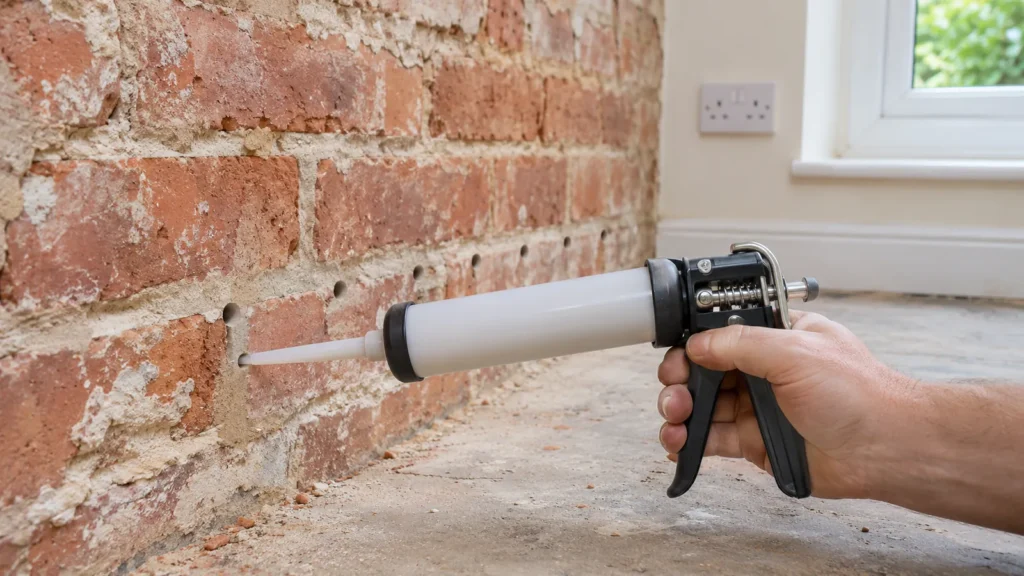
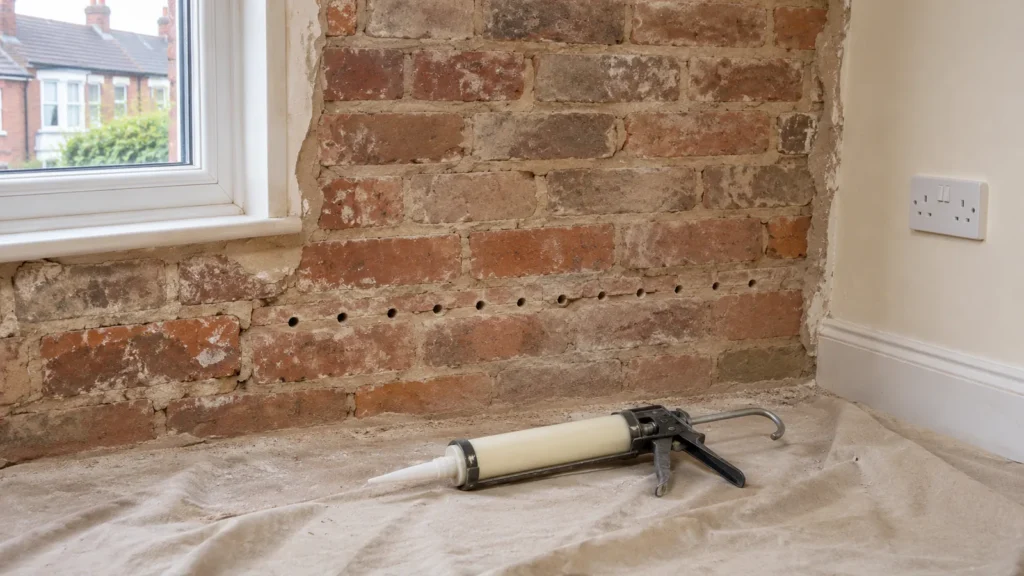
A contractor drills a line of holes into the mortar course (or the brick) near the base of the wall and injects a water-repellent cream, usually silane or siloxane based. The cream spreads through the masonry around each hole and cures to form a water-repellent band, which stops moisture soaking upwards.
In the UK, chemical DPC installation is covered by a British Standard code of practice, BS 6576, which also stresses diagnosing rising damp properly before treating it. Products are often certified by the British Board of Agrément (BBA) for use in line with that standard.
How much does damp injection cost?
These are typical UK price ranges for 2026. They're estimates, not quotes: your price depends on wall length and thickness, access, how much plaster has to come off, and where you live.
| Work | Typical UK cost |
|---|---|
| DPC injection, one wall (around 4–5 metres) | £300–£900 |
| DPC injection, terraced house (ground floor) | £1,500–£3,500 |
| DPC injection, semi-detached house | £2,000–£4,500 |
| Hacking off and replastering per wall (salt-resistant plaster) | £400–£1,200 |
| Full treatment with replastering, semi-detached | £3,000–£6,000+ |
| Independent damp survey before you commit | £250–£600 |
| DIY cream injection kit (enough for a wall or two) | £40–£150 |
Prices are often worked out per linear metre of wall, with replastering priced by the square metre. Removing and refitting skirting boards, radiators and electrics, plus redecorating, can add significantly to the total, so ask what's included.
What pushes the price up
- Thick solid walls (more drilling from both sides, more cream)
- Stone or rubble walls, which are harder to treat and often unsuitable for injection
- Replastering large areas, including drying time before decorating
- Party walls and internal walls, which may need treating too
- Access: fitted kitchens, built-in units or floors that need lifting
- Cellars and basements, which usually need tanking or a membrane system instead, at a higher price
Get two or three written quotes, and make sure each one says exactly which walls, how many metres, the product, whether replastering is included and what guarantee you'll get. Very different diagnoses between companies are a warning sign.
When is damp injection actually needed?
Only when you have genuine rising damp, groundwater soaking up through the wall because the DPC is missing or has failed, and the simpler causes have been ruled out. Many walls quoted for injection don't need it.
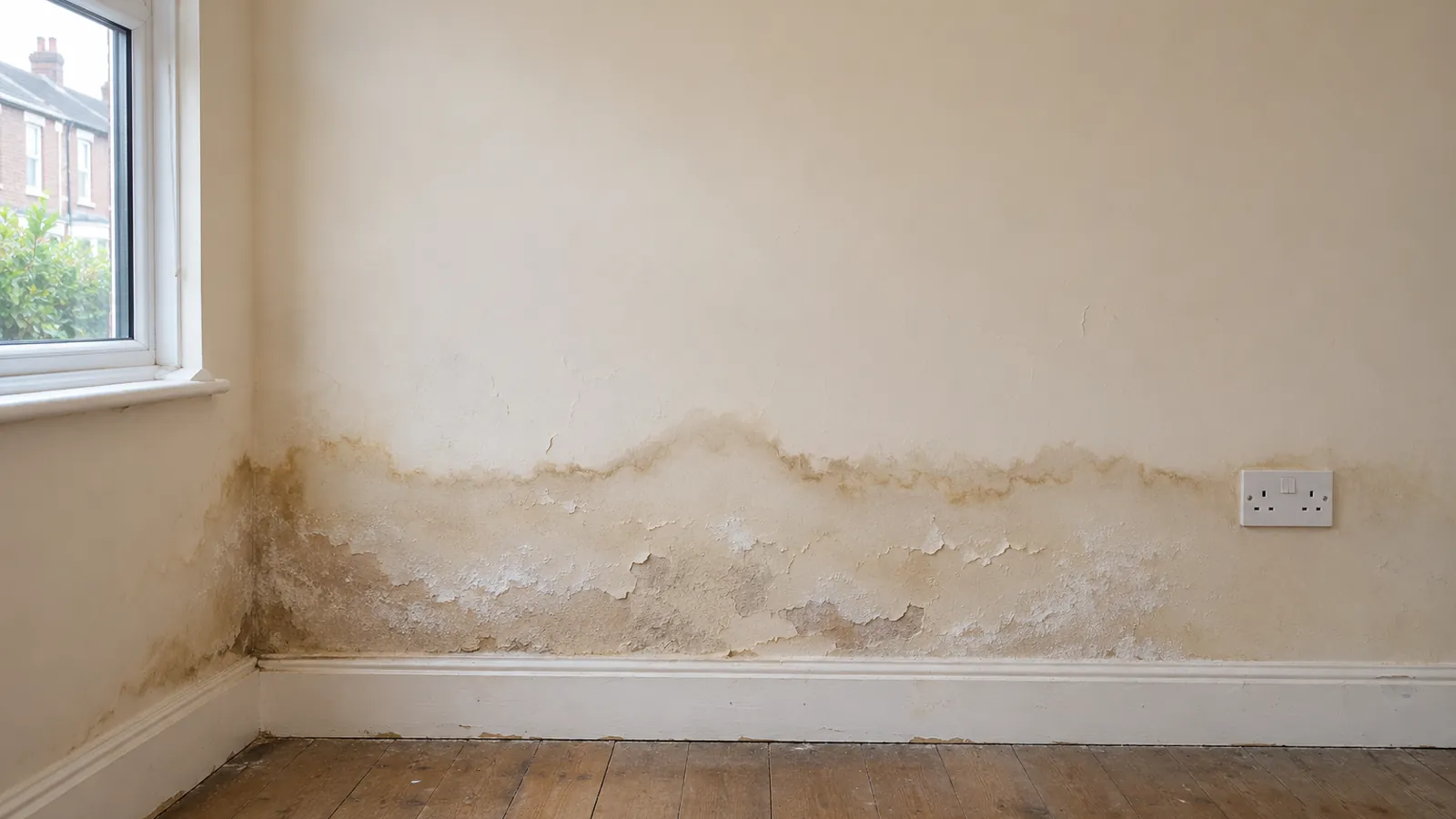
The tell-tale signs of real rising damp are a tide mark up to about a metre above the floor, white salt deposits, crumbling plaster at low level and rotting skirting boards, all year round. Read our full guide to rising damp for how to recognise it.
The most common misdiagnoses
| What it really is | How it fools people | What actually fixes it |
|---|---|---|
| Bridging (render, plaster or a raised path running past the DPC) | Water climbs around a perfectly good DPC | Cut back render, stop plaster short of the floor, lower paths |
| High outside ground levels | Soil or patio above the DPC lets water in at low level | Lower ground to at least 150mm (two bricks) below the DPC |
| Leaking gutters, downpipes or plumbing | Low-level damp near a downpipe or a pipe in the wall | Repair the leak, then let the wall dry |
| Condensation | Damp, mould and staining low on cold walls and behind furniture | Ventilation, steady heating, less moisture |
| Old salts in the plaster | Damp meter shows "high" readings on a dry wall | Replace the salty plaster; no injection needed |
| Blocked air bricks | Underfloor damp rots skirtings and floor timbers | Clear the air bricks so the void can ventilate |
That last one matters for draught-proofing too: never block air bricks or underfloor vents to stop draughts. Our draught-proofing guide explains what to seal and what to leave open.
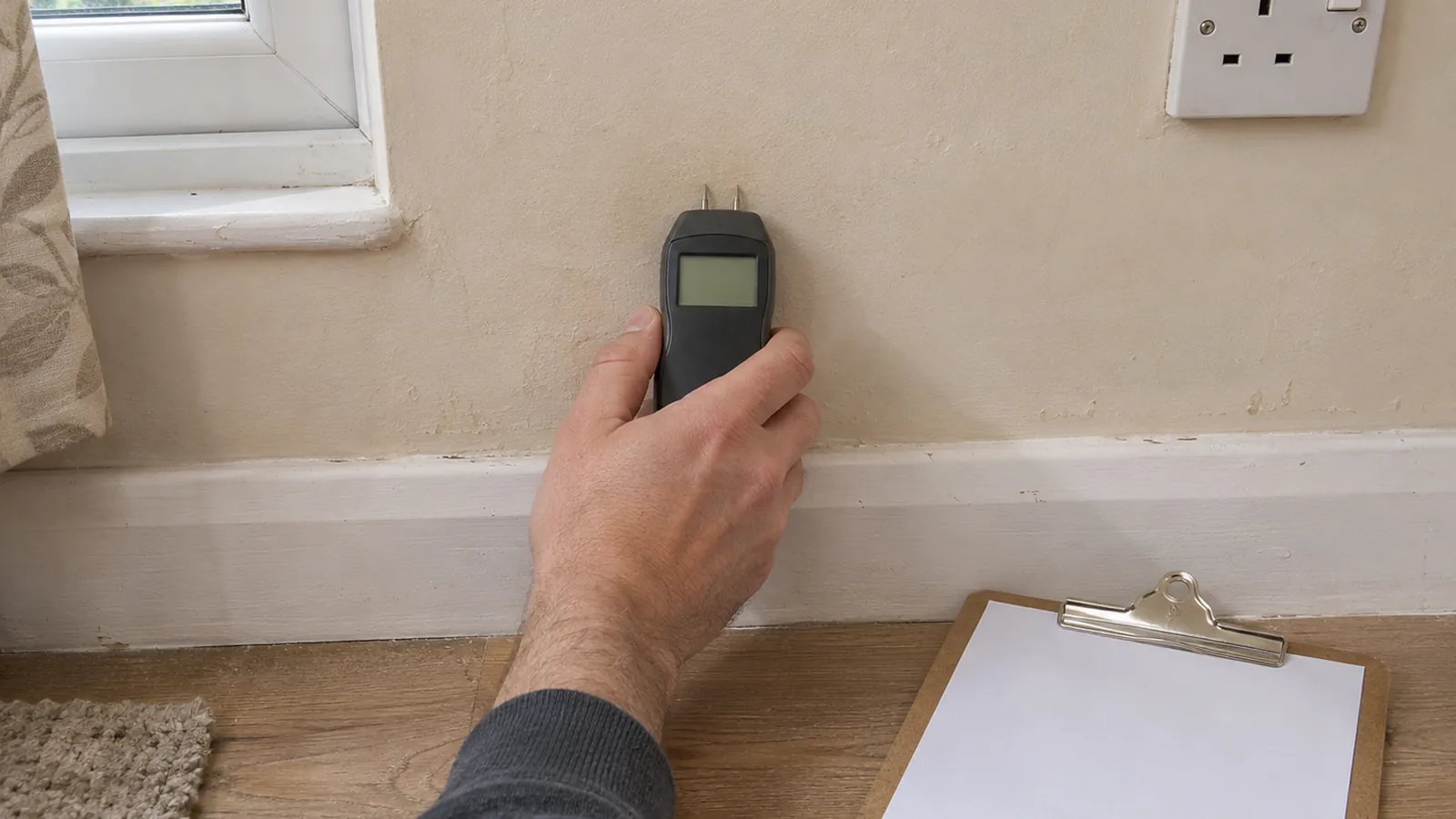
A damp meter reading on its own doesn't prove rising damp. Electrical damp meters are designed for timber, and salts in old plaster conduct electricity, so they can read "wet" on walls that are dry. A proper diagnosis looks at the building, the pattern of damp and, where needed, takes samples.
Get an independent survey first
Free surveys from companies that sell damp-proofing have an obvious conflict of interest: their surveyor's job is often to find work. For anything that will cost more than a few hundred pounds, pay for an independent survey from a surveyor who isn't selling the treatment.
Our guide to damp survey costs covers the types of survey, what they cost and what a good report should include. Ask the surveyor to explain:
- What type of damp it is, and the evidence for it
- What's causing it (including any bridging or outside faults)
- Whether a chemical DPC is needed at all, or whether fixing the cause is enough
- What plaster and finishes are suitable for the wall, especially in older homes
If you're buying a house and the mortgage survey flags damp, an independent damp report is usually money well spent before you agree to treatment as a condition of the sale.
What the damp injection process involves
If injection is genuinely needed, a typical job runs like this:
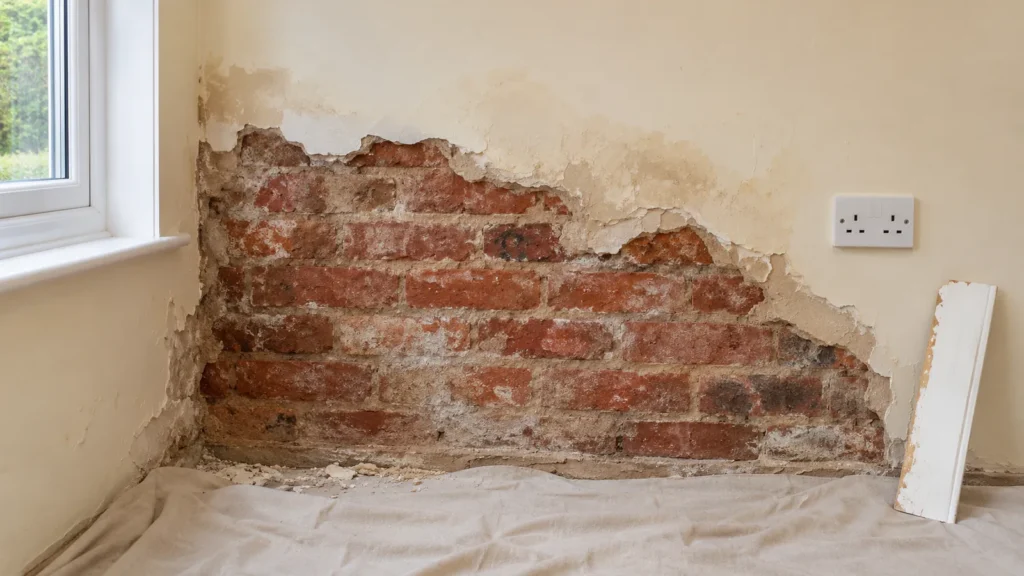
- Preparation: furniture moved, skirting boards and sometimes radiators removed, floors protected.
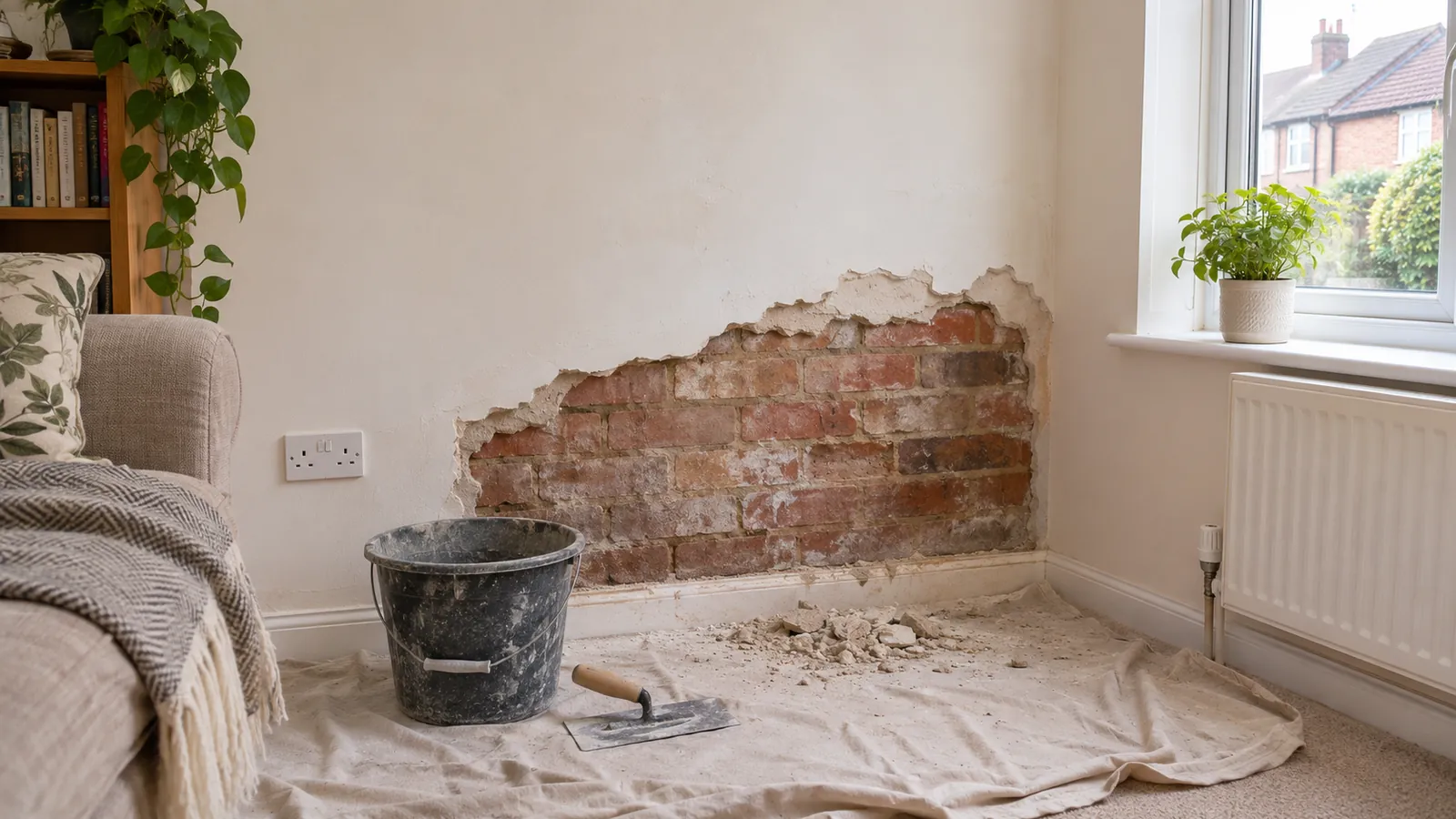
- Hacking off plaster: salt-contaminated plaster is removed, usually to about a metre high (sometimes higher where salts have spread).
- Drilling: holes drilled at regular spacings along the mortar course just above floor level (or into the brick), following the product maker's instructions.
- Injecting the cream: the DPC cream is injected into each hole until it's full. On thick walls, both sides may be drilled.
- Curing: the cream spreads into the masonry and cures over the following weeks.
- Replastering: the wall is replastered with a salt-resistant render and plaster system, or a breathable lime system on older solid walls, to stop residual salts coming through.
- Drying and decorating: walls need time to dry before painting; breathable paint is best for the first coats.
Expect the main work to take one to a few days per room, plus drying time.
Why the replastering matters
Even after a new DPC is in, the old wall stays loaded with salts drawn up over years. These salts attract moisture from the air and would push through ordinary plaster, causing new stains and the mistaken belief that "the injection hasn't worked". That's why salt-contaminated plaster is removed and replaced. It's also where much of the cost lies.
Older and solid-wall homes
For older homes (stone, lime mortar, roughly pre-1919), many conservation specialists prefer a breathable approach: fixing drainage and ground levels, lime plaster, and breathable paints rather than injected DPCs and dense cement-based plasters, which can trap moisture in the wall. If your house is old or listed, look for a surveyor with experience of traditional buildings.
Damp proofing injection on internal walls
Ground-floor internal walls built on their own foundations can also suffer rising damp, particularly if the floor has been raised or replaced against them. Damp proof injection on internal walls works the same way, but before treating them, check that the moisture isn't coming from an outside wall, a leaking pipe in the floor, or a solid floor with no damp-proof membrane. Upstairs walls can't have rising damp.
Guarantees: what to check before you pay
Most contractors offer a long guarantee on a chemical DPC, commonly 10 or 20 years, and some product makers quote 30 years when an approved installer uses their cream. Some firms now limit insurance-backed cover to 10 years. A guarantee is only as good as who stands behind it.
- Is it insurance-backed? Ask for proof. An insurance-backed guarantee (for example through Guarantee Protection Insurance, GPI) can stay valid if the company stops trading. A guarantee from a firm that's gone bust is usually worthless.
- What does it cover? Often just the DPC itself, not the replastering, and only if the cause was correctly diagnosed. Read the exclusions.
- Is it transferable? If you sell the house, the buyer's solicitor will want to see it, and many reject guarantees that aren't backed.
- What are the conditions? Some require you to keep gutters and ground levels maintained, or not to block the wall.
Property Care Association (PCA) members
The Property Care Association is the trade body for damp-proofing and structural waterproofing in the UK. Its members agree to its codes of practice, and it offers an independent route to resolve complaints if a member's own complaints process doesn't settle a dispute. Using a PCA member, and asking whether the guarantee is insurance-backed, is a sensible minimum. It doesn't replace an independent diagnosis, though: PCA members are still companies selling treatment.
DIY damp injection kits: worth it?
DIY damp-proofing cream kits are sold at DIY stores and online, with a tube or cartridge and drill bit sizes on the pack. They can work for a small, straightforward job, such as a short brick wall with a clearly failed DPC, if you follow the instructions exactly.
The risks:
- Treating the wrong problem. Most DIY injection jobs fail because the damp wasn't rising damp in the first place.
- No guarantee. This can be a problem if you sell, because buyers' solicitors often ask for one.
- Replastering is the hard part. Without salt-resistant replastering, stains come back and look like failure.
- Drilling hazards. Check for pipes and cables before drilling, wear eye protection and a dust mask, and keep the cream off skin and eyes.
Before buying any kit, try the free fixes first: lower soil or paths against the wall, cut back render that bridges the DPC, clear air bricks, and fix gutters and downpipes. Then give the wall a few months to dry out with heating and ventilation. Our guide to how to fix damp walks through it step by step.
FAQs
How much does it cost to inject a damp proof course?
Typically around £300–£900 per wall and about £1,500–£3,500 for the ground floor of a terraced house in 2026. With hacking off and salt-resistant replastering, a full treatment on a semi-detached house is often £3,000–£6,000 or more.
Does damp injection actually work?
It can, when the problem really is rising damp from a missing or failed DPC, and it's done properly with replastering. It doesn't fix condensation, penetrating damp, leaks or bridging, which are the most common causes of damp walls.
How long does a chemical damp proof course last?
Guarantees of 10 to 20 years are common, and some product makers quote up to 30 years, but how long it works depends on the wall, the installation and whether the real cause was treated. Check the guarantee terms and whether it's insurance-backed.
How long after damp proofing can I plaster?
Contractors usually replaster with a salt-resistant system soon after injection, as part of the same job. Decorating needs to wait until the new plaster has dried, which can take several weeks depending on the system used.
Can I inject damp proofing myself?
You can, with a DIY cream kit, on a small and straightforward wall. But you won't get a guarantee, you need to replaster properly, and the most common reason for failure is treating damp that wasn't rising damp.
Do I need damp proofing to sell my house?
Not automatically. If a buyer's survey flags damp, get an independent survey before agreeing to any treatment. If a DPC was installed in the past, find the guarantee paperwork, because the buyer's solicitor will ask for it.
Is damp proofing covered by home insurance?
Usually not. Most policies exclude gradual damp and wear and tear. Sudden water damage, such as a burst pipe, is different, and some policies cover drying-out costs.
- A chemical DPC costs roughly £300–£900 per wall, and £1,500–£3,500 for a terraced house, before replastering.
- It's only needed for genuine rising damp, which is often misdiagnosed.
- Rule out bridging, high ground, leaks and condensation, and get an independent survey first.
- Salt-resistant (or breathable lime) replastering is a must, and often half the cost.
- Insist on an insurance-backed guarantee, and consider a PCA member contractor.