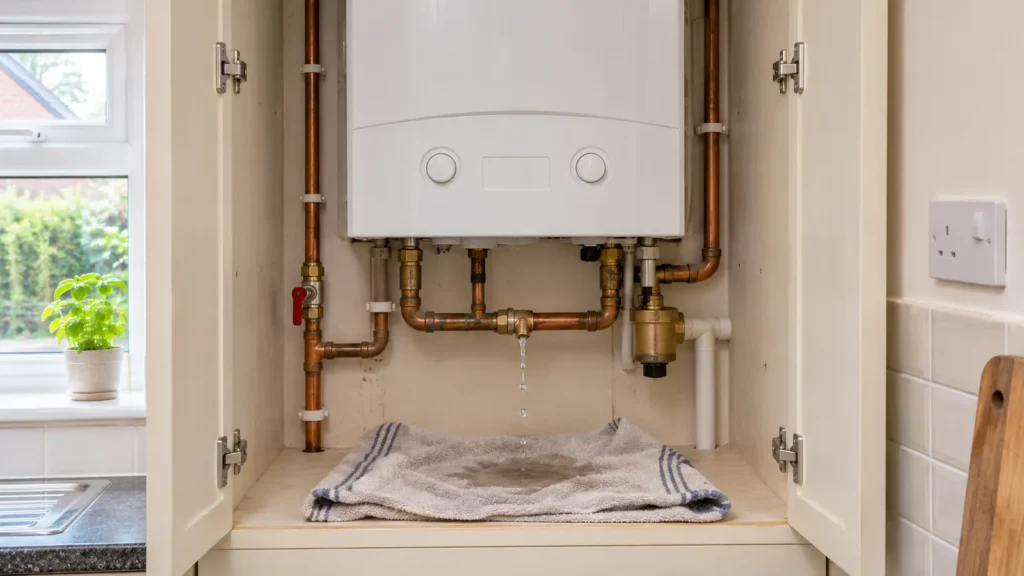
If your boiler is leaking water, turn the boiler off, switch off its power at the fused spur, and put a towel or bowl underneath. Water near electrics is the main risk. The most common causes are a leaking pressure relief valve (often because pressure is too high), corroded or loose pipe joints, a failed seal inside the boiler, or a faulty expansion vessel. You can check the pressure and the pipes underneath yourself, but anything inside the casing needs a Gas Safe registered engineer.
A dripping boiler is worrying, but it's rarely dangerous if you act quickly. This guide covers what to do in the first five minutes, the likely causes, what you can safely check, and what repairs cost. For more on pressure problems, see combi boiler losing pressure.
What to do right now
- Switch the boiler off at its controls.
- Turn off the electrical supply at the fused spur switch next to the boiler. Water and electricity don't mix.
- Catch the water with a towel, tray or bowl, and move anything valuable out of the way.
- If water is pouring out, turn off the mains water at your stopcock (often under the kitchen sink).
- Note where it's coming from: underneath the boiler, from a pipe, or from inside the casing.
- Call a Gas Safe engineer if water is coming from inside the boiler.
If you smell gas at any point, call the National Gas Emergency number on 0800 111 999 immediately. Never remove the boiler casing yourself: work inside a gas boiler must be done by a Gas Safe registered engineer.
Why is my boiler leaking water from underneath?
| Where you see water | Most likely cause | DIY check? |
|---|---|---|
| Dripping from a copper pipe through the outside wall | Pressure relief valve releasing water | ✅ Check the pressure gauge |
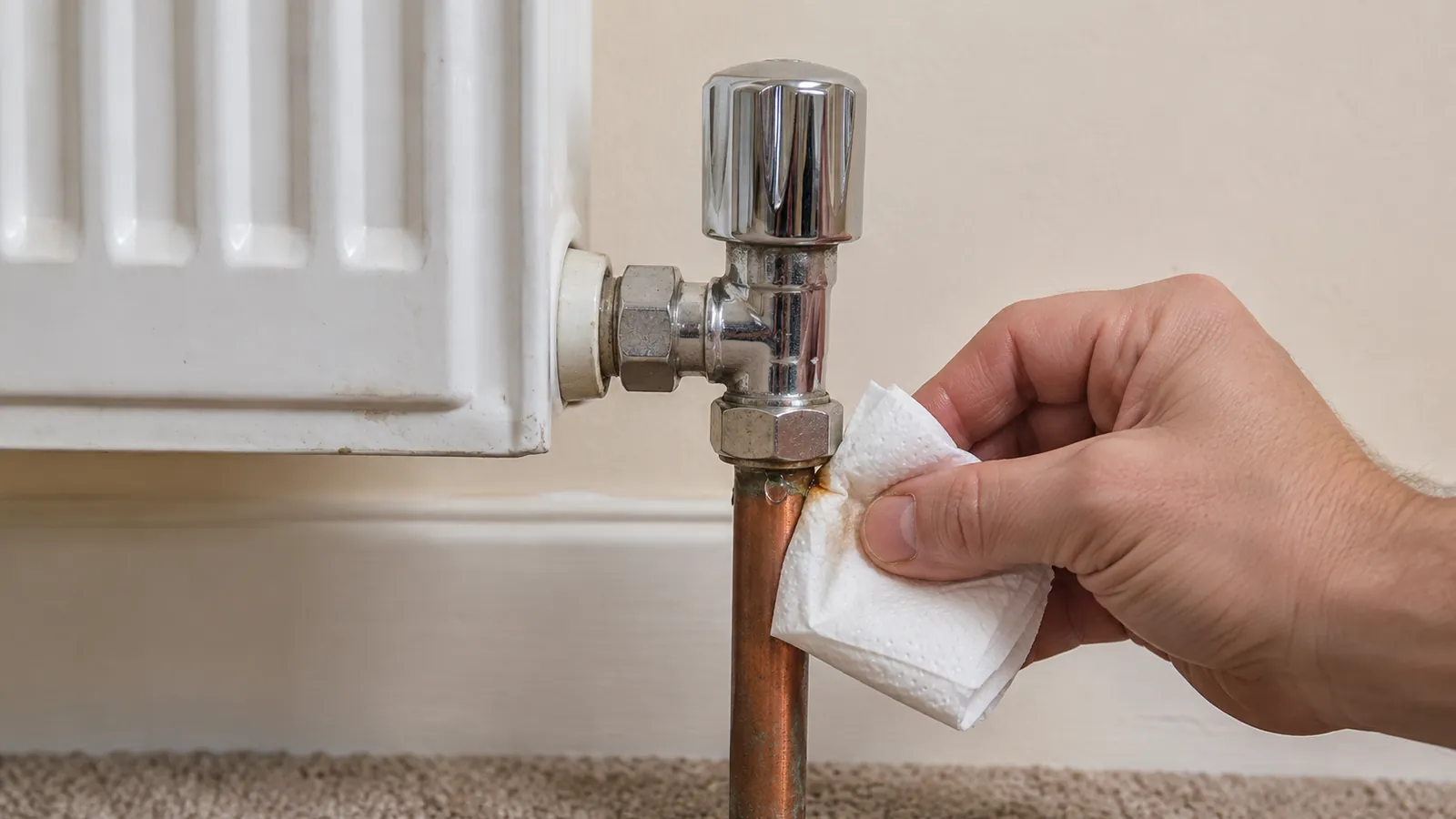
| Drips at a pipe joint under the boiler | Loose or corroded fitting | ✅ Look, but don't tighten gas pipes |
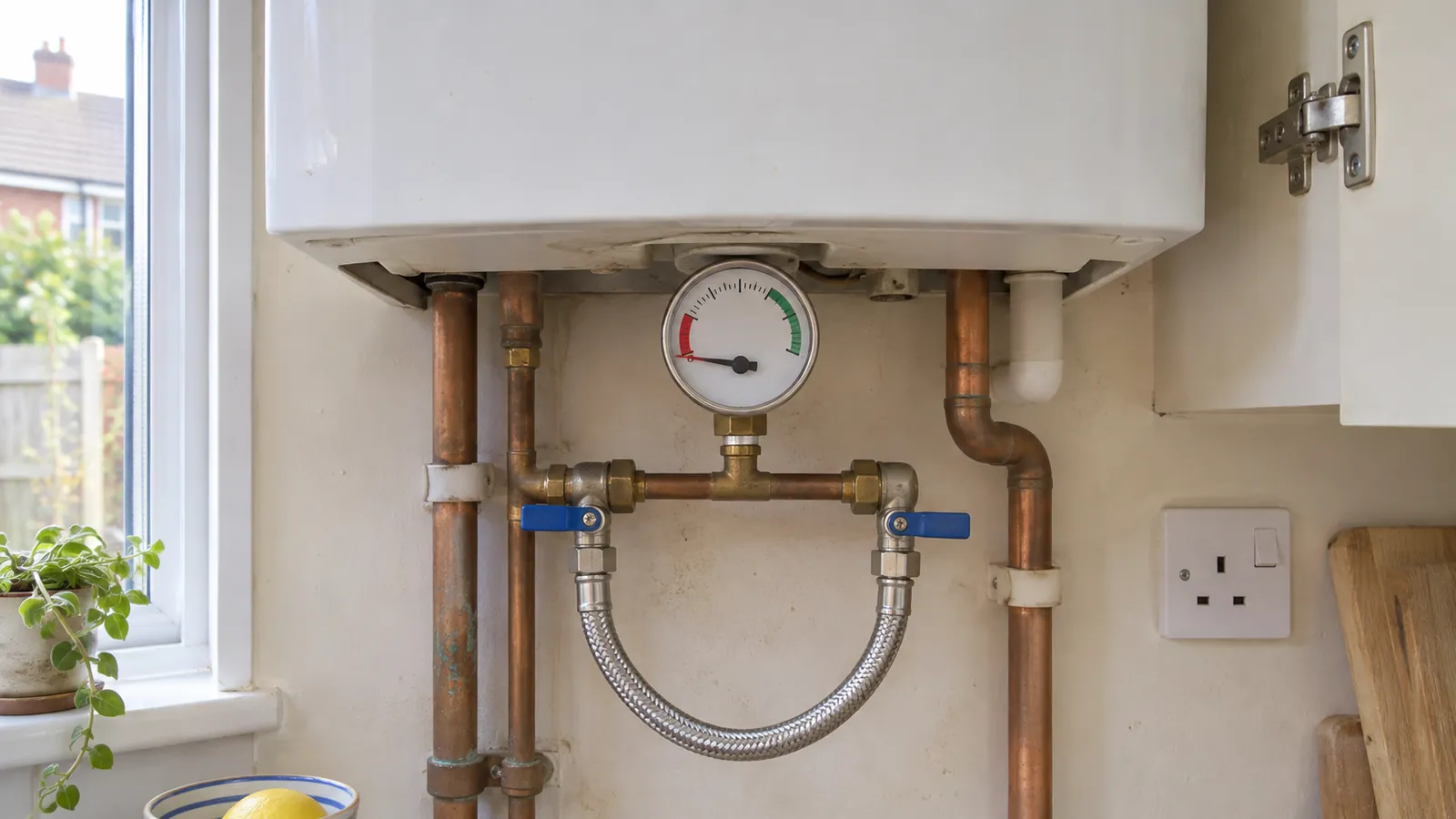
| Water from the filling loop area | Filling loop valve not fully closed or worn | ✅ Check both valves are closed |
| Water from inside the casing / bottom of the boiler | Internal seal, pump or heat exchanger | ❌ Engineer |
| Water from the plastic condensate pipe | Blocked or split condensate pipe | ✅ Look for cracks or blockages |
| Leak plus pressure rising to 3 bar | Expansion vessel fault | ❌ Engineer |
1. Pressure relief valve (PRV) leaking
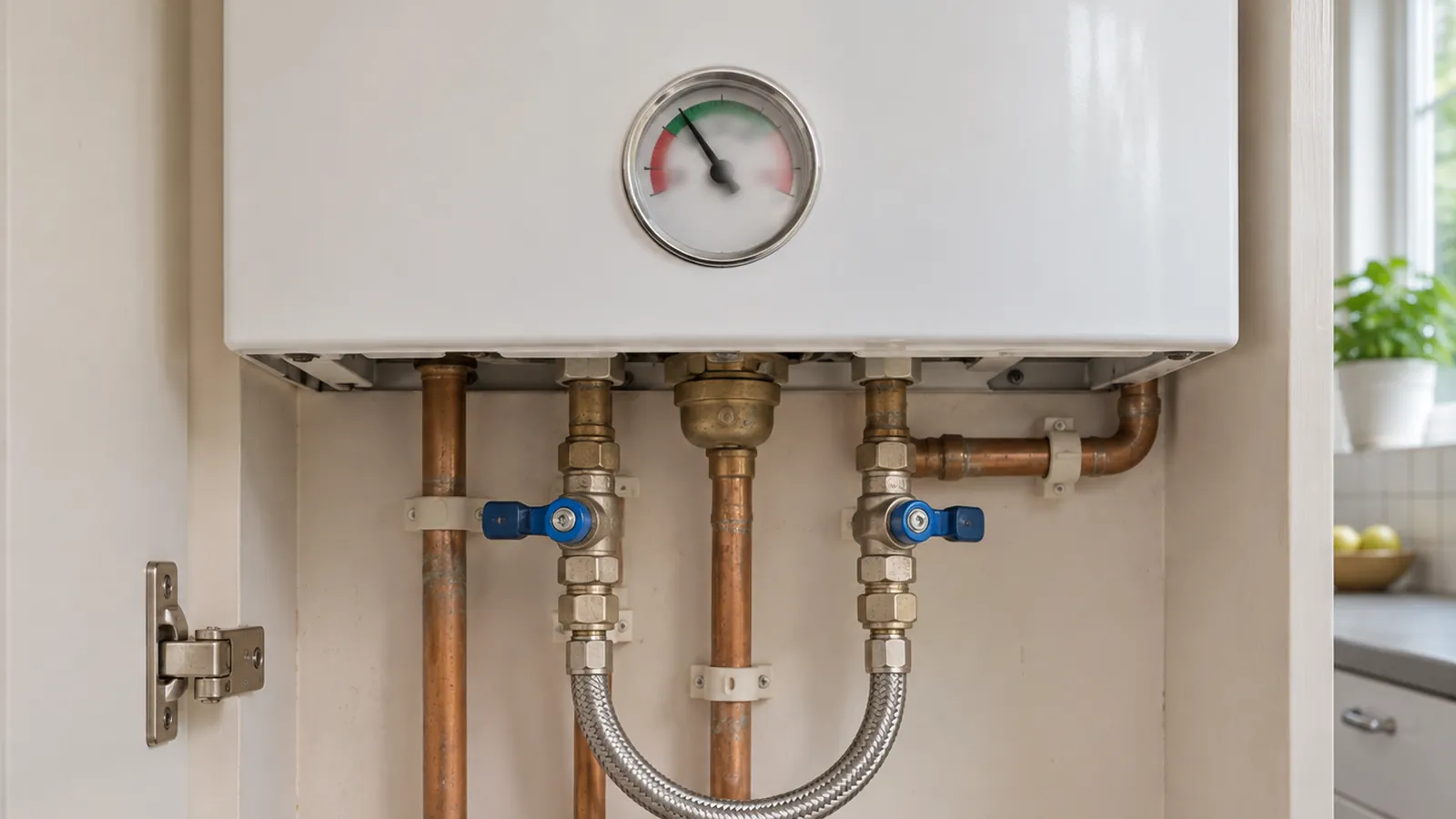
The PRV releases water if pressure goes above about 3 bar. If your gauge is high, or the copper pipe outside drips, the valve is doing its job, or it's worn and no longer seals. Bring the pressure back down by bleeding a radiator, then get the cause checked. See what boiler pressure should be.
2. Corroded or loose pipe joints
Fittings can loosen with heating and cooling over the years, and old pipework corrodes. Small weeps often show as green or white crusty deposits on joints.
3. Filling loop left open or leaking
If the filling loop valves aren't fully closed, water keeps entering the system, pressure rises and the relief valve dumps it. Check both valves are tight shut.
4. Internal seal or pump failure
Rubber seals inside the boiler perish with age, and pump seals can fail. Water appears from inside the casing or at the bottom of the boiler. Engineer job.
5. Corroded heat exchanger
On older boilers, a corroded heat exchanger can leak. This is often expensive enough that replacing the boiler is worth considering.
6. Faulty expansion vessel
If the vessel loses its air charge, pressure spikes when the heating runs and the PRV discharges repeatedly. Engineer job.
Boiler leaking and losing pressure
Leaks and pressure loss go together: every drop that escapes lowers the system pressure. If you're topping up regularly and can see a leak, fix the leak first. If you're losing pressure but can't find a leak, the water may be escaping through the relief valve outside, or from a hidden pipe under floors.
How much does it cost to fix a leaking boiler?
| Repair | Typical UK cost |
|---|---|
| Call-out and diagnosis | £60–£120 |
| Re-make a leaking joint / replace a fitting | £60–£150 |
| Replace the pressure relief valve | £100–£200 |
| Re-charge or replace the expansion vessel | £60–£350 |
| Replace internal seals | £100–£250 |
| Replace the pump | £200–£400 |
| Replace the heat exchanger | £400–£800+ |
If your boiler is over 12–15 years old and needs a heat exchanger, it's usually worth getting a quote for a new boiler as well.
Is a leaking boiler dangerous?
A small leak isn't usually dangerous in itself, but it can damage electrics inside the boiler, cause corrosion, and damage floors and ceilings. If a leak is near the electrical connections or you smell gas, switch off immediately and get help. Don't keep using a boiler that's leaking from inside the casing.
FAQs
Why is my boiler dripping water?
Most often because the pressure relief valve is releasing water (pressure too high), a pipe joint is loose or corroded, or an internal seal has failed.
Can I use my boiler if it's leaking?
Not if water is coming from inside the casing or near the electrics. Switch it off and call a Gas Safe engineer. A drip from the relief valve pipe outside is less urgent, but still needs checking.
Why is my boiler leaking water from the bottom?
Common causes are a failed internal seal, a pump seal, a corroded heat exchanger or a loose connection underneath. Switch it off and get an engineer to inspect it.
Will boiler cover pay for a leak?
Most boiler cover and home emergency policies cover leaks from the boiler itself, but often not gradual damage to floors or ceilings. Check your policy.
Why is water dripping from my boiler's pressure relief valve?
Because pressure inside the system went over about 3 bar, often due to a faulty expansion vessel or a filling loop left open, or because the valve itself is worn.
- Switch the boiler off at the controls and the fused spur, and catch the water.
- Check the pressure gauge, the filling loop and the relief valve pipe outside.
- Anything leaking from inside the boiler is a Gas Safe engineer job.
- Smell gas? Call 0800 111 999 immediately.