

To properly reduce noise through a wall, you need mass, a gap, and something soft in that gap. In practice that means a new lining built in front of the existing wall: either resilient bars or acoustic clips with dense acoustic plasterboard, or a separate stud wall that doesn't touch the old one, filled with acoustic mineral wool. Foam panels, egg boxes and thick wallpaper don't block noise between rooms. Before building anything, seal the gaps: sockets, skirting and holes in the party wall often leak more sound than the wall itself.
Noise through a party wall is one of the most common reasons people search this, and the forums are full of people who spent money on the wrong thing. What follows is based on how sound actually travels and on the build-ups set out in building regulations guidance (Approved Document E). For heat-loss rather than noise, see our insulation and EPC guides.
First, work out what kind of noise it is
Airborne noise is voices, TV, music and barking dogs. It travels through the air, makes the wall vibrate slightly, and is heard on the other side. Wall linings can make a real difference to this.
Impact noise is doors slamming, things being dropped, or footsteps. On a wall, that usually means cupboards being shut, or a bed or sofa banging against it. It travels through the structure itself, so the fix has to break that path (or the neighbour has to move the furniture).
Low bass from speakers and subwoofers is the hardest of all to block, and even a well-built lining will reduce it far less than it reduces voices.
Check for leaks before you build anything
Sound behaves like water: it finds the gaps. A solid brick party wall can perform well but be let down by:
- back-to-back sockets, where both houses have a socket in the same spot with only a thin box between them
- gaps under or behind the skirting board
- unfilled holes where pipes or cables pass through
- a party wall that stops at ceiling height in the loft, with no wall continuing up to the roof, or poorly filled gaps up there
- chimney breasts and old fireplaces that are thinner than the rest of the wall
Fill gaps with acoustic sealant (it stays flexible), fit acoustic putty pads behind socket boxes, and check the loft. In older terraces, an incomplete loft party wall is a classic cause of noise that seems to come "through the ceiling".
Before spending money, put your ear to the wall in different places while the noise is happening. If it's clearly louder at the skirting, a socket or a chimney breast, fix that spot first.

What doesn't work
Foam panels and acoustic tiles. These are designed to reduce echo inside a room (useful in a recording studio), not to stop sound passing between rooms. They're light and porous, so they do almost nothing for neighbour noise.
Egg boxes, carpet on the wall, cork tiles, thick wallpaper or polystyrene. Same problem: not enough mass, and nothing to break the vibration path.
A single layer of plasterboard screwed directly onto the wall. You've added a little mass but connected it rigidly to the wall, so it vibrates with it. The improvement is small.
Insulation board meant for heat. Rigid foam boards are great for heat, but they're light and stiff, and fixed straight to the wall they can sometimes make sound transmission worse at certain frequencies.
What works: the three options
Option 1: Resilient bars with acoustic plasterboard
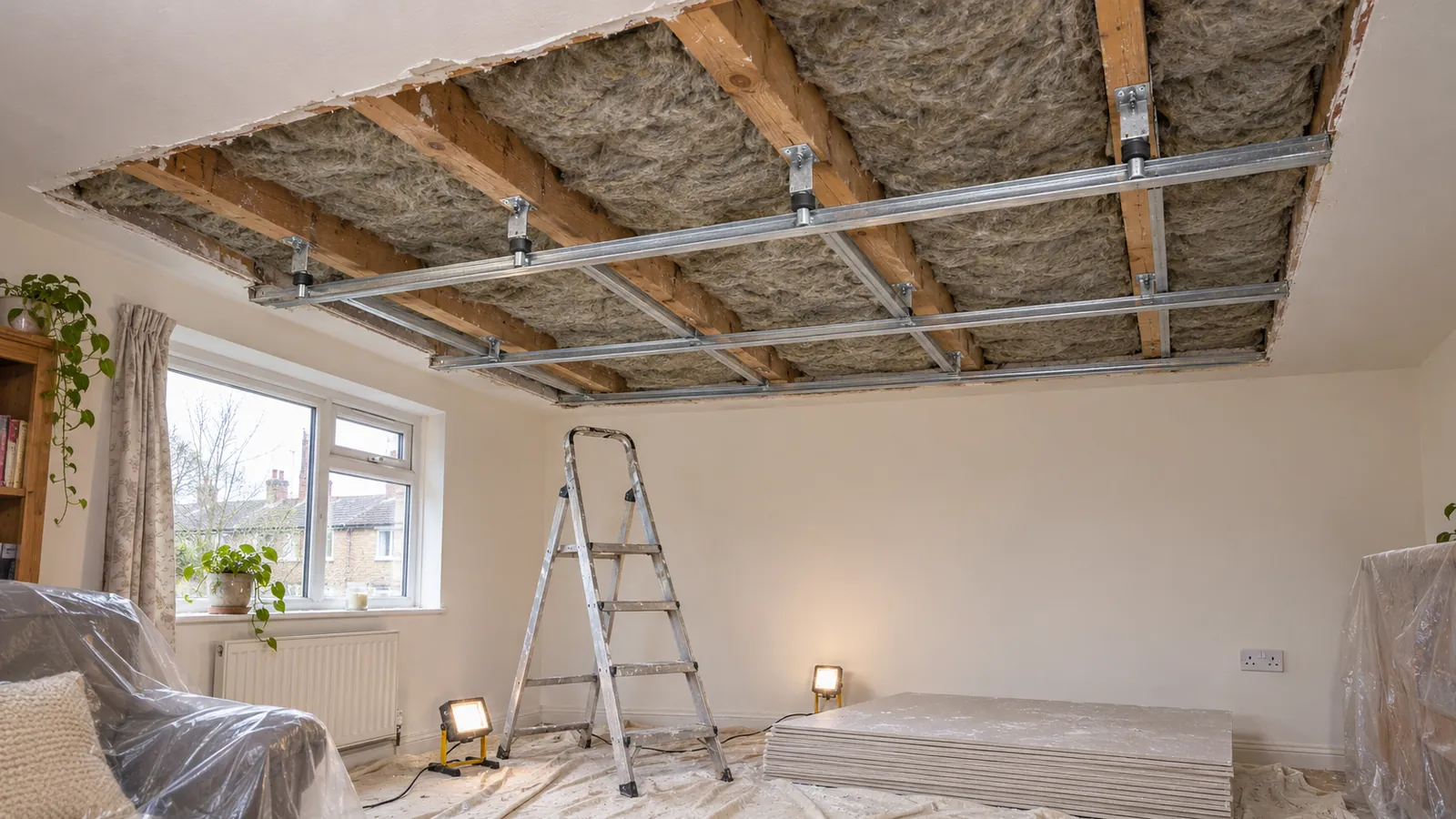
Resilient bars are thin metal channels screwed horizontally onto the wall (or onto timber battens) that hold the plasterboard slightly away from it. Because they flex, they absorb vibration instead of passing it straight through. The usual build is:
- Battens fixed to the wall with acoustic mineral wool between them.
- Resilient bars fixed across the battens.
- Two layers of acoustic plasterboard, with staggered joints, screwed into the bars only.
- A small gap at the edges, filled with acoustic sealant.
The detail that ruins most DIY attempts: the screws must go into the bar, not through it into the batten or wall behind. One screw that bridges the gap can cut the performance a lot. Manufacturer guidance is clear on this, and it's the first thing to check if a new lining hasn't made much difference.
This option takes up roughly 60 to 75mm of room depth depending on the battens and boards.
Option 2: Acoustic clips and channel
Similar idea, but with rubber-mounted clips holding a metal channel, and plasterboard fixed to the channel. Clips usually isolate better than resilient bars and are more forgiving of small mistakes, but cost more. Depth is similar or a little more.

Option 3: An independent stud wall
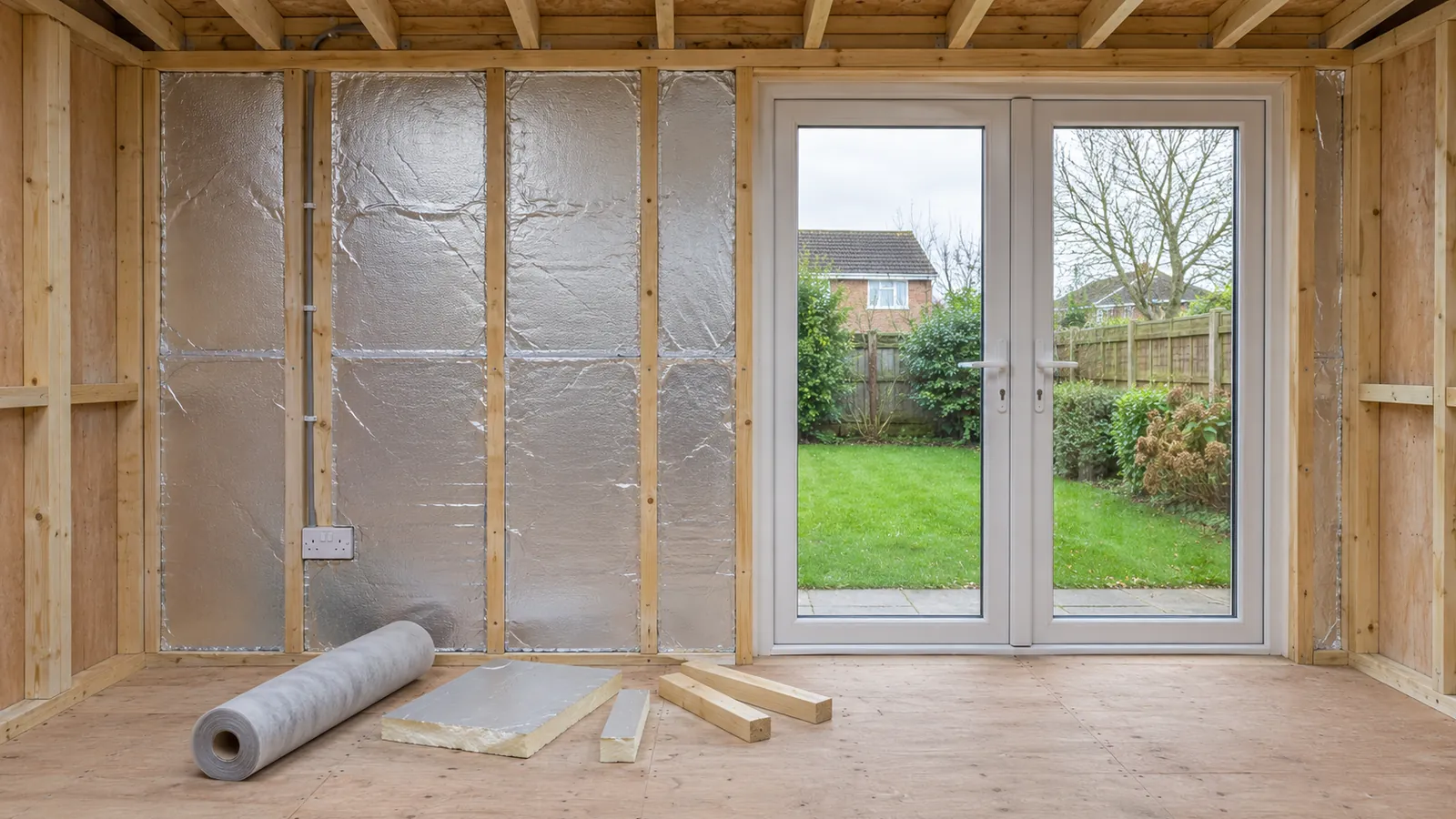
The best performer for walls. You build a completely separate metal or timber stud wall a small distance in front of the party wall, so it doesn't touch it at all. Fill the cavity with acoustic mineral wool and board it with two layers of acoustic plasterboard. Because there's no direct connection, very little vibration gets through.
The cost is space. With the gap, studs and two boards, you'll typically lose 100 to 150mm of room depth along the whole wall. In a small terraced bedroom that's a real loss, so measure first.
How much difference will it make?
Manufacturers publish figures for their systems, and real-world results vary depending on how well it's built and how much noise leaks through the floor, ceiling and side walls (called flanking). As a rough idea from manufacturer and trade sources, acoustic board on its own gives a few decibels of improvement, resilient bar systems more, and a properly built independent wall the most.
A useful way to think about it: a good lining turns clear speech into murmurs and makes a TV much less noticeable. It won't make the neighbour's subwoofer silent.
What it costs in 2026
These are rough 2026 estimates for one average party wall in a bedroom or living room (about 4m long), and what moves the price is wall size, sockets and radiators that need moving, and finishing:
| Approach | DIY materials | Fitted by a trade |
|---|---|---|
| Sealing gaps, socket pads, loft check | £30 to £100 | Often part of a handyman day |
| Resilient bars + acoustic plasterboard | £300 to £600 | £900 to £1,800 |
| Acoustic clips + channel | £450 to £800 | £1,100 to £2,200 |
| Independent stud wall | £500 to £900 | £1,300 to £2,500+ |
Add plastering or skimming, decorating, and the cost of moving sockets, switches and radiators. A radiator on the party wall needs taking off and refitting on the new surface, which is a plumbing job.
Things people forget
- Sockets and switches on the new lining need back boxes designed for it, and any new socket box is a weak point. Use acoustic putty pads.
- Radiators need longer brackets or pipe extensions. A heavy radiator also needs proper fixings into the studs, not just the plasterboard.
- The ceiling and floor. If noise comes through the floor or ceiling as well, a new wall lining won't help that part. Our ceiling sound insulation guide covers noise from upstairs.
- Building regulations. Fitting a lining to an existing house wall doesn't normally need approval, but a change of use or a new flat conversion does, under Approved Document E. If you're splitting a house into flats, the sound standards are compulsory and tested.
- Damp. Don't box in a wall that's damp. Any lining traps moisture and can hide mould. Check our guide on how to fix damp first if the wall has a tide mark or musty smell.
Do you need your neighbour's permission?
Not for a lining built on your side, as long as you're not cutting into the party wall itself. Chasing out the wall, fixing deep into it, or anything that affects the structure can fall under the Party Wall etc. Act 1996, which may mean serving notice. If in doubt, ask a party wall surveyor before you start.
FAQs
What is the best sound insulation for a party wall?
An independent stud wall with acoustic mineral wool and two layers of acoustic plasterboard, if you can spare the space. Resilient bars or acoustic clips with acoustic plasterboard are the thinner alternative.
Do soundproofing foam panels work on walls?
Not for neighbour noise. They reduce echo within a room but are too light to stop sound passing through a wall.
How much room will I lose soundproofing a wall?
Roughly 60 to 75mm with resilient bars or clips, and 100 to 150mm with an independent stud wall.
Is acoustic plasterboard enough on its own?
It helps a little, but screwed straight onto the wall it vibrates with it. It works properly when it's held off the wall on bars, clips or its own studs.
Can I soundproof a wall without losing space?
Only partly. Sealing gaps, fitting acoustic socket pads, filling the loft party wall and moving furniture away from the wall all help and take up no space. Beyond that, an effective lining always costs some depth.
Why can I still hear my neighbours after soundproofing?
Usually because sound is bypassing the new wall through the floor, ceiling, side walls, sockets or the loft, or because a screw or batten is bridging the resilient bar. Check those weak points.
- Identify whether it's airborne, impact or bass noise first.
- Seal gaps, sockets and the loft party wall before building anything.
- Foam panels and egg boxes don't stop neighbour noise.
- Resilient bars or clips with acoustic plasterboard are the slim option; an independent stud wall works best.
- Budget for moving sockets and radiators, and never line a damp wall.