
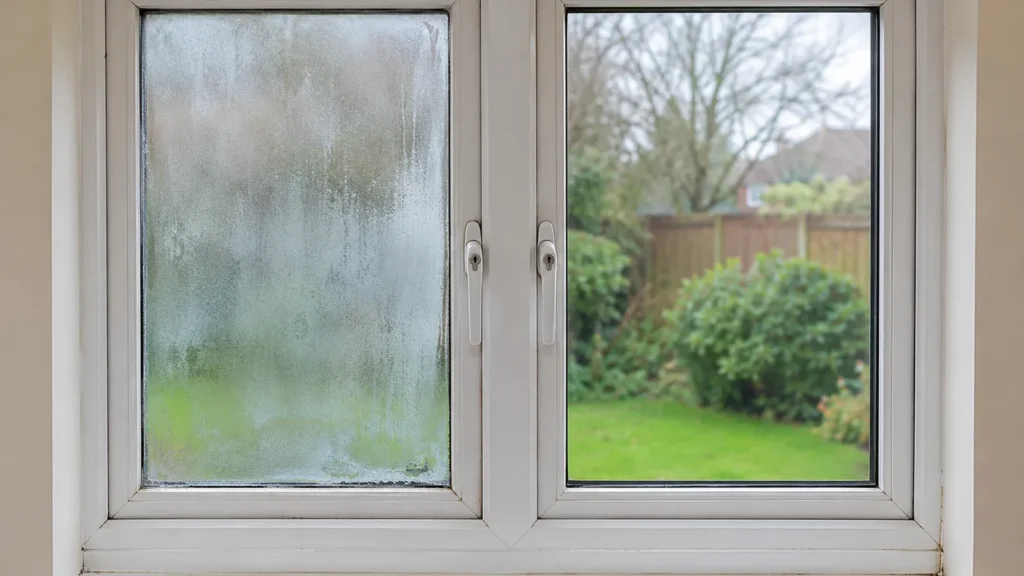
Blown double glazing means the seal around the sealed glass unit has failed, so moist air gets into the gap between the two panes and fogs up the glass from the inside. You can't wipe it away. It isn't usually dangerous, but the window insulates less well and looks permanently cloudy. In most cases you only need a new sealed unit (the glass), not a whole new window. A glazier swaps it in an hour or so, typically for around £80–£250 per unit depending on size and glass type. Replace the whole window only if the frame is also failing.
If you can see mist, droplets or a milky film between the two panes of a window, and no amount of wiping makes a difference on either side, your double glazing has "blown". It's one of the most common window problems in UK homes with uPVC windows from the 1990s and 2000s. For the bigger picture, see our insulation and EPC guide.
What does blown double glazing mean?
A double-glazed window has two parts:
- The frame, usually uPVC, aluminium or timber
- The sealed unit, also called an insulated glass unit (IGU): two panes of glass held apart by a spacer bar around the edge, with the gap sealed and filled with dry air or argon gas
The spacer bar contains a desiccant, a drying material that soaks up any tiny bit of moisture inside the gap. As long as the edge seal holds, the gap stays dry and clear.
When the seal breaks down, damp outside air slowly gets into the gap. The desiccant fills up, then can't absorb any more. From then on, moisture condenses on the inside faces of the glass whenever the pane cools, usually on cold mornings or when the sun goes off the window. That's what "blown", "failed" or "misted" double glazing means.
Is the condensation inside, outside or between the panes?
Before you call anyone, check where the moisture actually is. There are three possibilities, and only one of them means the unit has failed.

| Where the moisture is | What it means | What to do |
|---|---|---|
| On the room side of the glass | Normal indoor condensation: your home is humid and the glass is cold | Wipe it, ventilate, reduce moisture. See condensation on the inside of windows |
| On the outside of the glass | Usually a good sign: your glazing is insulating so well the outer pane stays cold overnight | Nothing. It clears as the sun comes up |
| Between the two panes | The sealed unit has failed (blown) | Replace the sealed unit |
The wipe test: on a misty morning, wipe a patch on the inside with a dry cloth, then wipe the outside. If the mist is still there after both, it's between the panes.
Why does double glazing blow?
Sealed units don't last forever. Many glaziers expect them to last around 20 years or more, but some fail much earlier. The common causes are:
- Age. Edge seals slowly break down over time, especially on older units with less durable seals.
- Sun and heat. South- and west-facing windows heat up and cool down more, and the seal expands and contracts more. These often blow first.
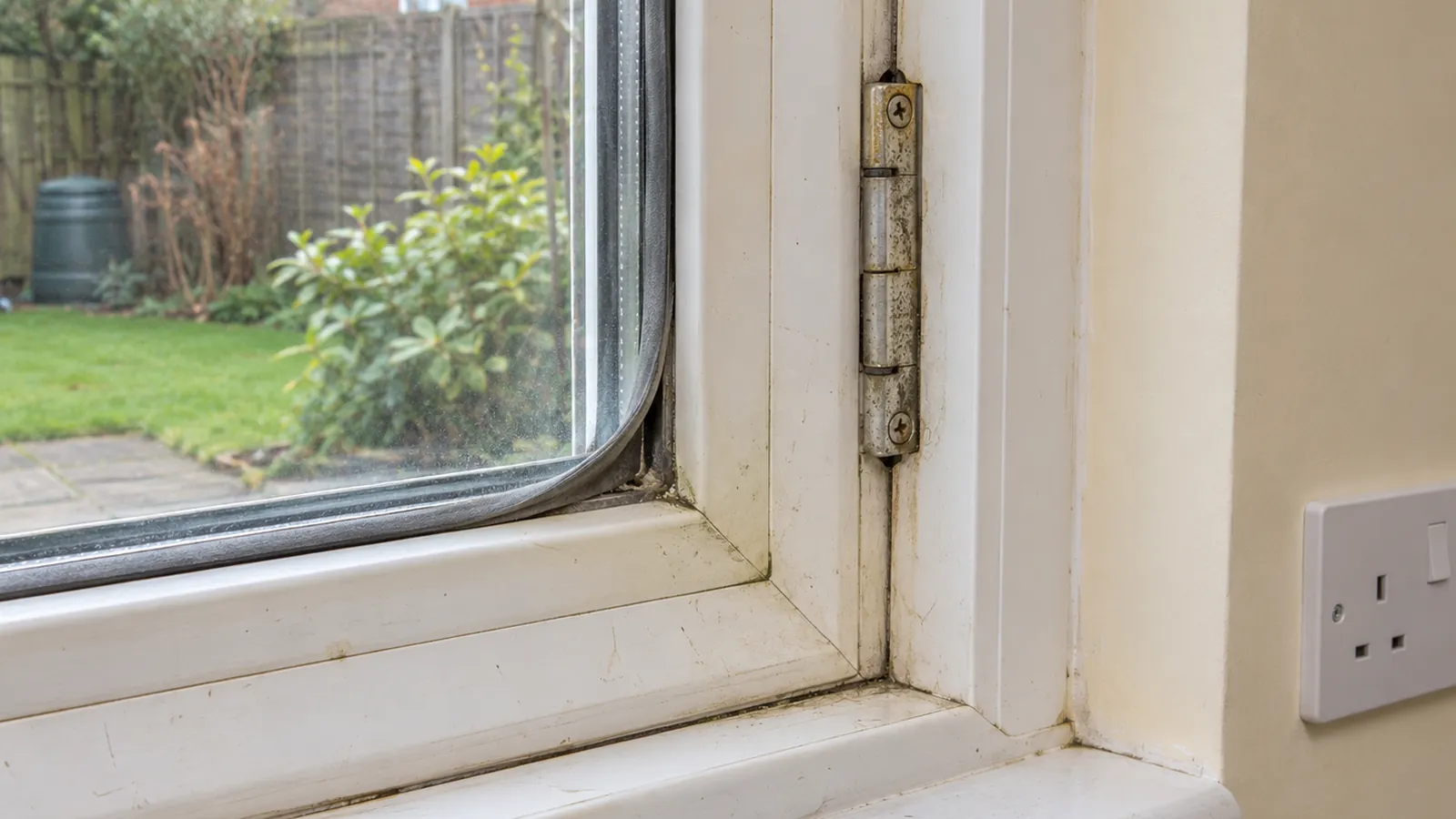
- Water sitting on the seal. If the drainage holes at the bottom of the frame are blocked, rainwater sits against the edge of the unit and attacks the seal.
- Poor fitting. Units fitted without the right packers under them, or glazed into a frame that's not square, put stress on the seal.
- Damage. Knocks, frame movement, settling of the building, or a careless jet wash can all break the seal.
- Harsh cleaners or solvents used around the seal and gaskets.
Is blown double glazing a problem?
It's mostly a nuisance rather than an emergency. What it does and doesn't mean:
What it does mean:
- Less insulation. Once moist air is in the gap, and any argon has leaked out, the unit insulates less well. You'll lose a bit more heat through that window and the inner pane will feel colder.
- More condensation on the room side. A colder inner pane can pick up more indoor condensation, which adds to mould risk around the frame.
- Poor view and a scruffy look. The fogging comes and goes with the weather and often leaves white streaks and spots inside the gap over time.
- A note on surveys and sales. Surveyors often flag blown units. Buyers may ask for a price reduction or for the units to be replaced.
What it doesn't usually mean:
- It's not usually a safety problem. The glass is no weaker than before. If the glass itself is cracked, that's different: get it replaced promptly.
- It doesn't mean the whole window has failed. In most cases the frame, hinges and locks are fine.
If only one or two panes are misted, that's normal ageing of individual units. If most windows in the house are misting at once, they're probably near the end of their life and it may be worth pricing up full replacement alongside unit swaps.
How to fix blown double glazing
You have three realistic options.
Option 1: Replace just the sealed unit (usually best)
This is the standard fix. A glazier measures the existing unit, orders a new one made to size, then comes back and swaps it. The frame stays in place.

The process usually goes like this:
- Survey and measure. The glazier checks the frame is sound and measures the glass, its thickness and any features (Georgian bars, obscure glass, toughened safety glass).
- Order. The new unit is made to size. This usually takes a week or two.
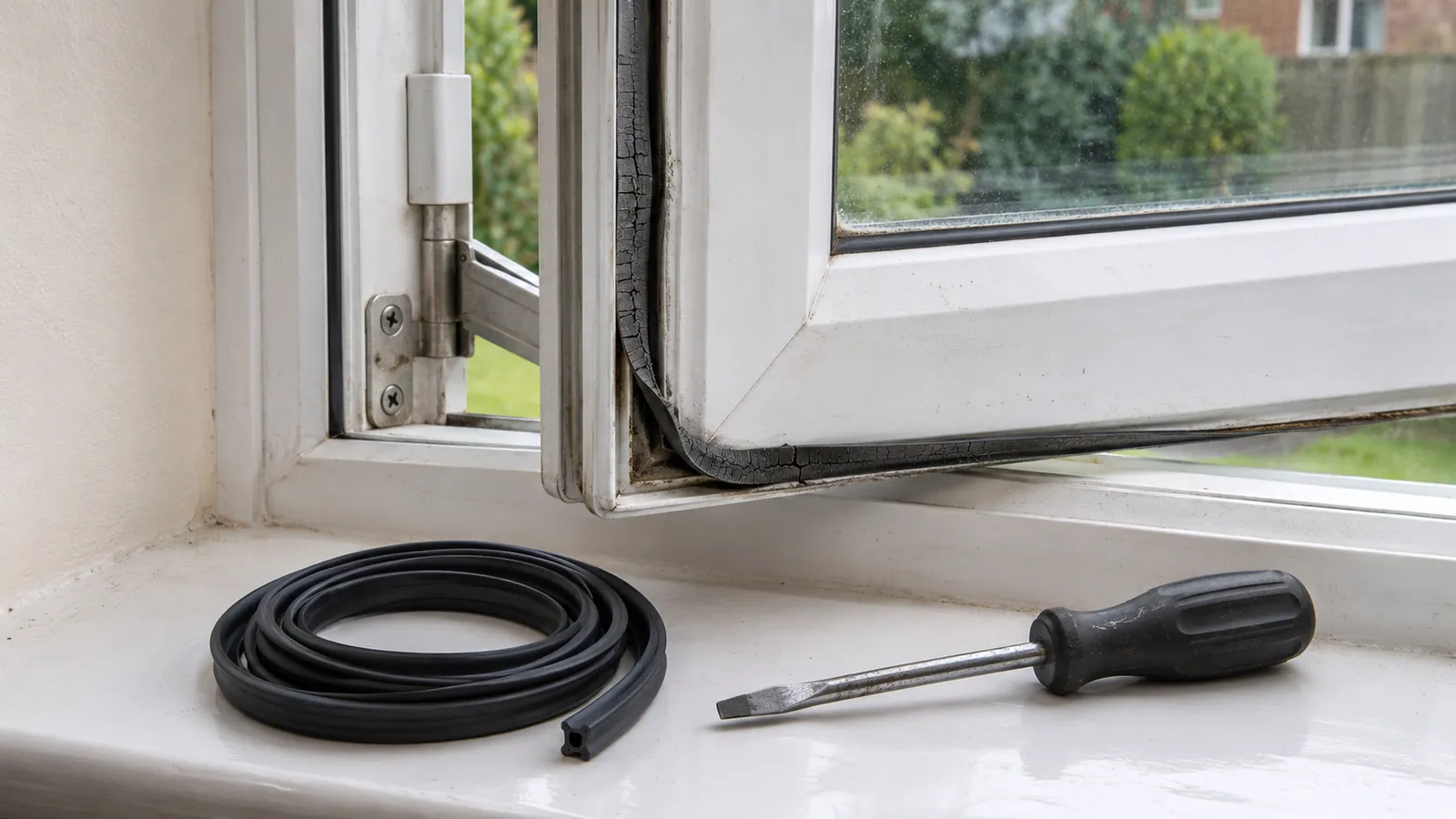
- Fit. On most uPVC windows, the glazing beads (the plastic strips holding the glass in) are prised out, the old unit lifted out, the new one set on packers, and the beads clipped back. Usually under an hour per window.
- Dispose of the old unit. Most glaziers take it away.
Why it's usually best: you get a clear, fully sealed, modern unit for a fraction of the cost of a new window. Modern units with a low-emissivity (low-E) coating, argon fill and a "warm edge" spacer are typically better insulators than the 20-year-old unit they replace.
Option 2: "Demisting" or defogging services
Some companies offer to repair blown units without replacing them. They drill small holes in the glass, flush the gap with a cleaning solution, dry it out, then fit small valves or plugs to let the unit "breathe".
| Pros | Cons |
|---|---|
| Can be cheaper than a new unit | The gap is no longer sealed or gas-filled, so insulation isn't restored to original levels |
| No waiting for a new unit to be made | Results vary: misting can come back |
| Less waste | Small plugs remain visible in the corner of the glass |
| Can't be done on toughened glass, which shatters if drilled |
Demisting can improve the look of a window, but it won't make it insulate like a new sealed unit. For most homes, a new unit is the better long-term buy. If you try demisting, ask what the guarantee covers and for how long.
Option 3: Replace the whole window
Only worth it when:
- The frame is rotten, warped, cracked or badly discoloured
- The hinges, locks or handles are worn and parts can't be found
- Lots of windows have blown at once and the frames are near the end of their life too
- You want better security, noise reduction or a different style
A full window replacement in England and Wales must meet Building Regulations, including thermal performance and ventilation. Most homeowners use an installer registered with a competent person scheme such as FENSA or CERTASS, who self-certifies the work and issues a certificate. Keep that certificate. You'll need it when you sell.
Blown double glazing repair cost
Prices vary by region, size, glass type and how many units you're replacing at once. These are rough 2026 guide prices:
| Job | Typical cost (estimate) |
|---|---|
| Small sealed unit (e.g. top opener, small side pane) | £60–£150 |
| Medium sealed unit (standard bedroom window pane) | £100–£200 |
| Large sealed unit (big living room pane) | £150–£300+ |
| Toughened or laminated safety glass unit (doors, low-level panes) | Usually £30–£100+ more than standard |
| Units with Georgian bars, leaded effect, obscure or self-cleaning glass | Extra, often £20–£80+ per unit |
| Demisting service | Often £50–£100 per pane |
| Whole replacement uPVC window | Often £400–£1,000+ per window fitted |
Do several at once. Most glaziers charge a call-out or minimum fee, so swapping three or four units in one visit costs much less per unit than doing them one at a time. Get two or three quotes and check they include fitting, VAT and disposal.
Does a blown unit count as failed double glazing for a warranty?
Often yes, if it's still in warranty. Check:
- Your installer's guarantee. Many window companies guarantee sealed units against misting for a set number of years, often 5 to 10. Look at your paperwork.
- An insurance-backed guarantee. Many FENSA and CERTASS installations come with an insurance-backed guarantee that protects you if the installer goes out of business.
- Home insurance. Usually covers accidental breakage, not wear and tear like a failed seal.
If you're within the guarantee period, contact the installer first, with photos of the misting and your paperwork. Don't pay a third party to replace the unit until you've checked, as that can void the guarantee.
Can you replace a sealed unit yourself?
It's possible on many uPVC windows, but it's not always a good idea.
It might be a reasonable DIY job if:
- The window is on the ground floor and easy to reach
- It's a small or medium pane you can lift safely (double-glazed units are heavy)
- The beads are internal and clip in, which is common on uPVC
- You can order a unit made to exact size from a supplier
Leave it to a glazier if:
- The window is upstairs (you'd need to work from inside or a ladder with a heavy sheet of glass)
- The pane is large: anything over about a metre is heavy and awkward
- The glass is in a door, or low down near the floor. Glass in these "critical locations" must be safety glass (toughened or laminated) to meet Building Regulations
- The beads are external or the window is timber or aluminium
- The window is still under warranty
Handle glass with care. Wear cut-resistant gloves and safety glasses, and have someone help you lift. If the glass cracks or shatters, keep children and pets away and clear it up carefully. Never stand directly below a window while someone lifts glass out above you.
Basic DIY steps on a uPVC window with internal beads:
- Measure the glass precisely (width, height and overall thickness) and order a unit to match, with the right glass type.
- Open the window if it's an opener, so the frame is supported.
- Slide a stiff putty knife or glazing bead tool into the joint between the bead and the frame, and gently prise out each bead. Start with the longest beads, then do the short ones. Number them so they go back in the same place.
- Lift the old unit out, noting where the packers (small plastic shims) sit underneath it.
- Put the packers back in the same positions and set the new unit on them. Packers stop the unit sitting on the frame and keep the sash square, so the window opens and closes properly.
- Clip the beads back in, short ones first, tapping gently with a rubber mallet.
- Check the window opens, closes and locks smoothly.
If anything feels stuck or the beads crack, stop and call a glazier.
How to make new double glazing last longer
- Keep the drainage holes clear. Look for small slots on the outside of the bottom frame, sometimes with little covers. Clear them with a pipe cleaner or thin brush.
- Clean gently. Use warm soapy water or glass cleaner. Avoid solvents, strong chemicals and jet washers near the seals.
- Don't let the frame rot or move. Check timber windows are painted and sound.
- Make sure units are fitted properly, on packers in a square frame. A good glazier does this as standard.
Blown windows and your energy bills
One or two blown units won't make a big difference to your bills, but they all add up. Windows are one of the places a home loses heat, so if lots of panes have failed, replacing them makes the house feel warmer and cuts condensation on the room side. While you're at it, fix any draughts around the frames. Our draught-proofing guide covers cheap seals that make a noticeable difference. And if you're working through improvements room by room, check your EPC to see where your home loses the most heat.
If several units are going at once, the windows may simply be at the end of their life. See how long double glazing lasts.
FAQs
Can blown double glazing be fixed without replacing the glass?
Demisting companies can clean and dry the gap through small drilled holes, which improves the look. But the unit is no longer sealed or gas-filled, so it won't insulate like a new one, and misting can come back. A new sealed unit is the more reliable fix.
How much does it cost to replace a blown double-glazed unit?
Typically around £60–£300 per unit fitted in 2026, depending on size and glass type. Safety glass, decorative bars and special finishes cost more. Doing several units in one visit lowers the cost per unit.
Is blown double glazing dangerous?
Usually not. The glass isn't weaker just because the seal has failed. It does insulate less well. Replace any cracked or chipped glass promptly though, especially in doors and low-level panes.
Do I need a FENSA certificate to replace a sealed unit?
Generally no. Replacing only the glass or sealed unit is treated as a repair, not a new window, so it falls outside the FENSA scheme and the thermal rules for replacement windows. Replacing the whole window does need to comply with Building Regulations.
Why is there condensation on the outside of my windows?
It's usually a sign your windows are insulating well. The outer pane stays cold overnight, so moisture in the outside air condenses on it. It clears as the morning warms up and isn't a fault.
How long does double glazing last?
Many sealed units last 20 years or more, but some fail sooner, especially on sunny elevations or where drainage holes are blocked. Frames often outlast the glass, which is why replacing just the unit usually makes sense.
Will replacing blown units improve my EPC?
A few new units won't usually change your EPC band on their own. Replacing all of the glazing in a home with poor windows can help. Loft and wall insulation usually make a bigger difference to the rating. See our loft insulation guide.
- Mist between the panes means the sealed unit has failed. Mist on the room side is normal condensation.
- Blown units aren't usually dangerous, but they insulate less well.
- In most cases you only need a new sealed unit, roughly £60–£300 fitted, not a whole window.
- Check your installer's guarantee before paying for a repair.
- Leave upstairs, large, door or low-level panes to a glazier: safety glass rules apply.