
Replacing a back boiler with a modern combi typically costs around £2,500 to £6,000 in 2026, depending on whether you keep a hot water cylinder, how much pipework changes, and what happens to the fireplace. Most are swapped for a wall-hung combi, with the cylinder and loft tanks removed. The work usually takes 2 to 3 days. Because many back boilers and their surrounds date from before asbestos was banned, get an asbestos check before any work starts.
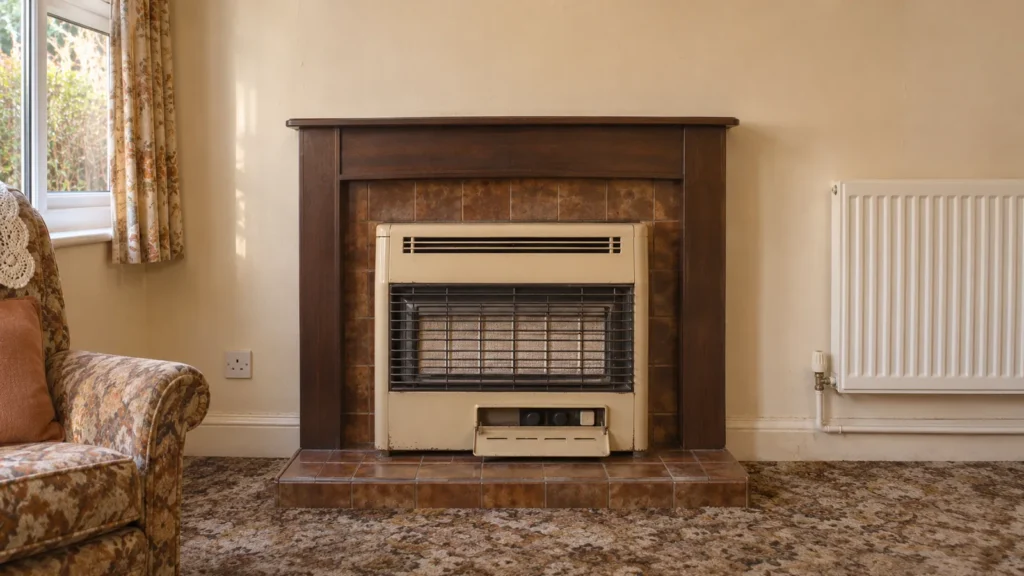
Back boilers were fitted in huge numbers from the 1960s to the 1980s, hidden behind a gas fire in the living room. The ones still running are old, inefficient by modern standards, and getting hard to repair as parts disappear. For general boiler prices, see our new combi boiler cost guide, and more help is on our heating hub.
How to tell if you have a back boiler
- There's a gas fire in the living room with a separate control panel, often hidden behind a flap on the fire or the hearth.
- There's no boiler on any wall in the kitchen, utility room or cupboards.
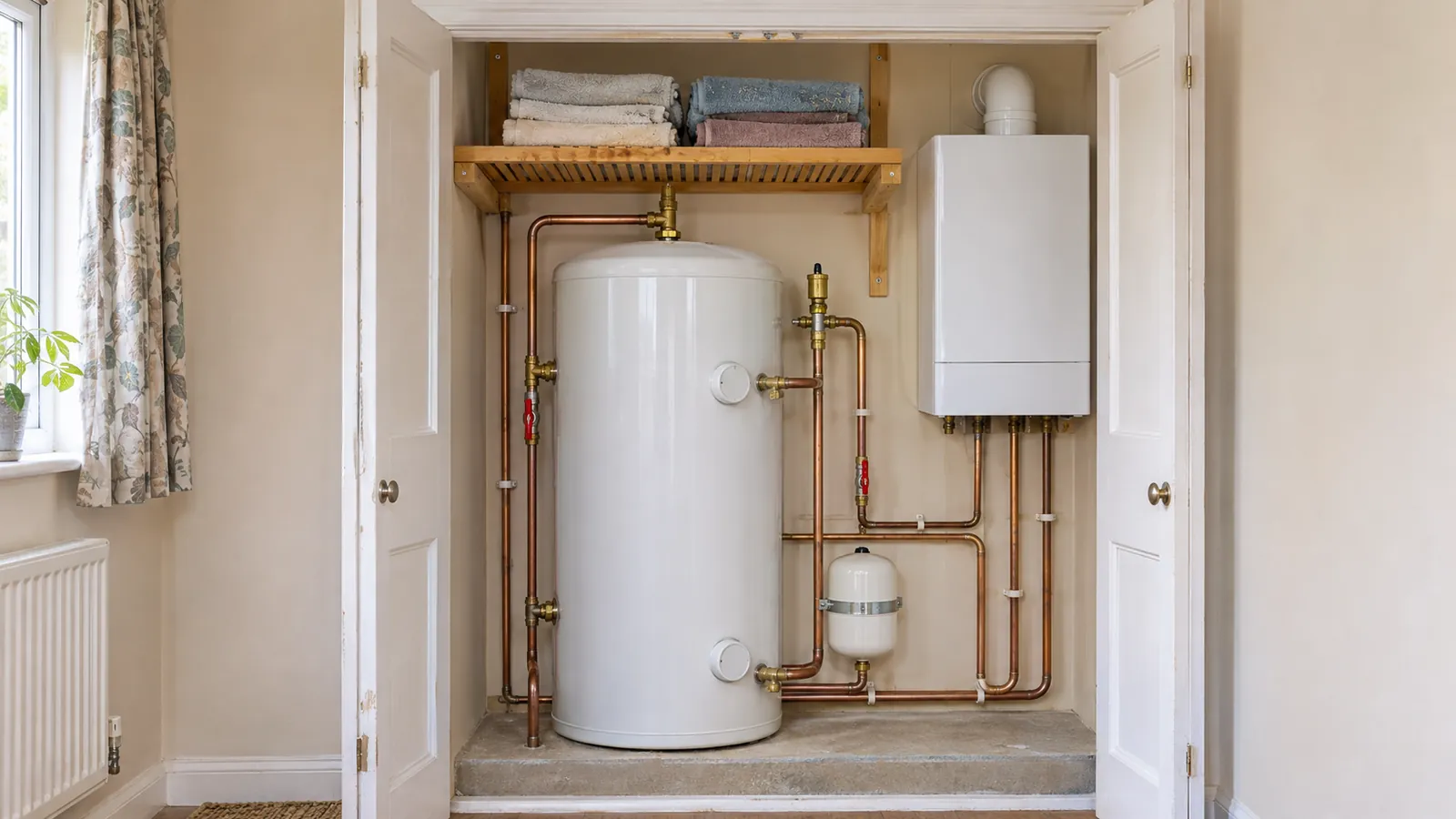
- There's a hot water cylinder in an airing cupboard and tanks in the loft.
- The heating and hot water work even when the fire itself is off.
The best-known models include the Baxi Bermuda range. If you're not sure, our guide to what type of boiler you have helps.
Why replace it?
- Efficiency. Old back boilers are typically far less efficient than a modern condensing boiler, so more of the gas you pay for goes up the chimney.
- Parts and repairs. Many models are long out of production. Engineers increasingly struggle to get parts, and a breakdown can mean a long, cold wait.
- Safety. Old, open-flued appliances relying on a chimney need to be checked carefully. Carbon monoxide risk rises with age and poor maintenance. Have a working CO alarm in the room regardless.
- Space. Removing the cylinder and loft tanks frees up an airing cupboard and loft space.
If your back boiler or gas fire shows signs of a problem, such as a lazy yellow flame, soot round the fire, or a CO alarm going off, turn it off, open windows and call the National Gas Emergency number on 0800 111 999. Don't use it until a Gas Safe engineer has checked it.
What's involved in replacing a back boiler
- Survey. A Gas Safe engineer checks the system, measures water pressure and flow, and plans where the new boiler and flue will go.
- Asbestos check. If the back boiler, fire or flue may contain asbestos, it's tested first. Any asbestos is removed by a suitable contractor before the heating work.
- Decommission and remove. The gas is capped, the back boiler and fire are removed, and the chimney flue liner is dealt with.
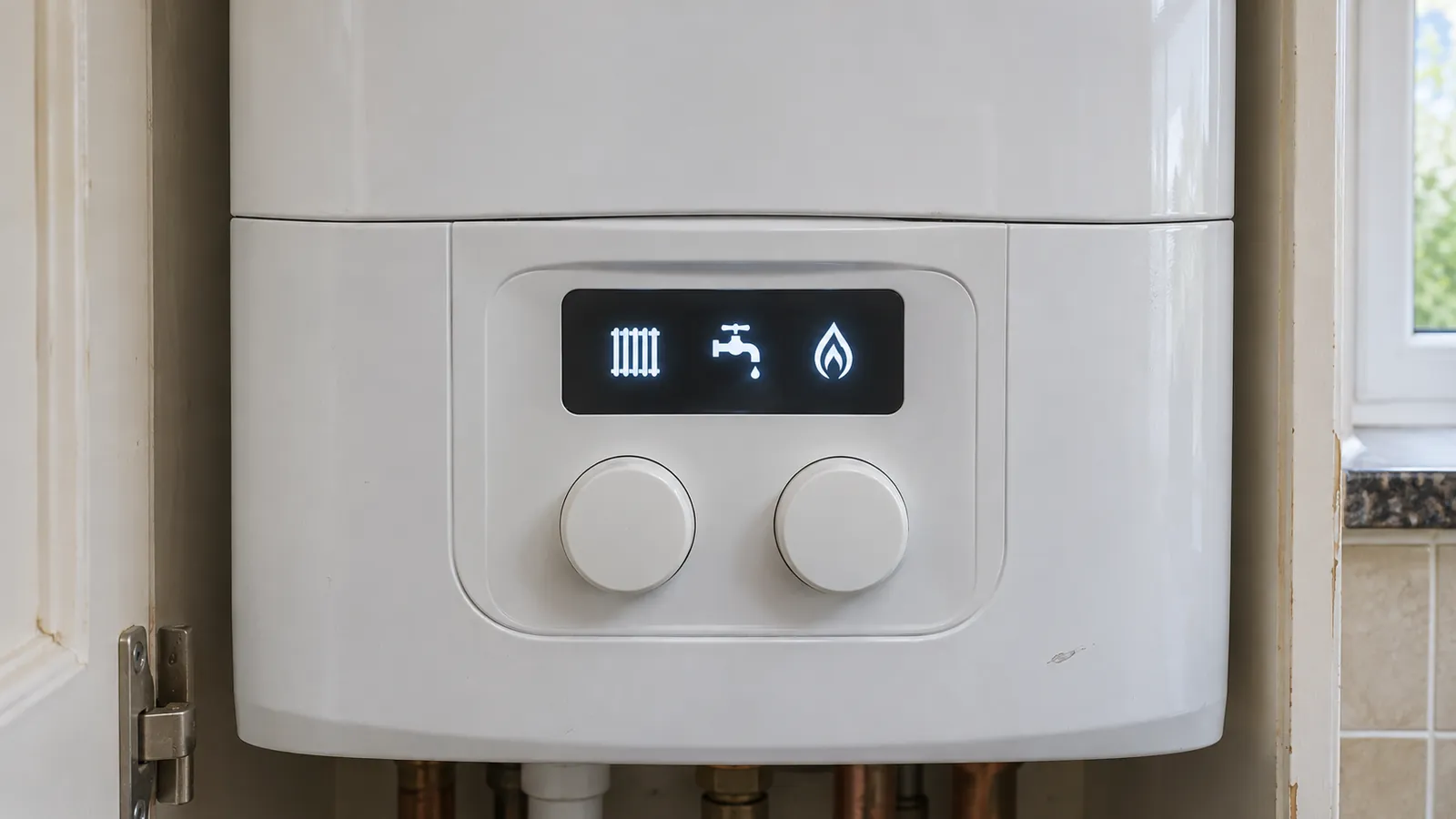
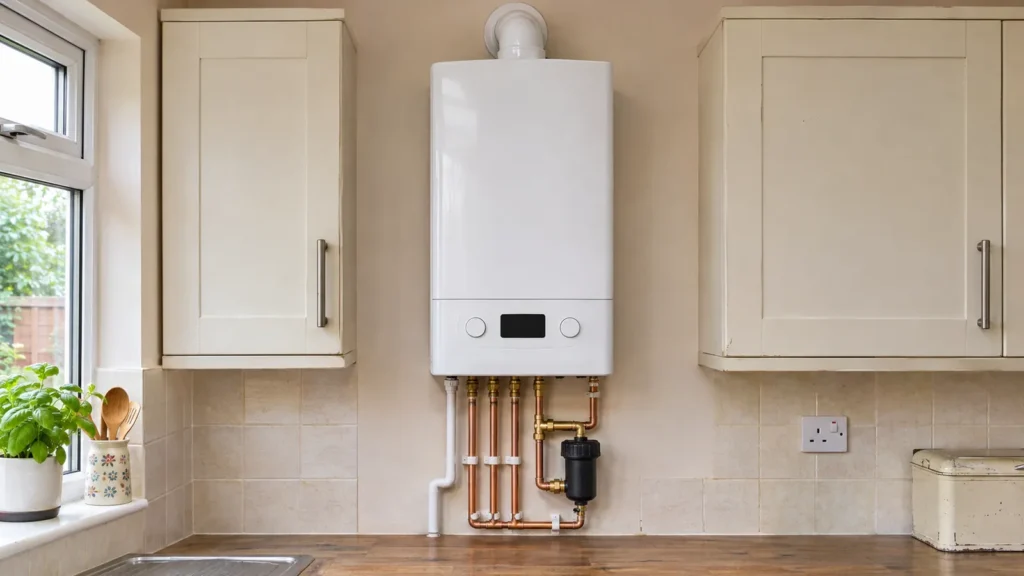
- New boiler. A combi (or a system or regular boiler) is fitted on a wall, often in the kitchen, with a new flue through the wall.
- Pipework changes. Pipes that ran to the fireplace are rerouted to the new boiler. If you're going combi, the cylinder and loft tanks are removed and pipes capped.
- Flush and commission. The system is cleaned, filled, treated with inhibitor and tested. Old systems often have a lot of sludge.
- Making good the fireplace. Either a new fire (gas, electric or a stove) or the opening is blocked up and plastered.
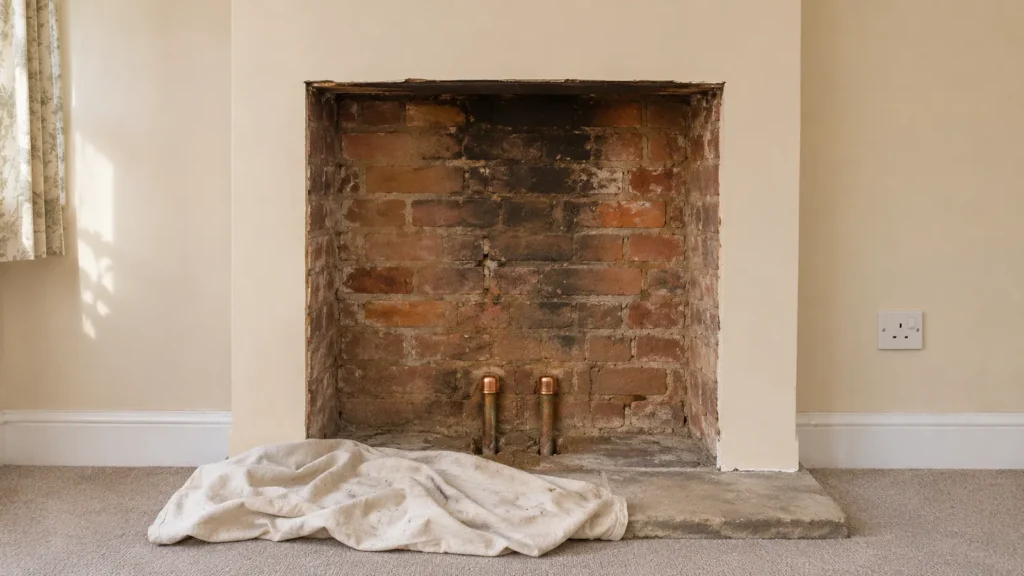
Asbestos: what you need to know
Back boilers and the panels, rope seals and flue pipes around them were often made with asbestos-containing materials, especially in installations from before the mid-1980s. Asbestos is only dangerous when disturbed, which is exactly what removal does.
- An asbestos survey or sample test is the sensible first step. A sample test is often inexpensive, and a survey of the area may cost more.
- If asbestos is found, it must be removed safely by a suitably trained contractor before the heating engineer starts. Depending on the material, this may need a licensed contractor.
- Allow extra time and budget. Asbestos removal can add a day or more.
Don't start pulling the fireplace apart yourself.
Costs in 2026
Rough estimates for a typical home, and what moves the price is the boiler model, distance to the new position, cylinder decisions, sludge, fireplace work and region:
| Item | Typical 2026 cost |
|---|---|
| Back boiler to combi, all in | About £2,500 to £6,000 |
| Asbestos test or survey | Often around £50 to £150 for a test |
| Asbestos removal (if found) | Often £300 to £800+ |
| Making good the fireplace (block up, plaster) | Often £200 to £500 |
| New electric or gas fire | £150 to £1,500+ depending on the fire |
| Power flush or chemical clean | Often £300 to £700 |
| New hot water cylinder (if keeping a cylinder system) | Often adds £1,000 to £2,500 |
Ask whether the quote covers removing the back boiler, the fire, the cylinder and the loft tanks, and making good the fireplace, or just the heating work. Fireplace finishing is the item most often left off.
Combi or system boiler to replace it?
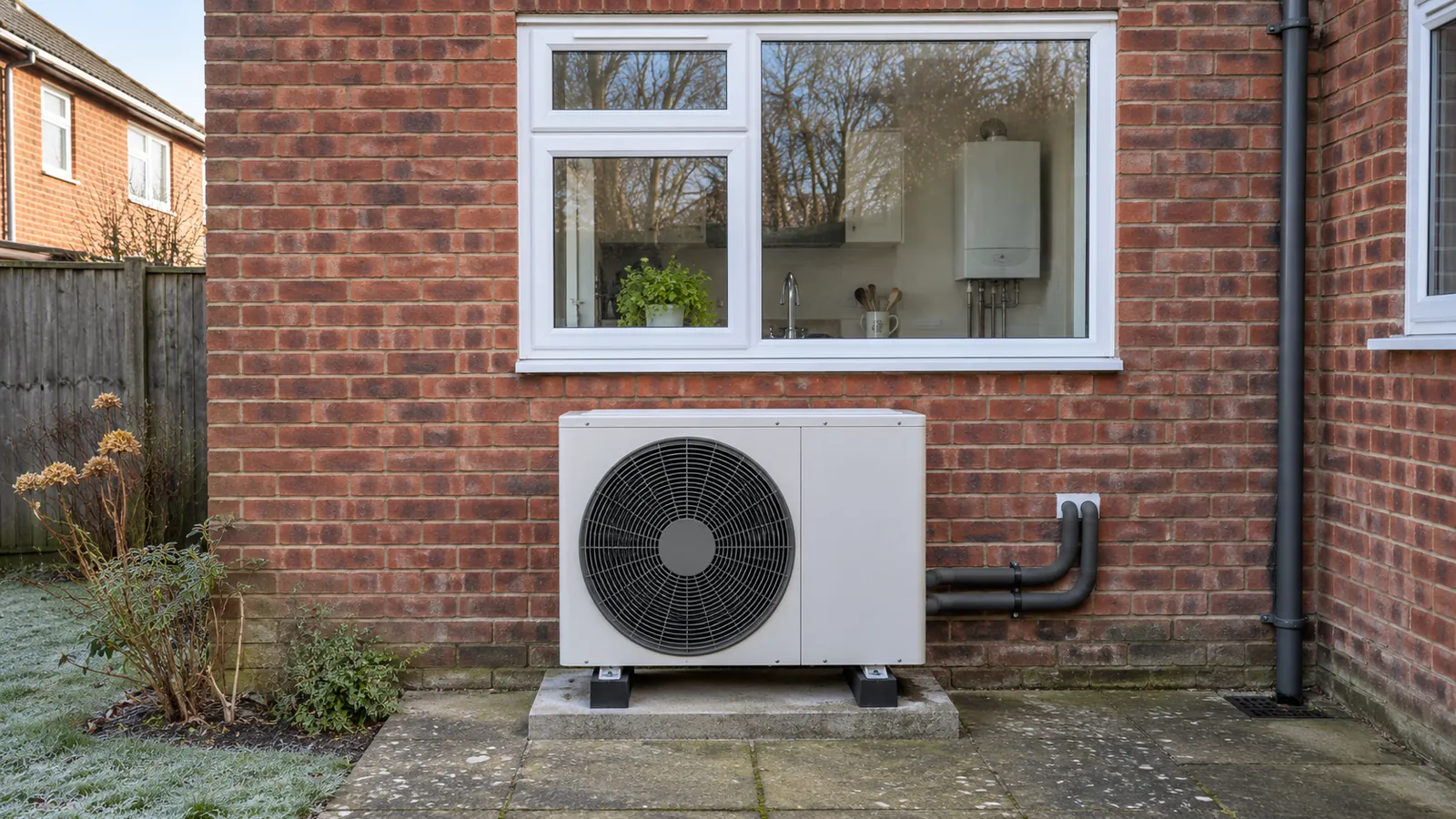
Most people choose a combi because it frees up the airing cupboard and loft and is the cheapest option. But if you have two bathrooms used at the same time, or your mains water flow is weak, a system boiler with an unvented cylinder may serve you better. Our combi vs system boiler guide explains how to decide. And if you're thinking about a heat pump in future, keeping a cylinder space helps; see combi boiler vs heat pump.
How long does it take?
Usually 2 to 3 days: a day to remove the old system and asbestos-cleared items, a day to fit the new boiler and reroute pipes, and time to flush, commission and tidy up. Asbestos removal or major pipework can add more. See how long it takes to fit a boiler for other job types.
Are there grants for replacing a back boiler?
Some households on certain benefits or low incomes may qualify for help with heating upgrades through government, energy supplier or council schemes. These change often, so check with your council and the Energy Saving Trust. In England and Wales, the Boiler Upgrade Scheme helps with heat pumps, not gas boilers.
FAQs
How much does it cost to replace a back boiler with a combi?
Typically around £2,500 to £6,000 in 2026, plus extra for asbestos removal and making good the fireplace.
Do all back boilers contain asbestos?
No, but many older ones and their surrounds do. Get a test before any removal work so it can be handled safely.
How long does it take to replace a back boiler?
Usually 2 to 3 days, longer if asbestos needs removing or there's a lot of pipework to change.
Can I keep my gas fire when replacing the back boiler?
The fire is usually removed with the back boiler. You can fit a new standalone gas fire, an electric fire or a stove in the opening afterwards.
Are back boilers dangerous?
Not if they're working properly and serviced. But they're old, so have a working CO alarm and an annual check by a Gas Safe engineer.
Can you still get back boilers?
New back boilers are very rare now, and most can't meet current efficiency rules, so replacements are almost always wall-hung boilers.
- Back boiler to combi typically costs around £2,500 to £6,000 in 2026.
- Get an asbestos check before any removal work.
- Most people go combi and remove the cylinder and loft tanks.
- Ask whether the quote covers making good the fireplace.
- Expect the work to take 2 to 3 days.