

A like-for-like combi swap in the same place usually takes about 4 to 8 hours, so most are done in a day. Moving the boiler to a new spot typically adds a day, and converting from a regular or system boiler with a hot water cylinder to a combi usually takes 1 to 2 days, sometimes 3. A system flush, new radiators or asbestos removal adds more time. You'll normally be without heating and hot water for the working day, and overnight if the job runs to a second day.
These are the times installers and boiler companies quote, and they line up with what people report on forums once the job's done. If you're still comparing prices, see our new combi boiler cost guide. More heating help is on our heating hub.
Fitting times by type of job
| Job | Typical time | Why |
|---|---|---|
| Combi to combi, same place | 4 to 8 hours | Existing gas, water and flue routes are reused |
| System to system, or regular to regular, same place | About 1 day | Similar to a combi swap, with cylinder controls to reconnect |
| Combi swap with boiler moved to another room | 1 to 2 days | New gas, water, condensate and flue runs |
| Regular or system boiler to combi | 1 to 2 days, sometimes 3 | Cylinder and tanks removed, pipework reconfigured |
| Back boiler to combi | 2 to 3 days | Fireplace work, possible asbestos, longer pipe runs |
| Any of the above plus a power flush | Add half a day to a day | Flushing and treating the system water |
Ranges vary between companies, and an engineer's survey is the only way to get a reliable figure for your house.
What a typical one-day combi swap looks like
- Arrival and protection (first half hour). Dust sheets down, the gas and water turned off, and the system drained.
- Old boiler out (about an hour). Disconnecting the gas, water, flue and wiring, and taking the old boiler off the wall.
- New boiler on (two to three hours). New mounting plate, connecting up the pipes, often a new flue, a magnetic filter on the return pipe, and the condensate pipe.
- Flush and fill. The system is cleaned (at least a chemical flush is expected by most manufacturers), refilled and treated with inhibitor.
- Commissioning (an hour or so). Gas tightness checks, flue gas analysis, setting up controls, and checking every radiator gets hot.
- Handover. The engineer shows you the controls, registers the boiler for the warranty, and notifies Building Control through the Gas Safe scheme.
Day-to-day, that means no heating or hot water from early morning to mid or late afternoon. In winter, plan for a cold house and have an electric heater and kettle ready.

What makes it take longer
Moving the boiler. A new location needs a new flue route through the wall or roof, a new gas pipe of the right size, new water connections and a condensate pipe to a drain. Lofts take longer still because of access and frost protection. Our guide to the cost of moving a combi boiler covers what's involved.
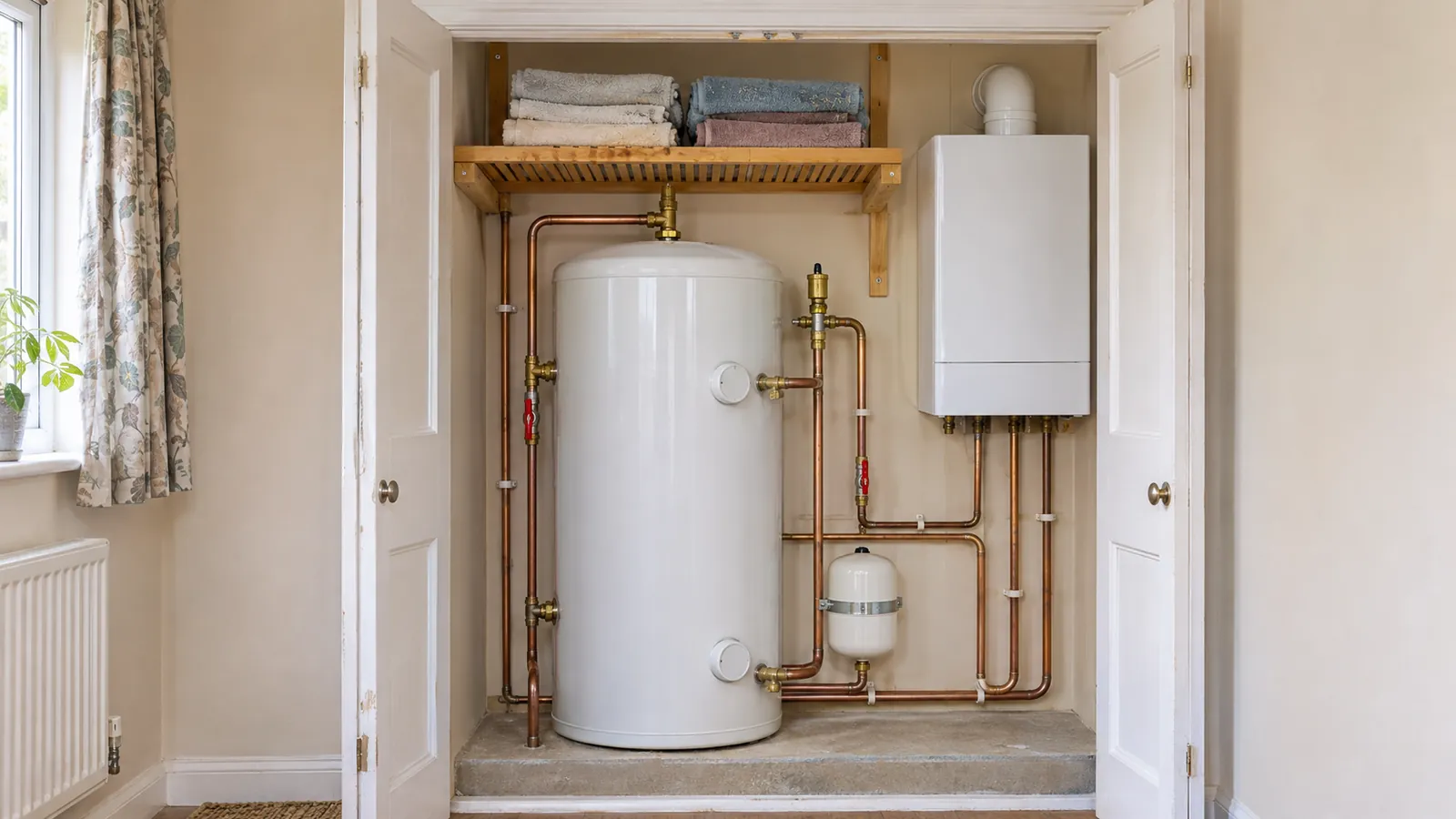
Removing a cylinder and loft tanks. Converting to a combi means draining and removing the hot water cylinder in the airing cupboard and the cold water tanks in the loft, capping off pipes, and rerouting the heating circuit. Often the airing cupboard becomes a cupboard again, which people like.
Undersized gas pipe. Modern combis need more gas than many old boilers, and the gas pipe from the meter may need upgrading. If it runs under floorboards across the house, that takes time.
A dirty system. Black sludge from old radiators can block a new boiler's heat exchanger. A power flush (often half a day or more) or a thorough chemical clean adds time. See our power flush cost guide.
Asbestos. Old back boilers and some older flue pipes and boiler cupboards contain asbestos. If it's suspected, it has to be tested and removed safely before the heating work, which can add days.
Surprises behind the old boiler. Rotten wall fixings, corroded pipework or a flue running somewhere it shouldn't be found only once the old boiler comes off.

Can you stay at home during the work?
Yes. Most people do. You'll have workmen in, noise from drilling, and the water off for chunks of the day. If you work from home, plan for interruptions. Gas will be off too, so your hob won't work.
If the job runs over two days, ask the engineer whether they can restore heating or hot water overnight. On combi conversions, some engineers can get the new boiler running on day one and finish tidying pipework on day two.
Only a Gas Safe registered engineer can legally fit or move a gas boiler. Check their ID card and look them up on the Gas Safe Register. A boiler fitted by someone unregistered won't be registered for its warranty and may not be safe.
How to make fitting day go quickly
- Clear the boiler cupboard and the path to it, including the loft if tanks are coming out.
- Find your gas meter and stopcock and make sure they're reachable.
- Move valuables and furniture away from radiators if they're being changed.
- Know where the old controls and thermostat are, and what you want in their place.
- If you're on a prepayment gas meter, make sure there's credit for commissioning.
How long after fitting will it work properly?
It works straight away, but give it a week before judging it. New boilers often need small tweaks once you've lived with them: the heating flow temperature, the timer settings, or a radiator that needs balancing. Your installer should come back for these. Our guide to boiler temperature explains the settings worth changing to cut gas use.
FAQs
How long does it take to replace a combi boiler?
Usually 4 to 8 hours if it's going in the same place, so most are finished within a working day.
How long does it take to change a system boiler to a combi?
Usually 1 to 2 days, sometimes 3, because the hot water cylinder and tanks are removed and the pipework is changed.
Will I have hot water on the day of the boiler installation?
Not during the working day. If it's a one-day job, you'll normally have heating and hot water back by late afternoon or evening.
How long does it take to move a boiler to the loft?
Usually 1 to 2 days, depending on the flue route, access through the hatch and the gas pipe run.
Does a power flush add time to a boiler installation?
Yes, typically half a day to a day. Some installers do a chemical flush instead, which is quicker.
Can a boiler be fitted in one day?
Yes, most like-for-like combi swaps are. Conversions and moves usually need longer.
- Like-for-like combi swap: about 4 to 8 hours.
- Moving the boiler: usually 1 to 2 days.
- Regular or system to combi: 1 to 2 days, sometimes 3.
- Flushing, gas pipe upgrades and asbestos add time.
- Expect no heating or hot water during the working day.